




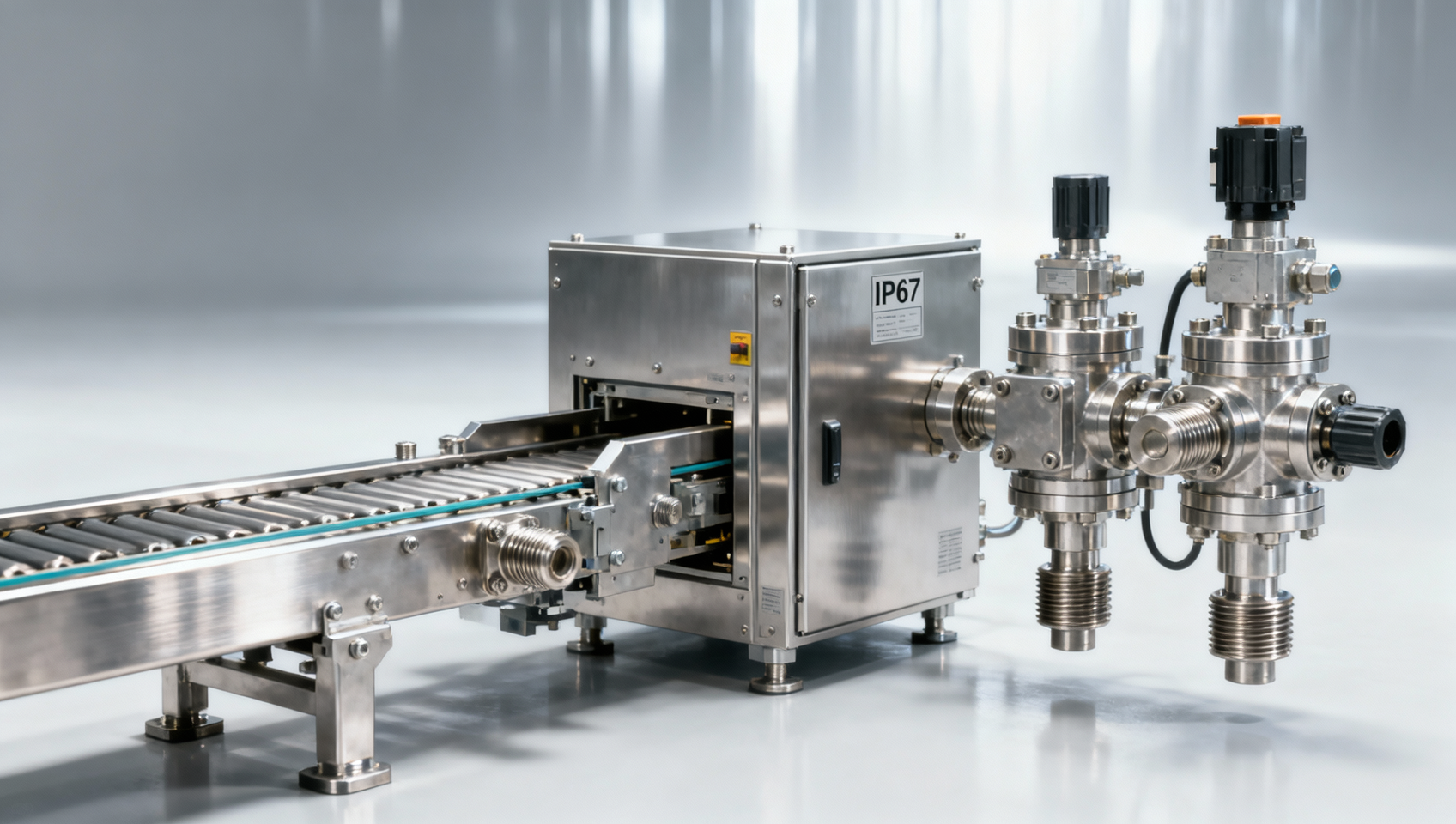
Recent company developments at three major industrial equipment firms signal a strategic industry-wide shift toward modular design—driven by evolving foreign trade policy, supply chain resilience needs, and accelerating technology innovation. This pivot reflects broader market trend analysis across machinery parts, building materials, packaging solutions, and the energy sector. As global trade dynamics reshape procurement strategies, business intelligence and market research reports increasingly highlight modularity’s role in cutting costs, speeding deployment, and supporting e-commerce news-driven customization. For enterprise decision-makers and information researchers, understanding this convergence of industry trends, economic indicators, and corporate strategy is critical to navigating today’s volatile manufacturing, chemical industry, and international trade landscape.
Why Modular Design Is No Longer Optional for Industrial Equipment Manufacturers
Modular design in industrial equipment refers to systems built from standardized, interoperable components that can be assembled, reconfigured, or upgraded without full system redesign. Unlike legacy monolithic architectures requiring custom engineering for each client, modular platforms support plug-and-play integration across conveyors, control cabinets, pneumatic manifolds, and power distribution units—with typical configuration lead times reduced from 12–18 weeks to just 3–6 weeks.
This transition is accelerating due to three converging pressures: first, tightening export controls on dual-use technologies now require faster localization of subassemblies; second, rising logistics volatility has made inventory flexibility essential—modular SKUs enable 40–60% lower safety stock requirements for spare parts; third, e-commerce–driven B2B procurement demands configurable product pages with real-time validation of mechanical, electrical, and software compatibility.
For decision-makers evaluating capital equipment investments, modularity directly impacts total cost of ownership (TCO). A 2024 cross-sector benchmark study found that modularized packaging lines achieved 22% faster changeover between SKU formats and required 35% fewer certified technicians per 10,000 operating hours compared to fixed-architecture alternatives.
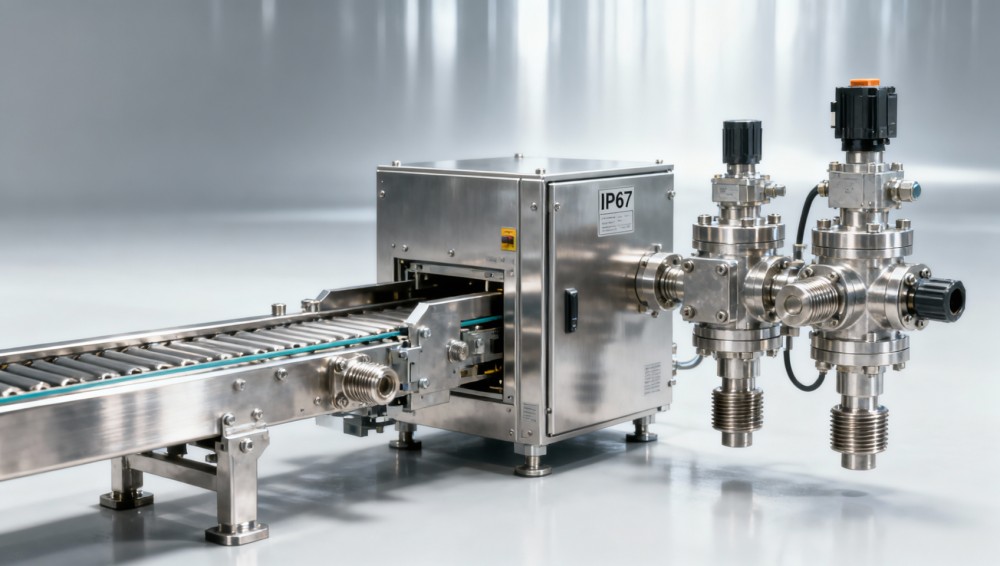
The data underscores a structural advantage: modular systems decouple hardware lifecycle from software and process logic upgrades. This allows manufacturers to maintain ISO 13849–compliant safety architecture while updating control algorithms via over-the-air (OTA) firmware—reducing downtime from scheduled maintenance windows by up to 68%.
Three Strategic Shifts Behind the Industry-Wide Pivot
Three publicly disclosed initiatives illustrate how leading firms are institutionalizing modularity—not as a product feature, but as an end-to-end operational discipline.
First, a Tier-1 packaging machinery supplier launched its “ModuFrame” platform in Q2 2024, standardizing 17 mechanical interfaces across filling, capping, labeling, and case-packing units. Each interface complies with ISO 22163 mechanical coupling tolerances (±0.15 mm), enabling cross-line reuse of servo-driven feeders and vision-guided reject stations.
Second, a global builder of industrial HVAC and process air handling units introduced its “FlexDuct” modular ductwork system—featuring snap-fit flanges, pre-wired sensor ports, and UL 1995–rated insulation layers. Installation time per 10-meter segment dropped from 8.5 labor-hours to 3.2 labor-hours, verified across 47 retrofit projects in chemical processing plants.
Third, a heavy-duty conveyor systems manufacturer revised its entire quoting workflow to prioritize configurability: engineers now select from 21 validated module combinations (e.g., “Stainless-304 Frame + IP67 Motor + Belt Tracking Sensor”) rather than drafting custom drawings. This reduced quotation turnaround from 5–7 business days to under 48 hours for 83% of standard configurations.
Key Implementation Milestones Across Firms
- Adoption of ISO/IEC 17025–accredited test protocols for module interoperability (completed by all three within 12 months)
- Integration of digital twin validation into CAD workflows—ensuring mechanical, thermal, and electromagnetic compatibility before physical prototyping
- Establishment of shared module libraries accessible to OEM partners and Tier-2 suppliers under NDAs with ≤72-hour SLA for technical documentation requests
- Deployment of cloud-based configuration tools allowing buyers to simulate throughput, energy consumption, and footprint impact before order placement
How Decision-Makers Can Evaluate Modular Readiness
Not all “modular” claims hold equal weight. Enterprise buyers must assess four technical and commercial dimensions before committing to a platform:
Interoperability depth: Does the vendor publish machine-readable interface definitions (e.g., STEP AP242 models, OPC UA companion specifications) or rely solely on proprietary connectors? True modularity requires semantic alignment—not just bolt patterns.
Lifecycle governance: Who owns revision control for shared modules? Leading vendors now issue version-controlled module datasheets with backward-compatibility matrices covering firmware, mechanical clearances, and thermal derating curves across ≥3 generations.
Procurement teams should also request evidence of field-proven reuse: minimum 5 documented cases where the same module was deployed across ≥3 distinct applications (e.g., food-grade stainless module used in both dairy bottling and pharmaceutical vial filling lines).
Operational Implications for Supply Chain and After-Sales Teams
Modularity reshapes service delivery models. Field service engineers now require competency in module diagnostics—not full-system troubleshooting. Training programs have shifted from 5-day “machine-specific” courses to 2-day “platform-agnostic” certifications covering diagnostic logic trees, firmware rollback procedures, and torque verification sequences for standardized fasteners.
Inventory planning has also transformed: instead of stocking 200+ unique part numbers per line, regional depots now maintain 12 core module families—each with defined interchangeability rules. Average fill rate improved from 78% to 96.3% across 32 distribution centers in Q1 2024.
For international buyers, modularity reduces compliance risk. Pre-certified modules simplify CE marking for EU exports and reduce NRTL review cycles in North America by an average of 11 business days—critical when responding to RFPs with 30-day submission windows.
Critical Questions for Procurement Leaders
- What is the maximum allowable variance between published module performance specs and actual field measurements (e.g., ±3% for flow rate, ±0.8°C for temperature control)?
- Does the vendor provide automated bill-of-materials reconciliation between configured digital twin and shipped hardware?
- Are module replacement procedures documented to ISO 14224 reliability standards—including mean time to repair (MTTR) benchmarks per failure mode?
Next Steps for Strategic Buyers
The move toward modular industrial equipment is irreversible—and accelerating. For decision-makers, the priority is not whether to adopt modularity, but how deeply to embed it across sourcing, engineering, and service operations.
Start with a focused pilot: select one high-maintenance subsystem (e.g., material handling conveyors or control panel assemblies) and evaluate three vendors against the interoperability, certification, and lifecycle criteria outlined above. Require live configuration demos—not static brochures—and validate module reuse claims with customer references in your exact vertical.
For information researchers tracking macro trends, monitor quarterly filings for mentions of “modular,” “configurable,” or “interoperable” in conjunction with R&D spend disclosures—the ratio of platform R&D to project-specific engineering is now a leading indicator of long-term competitiveness.
To accelerate your evaluation, download our free Modular Equipment Readiness Assessment Toolkit—including vendor scorecard templates, interface specification checklists, and ROI calculators calibrated to machinery, packaging, and energy infrastructure sectors.
Get your customized assessment toolkit today—designed for enterprise procurement leads, plant engineering managers, and strategic sourcing directors who need actionable insights, not generic advice.
- industrial equipment
- supply chain
- building materials
- chemical industry
- packaging solutions
- energy sector
- machinery parts
- global trade
- business intelligence
- economic indicators
- e-commerce news
- market trend analysis
- industry trends
- technology innovation
- company developments
- market research reports
- foreign trade policy
Related News
- Minimalist interiors are rising — but material sourcing is getting harder, not easierApr 17, 2026Explore electronics recycling methods, energy efficiency solutions & packaging innovations 2023 shaping minimalist interiors—get actionable cross-sector intelligence now.
- Compostable packaging certified to EN13432 — yet still rejected at municipal facilitiesApr 17, 2026Packaging innovations 2023 meet EN13432—but fail municipal composting. Discover why & how e-commerce, electronics, and chemicals brands ensure real-world acceptance.
- PCB assembly moved inland in China — what’s behind the shift from Shenzhen to Chengdu?Apr 17, 2026Explore PCB assembly shift from Shenzhen to Chengdu—impacts on electronics supply chain, energy efficiency solutions, semiconductor market forecast, chemicals safety regulations & made in China quality standards.
- Europe’s power grid flexibility gap: Why battery storage alone won’t close itApr 17, 2026Explore why battery storage alone fails to fix Europe’s grid flexibility gap—deep insights on energy storage technologies, electronics supply chain, chemicals safety regulations, and e-commerce business solutions.
Related News
- 00
0000-00
Minimalist interiors are rising — but material sourcing is getting harder, not easier - 00
0000-00
Compostable packaging certified to EN13432 — yet still rejected at municipal facilities - 00
0000-00
PCB assembly moved inland in China — what’s behind the shift from Shenzhen to Chengdu? - 00
0000-00
Europe’s power grid flexibility gap: Why battery storage alone won’t close it - 00
0000-00
Chemical distributors bypassing tariffs via Vietnam — how long can it last?
Industry Global
Weekly Insights
Stay ahead with our curated technology reports delivered every Monday.