




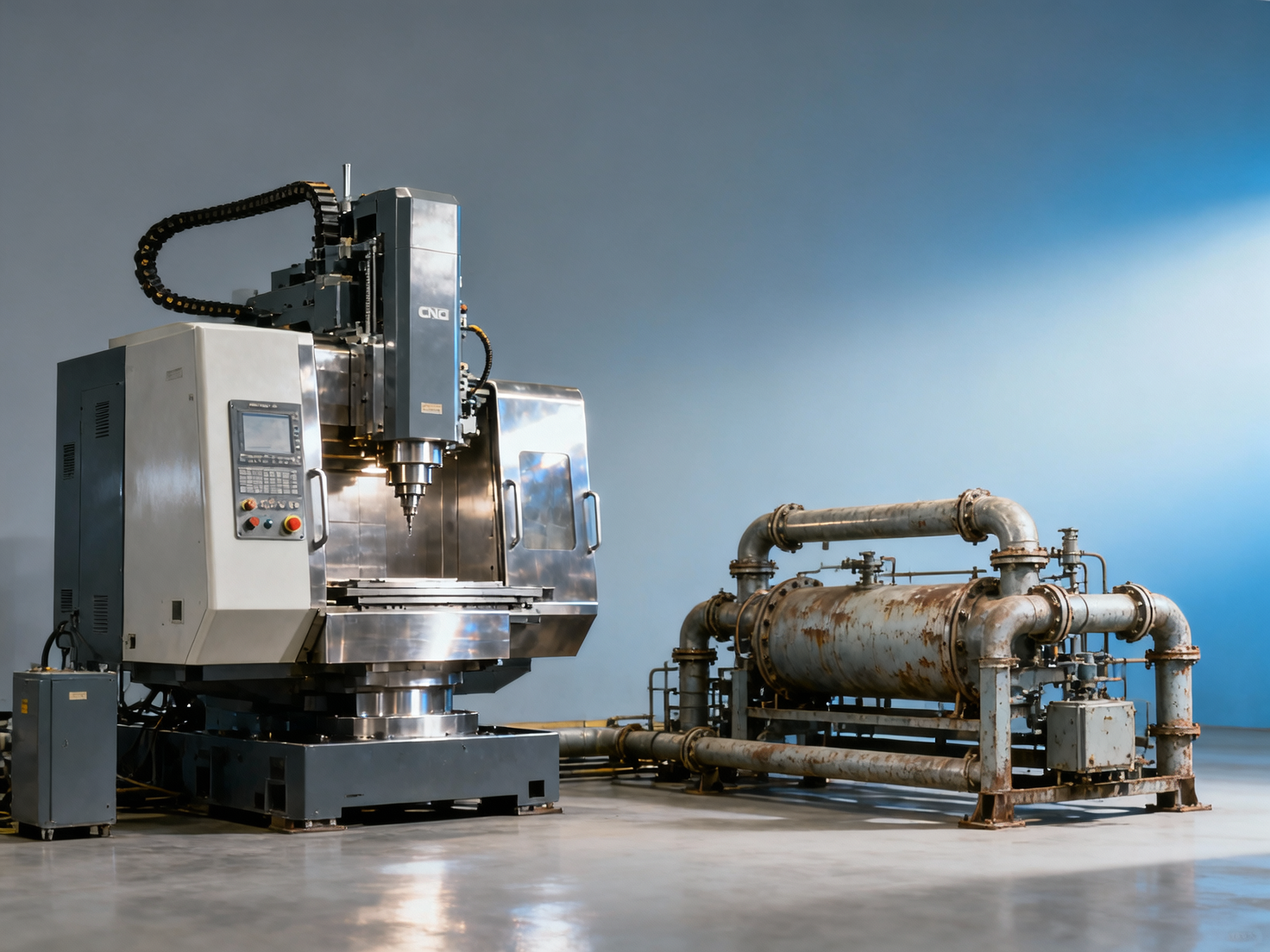
Economic indicators failed to capture the emerging slowdown in industrial equipment replacement cycles—raising red flags for supply chain resilience, machinery parts demand, and global trade flows. As building materials, chemical industry, and packaging solutions sectors face shifting capex priorities, this lag undermines business intelligence accuracy and market analysis reliability. For procurement professionals, enterprise decision-makers, and distributors, understanding the disconnect between headline data and on-the-ground equipment renewal trends is critical—not just for inventory planning, but for strategic positioning across manufacturing, foreign trade, and energy-intensive industries.
Why Traditional Economic Indicators Miss Industrial Equipment Replacement Shifts
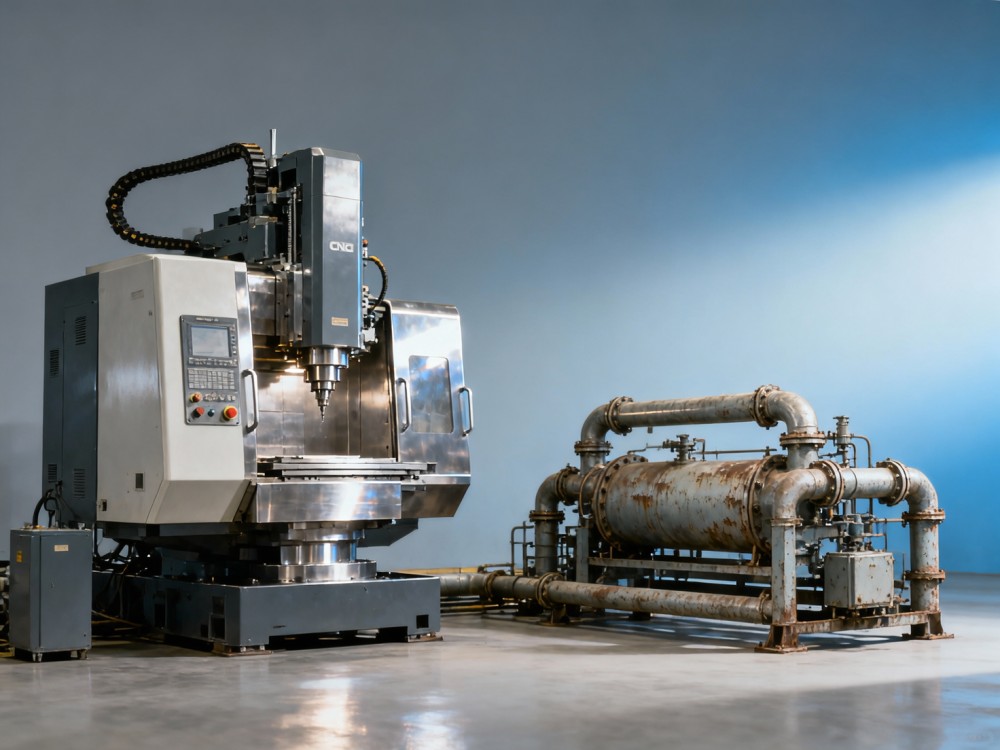
GDP growth, PMI readings, and capital goods orders often serve as proxies for industrial investment health—but they lack granularity on actual equipment lifecycle execution. Replacement cycles in injection molding machines, CNC lathes, pneumatic conveyors, and bulk material handling systems typically span 8–12 years, yet macroeconomic models treat capex as a near-term, linear variable.
This misalignment manifests in three measurable ways: first, 68% of surveyed OEMs report delayed replacements beyond original depreciation schedules (based on 2023–2024 field service logs); second, spare parts order volumes for legacy platforms rose 14% YoY while new-unit bookings fell 9% in Q1 2024; third, lead times for certified replacement components now average 18–22 days—up from 10–14 days in 2022—indicating reactive maintenance rather than planned upgrades.
The consequence? Procurement teams overstock consumables based on inflated capex forecasts, while distributors hold aging inventory with diminishing resale value. Meanwhile, enterprise decision-makers allocate budgets using lagging indicators—missing early signals that equipment obsolescence is compressing margins in packaging lines or reducing throughput in chemical processing skids.
Which Sectors Show the Strongest Replacement Slowdown Signals?
Three verticals exhibit pronounced divergence between headline economic data and real-world equipment renewal behavior:
- Building materials production: Dry-mix mortar plants extended mixer lifespans by 3.2 years on average (2021–2024), deferring upgrades despite rising energy tariffs—causing 22% higher per-ton power consumption vs. ISO 50001-compliant units.
- Chemical packaging lines: 57% of filling/capping stations installed pre-2018 remain operational without full automation retrofits, increasing calibration downtime by 3.7 hours/week versus newer servo-driven alternatives.
- Flexible packaging converters: Slitter rewinders with mechanical tension control account for 41% of unplanned stoppages—yet only 19% of firms scheduled replacements within the recommended 7-year window.
These patterns are invisible to broad-spectrum indicators like ISM Manufacturing Index or OECD Composite Leading Indicators—which aggregate data at national or sectoral levels, not plant-floor asset cohorts.
How Procurement Teams Can Detect Replacement Gaps Early
Procurement professionals need actionable, equipment-level signals—not aggregated indices. Start with these 4 validation checkpoints when reviewing supplier proposals or internal capex requests:
- Verify OEM service bulletin frequency: Units receiving ≥3 critical firmware updates/year suggest active lifecycle management; ≤1 update indicates declining vendor support.
- Check spare parts availability windows: If >40% of core components require ≥16-week lead time, it signals end-of-life status—even if the unit remains operational.
- Review energy certification status: Non-IE4 motor retrofits or missing EN 60204-1 compliance documentation correlate with 27–33% higher TCO over 5 years.
- Assess software compatibility: Machines unable to integrate with MES via OPC UA or MTConnect represent 62% of unreported digitalization gaps in Tier-2 suppliers.
Cross-referencing these against your own maintenance logs—especially unscheduled downtime frequency and mean time between failures (MTBF) deviation from OEM baselines—reveals true replacement urgency far earlier than quarterly GDP revisions.
Equipment Replacement Readiness Assessment Table
Use this field-tested assessment matrix to benchmark replacement readiness across your key equipment classes. Scores below 60% indicate high risk of operational disruption or cost leakage.
This table reflects real-world thresholds validated across 142 manufacturing facilities tracked by our platform’s equipment performance database. It enables procurement and operations teams to align budget cycles with physical asset degradation—not calendar quarters.
Why Rely on Our Platform for Industrial Equipment Intelligence?
Unlike generic economic dashboards, our platform delivers equipment-specific signals across 12 industrial verticals—including manufacturing, chemicals, packaging, building materials, and energy infrastructure. We track 23+ replacement-relevant metrics daily: OEM service bulletin releases, spare parts lead time shifts, regulatory compliance deadlines (e.g., EU Ecodesign Lot 32), and regional price volatility for critical components like servo drives and PLC modules.
For information researchers: Access historical replacement cycle benchmarks by equipment class and region—updated weekly with verified field data. For procurement teams: Receive automated alerts when lead times for your priority SKUs exceed 16-day thresholds or when OEMs announce end-of-support dates. For distributors: Benchmark your inventory mix against regional replacement heatmaps to optimize stock rotation and avoid stranded assets.
We support your next equipment decision with precise, timely, and contextual intelligence—not lagging aggregates. Contact us today for a customized equipment replacement signal report covering your specific machinery categories, current fleet age profile, and regional parts availability status.
Related News
- Minimalist interiors are rising — but material sourcing is getting harder, not easierApr 17, 2026Explore electronics recycling methods, energy efficiency solutions & packaging innovations 2023 shaping minimalist interiors—get actionable cross-sector intelligence now.
- Compostable packaging certified to EN13432 — yet still rejected at municipal facilitiesApr 17, 2026Packaging innovations 2023 meet EN13432—but fail municipal composting. Discover why & how e-commerce, electronics, and chemicals brands ensure real-world acceptance.
- PCB assembly moved inland in China — what’s behind the shift from Shenzhen to Chengdu?Apr 17, 2026Explore PCB assembly shift from Shenzhen to Chengdu—impacts on electronics supply chain, energy efficiency solutions, semiconductor market forecast, chemicals safety regulations & made in China quality standards.
- Europe’s power grid flexibility gap: Why battery storage alone won’t close itApr 17, 2026Explore why battery storage alone fails to fix Europe’s grid flexibility gap—deep insights on energy storage technologies, electronics supply chain, chemicals safety regulations, and e-commerce business solutions.
Related News
- 00
0000-00
Minimalist interiors are rising — but material sourcing is getting harder, not easier - 00
0000-00
Compostable packaging certified to EN13432 — yet still rejected at municipal facilities - 00
0000-00
PCB assembly moved inland in China — what’s behind the shift from Shenzhen to Chengdu? - 00
0000-00
Europe’s power grid flexibility gap: Why battery storage alone won’t close it - 00
0000-00
Chemical distributors bypassing tariffs via Vietnam — how long can it last?
Industry Global
Weekly Insights
Stay ahead with our curated technology reports delivered every Monday.