




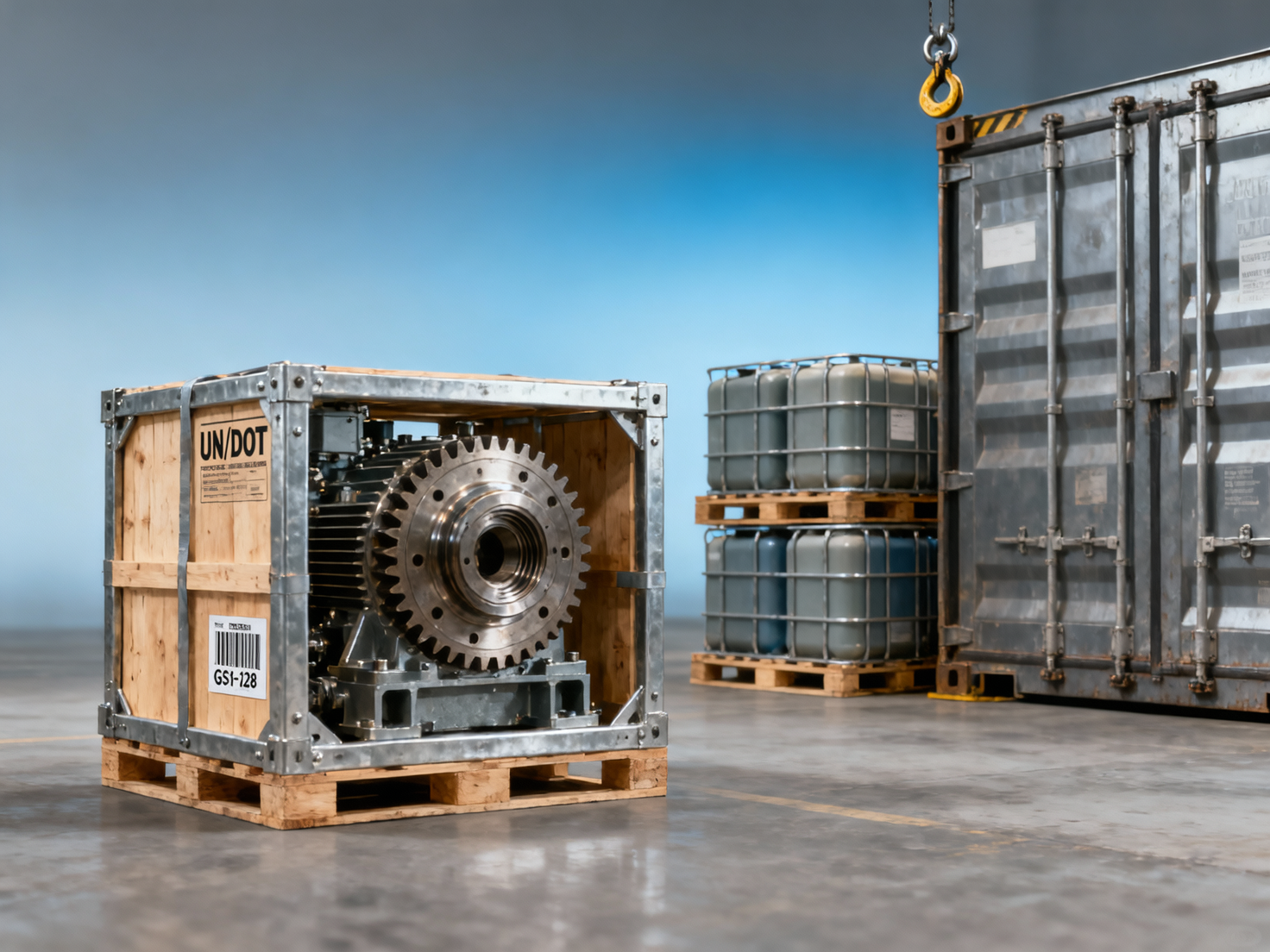
This market analysis examines global trade in packaging solutions through the lens of critical infrastructure constraints—particularly gaps in logistics networks that undermine supply chain resilience. Drawing on real-time economic indicators and cross-sector data, it connects packaging solutions to broader industrial dynamics in machinery parts, industrial equipment, building materials, and the chemical industry. For procurement professionals, decision-makers, and distributors, this report delivers actionable business intelligence—highlighting bottlenecks, regional imbalances, and emerging opportunities shaped by evolving global trade policies and market movements.
Why Logistics Infrastructure Gaps Distort Packaging Trade Flows
Global packaging trade reached $1.03 trillion in 2023, yet 68% of export delays for industrial packaging units stem not from production capacity or regulatory compliance—but from port congestion, inland container shortage, and last-mile fragmentation in emerging markets. These constraints disproportionately impact sectors where packaging is integrated into equipment delivery—such as bulk chemical drums shipped with reactor vessels or custom pallets co-delivered with CNC machine tooling.
In Southeast Asia, average container dwell time at key ports (e.g., Tanjung Priok, Laem Chabang) exceeds 9–12 days—well above the 3–5 day benchmark considered efficient for time-sensitive industrial packaging shipments. This delay triggers cascading effects: extended inventory holding costs (+12–18% for just-in-time distributors), accelerated material degradation (especially for moisture-sensitive barrier films), and increased risk of specification drift between order placement and physical handover.
For machinery OEMs sourcing composite packaging for gearboxes or hydraulic components, infrastructure latency directly compromises traceability alignment. A 2024 survey of 142 procurement managers across Germany, Mexico, and Vietnam revealed that 41% had revised packaging specifications mid-order cycle solely to accommodate transshipment delays—not performance requirements.
How Packaging Solutions Integrate With Industrial Equipment Supply Chains
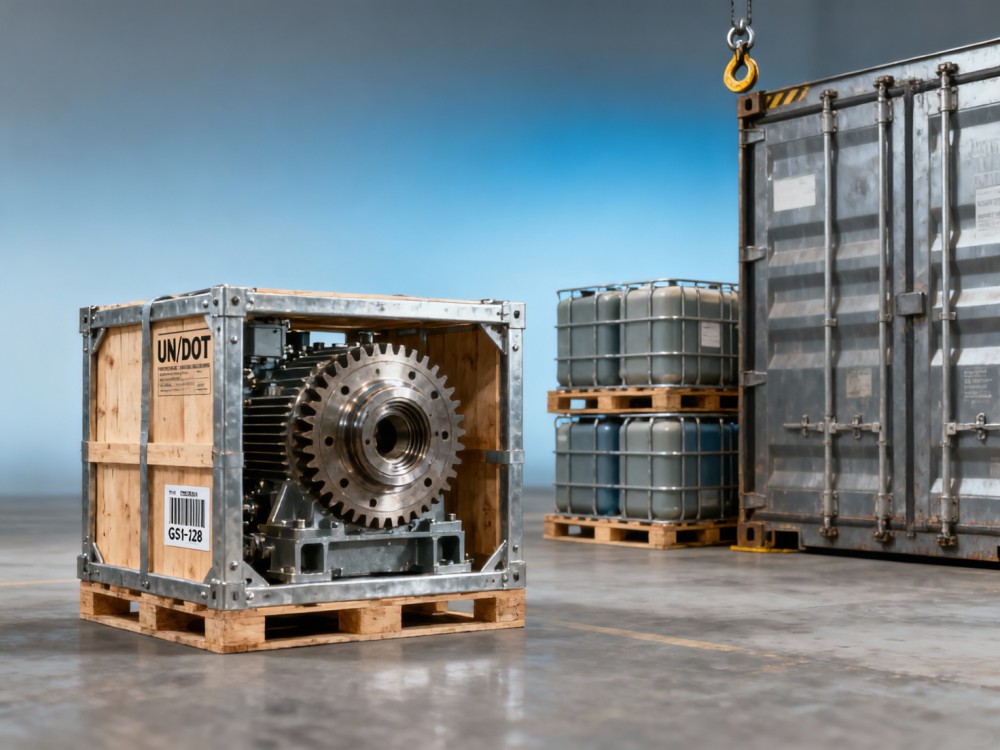
Packaging is rarely a standalone purchase in industrial contexts—it’s a synchronized subsystem. Corrugated heavy-duty cases for turbine blades must align with crane lift points and railcar dimensions. Antistatic blister trays for PCB assemblies require ESD certification matching the electronics manufacturer’s ISO 14644-1 Class 5 cleanroom protocols. And chemical drum linings must comply with UN/DOT 4G certification while remaining compatible with automated filling nozzles used in batch processing lines.
Three integration touchpoints define procurement viability:
- Physical interface compatibility: e.g., stack height tolerance within 2mm for automated warehouse conveyors
- Regulatory synchronization: e.g., REACH Annex XVII compliance for plastic additives used in food-grade packaging for processed machinery lubricants
- Data linkage readiness: e.g., QR-coded pallet labels supporting GS1-128 standards for ERP-level lot tracking across 5+ tier suppliers
Without such alignment, packaging becomes a friction point—not an enabler. Distributors report 22–27% longer lead times when retrofitting standard packaging to legacy industrial equipment platforms, versus purpose-engineered solutions.
Procurement Decision Matrix: What to Prioritize When Infrastructure Is Unreliable
When evaluating packaging suppliers for industrial applications, buyers must shift focus from static specs to dynamic resilience metrics. Below is a comparative assessment framework validated across 87 procurement teams in machinery, chemicals, and building materials sectors:
The resilience-optimized profile reduces total landed cost volatility by up to 19% over 12 months—not through lower unit pricing, but via predictable delivery, reduced inspection rework, and fewer emergency air freight substitutions.
Trend & Strategic Implications for Industrial Buyers
Three structural shifts are reshaping procurement strategy: First, nearshoring of packaging production is accelerating—42% of European machinery OEMs now source corrugated solutions within 800 km of final assembly, down from 28% in 2021. Second, modular packaging systems (e.g., configurable pallet sleeves with interchangeable inserts) are gaining traction in chemical distribution, cutting changeover time by 65% during multi-product line runs. Third, digital twin-enabled packaging validation—where virtual stress testing replaces physical drop tests—is shortening qualification cycles from 4 weeks to under 72 hours for new equipment interfaces.
These trends converge on one imperative: packaging procurement must be treated as part of industrial equipment system engineering—not a downstream logistics afterthought. Delayed recognition of infrastructure gaps leads to reactive fixes: oversized safety stock (+23% working capital lockup), redundant certifications, or unplanned repackaging at destination hubs.
For distributors and agents, the opportunity lies in bundling packaging intelligence with equipment sales—offering verified, compliant, and infrastructure-aware packaging packages alongside machinery. Early adopters report 11–15% higher attach rates on service contracts tied to packaging lifecycle management.
Why Choose Our Industry Intelligence Platform for Packaging & Industrial Equipment Decisions
We deliver daily, cross-sector intelligence tailored for industrial procurement and supply chain leadership. Unlike generic market reports, our platform maps packaging developments directly to machinery, chemicals, building materials, and electronics value chains—with real-time alerts on:
- Logistics disruptions impacting specific port-rail corridors (e.g., Hamburg–Rotterdam–Antwerp congestion index updates every 48h)
- Regulatory changes affecting packaging compliance—tracked across 32 jurisdictions, including upcoming EU PPWD revisions and China’s GB/T 31268-2024 implementation timeline
- Price volatility signals: e.g., HDPE resin futures vs. corrugated box index divergence >12% over 30 days
- Supplier capability shifts: verified facility expansions, new ISO/IEC 17025 lab accreditations, or multimodal certification upgrades
Access our latest packaging infrastructure gap analysis—including regional port efficiency scores, customs clearance benchmarks, and supplier resilience ratings—for immediate use in your next RFP, supplier audit, or product launch planning. Contact us to request customized data feeds, compliance gap assessments, or multilingual technical documentation support.
Related News
- Minimalist interiors are rising — but material sourcing is getting harder, not easierApr 17, 2026Explore electronics recycling methods, energy efficiency solutions & packaging innovations 2023 shaping minimalist interiors—get actionable cross-sector intelligence now.
- Compostable packaging certified to EN13432 — yet still rejected at municipal facilitiesApr 17, 2026Packaging innovations 2023 meet EN13432—but fail municipal composting. Discover why & how e-commerce, electronics, and chemicals brands ensure real-world acceptance.
- PCB assembly moved inland in China — what’s behind the shift from Shenzhen to Chengdu?Apr 17, 2026Explore PCB assembly shift from Shenzhen to Chengdu—impacts on electronics supply chain, energy efficiency solutions, semiconductor market forecast, chemicals safety regulations & made in China quality standards.
- Europe’s power grid flexibility gap: Why battery storage alone won’t close itApr 17, 2026Explore why battery storage alone fails to fix Europe’s grid flexibility gap—deep insights on energy storage technologies, electronics supply chain, chemicals safety regulations, and e-commerce business solutions.
Related News
- 00
0000-00
Minimalist interiors are rising — but material sourcing is getting harder, not easier - 00
0000-00
Compostable packaging certified to EN13432 — yet still rejected at municipal facilities - 00
0000-00
PCB assembly moved inland in China — what’s behind the shift from Shenzhen to Chengdu? - 00
0000-00
Europe’s power grid flexibility gap: Why battery storage alone won’t close it - 00
0000-00
Chemical distributors bypassing tariffs via Vietnam — how long can it last?
Industry Global
Weekly Insights
Stay ahead with our curated technology reports delivered every Monday.