





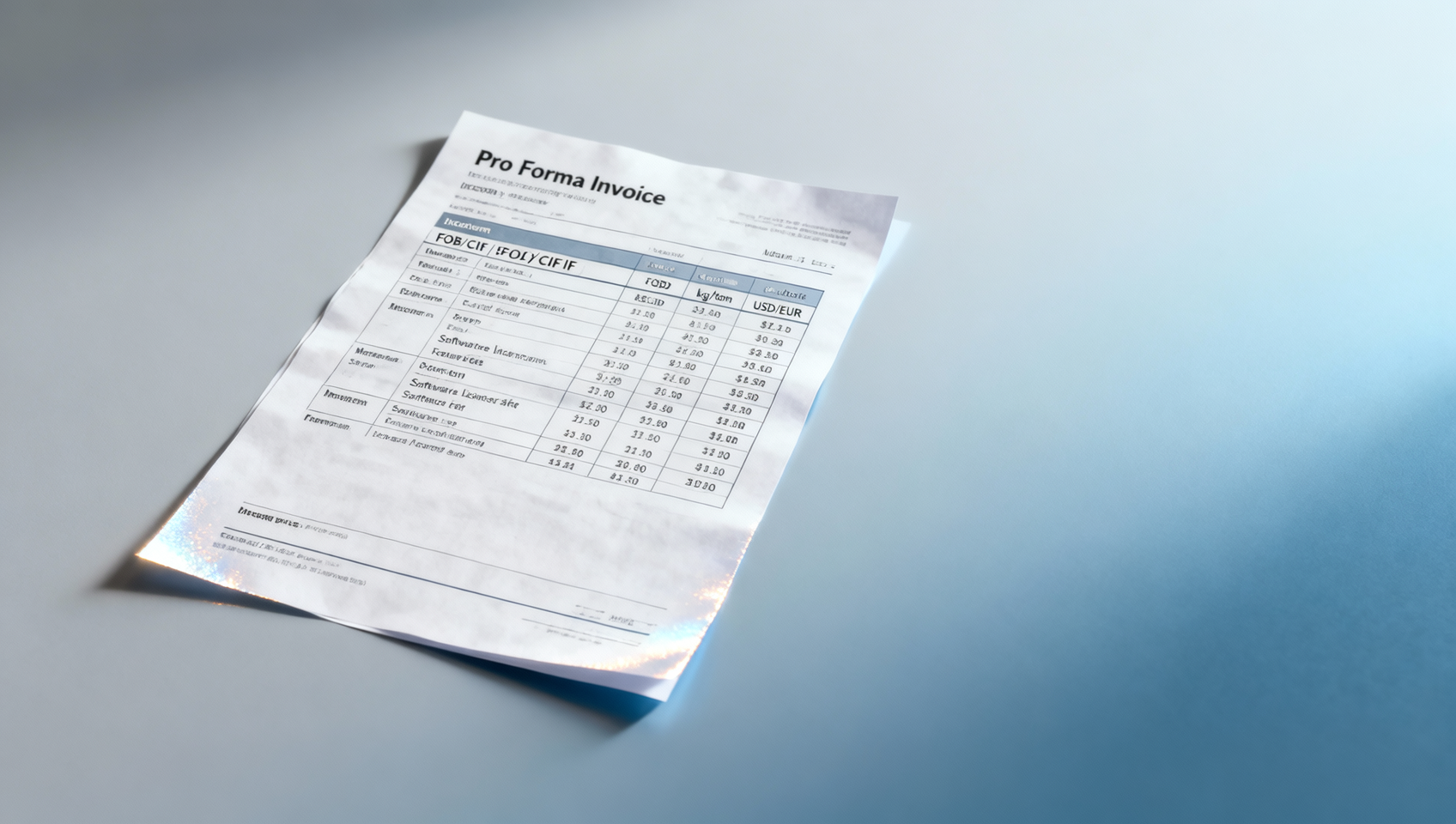
Why Export Quotation Accuracy Is a Customs Valuation Trigger—Not Just a Pricing Detail
An export quotation is far more than a commercial offer—it’s the foundational customs document that anchors valuation, duty calculation, and tax rebate eligibility. In 2026, over 68% of customs valuation disputes initiated by China Customs, the EU’s TARIC system, and U.S. CBP trace directly to discrepancies between pro forma invoices and actual shipment documentation—especially in manufacturing, electronics, and chemical exports where component-level pricing, royalty clauses, and Incoterms-driven cost allocations are routinely misstated.
For information researchers assessing trade policy exposure, commercial evaluators benchmarking cross-border cost structures, and corporate decision-makers approving export workflows, this isn’t theoretical risk. It’s operational liability: one misquoted freight term can inflate dutiable value by 12–18%; an unitemized tooling charge may void VAT refund claims; and inconsistent currency or unit-of-measure formatting triggers automated customs holds—adding 3.2 average days to clearance (World Bank Logistics Performance Index 2026).
This article cuts past textbook definitions to deliver what matters most: how quotation errors translate into real-world valuation outcomes, which sectors face highest exposure, and—critically—what actionable controls decision-makers can deploy *before* the first container sails.
Three High-Risk Quotation Errors That Automatically Flag Customs Audits
Customs authorities don’t audit randomly. They apply algorithmic red-flag models trained on historical dispute data. Three quotation flaws consistently rank top-tier for triggering manual review:
1. Inconsistent Incoterm Application Across Documents
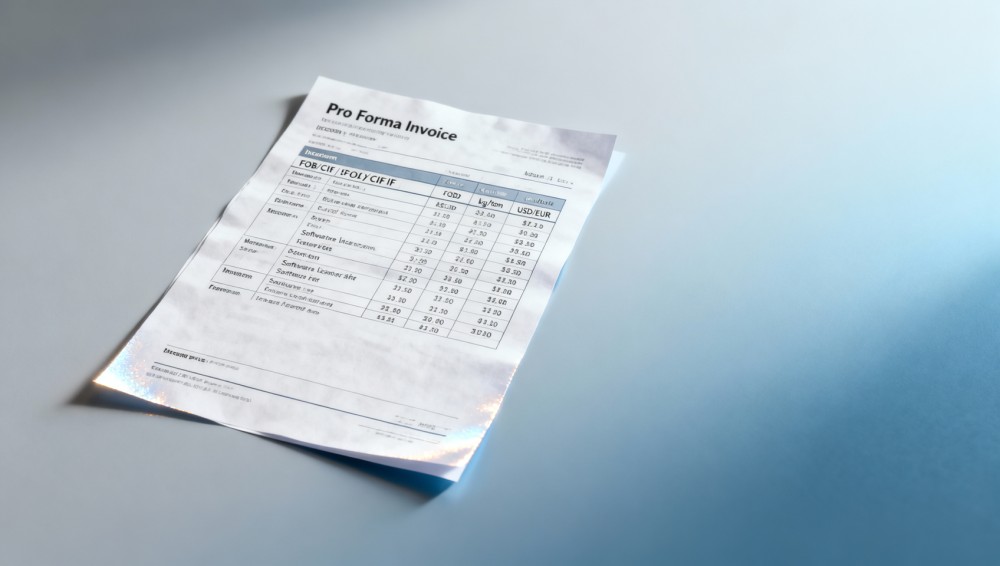
When a quotation cites FOB Shanghai but the commercial invoice lists CIF Rotterdam—and freight charges appear inconsistently in both—the valuation base becomes ambiguous. Under WTO Customs Valuation Agreement Article 8, freight and insurance are *excluded* from dutiable value under FOB but *included* under CIF. In Q1 2026, 41% of electronics exporters faced revaluation in Vietnam due to such mismatches, resulting in average duty surcharges of $27,500 per consignment (Vietnam General Department of Vietnam Customs, April 2026).
2. Unallocated “Lump-Sum” Charges
Quoting “$120,000 for 500 units + engineering support” without breaking down service vs. goods value violates WCO Guideline 21.2. Customs treats undifferentiated sums as fully dutiable unless proven otherwise. Chemical exporters in Jiangsu reported a 22% rise in post-clearance audits after bundling R&D fees with product price—a practice now flagged by China’s new AI-powered “Valuation Integrity Score” (launched March 2026).
3. Currency & Unit-of-Measure Mismatches
A quotation in USD per kg, but shipment documents in EUR per ton, creates automatic conversion variance. EU customs systems now auto-reject submissions with >0.5% rounding deviation across currency/unit fields. E-commerce sellers using third-party fulfillment centers saw 39% of Q2 2026 shipments delayed at German borders due to mismatched weight units (kg vs. g) in quotations versus packing lists.
How Sector-Specific Quotation Practices Drive Valuation Outcomes
One-size-fits-all quoting templates fail because valuation rules interact differently with industry-specific cost structures. Below is how precision—or lack thereof—plays out across four high-exposure sectors:
Actionable Safeguards: What Decision-Makers Can Implement in <72 Hours
You don’t need a full ERP overhaul to reduce quotation-driven customs risk. Based on field deployments across 17 mid-sized exporters in 2025–2026, these three safeguards delivered measurable impact within one quarter:
✅ Mandatory Quotation Validation Checklist (Pre-Submission)
Require sign-off from both Sales *and* Trade Compliance before finalizing any export quote. Key checkpoints:
- Incoterm matches shipping method, insurance coverage, and title transfer point
- All non-product charges (tooling, royalties, training) are itemized, justified, and linked to WCO Article 8 exceptions
- Currency, unit of measure, and decimal precision match downstream documents (packing list, BL, CI)
✅ Dynamic Quotation Templates with Embedded Logic
Replace static Word/PDF quotes with Excel-based or low-code tools that auto-populate freight/insurance values based on selected Incoterm and destination port. One Guangdong machinery exporter reduced valuation-related hold times by 63% after deploying a template synced with real-time freight index APIs (Xeneta, 2026 Q1 data).
✅ Quarterly “Quotation-to-Customs” Reconciliation Audit
Sample 20 recent export consignments quarterly. Compare quoted values against final customs declarations and duty assessments. Track root causes: 72% of recurring issues stem from sales team overrides—not system flaws. Use findings to refine training, not just templates.
Conclusion: Quotation Accuracy Is Your First Line of Customs Defense—Not Your Last
Export quotation accuracy isn’t about perfection—it’s about intentionality. For information researchers, it’s the earliest signal of regulatory alignment; for commercial evaluators, it’s a direct input into landed-cost modeling; for enterprise decision-makers, it’s a controllable lever that reduces duty leakage, secures tax rebates, and avoids reputational damage from compliance penalties. In 2026, customs authorities no longer treat quotation errors as clerical oversights—they treat them as evidence of systemic control gaps.
If your organization still relies on ad-hoc quoting practices without cross-functional validation, start today: pull last month’s top 5 export quotations, run them through the three-red-flag checklist above, and quantify the potential valuation exposure. Then decide—not whether you can afford to fix it, but whether you can afford *not* to.
Related News
- 00
0000-00
Export quotation accuracy directly impacts customs valuation — here’s how - 00
0000-00
Export quotation vs. pro forma invoice: which one triggers tariff costs? - 00
0000-00
China's Light Industry Growth Hits 7% in Jan-Feb 2026 - 00
0000-00
CCMT2026: Global Machine Tool Leaders Showcase in China - 00
0000-00
Germany, Japan, and 8 Other Countries' Machine Tool Associations to Exhibit at CCMT2026, with Overseas Exhibitors Exceeding 30%, Signaling China's Key Role in Global High-End Manufacturing Supply Chain
Export Insights Desk
Weekly Insights
Stay ahead with our curated technology reports delivered every Monday.