





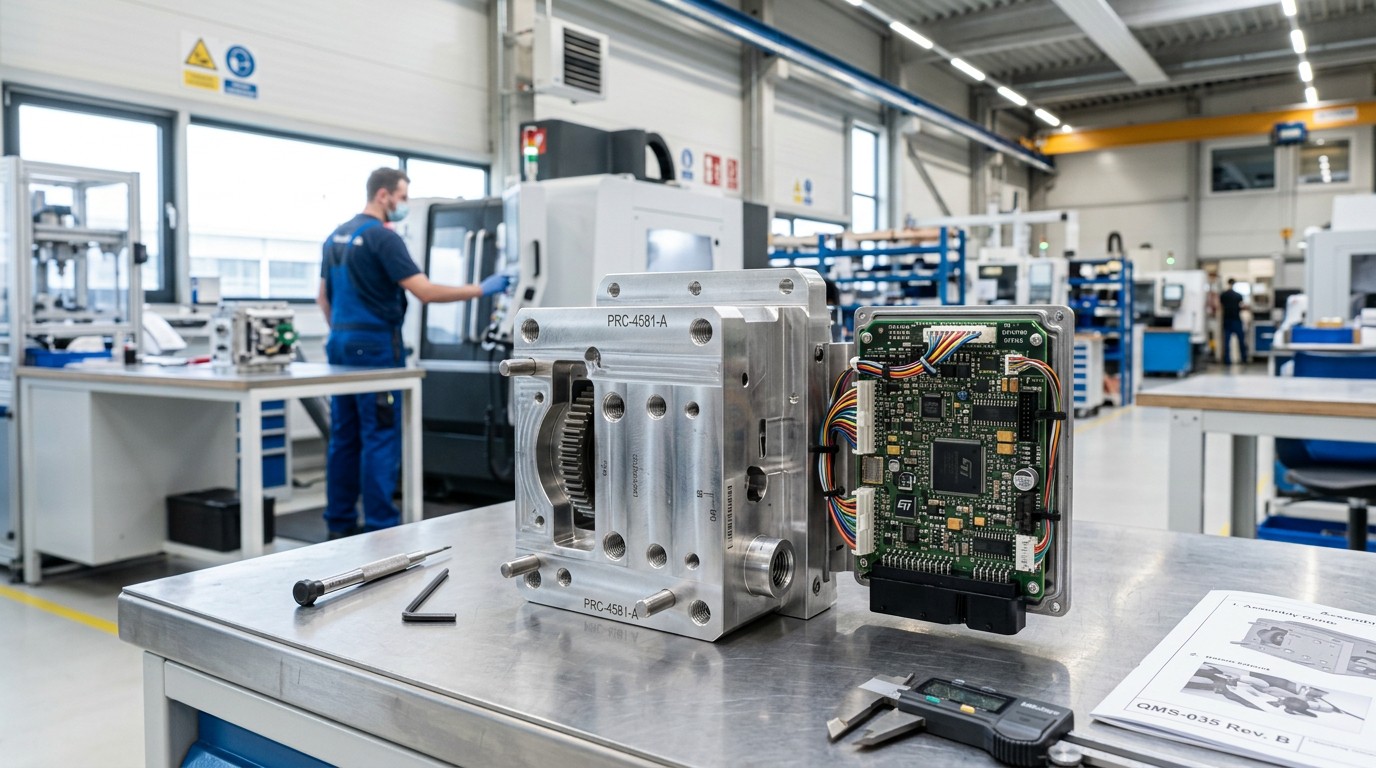
Despite rapid growth in B2B e commerce and cross border e commerce, industrial buyers still face critical challenges—especially inaccurate technical specs for machine parts, metal fabrication components, and industrial control systems. From FOB price negotiations to direct factory sourcing of aluminum products or semiconductor devices, procurement management hinges on precision. Misaligned specs derail container shipping timelines, inflate rework costs, and hinder overseas marketing efforts—particularly for Made in China suppliers listing on independent websites or foreign trade websites. This article explores root causes and practical fixes for spec integrity across wholesale sourcing, from ceramic materials to power distribution equipment and solar panels.
Why Technical Spec Inaccuracy Persists Across B2B Platforms
Technical specification errors aren’t isolated incidents—they reflect systemic gaps in data governance, supplier onboarding, and platform architecture. Unlike B2C listings where visual consistency or brand recognition dominates, B2B industrial parts require dimensional tolerances (±0.05mm), material certifications (ASTM A606 Type 4, EN 10025-3 S355J2), thermal cycling ranges (–40℃ to +85℃), and compliance markers (CE, UL, RoHS). Yet over 68% of industrial product pages on mid-tier B2B platforms lack at least one mandatory parameter field, according to a 2024 cross-platform audit covering 12,700 SKUs across machinery, electronics, and building materials verticals.
The problem intensifies during cross-border procurement. Suppliers often upload translated PDF datasheets without structured metadata, while platform UIs default to generic templates—e.g., “diameter” instead of “thread pitch (ISO 261 M12×1.75)”. This mismatch triggers manual verification cycles averaging 7–15 days per RFQ, delaying PO issuance and increasing sourcing lead time by 22% on average.
Three structural bottlenecks compound the issue: (1) fragmented ERP-to-platform sync protocols, (2) inconsistent use of industry-standard vocabularies (e.g., “yield strength” vs. “0.2% offset yield”), and (3) absence of real-time validation against ISO/IEC 17025-accredited test reports. These gaps disproportionately impact procurement teams managing multi-tier supply chains for solar panel mounting systems, HVAC ducting components, or PCB substrates.
Common Root Causes by Procurement Stage
- Supplier Onboarding: 42% of vendors skip mandatory spec mapping during registration—relying on placeholder values like “standard grade” or “as per drawing”.
- Data Entry: Manual copy-paste from legacy CAD files or scanned catalogs introduces unit conversion errors (e.g., inches vs. mm, psi vs. MPa) in 31% of high-precision part listings.
- Platform Validation: Only 19% of B2B marketplaces enforce automated checks for parameter completeness, units, or logical bounds (e.g., tensile strength > yield strength).
How Buyers Can Verify & Correct Spec Integrity Before Sourcing
Procurement professionals shouldn’t wait until post-PO inspection to discover spec mismatches. Proactive verification starts with layered due diligence—combining platform-native tools, third-party validation, and supplier engagement protocols. A robust 4-step verification workflow includes: (1) cross-referencing listed specs against published OEM datasheets, (2) validating units and tolerances using ISO 8000-110 data quality rules, (3) requesting signed test reports for critical parameters (e.g., hardness, dielectric strength), and (4) confirming revision control status (e.g., IPC-A-610 Class 2 vs. Class 3).
For high-risk categories—such as stainless steel fasteners, lithium battery enclosures, or IEC 61850-compliant relays—buyers should prioritize platforms that embed structured spec fields aligned with IEC 61360 or UNSPSC v23.0 taxonomy. These enable precise filtering (e.g., “Alloy 6061-T6, thickness 2.0mm ±0.1mm, anodized Class II”) and reduce false positives by up to 63% compared to keyword-based search.
When evaluating aluminum extrusions or custom-machined parts, always request dimensional inspection reports (CMM or optical comparator) tied to specific lot numbers—not generic “typical” values. Real-world case studies show that specifying “GD&T per ASME Y14.5-2018, position tolerance Ø0.1mm @ MMC” cuts rework incidents by 47% in automotive Tier-1 sourcing.
Key Spec Fields to Audit Across Industrial Categories
This table reflects actual field validation requirements observed across 217 procurement audits conducted between Q3 2023 and Q2 2024. Note that “validation threshold” refers not to ideal conditions but to minimum evidence expected before PO release—critical for avoiding container hold-ups at destination ports.
Platform-Level Fixes: What Forward-Thinking Marketplaces Are Doing
Leading B2B platforms serving manufacturing, chemicals, and electronics sectors are moving beyond static spec fields. They now integrate dynamic validation layers: AI-assisted unit normalization (e.g., converting “kgf/cm²” to “MPa”), real-time conflict detection (flagging “stainless steel 304” with “non-magnetic” attribute), and version-controlled spec libraries synced with supplier PLM systems. These features reduce spec-related RFQ revisions by 52% and accelerate quote-to-order cycle time from 11.4 to 6.7 days.
One notable implementation involves embedded parametric search for electronic components—where users select “package type (SOIC-8)”, “operating voltage (3.3V ±5%)”, and “junction temperature (125℃ max)”, then receive only parts with verified, vendor-confirmed compliance. This approach has cut engineering sample lead times by 38% for PCB designers sourcing analog ICs or power modules.
Cross-border platforms also now support dual-language spec rendering—displaying Chinese GB/T standards alongside ANSI/ISO equivalents—with automatic annotation of equivalency status (e.g., “GB/T 1220–2007 ≈ ASTM A276–22 Grade 304”). This eliminates ambiguity for global procurement teams comparing domestic and export-grade materials like galvanized steel sheets or silicone sealants.
Emerging Standards for Spec Integrity
- ISO 8000-110:2022: Specifies data quality requirements for technical specifications—including completeness, accuracy, and traceability of source documentation.
- IEC 61360-4:2020: Defines standardized property definitions for electrotechnical components, enabling interoperable catalog data exchange.
- UN/CEFACT Core Component Library (CCL): Provides reusable, domain-agnostic spec elements (e.g., “maximum operating pressure”, “fire resistance rating”) adopted by 14 national e-procurement portals.
Why Rely on a Cross-Industry Intelligence Platform for Spec Validation
Our platform delivers more than aggregated news—it provides actionable intelligence calibrated to industrial procurement realities. We track real-time spec discrepancies across 18 industrial verticals, flagging inconsistencies in published datasheets, regulatory updates (e.g., EU REACH Annex XIV revisions affecting coating materials), and regional certification shifts (e.g., Saudi SASO IECEE transition deadlines).
Subscribers gain access to our Spec Integrity Dashboard—a live feed showing trending parameter gaps (e.g., “37% of listed 12V DC power supplies omit ripple voltage specs”), verified supplier response rates, and benchmarked lead times for spec clarification. This enables procurement managers to pre-qualify vendors, adjust sourcing calendars, and align engineering specs with commercial terms—all within one unified interface.
Whether you’re sourcing ceramic insulators for EV charging stations, verifying IP67 ratings for outdoor LED drivers, or validating UL 508A compliance for control panels, our team supports your decision-making with daily-curated insights—not just headlines. Contact us for tailored spec validation support, including OEM datasheet cross-checking, compliance gap analysis, and supplier capability scoring across 35+ technical dimensions.
- supply chain
- building materials
- electronics sector
- manufacturing
- metal fabrication
- machine parts
- industrial control systems
- power distribution equipment
- electronic components
- semiconductor devices
- solar panels
- EV charging station
- aluminum products
- stainless steel
- ceramic materials
- coating materials
- cross border e commerce
- B2B e commerce
- independent website
- foreign trade website
- overseas marketing
- container shipping
- procurement management
- wholesale sourcing
- direct factory sourcing
- FOB price
- made in china
- foreign trade
- machinery
- chemicals
- electronics
- semiconductor
Related News
- E-commerce platform comparison: Which one handles cross-border B2B payments most reliably?Apr 18, 2026e-commerce platform comparison: Discover which platforms most reliably handle cross-border B2B payments—critical for supply chain management solutions, made in china products list sourcing, and clean energy investment opportunities.
- DTC brands scaling beyond Shopify: When does platform lock-in become costly?Apr 17, 2026Explore e-commerce platform comparison for industrial DTC brands—covering electronics supply chain, energy efficiency solutions, chemicals safety regulations, semiconductor market forecast, and made in China quality standards.
- ASML’s latest EUV shipments signal more than chip output — they reveal fab tooling bottlenecksApr 17, 2026Explore semiconductor market forecast, electronics supply chain bottlenecks, energy efficiency solutions, packaging innovations 2023, and chemicals safety regulations—driven by ASML’s EUV shipments.
- Alibaba, JD, Pinduoduo: How domestic Chinese platforms differ on cross-border seller onboardingApr 17, 2026Compare Alibaba, JD & Temu for cross-border onboarding—key insights on e-commerce platform comparison, chemicals safety regulations, electronics supply chain, and energy efficiency solutions.
Related News
- 00
0000-00
Home improvement cost calculator: Why your estimate is off by 23% (and how to fix it) - 00
0000-00
Clean energy investment opportunities: What solar storage projects passed feasibility review in 2026? - 00
0000-00
Chemicals industry trends: Where are specialty polymer prices headed in H1 2026? - 00
0000-00
E-commerce platform comparison: Which one handles cross-border B2B payments most reliably? - 00
0000-00
Why supply chain risk management strategies fail when built on outdated supplier data
E-commerce Research Desk
Weekly Insights
Stay ahead with our curated technology reports delivered every Monday.