





Do e-commerce business intelligence tools really improve margins, or do they simply add more data to manage? For buyers, operators, and decision-makers, the answer depends on how well these platforms connect e-commerce business intelligence tools with electronic commerce supply chain solutions, manufacturing industry market analysis, and building materials price fluctuations. This article explores whether better visibility into costs, demand, and market shifts can turn industry data into measurable profit gains.
When do e-commerce business intelligence tools improve margins in practice?
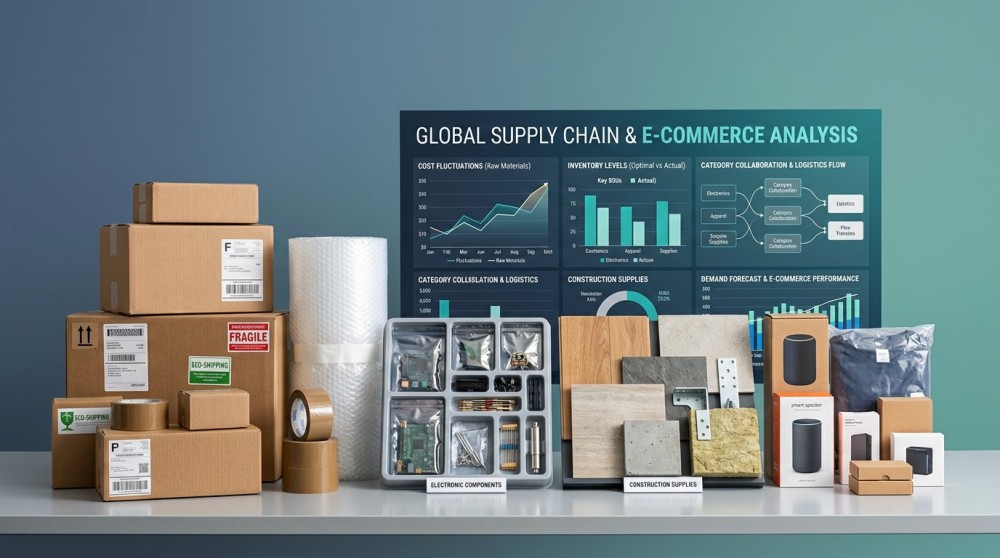
E-commerce business intelligence tools improve margins when they shorten the gap between market change and business response. In multi-sector environments, that means linking sales performance with supplier movement, freight conditions, raw material trends, competitor pricing, and policy updates. If a platform only produces dashboards, the margin impact is often limited. If it helps teams act within 24–72 hours on product mix, pricing, procurement, and inventory, the financial value becomes easier to see.
For operators, the main benefit is not “more data” but fewer blind spots. A product manager selling home improvement items, packaging materials, or electronics accessories may face weekly price changes upstream and daily demand shifts downstream. Without structured signals, teams often react too late. With organized intelligence, they can identify which SKUs need repricing, which categories require stock protection, and which channels should be reduced before margin erosion accelerates.
For procurement staff and commercial evaluators, the strongest use case appears when business intelligence is connected to electronic commerce supply chain solutions. Margin pressure rarely comes from one factor alone. It may come from a 7–15 day supplier lead time extension, a 3%–8% increase in packaging cost, a change in import rules, or a seasonal demand spike in building materials. A useful tool should combine these signals into decisions, not leave them isolated in separate reports.
For enterprise decision-makers, the question is whether visibility can be turned into control. In practice, companies tend to see the best margin improvements when they standardize 3 layers of monitoring: revenue and conversion signals, supply chain cost signals, and external market signals. A comprehensive industry news platform adds value here because it tracks policy, market movements, price changes, corporate updates, and international trade trends across manufacturing, foreign trade, machinery, building materials, chemicals, packaging, electronics, e-commerce, and energy.
What margin gains usually come from
Most margin gains do not come from a single dramatic improvement. They come from repeated operational corrections across a quarter or two. Teams usually identify gains in 4 areas: pricing discipline, inventory control, supplier timing, and category selection. When business intelligence is aligned with real workflows, these areas can be reviewed weekly, monthly, and by campaign cycle rather than only after the quarter closes.
- Pricing discipline: detecting where discount depth is too high relative to demand elasticity or competitor movement.
- Inventory control: reducing dead stock risk and identifying fast-moving SKUs that need earlier replenishment.
- Supplier timing: adjusting purchase windows when chemicals, packaging, or building materials show short-term cost volatility.
- Category selection: shifting traffic and budget to product lines with healthier contribution margins and fewer fulfillment issues.
The key takeaway is simple: e-commerce business intelligence tools improve margins only when they support decisions with a clear owner, a review cycle, and measurable thresholds. Otherwise, they become another reporting layer that consumes time without improving profit quality.
Which data connections matter most for buyers, operators, and decision-makers?
The most useful e-commerce business intelligence tools do not treat e-commerce as a closed system. In many sectors, margin performance depends on what happens beyond the storefront. A packaging seller, electronics distributor, or home improvement merchant needs to understand how manufacturing industry market analysis and building materials price fluctuations may affect landed cost, reorder timing, and demand confidence. That is why integrated market intelligence is more valuable than isolated dashboard metrics.
A buyer typically needs 5 linked data groups: supplier price changes, lead time shifts, freight movement, policy or tariff updates, and category-level demand signals. An operator adds conversion rate, refund rate, ad efficiency, and stock turnover. A commercial decision-maker usually wants a higher-level view: gross margin by category, contribution by channel, and exposure to external volatility over the next 30–90 days. Tools that connect these layers help teams act earlier.
This is where a cross-industry news and intelligence platform becomes practical. Instead of forcing every team to collect fragmented updates manually, the platform organizes information across manufacturing, foreign trade, machinery, building materials, chemicals, packaging, electronics, and energy. That gives users a more realistic basis for pricing reviews, sourcing discussions, category planning, and budget allocation. It also supports content teams that need market context for product communication and campaign timing.
The table below shows which data links are most relevant to margin management in different roles. It focuses on operational use rather than abstract reporting, so procurement teams and business evaluators can translate insights into action within a normal review cycle of 1 week, 1 month, or 1 quarter.
This comparison shows why many firms fail to get value from business intelligence. They buy a system for reporting, but their real need is cross-functional decision support. The more exposed the business is to supply chain movement and industry price fluctuations, the more important these data links become.
A practical data hierarchy for margin control
A workable model is to organize information into 3 levels. Level 1 is internal transaction data such as sales, margin, returns, and inventory. Level 2 is commercial context, including competitor prices, channel performance, and customer demand patterns. Level 3 is external intelligence, including market price fluctuations, policy changes, international trade developments, and supplier-side signals. Margin decisions become stronger when all 3 levels are reviewed together rather than in separate teams.
In a comprehensive industry environment, this hierarchy also helps content and strategy teams. If industry news shows machinery demand weakening, packaging cost rising, or energy prices becoming unstable, category managers can adjust forecasts sooner. That can protect promotional plans and stop aggressive discounting that would otherwise destroy margin in the next campaign cycle.
How to compare tools: dashboard software versus industry intelligence platforms
Not all e-commerce business intelligence tools are built for the same task. Some are strong in internal reporting, while others support market sensing and supply chain awareness. For B2B users, the real comparison is not “tool A versus tool B” alone. It is whether your current reporting stack can explain why margins are changing, or whether you also need external industry intelligence to understand what to do next.
A common mistake is to choose only on visualization quality. Clean charts matter, but they do not tell a procurement manager why a chemical input cost is moving or why a building materials category may face a demand shift next month. A stronger evaluation method uses 4 dimensions: internal analytics depth, external market coverage, supply chain relevance, and decision usability across roles. This is especially important when one team serves e-commerce, foreign trade, and broader industrial product lines at the same time.
The table below compares two common approaches. It is intended as a selection aid for organizations that need both operational visibility and broader industry understanding. Review it before you define procurement scope, because many margin problems sit outside the transaction layer.
The comparison suggests that margin improvement often comes from combining both types of capability. Internal analytics tells you where the problem is. Industry intelligence helps explain why it is happening and whether it is temporary, structural, regional, or policy-driven. That combination is more useful than either system in isolation.
Selection questions procurement teams should ask
Before procurement starts vendor evaluation, teams should define what “margin improvement” means in operational terms. Is the goal to reduce emergency buying? Improve pricing speed? Protect gross profit in high-volatility categories? Or support management with better 30-day and 90-day market visibility? Without this definition, tool comparison becomes too generic and procurement may buy features that are rarely used.
Four checks before shortlisting
- Can the platform connect e-commerce performance data with electronic commerce supply chain solutions and external market signals?
- Does it cover the industries that affect your categories, such as manufacturing, building materials, chemicals, packaging, electronics, or energy?
- Can different roles use it without heavy analyst support, especially within weekly review routines?
- Does the output help with real actions such as supplier timing, category planning, and pricing review rather than only trend watching?
If the answer is weak on these four points, the margin effect will likely be weak as well. The issue is usually not the lack of data. It is the lack of relevance, timing, and connection to commercial decisions.
What should procurement and implementation teams evaluate before buying?
A procurement decision should look beyond subscription price. Many organizations underestimate onboarding effort, internal ownership, workflow change, and content relevance. In practice, implementation quality over the first 30–60 days has a stronger effect on adoption than interface design alone. A tool can appear powerful during a demo and still fail if no one knows which weekly decisions it should support.
For users in multi-industry business environments, selection should start with a role-based requirement map. Information researchers may need sector monitoring and trend alerts. Operators need category-level commercial signals. Procurement buyers need supplier and cost movement context. Decision-makers need condensed views that highlight risk and opportunity over the next quarter. If a platform cannot serve these 4 use cases clearly, adoption tends to drop after the initial setup period.
Another critical point is update rhythm. Some decisions require daily refresh, but others do not. For example, competitor pricing and advertising efficiency may need daily or every 48-hour review, while manufacturing industry market analysis, policy interpretation, and trade developments may be more useful on a weekly basis. Matching frequency to decision type prevents teams from over-monitoring low-impact changes and missing the more strategic signals.
The procurement guide below can help teams assess fit before contract negotiation. It emphasizes practical checkpoints that affect margin improvement, adoption speed, and usability across purchasing, operations, and commercial leadership.
This table highlights a procurement reality: the right platform is not the one with the most features, but the one that fits your decision rhythm and business exposure. For many B2B teams, a pilot covering 2–3 categories over 4–8 weeks is often more informative than a broad rollout from day one.
A simple implementation path
- Define 3–5 margin questions first, such as which categories are vulnerable to supply-side inflation or which SKUs need faster pricing review.
- Map the relevant industries and external signals, including building materials price fluctuations, supplier trends, and policy updates.
- Assign review ownership by role so information researchers, operators, buyers, and decision-makers do not duplicate effort.
- Run a pilot for 4–8 weeks, then measure whether decisions were made earlier, not just whether more reports were produced.
This approach keeps implementation disciplined. It also makes ROI discussions more credible because teams can compare before-and-after decision speed, procurement timing, and category adjustments rather than debating software usage in the abstract.
Common misconceptions, risks, and what to do next
One common misconception is that business intelligence tools automatically improve margins once connected to sales data. They do not. Margins improve when a company changes timing, pricing, sourcing, or category allocation based on the insights. Another misconception is that external market information is “nice to have.” In sectors exposed to supplier volatility, trade rules, or commodity-linked movement, external information may be the missing piece that explains profit decline.
A second risk is overreacting to short-term signals. Not every weekly price change requires immediate action. Teams should define thresholds in advance, such as when lead time extends beyond the usual range, when category margin slips under the planned band for 2 consecutive review cycles, or when policy changes affect import timing. This prevents noise from driving poor decisions and keeps attention on commercially meaningful changes.
A third risk is poor cross-functional adoption. If operators, buyers, and decision-makers each use different assumptions, the same data creates confusion instead of alignment. That is why many firms benefit from a shared industry intelligence source that organizes updates across sectors and makes them easier to interpret for different roles. In a comprehensive industry setting, that shared context is often as important as the analytics tool itself.
The final takeaway is balanced: e-commerce business intelligence tools can improve margins, but only when they are part of a wider decision system that includes electronic commerce supply chain solutions, manufacturing industry market analysis, and organized tracking of building materials price fluctuations and other relevant sector signals. Better visibility alone is not enough. Better response is what protects margin.
FAQ: practical questions buyers and decision-makers ask
How long does it usually take to see value from e-commerce business intelligence tools?
In many organizations, initial operational value can appear within 2–6 weeks if the tool is tied to clear review routines. Margin impact usually takes longer because teams need at least 1–2 planning cycles to adjust pricing, supplier timing, or inventory strategy. The real indicator is not login frequency. It is whether decisions are made earlier and with fewer surprises.
Which businesses benefit most from combining internal analytics with industry news?
Businesses with category exposure to manufacturing, building materials, packaging, chemicals, electronics, or foreign trade tend to benefit most. Their margins are influenced by upstream and external changes that internal dashboards alone cannot explain. If your product portfolio is sensitive to raw material movement, supplier delays, policy updates, or trade conditions, the combined approach is usually stronger.
What should procurement focus on during vendor evaluation?
Focus on 3 things: relevance, implementation, and actionability. Relevance means coverage of the industries and signals that affect your business. Implementation means whether teams can use it within a 2–6 week onboarding window. Actionability means the output helps with price review, supplier timing, inventory decisions, and commercial planning rather than just information display.
Can a comprehensive industry news platform support margin decisions even if it is not a full analytics suite?
Yes, especially when the challenge is understanding external market drivers. A comprehensive platform can help users track policy changes, price trends, technology developments, corporate movement, and international trade signals across multiple sectors. That context supports better product strategy, content planning, sourcing discussions, and management evaluation, even if another tool handles transactional dashboards.
Why choose us for industry intelligence and decision support?
We focus on collecting, organizing, and delivering timely updates across manufacturing, foreign trade, machinery, building materials, home improvement, chemicals, packaging, electronics, e-commerce, and energy. This helps information researchers, operators, procurement teams, business evaluators, and enterprise decision-makers work from the same market context instead of scattered sources and delayed summaries.
If you are assessing e-commerce business intelligence tools, we can help you clarify which external signals matter to your categories, how industry news should support pricing and sourcing decisions, and what monitoring structure fits a 1-week, 1-month, or quarterly review process. We can also support discussions around category selection, supplier exposure, market trend tracking, and content planning based on real sector developments.
Contact us to discuss your key evaluation points, including industry coverage, monitoring scope, update rhythm, procurement decision support, implementation priorities, and custom information needs. If your team needs help comparing signal sources, defining alert priorities, or aligning market intelligence with commercial decisions, that is the best place to start.
- market analysis
- supply chain
- building materials
- industry news
- business intelligence
- corporate updates
- price trends
- manufacturing
- packaging materials
- foreign trade
- international trade
- machinery
- home improvement
- chemicals
- packaging
- electronics
- e-commerce
- electronic commerce
- energy
- policy updates
- e-commerce business intelligence tools
- manufacturing industry market analysis
- building materials price fluctuations
- electronic commerce supply chain solutions
Related News
- Cross-Border E-Commerce Logistics Solutions With Fewer ReturnsApr 20, 2026Cross-border e-commerce logistics solutions that cut returns through smarter supplier sourcing strategies, quality inspection checklist controls, and CE certification process compliance.
- Why e-commerce market analysis techniques miss repeat demandApr 22, 2026E-commerce market analysis techniques often miss repeat demand. Discover how electronics manufacturing trends, packaging industry business intelligence, and building materials market analysis reveal stronger, actionable demand signals.
- Electronic commerce supply chain solutions with fewer returnsApr 22, 2026Electronic commerce supply chain solutions that cut returns with smarter e-commerce market analysis techniques, packaging intelligence, and electronics manufacturing trends—discover practical strategies now.
- Do E-commerce Business Intelligence Tools Really Improve Margins?Apr 22, 2026Discover whether e-commerce business intelligence tools truly lift margins by connecting electronic commerce supply chain solutions, manufacturing industry market analysis, and building materials price fluctuations.
Related News
- 00
0000-00
Two Supreme Organs Issue Anti-Bribery Judicial Interpretation (II) - 00
0000-00
Yangtze River Delta: 163 Projects Boost Manufacturing Sourcing Hub - 00
0000-00
China’s 'AI+Education' Action Plan Opens Standardization Window for AI Ed-Tech Exports - 00
0000-00
HKMA Sets Q3 2026 Timeline for First Stablecoin Licenses - 00
0000-00
China-Sri Lanka Joint Operation Repatriates 125 Telecom Fraud Suspects
E-commerce Research Desk
Weekly Insights
Stay ahead with our curated technology reports delivered every Monday.