





For buyers, project leaders, and decision-makers, evaluating dropshipping suppliers for electronics means balancing speed and scalability against compliance, quality, and fulfillment risks. From real-time inventory management solutions and an automated order management system to wholesale sourcing strategies, overseas warehouse solutions for cross-border e-commerce, and trade compliance regulations for exporters, the real question is not just whether the model works—but whether it can support sustainable, low-risk growth.
In the electronics sector, that question deserves closer scrutiny than it does in many other categories. Small devices, accessories, smart home products, replacement parts, and consumer gadgets can move quickly through dropshipping channels, but they also carry a higher burden of returns, technical claims, battery shipping restrictions, certification checks, and after-sales expectations. A supplier that looks efficient on a marketplace page may become a costly bottleneck once volumes rise above 50 to 100 orders per day.
For research teams, procurement professionals, and operational leaders tracking changes across electronics, e-commerce, foreign trade, and cross-border logistics, the value of dropshipping suppliers depends less on headline price and more on process control. Product authenticity, inventory accuracy, shipping lead time, customs readiness, and defect handling are usually the factors that determine whether the model protects margin or erodes it.
Why Electronics Dropshipping Looks Attractive at First
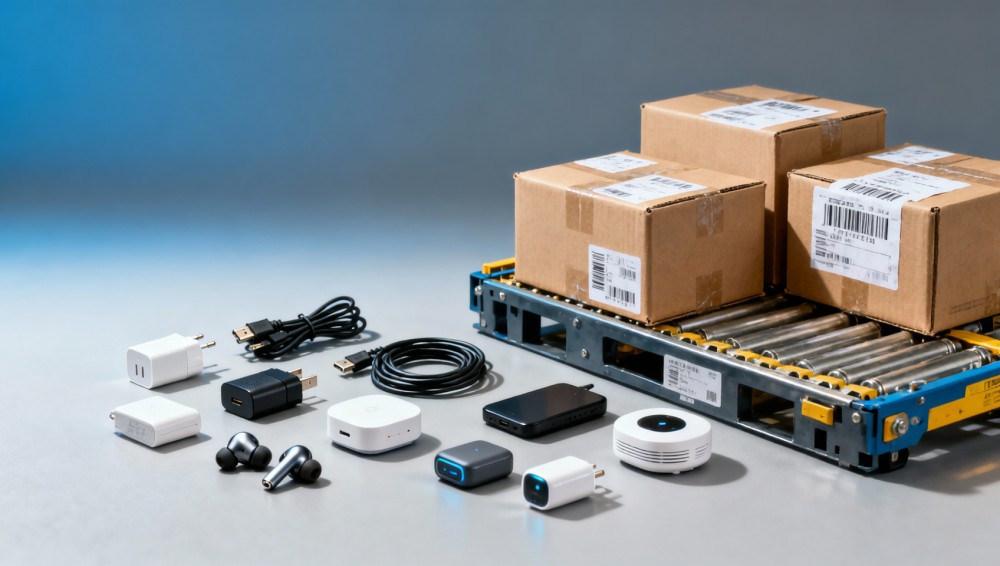
Electronics dropshipping has clear commercial appeal. It reduces the need to hold stock, lowers the upfront cash requirement, and lets sellers test multiple SKUs without committing to a full container or a large wholesale order. In fast-moving categories such as chargers, cables, Bluetooth accessories, smart sensors, and low-cost peripherals, that flexibility can shorten the launch cycle from 6–8 weeks to as little as 7–15 days.
For project managers and business leaders entering new regional markets, dropshipping can also support phased expansion. Instead of building a warehouse network immediately, teams can validate demand in 2–3 target markets, compare return rates, and identify which items deserve local stocking. This model is particularly useful when product demand is uncertain or when technical specifications vary by plug type, voltage range, wireless standard, or local compliance expectations.
Another advantage is catalog breadth. A seller can offer 200–500 electronics-related SKUs online while only actively scaling the top 20–30 products. That range can improve digital shelf visibility, capture long-tail search traffic, and reveal purchasing patterns by region, application, and price band. For industry content teams and market researchers, supplier catalogs also provide a useful signal for tracking trend shifts in accessories, smart home devices, and repair components.
However, the same features that make dropshipping attractive also create hidden operational dependencies. The seller does not directly control picking, packaging, labeling, firmware version consistency, or final-mile performance. In electronics, even a 2%–5% defect rate can quickly consume margin if the item is low value and return shipping is expensive.
Where the model fits best
- Low-to-mid value accessories with stable specifications, such as cables, adapters, stands, and standard chargers.
- Products with low breakage risk and return rates below roughly 3%–8% in normal e-commerce operation.
- New product testing phases where demand data is limited and initial volume is under 300 orders per week.
- Cross-border pilots supported by overseas warehouse backup for best-selling SKUs after validation.
Early commercial upside versus later operational exposure
The model works best when the business treats it as a controlled market-entry tool rather than a permanent substitute for supply chain planning. Once return volumes, customer support requests, and platform claims start increasing, the original savings from zero inventory can disappear. This is why electronics dropshipping is often most effective in stage 1 of market testing, but less reliable as the only fulfillment structure for long-term scale.
The Main Risks: Compliance, Quality, Fulfillment, and Data Accuracy
The biggest risk in electronics dropshipping is not simply late delivery. It is the combination of technical inconsistency and weak accountability across multiple supply chain nodes. Electronics products often involve batteries, wireless functions, voltage specifications, plug standards, material declarations, user safety instructions, and labeling rules. If any one of these elements is missing or incorrect, the seller can face customs delays, platform delisting, or costly return waves within 14–30 days of launch.
Inventory visibility is another major issue. Many suppliers update stock manually every 12–24 hours, while fast-selling products can go out of stock in a few hours during promotions. Without real-time inventory management solutions or API-based synchronization, overselling becomes likely. That creates order cancellation rates that damage marketplace metrics, especially when cancellation exceeds common platform tolerance ranges.
Quality control is harder in dropshipping because inspection is often indirect. A buyer may receive products from different production batches, packaging versions, or component sources even when the SKU title appears unchanged. For electronics, a silent component change can affect charging speed, heat performance, compatibility, or lifespan. This matters for technical evaluators who need repeatable specifications and stable field performance.
Fulfillment risk also expands across borders. Delivery windows advertised as 5–7 days can stretch to 10–20 days if the supplier relies on consolidators, delayed handover, or indirect line-haul routing. For products containing lithium batteries, additional handling and declaration requirements can add another 3–7 business days depending on destination and carrier acceptance rules.
Common risk areas in electronics dropshipping
The table below summarizes the risk areas that matter most when comparing dropshipping suppliers for electronics in cross-border and domestic B2B-informed e-commerce operations.
The key takeaway is that electronics dropshipping risk is usually cumulative. A supplier may appear acceptable in one dimension, such as price or SKU range, while failing in two more important areas such as shipping declaration accuracy and batch stability. Procurement teams should therefore evaluate suppliers using a weighted scorecard, not a single-cost lens.
A frequent misconception
A low unit price does not automatically create a better supply model. If a supplier offers a charger at 8% lower cost but causes a 4% increase in refund claims and a 3-day dispatch delay, the commercial result may be worse than using a supplier with tighter process control. In electronics, service reliability often matters more than the cheapest first quote.
How to Evaluate a Dropshipping Supplier for Electronics
A practical evaluation framework should cover at least four dimensions: product integrity, systems connectivity, logistics capability, and dispute handling. For enterprise buyers and technical reviewers, the process should not stop at catalog review. A real supplier assessment usually requires 2–3 rounds of testing, including sample inspection, order simulation, and exception handling checks.
Start with samples from at least 3 comparable SKUs and 2 production batches where possible. Confirm packaging quality, labeling, function consistency, and included accessories. If the item is technical, such as a power adapter, router accessory, sensor, or LED control component, document core performance points such as voltage input range, connector fit, heat behavior after 30–60 minutes of operation, and visible build quality.
Next, assess data flow. An automated order management system, stock feed synchronization, and tracking upload process should be clearly mapped. Teams should ask how often stock is updated, whether backorders are allowed, how substitutions are approved, and how exceptions are escalated. If the supplier cannot provide a clear process within 5 steps, it often signals operational immaturity.
Finally, review after-sales handling. Electronics returns can involve no-fault returns, compatibility problems, dead-on-arrival claims, and warranty questions. A supplier should define response time, evidence requirements, replacement policy, and return path. A 24–48 hour response window is generally more manageable than open-ended ticket handling.
Supplier evaluation scorecard
The table below can be adapted by sourcing teams, e-commerce operators, and project leaders when comparing 2–5 candidate suppliers.
This type of scorecard helps separate suppliers that are merely available from those that are operationally scalable. It also gives decision-makers a basis for internal sign-off, especially when electronics listings affect brand reputation, warranty exposure, and multi-country sales performance.
A 5-step validation process
- Review product and shipping documentation for at least the top 10 planned SKUs.
- Order samples to 2 destinations if cross-border delivery time is a key metric.
- Test order integration, stock sync, and cancellation logic for 7–14 days.
- Check how the supplier handles one damaged item, one delayed parcel, and one wrong-item claim.
- Approve only after service levels, communication speed, and batch consistency meet internal standards.
When Dropshipping Should Shift to Hybrid or Local Stock Models
A common mistake in electronics commerce is assuming dropshipping should remain the default model once sales accelerate. In practice, the economics often change when a product reaches stable velocity. If a SKU regularly sells 100–300 units per week, the business may gain more control and lower total service cost by moving to a hybrid model that combines supplier dispatch with overseas warehouse solutions for cross-border e-commerce.
Hybrid models are especially useful for electronics with predictable demand, high review sensitivity, or time-critical delivery expectations. For example, replacement adapters, smart home controllers, routers, USB hubs, and installation-related accessories often benefit from local inventory because buyers expect 2–5 day delivery and easier returns. Delays in these categories can directly reduce reorder rates and project continuity.
From a procurement and project planning perspective, the shift point can be estimated using three factors: sales stability over 8–12 weeks, defect and return trend, and the landed cost difference between supplier-direct shipping and regional stock. If the cost gap narrows while return handling becomes simpler, local inventory may produce a better margin profile even if the upfront commitment rises.
This transition is also relevant for B2B-oriented sellers serving installers, contractors, and technical maintenance teams. These buyers often need repeatable specifications and short lead times for ongoing projects. A direct-from-supplier dropship model may work for initial testing, but not always for servicing field schedules, spare part urgency, or multi-location deployments.
Choosing the right fulfillment model by product type
The comparison below shows how different electronics categories may fit different supply models as volume and service expectations change.
The practical conclusion is that electronics dropshipping is often strongest as a front-end growth tool, but weaker as a sole long-term operating model. Once product-market fit is visible, selective stock positioning and clearer service ownership usually create better resilience.
Signals that it is time to change model
- Top SKUs account for more than 60% of total orders over 2–3 months.
- Average delivery complaints rise while demand becomes more predictable.
- Return handling costs exceed the savings gained from not stocking inventory.
- Project customers begin requesting repeat supply windows, batch consistency, or local backup stock.
Practical Recommendations for Buyers, Procurement Teams, and Decision-Makers
So, are dropshipping suppliers for electronics worth the risk? The answer is yes in some situations, but only when the supplier operates with measurable controls and the buyer uses the model for the right products, markets, and growth stage. Electronics is not a category where loose vendor management can be hidden for long. Small failures in product data, packing, or dispatch timing quickly show up in returns, marketplace penalties, and customer churn.
For information researchers and strategic decision-makers, the strongest approach is to view dropshipping as one component in a broader sourcing strategy. Real-time inventory management solutions, automated order management, overseas warehouse support, and clear trade compliance regulations for exporters should be evaluated together, not in isolation. The objective is to build a supply model that can absorb growth without creating unstable service outcomes.
For procurement teams, supplier selection should include technical review, fulfillment tests, and dispute simulation before launch. For project managers, the priority is continuity: can the supplier support a predictable delivery cycle, consistent specifications, and acceptable exception handling over the next 3–6 months? For executives, the focus should be on margin protection and reputational control rather than headline unit cost alone.
If your organization is tracking electronics sourcing trends, cross-border logistics changes, policy shifts, and fulfillment model decisions across multiple sectors, structured market intelligence is essential. Timely updates on trade rules, pricing movements, supplier capability, and logistics conditions can help reduce sourcing blind spots before they become commercial losses.
Final decision checklist
- Use dropshipping for electronics only when SKU complexity, return risk, and compliance exposure are manageable.
- Require clear documentation, stock visibility, and service response standards before onboarding a supplier.
- Move winning SKUs to hybrid or regional stock models when order volume and service expectations justify tighter control.
- Monitor delivery time, cancellation rate, defect trend, and return reasons every week during the first 30–60 days.
Need a clearer sourcing and market view?
If you are evaluating electronics supply options, cross-border fulfillment models, or supplier risk across manufacturing, trade, e-commerce, and industrial channels, now is the time to get a more structured picture. Contact us to explore tailored market insights, compare sourcing strategies, and learn more solutions that support lower-risk growth, better product decisions, and faster response to industry change.
- supply chain
- electronics sector
- manufacturing
- sensors
- lithium batteries
- cement
- wholesale sourcing
- trade compliance
- overseas warehouse
- dropshipping
- inventory management
- order management
- foreign trade
- packaging
- electronics
- e-commerce
- cross-border e-commerce
- dropshipping suppliers for electronics
- overseas warehouse solutions for cross-border e-commerce
- trade compliance regulations for exporters
- wholesale sourcing strategies
- automated order management system
- real-time inventory management solutions
Related News
- 2026 China Space Day Preview Signals Global Standard Alignment for Commercial Space PayloadsApr 25, 2026China Space Day 2026 preview reveals ESA & UAE payload agreements—key for exporters of aerospace electronics, specialty materials, and precision instruments seeking EU/Gulf market access.
- AI+Education Action Plan Launches, Impacting EdTech ExportsApr 24, 2026AI+Education Action Plan launched—key for EdTech exporters targeting ASEAN. Mandates secure AI interfaces & local student data processing. Act now to align.
- OpenClaw AI Agent Deployment Risk Guide ReleasedApr 24, 2026OpenClaw AI Agent Deployment Risk Guide: Key export-adaptation requirements for AI hardware, service robots & industrial agents—act now to avoid customs delays in Shenzhen/Suzhou.
- Are Dropshipping Suppliers for Electronics Worth the Risk?Apr 25, 2026Dropshipping suppliers for electronics: weigh risk, compliance, and growth with real-time inventory management solutions, automated order management, and smarter fulfillment strategies.
Related News
- 00
0000-00
Indonesia to Enforce Energy Labeling on Chinese Appliances, Building Materials from Oct 2026 - 00
0000-00
2026 China Space Day Preview Signals Global Standard Alignment for Commercial Space Payloads - 00
0000-00
Hualin Securities Q1 2026 Report: FX Losses Rise 23% for Exporters - 00
0000-00
Vietnam Mandates QR Traceability for Chinese Packaging Imports from July 2026 - 00
0000-00
Yangtze River Delta Ports Q1 Throughput Up 7.2% Amid RCEP Stability
Electronics & Tech Desk
Weekly Insights
Stay ahead with our curated technology reports delivered every Monday.