





Clean energy market trends are reshaping project timelines as policy shifts, cost pressure, and renewable energy supply chain challenges affect planning across industries. For readers tracking clean energy policy updates, manufacturing industry market analysis, and building materials price fluctuations, this overview highlights the signals that matter most. It offers practical context for procurement, operations, and decision-makers seeking faster, smarter responses to market change.
Across manufacturing, machinery, chemicals, building materials, electronics, packaging, foreign trade, and energy-intensive operations, project schedules are no longer driven only by engineering readiness. They now depend on permit cycles, grid access, equipment lead times, financing conditions, and commodity volatility. A solar rooftop project that once moved from design to commissioning in 4–6 months may now require 6–9 months if switchgear, inverters, transformers, or approvals are delayed.
For procurement teams and business evaluators, the practical question is not whether clean energy investment will continue, but how to plan around timing risk. Delays of even 30–90 days can affect capex release, production expansion, contract delivery, and internal carbon targets. Understanding the market signals behind those delays helps companies compare suppliers more accurately, stage purchases better, and avoid timeline assumptions that were valid 2 years ago but are less reliable today.
Policy shifts are speeding some projects up while slowing others down
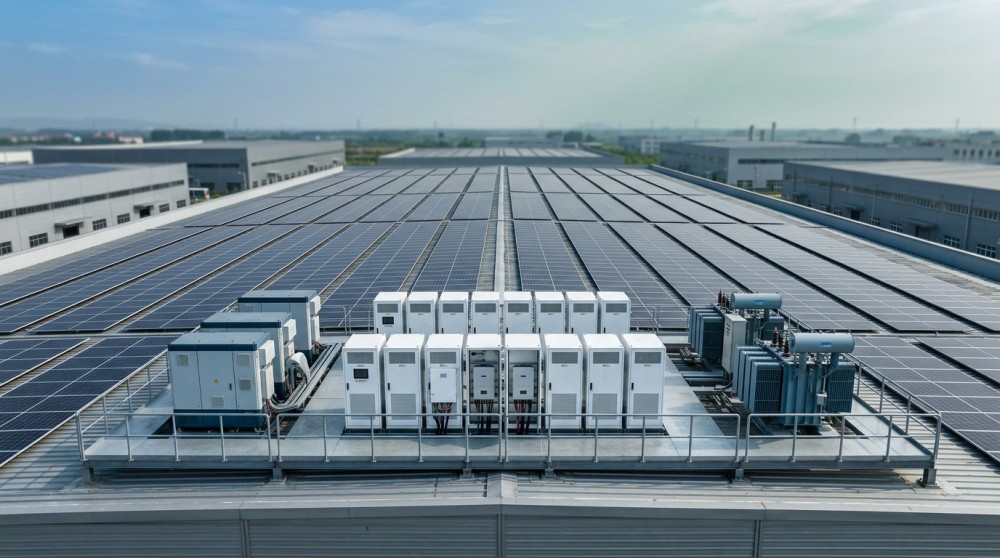
Clean energy policy updates are one of the biggest reasons project timelines have become uneven. Incentives, local content rules, grid interconnection requirements, carbon reporting obligations, and subsidy review procedures can either shorten payback periods or add extra approval layers. In many industrial sectors, a project may look financially attractive in quarter 1, then face a different compliance path by quarter 2 if tariff rules or permitting standards change.
This matters especially for buyers in manufacturing and building materials, where electricity demand is continuous and downtime carries a direct production cost. A factory planning on-site solar, battery storage, or a cleaner thermal system often has a fixed shutdown window of 7–14 days for installation. If permit approvals extend from 3 weeks to 8 weeks, the technical plan may remain sound, but the operating calendar becomes harder to manage.
Why policy timing now affects commercial scheduling
Several trends are happening at the same time. First, governments are tightening reporting around energy use, emissions intensity, and imported materials. Second, utilities are reviewing interconnection applications more carefully because distributed generation volumes have increased. Third, cross-border equipment sourcing can be affected by customs checks, origin documentation, or anti-dumping reviews. Each of these steps can add 2–6 weeks if not identified early.
For corporate decision-makers, the key issue is sequence. A project that used to begin with equipment selection may now need a three-stage review: policy screening, grid or utility consultation, and procurement alignment. Skipping that sequence creates a common risk: hardware arrives before legal, grid, or site conditions are ready. That ties up working capital and can also trigger storage, inspection, or warranty exposure.
Common policy-driven delay points
- Permit and utility application cycles moving from 15–20 business days to 30–45 business days.
- Additional documentation for imported components such as inverters, battery cells, or control systems.
- Environmental or safety reviews for rooftop loading, fire spacing, and electrical protection updates.
- Revisions to subsidy qualification rules that require design or supplier changes before order confirmation.
The table below shows how common policy factors translate into schedule impact across sectors that rely on industry news and procurement planning.
The main takeaway is that policy change does not always mean project cancellation. More often, it changes the order of tasks. Companies that monitor policy updates weekly and build a 2-layer approval plan usually manage timelines better than those treating regulation as a final checklist item.
Supply chain volatility is changing lead times for renewable energy equipment
Renewable energy supply chain pressure remains a defining timeline risk. Although some component pricing has normalized compared with peak disruption periods, lead time stability is still uneven. Modules, inverters, battery systems, transformers, cable, steel structures, and control cabinets move on different supply cycles. For a mid-sized industrial energy project, one delayed electrical component can hold up mechanical completion, testing, and handover.
This is particularly relevant for sectors covered by broad market intelligence platforms. A building materials plant, electronics factory, or packaging facility may source clean energy equipment alongside conventional machinery upgrades. If the clean energy package has a 10–16 week lead time while adjacent process equipment arrives in 6–8 weeks, internal project management becomes more complex. Procurement must compare not just unit price, but schedule reliability and substitution risk.
Where the longest delays often appear
The longest and least predictable delays often show up in balance-of-system items rather than headline components. Buyers may focus on module availability or battery capacity, but projects often slip because of transformers, protection devices, switchgear, monitoring hardware, and civil support materials. In cross-border sourcing, ocean freight and customs checks can add another 2–5 weeks to delivery if documents do not align with local technical requirements.
Industrial buyers should also account for quality control timing. A supplier that promises shipment in 30 days may still require 7–10 days for factory inspection, packaging reinforcement, export clearance, and site coordination. If installation crews are booked on the original schedule, those hidden days translate directly into labor inefficiency or rebooking cost.
Practical checks before issuing a purchase order
- Confirm manufacturing lead time separately from shipping lead time.
- Ask whether key electrical parts are standard stock, configurable stock, or made to order.
- Review substitute component options that do not force redesign or recertification.
- Check whether site installation depends on one long-lead item such as a transformer or EMS controller.
The following comparison helps procurement teams identify which categories usually require the earliest sourcing decisions.
The procurement lesson is clear: timeline control improves when long-lead electrical items are identified at the concept stage, not after price negotiation. In many projects, the lowest quote is not the fastest route to power-on if it depends on custom parts with low buffer stock.
Cost pressure from materials, freight, and financing is reshaping project decisions
Clean energy projects do not move on technical logic alone. They move when economics remain acceptable under changing market conditions. Manufacturing industry market analysis increasingly shows that energy project timing is linked to steel pricing, copper cost, insulation materials, cement demand, freight rates, and financing terms. In building materials and heavy industry, these cost drivers influence both capex budgeting and the preferred start date.
For example, a project budget prepared with a 5% contingency may no longer be sufficient if cable, structural steel, and installation labor rise at the same time. Even when component prices fall in one category, costs can increase elsewhere. A solar structure may become cheaper, while switchgear or logistics become more expensive. That creates a new planning pattern: phased execution instead of single-batch procurement.
Why market pricing affects scheduling
When pricing is unstable, decision-makers tend to delay commitment until internal ROI models are updated. That can add 2–4 review cycles within the company, especially when finance, procurement, operations, and sustainability teams each use different assumptions. In B2B settings, the result is often a project that is technically ready but commercially paused.
Another pressure point is interest cost. If borrowing costs rise or internal investment thresholds tighten, projects with a 3–5 year payback may be reassessed against shorter-return process upgrades. This does not reduce interest in clean energy, but it changes project sequencing. Companies may start with high-load rooftops, compressed air optimization, or smaller battery systems before approving a larger integrated energy package.
Four budgeting adjustments that reduce timeline friction
- Use at least 3 cost scenarios: current quote, moderate increase, and delayed procurement case.
- Separate fixed-price items from indexed items such as freight-sensitive or metal-intensive components.
- Reserve 7%–12% contingency for projects exposed to multiple material categories.
- Link order release dates to milestone approvals rather than one final capex event.
A practical reading of current clean energy market trends is that cost pressure tends to lengthen front-end decision time, but can shorten execution if buyers use staged procurement. Locking the right items first, then timing civil works or secondary packages later, gives operations teams more flexibility without freezing the entire budget at once.
This is where an industry news platform adds value. Tracking commodity movement, policy timing, and supplier activity together gives companies a broader signal set than watching energy headlines alone. Buyers in foreign trade and industrial sourcing can then judge whether a delay is temporary, structural, or supplier-specific.
How procurement and operations teams can build more realistic clean energy timelines
The most effective response to timeline uncertainty is not simply adding more buffer days. It is redesigning project governance around the actual risk points. For users, operators, and purchasing teams, the goal is to build a schedule that reflects permit timing, site constraints, equipment lead time, and commissioning dependencies. In most industrial settings, a realistic clean energy timeline now needs 5 linked phases rather than a single contractor promise.
A five-phase planning framework
- Feasibility screening in 1–2 weeks, including load profile, roof or land condition, and policy check.
- Concept and budget validation in 2–4 weeks, including at least 2 supplier quotations and ROI sensitivity.
- Permits and utility coordination in 3–8 weeks, depending on local review processes.
- Procurement and factory preparation in 4–16 weeks, depending on long-lead components.
- Installation, testing, and handover in 1–4 weeks for smaller systems, longer for integrated projects.
This framework helps different departments work from the same assumptions. Operations teams know when shutdown windows are needed. Procurement understands which purchase orders must be split. Business evaluators can identify the true critical path instead of using a generic supplier estimate. It also allows management to compare projects on a consistent basis across sites and business units.
What buyers should ask suppliers and contractors
Not all vendor schedules mean the same thing. Some quotes refer to ex-works readiness, some to port departure, and others to site delivery without installation. Asking for milestone-level detail reduces confusion. At minimum, teams should request engineering release date, material readiness date, shipment date, on-site arrival date, installation duration, and commissioning prerequisites.
The matrix below can be used during vendor comparison and internal decision review.
In practice, the strongest projects are not those with the shortest paper schedule, but those with transparent assumptions. A schedule that shows 12 weeks with clear dependency mapping is often safer than an 8-week promise without utility, customs, or site-readiness detail.
Frequently asked questions from buyers, operators, and decision-makers
How much buffer should companies add to clean energy project timelines?
A useful working range is 10%–20% schedule buffer for relatively standard projects and 20%–30% for projects involving imported equipment, utility coordination, or custom electrical integration. The exact buffer should be assigned to the riskiest phase rather than spread evenly. For example, if transformers or permits are uncertain, buffer the procurement or approval stage instead of extending installation time that may already be well defined.
Which industries are most exposed to timeline changes right now?
Energy-intensive sectors such as building materials, chemicals, machinery manufacturing, and parts processing tend to be highly exposed because project timing is tied to production scheduling and shutdown windows. Export-oriented businesses may face an additional layer of timing risk due to customs documentation, foreign trade rules, and client delivery commitments. Facilities with continuous operations often feel the impact faster than low-load commercial properties.
What are the biggest mistakes in procurement planning?
Three mistakes appear repeatedly. First, comparing suppliers only on equipment price without matching schedule definitions. Second, treating utility approval as a late-stage task instead of a front-end requirement. Third, assuming mainstream components guarantee a fast project even when auxiliary electrical items need 10–20 weeks. These issues can add more delay than moderate price volatility.
How can an industry information platform support faster decisions?
A strong platform helps by connecting policy updates, price changes, supply chain movement, corporate developments, and international trade trends in one place. That allows procurement teams to see whether a delay signal is isolated or market-wide. It also supports content teams, business evaluators, and managers who need regular visibility into 3 core questions: what changed, how fast it affects operations, and what action should be taken this month or quarter.
Clean energy market trends are changing project timelines because the market now moves through multiple linked systems at once: policy, supply chain, materials, freight, financing, and site execution. Companies that monitor those signals early, compare vendors by milestone detail, and stage procurement around long-lead risks will make better decisions than those relying on outdated timeline assumptions. If your team needs clearer market intelligence, supplier comparison support, or a more practical view of clean energy timing across industries, contact us to get tailored insights, evaluate project options, and explore more solutions for procurement and strategic planning.
- market analysis
- supply chain
- building materials
- industry news
- manufacturing
- switchgear
- cement
- insulation materials
- foreign trade
- international trade
- machinery
- chemicals
- packaging
- electronics
- energy
- clean energy
- renewable energy
- policy updates
- clean energy policy updates
- renewable energy supply chain challenges
- manufacturing industry market analysis
- clean energy market trends
- building materials price fluctuations
Related News
- Saudi Pipeline Attack Cuts 700K bpd Output, Pressures Energy & Chemical Supply ChainsApr 22, 2026Saudi pipeline attack cuts 700K bpd output—disrupting global energy & chemical supply chains, especially LPG-dependent industries in China’s manufacturing hubs.
- Are Energy Management Solutions Worth It for Mid-Sized Plants?Apr 20, 2026Energy management solutions for mid-sized plants: learn ROI, sourcing cost reduction tips, supplier sourcing strategies, compliance needs, and how to cut utility waste with confidence.
- Carbon Footprint Calculation Methods Compared by Data AccuracyApr 20, 2026Compare carbon footprint calculation methods by data accuracy, reporting goals, and supply chain complexity. Learn practical energy management solutions, RoHS and REACH compliance insights.
- Where Energy Management Solutions Cut Costs Most in 2026Apr 20, 2026Energy management solutions cut costs most in 2026 through smarter sourcing, wholesale price comparison, supplier strategies, and carbon compliance—discover where savings scale fastest.
Related News
- 00
0000-00
Two Supreme Organs Issue Anti-Bribery Judicial Interpretation (II) - 00
0000-00
Yangtze River Delta: 163 Projects Boost Manufacturing Sourcing Hub - 00
0000-00
China’s 'AI+Education' Action Plan Opens Standardization Window for AI Ed-Tech Exports - 00
0000-00
HKMA Sets Q3 2026 Timeline for First Stablecoin Licenses - 00
0000-00
China-Sri Lanka Joint Operation Repatriates 125 Telecom Fraud Suspects
Energy Insights Desk
Weekly Insights
Stay ahead with our curated technology reports delivered every Monday.