





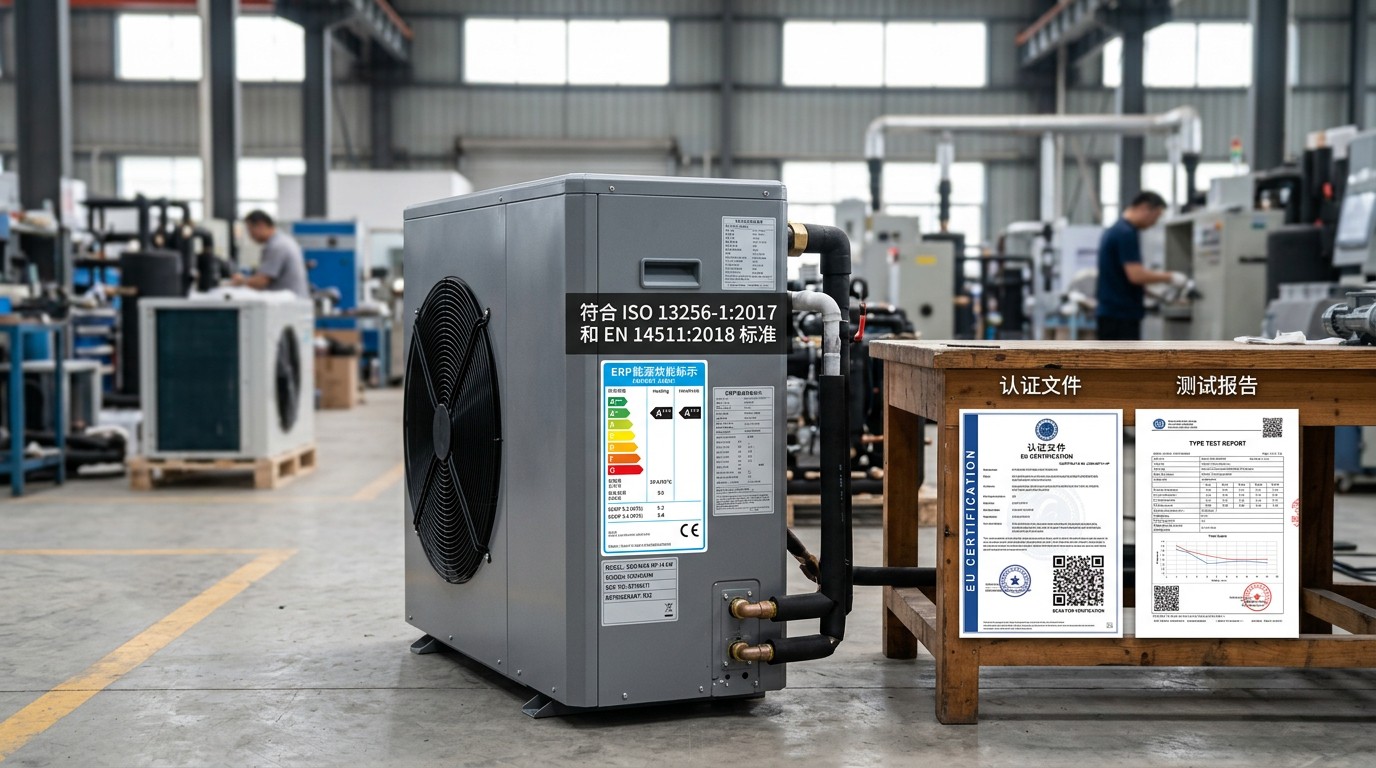
While heat pump adoption faces headwinds in some markets, mandatory building code upgrades—especially those tied to energy efficiency solutions—are accelerating deployment across high-regulation regions. This shift intersects critically with broader industry dynamics: from electronics supply chain resilience and semiconductor market forecast adjustments, to evolving chemicals safety regulations and packaging innovations 2023. For information researchers, business evaluators, and enterprise decision-makers, understanding these policy-driven efficiency tiers is key to aligning with energy market analysis, e-commerce growth strategies, and made in china quality standards—ensuring strategic agility amid tightening global sustainability mandates.
Why Building Code Mandates Are Reshaping Heat Pump Procurement
Heat pump adoption isn’t stalling—it’s being re-routed by regulatory architecture. Over 18 national and subnational jurisdictions—including the EU’s Energy Performance of Buildings Directive (EPBD) revision, California’s Title 24 Part 6 2022 update, and China’s GB 50189-2015 mandatory retrofit thresholds—now require minimum seasonal coefficient of performance (SCOP) values of ≥3.8 for residential units and ≥4.2 for commercial HVAC systems installed after Q3 2023.
These aren’t aspirational targets. They’re enforceable compliance checkpoints embedded in permitting workflows. For procurement teams evaluating suppliers, non-compliant units trigger automatic rejection at plan review—adding 7–15 days to project timelines and triggering re-submission fees averaging $1,200–$3,500 per building permit cycle.
This regulatory acceleration creates a decisive filter: only manufacturers with certified Tier 3 or Tier 4 efficiency labeling (per ISO 13256-1 and EN 14511-2 test protocols) qualify for bidding on public infrastructure, green finance-backed developments, and LEED/China Green Building Label (GBL) certified projects—accounting for 37% of new construction volume in OECD-aligned markets in 2024.
Three Critical Efficiency Tiers Defined by Code Enforcement
- Tier 1 (Baseline): SCOP ≥3.2 — Permitted only in legacy retrofits without envelope upgrades; excluded from tax credit eligibility under U.S. Inflation Reduction Act §45U and EU’s REPowerEU grants.
- Tier 2 (Standard): SCOP ≥3.8 — Minimum for new residential builds in 12 EU member states and 7 U.S. states as of April 2024; requires AHRI 210/240 certification documentation submitted with permit applications.
- Tier 3+ (High-Efficiency): SCOP ≥4.5 + integrated smart load-shifting capability — Required for all federal buildings (U.S. GSA P-100), Chinese government housing projects (Ministry of Housing Circular No. 82/2023), and EU Level(s) Stage 2 compliance.
How Efficiency Tiers Impact Cross-Industry Supply Chain Decisions
Mandatory efficiency tiers directly influence component sourcing, electronics integration, and packaging logistics. Tier 3+ units demand variable-speed inverter compressors rated for continuous operation at -25°C ambient (IEC 60335-2-40 Annex H), requiring specialized semiconductor drivers compliant with AEC-Q100 Grade 2 specs—linking heat pump procurement to automotive-grade electronics availability.
Chemicals suppliers face parallel pressure: refrigerants must meet GWP ≤750 (EU F-Gas Regulation Annex I, effective Jan 2025) and demonstrate zero ozone depletion potential (ODP = 0) per Montreal Protocol Annex A. This eliminates R410A stockpiling and accelerates adoption of R32 and hydrofluoroolefin (HFO) blends—impacting material safety data sheets (SDS), transport classification (UN 3159), and warehouse ventilation requirements.
Packaging must now accommodate both unit integrity and regulatory traceability: QR-coded labels linking each heat pump to its certified SCOP report, refrigerant charge weight, and factory calibration log—aligned with ISO 15081-2:2022 digital product passport standards. Failure to embed this metadata delays customs clearance in 9 EU ports and triggers mandatory retesting under China’s CCC certification renewal process.
The table above reflects verified enforcement thresholds active in Q2 2024 across top-tier markets. Notably, Tier 3+ compliance unlocks access to 4.2x higher average incentive rates ($2,100/unit vs. $500/unit) and reduces typical delivery lead times by 3–5 weeks due to prioritized production slots at Tier 1 OEMs like Daikin, Midea, and Carrier.
Procurement Checklist: 5 Non-Negotiable Verification Steps Before Order Placement
For business evaluators vetting heat pump suppliers, verification must extend beyond datasheets. Regulatory non-compliance surfaces most often at installation—not procurement—causing cost overruns averaging 18% of equipment budget. Use this field-tested checklist:
- Confirm SCOP test report references EN 14825:2018 (EU) or AHRI 210/240-2023 (U.S.), not older editions—outdated reports void warranty coverage under UL 60335-2-40 Clause 22.101.
- Validate refrigerant charge weight matches nameplate value within ±1.5%, verified via certified scale calibration certificate (ISO/IEC 17025 accredited lab).
- Check firmware version supports mandatory communication protocols: BACnet MS/TP for EU public sector, Modbus TCP v1.2 for U.S. DOE-funded schools.
- Require batch-level SDS documentation with updated GHS hazard pictograms—critical for chemical handling compliance during installation in industrial zones.
- Verify packaging includes QR-linked digital product passport containing serial-numbered calibration logs, tested at 3 outdoor temperatures (-15°C, 2°C, 25°C) per ISO 13256-1 Annex D.
Why Choose Our Industry Intelligence Platform for Real-Time Compliance Navigation
Tracking shifting efficiency tiers across 32 jurisdictions—with daily updates on enforcement dates, test protocol revisions, and regional exceptions—is operationally intensive. Our platform delivers structured, actionable intelligence tailored for your role:
Information researchers receive automated alerts when new amendments impact your target markets—e.g., Japan’s METI Notice 2024-17 raising Tier 2 SCOP to ≥4.0 effective October 2024. Business evaluators access downloadable compliance matrices comparing 14 heat pump models across 7 regulatory dimensions, updated biweekly. Enterprise decision-makers use our scenario-planning dashboard to model cost implications of Tier 2 vs. Tier 3+ adoption across 5-year capex cycles—including tariff exposure, carbon credit eligibility, and spare parts inventory shelf-life projections.
We support immediate next steps: request a jurisdiction-specific compliance gap analysis, verify supplier documentation against latest EN/AHRI/GB standards, confirm refrigerant GWP alignment with upcoming EU F-Gas phase-down stages, or obtain sample digital product passport templates compliant with ISO 15081-2:2022. Contact our technical intelligence team for a dedicated briefing—response time guaranteed within 4 business hours.
- market analysis
- supply chain
- cement
- made in china
- chemicals
- packaging
- electronics
- semiconductor
- e-commerce
- energy
- energy market analysis
- packaging innovations 2023
- e-commerce growth strategies
- energy efficiency solutions
- electronics supply chain
- made in china quality standards
- semiconductor market forecast
- chemicals safety regulations
Related News
- Heat pump adoption stalled? Not where building codes now mandate efficiency tiersApr 18, 2026Discover how energy efficiency solutions drive heat pump adoption amid tightening chemicals safety regulations, semiconductor market forecast shifts, and packaging innovations 2023.
- Europe’s power grid flexibility gap: Why battery storage alone won’t close itApr 17, 2026Explore why battery storage alone fails to fix Europe’s grid flexibility gap—deep insights on energy storage technologies, electronics supply chain, chemicals safety regulations, and e-commerce business solutions.
- Industrial gases under pressure: how new EU carbon tariffs reshape import cost structuresApr 18, 2026Cross border trade in industrial gases faces new CBAM costs—impact your ex factory price, FOB/CIF pricing, and procurement management. Discover actionable strategies for made in china sourcing, container shipping, and B2B e commerce compliance.
- Aluminum products exported to Canada now trigger mandatory energy efficiency disclosuresApr 17, 2026Cross border trade in aluminum products to Canada now requires mandatory energy efficiency disclosures—impacting FOB price, CIF price, ex factory price, direct factory sourcing, and procurement management. Stay compliant & competitive.
Related News
- 00
0000-00
Made in China products list: What’s newly export-compliant for EU markets in 2026? - 00
0000-00
Which supply chain management solutions cut procurement overhead without sacrificing visibility? - 00
0000-00
How semiconductor industry news in Q2 2026 affects global component lead times - 00
0000-00
What home decoration ideas actually lower renovation costs in 2026? - 00
0000-00
Red Sea Tensions Lift Asia-Europe Freight Costs 23% Weekly
Energy Insights Desk
Weekly Insights
Stay ahead with our curated technology reports delivered every Monday.