





Foreign trade policy impact on manufacturing is becoming a critical factor in cost planning, reshaping sourcing, production, and pricing across global industries. From building materials price fluctuations and electronic components price trends to semiconductor supply chain updates and clean energy policy updates, businesses need timely manufacturing industry market analysis and business intelligence for market analysis to stay competitive. This article explores how policy shifts are influencing costs, supply chains, and strategic decisions in today’s interconnected markets.
Why are foreign trade policies changing manufacturing costs so quickly?
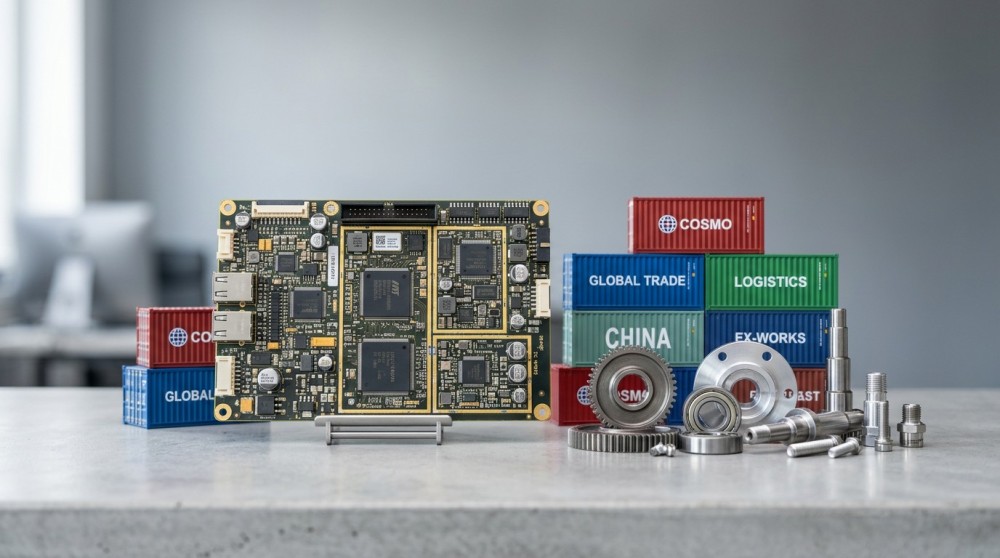
Manufacturing costs no longer move only with raw material prices or labor rates. In many sectors, the foreign trade policy impact on manufacturing now appears first in tariffs, customs procedures, export controls, rules of origin, and environmental compliance requirements. For procurement teams and business evaluators, that means a cost increase may begin long before goods reach the factory gate.
The effect is especially visible in cross-border supply chains that operate on 30–90 day purchasing cycles. A policy revision announced this month can alter landed cost, duty exposure, supplier eligibility, and inventory planning in the next quarter. This is why manufacturing industry market analysis must connect policy tracking with operational planning rather than treating regulation as a separate legal issue.
For industries such as machinery, electronics, building materials, chemicals, packaging, and energy equipment, cost pressure often comes in layers. A new tariff can add direct import cost. A customs inspection change can extend delivery by 7–15 days. A certification update can trigger retesting, relabeling, or alternative sourcing. Each layer raises working capital needs and weakens pricing stability.
This is also why buyers, operators, and decision-makers increasingly rely on business intelligence for market analysis. Timely industry news is not only useful for awareness. It helps teams compare sourcing options, understand price volatility, and avoid decisions based on outdated assumptions about trade flows or supplier competitiveness.
The main policy levers that influence manufacturing cost
Not every policy change affects cost in the same way. Some changes hit immediately at the border, while others reshape supplier networks over 2–4 quarters. Understanding the mechanism helps purchasing and finance teams respond faster.
- Tariffs and anti-dumping measures: These directly change import cost and can quickly alter the preferred source country for metals, chemicals, building inputs, and machinery components.
- Export controls and licensing rules: These are common in electronics, semiconductors, energy technology, and dual-use materials, often limiting supplier choice or extending lead times by several weeks.
- Customs and documentation requirements: Revised declarations, origin certificates, or product coding standards can raise brokerage cost and create clearance delays.
- Sustainability and carbon-related trade rules: These may not always look like traditional trade barriers, but they can add compliance, reporting, and supplier qualification costs.
Where do costs rise first in real manufacturing operations?
In practice, the foreign trade policy impact on manufacturing usually appears in five cost zones: raw material procurement, imported components, logistics, compliance, and inventory. The challenge is that these zones often move together. A factory may absorb a 5% duty shift on one input, but the combined effect of freight delay, higher safety stock, and supplier requalification can be much larger.
For example, building materials price fluctuations can result from both commodity movement and trade restrictions. Electronics manufacturers face similar pressure when electronic components price trends shift because of export licensing, regional tensions, or customs checks. In both cases, the direct purchase price is only one part of the equation.
Operators and planners should also watch the timing of cost exposure. Some policy-related costs are immediate, such as updated import duty or inspection fees. Others appear after 1–3 production cycles, such as line stoppage risk, substitute material validation, or customer renegotiation. The later the response, the more expensive the correction usually becomes.
The table below shows how common trade policy changes connect to manufacturing cost categories across multiple sectors. It is useful for procurement teams that need a quick framework for supplier review and budget adjustment.
The key takeaway is that policy-driven manufacturing cost is rarely a single-line item. It spreads across purchasing, scheduling, compliance, and cash flow. A platform that tracks policy updates, market movements, and supplier-side developments can help teams react before these cost layers accumulate.
Which sectors feel the pressure most?
Sectors with high import dependence or technical compliance needs typically feel policy shifts first. Semiconductor supply chain updates are a clear example because one restricted chip category can affect multiple industries at once, from automation equipment to consumer electronics and industrial control systems.
Clean energy policy updates are another major driver. Solar components, battery materials, electrical equipment, and related machinery can face sudden changes in sourcing attractiveness when subsidy rules, local content requirements, or trade remedies are adjusted. For strategic buyers, the question is not whether policy matters, but which cost layer will move next.
How should buyers compare sourcing options under policy uncertainty?
Procurement decisions are becoming more complex because the cheapest supplier on paper may no longer be the lowest-risk option in practice. When foreign trade policy impact on manufacturing is high, sourcing should be reviewed through at least 4 dimensions: landed cost, lead time stability, compliance burden, and substitution flexibility.
This is particularly important for companies with mixed purchasing profiles. A machinery buyer may source cast parts, electrical assemblies, packaging materials, and chemical inputs from different regions. Each category responds differently to trade restrictions, inspection regimes, and currency-linked freight changes. A single sourcing rule rarely works across all categories.
For business evaluators and enterprise decision-makers, a practical comparison model should cover short-term continuity and medium-term resilience. A supplier that can deliver in 10–20 days with moderate compliance effort may be preferable to one that offers lower unit price but faces 4–8 week policy-sensitive transit disruption.
The following table can support sourcing comparison for manufacturing, building materials, electronics, chemicals, and energy-related procurement projects where policy risk is part of the cost equation.
This comparison shows why procurement should not be guided by unit cost alone. In many categories, the better decision is the one that reduces disruption cost across 1–2 quarters, not the one that appears cheapest in a single quotation round.
A 5-point procurement review checklist
Before confirming a supplier under changing trade conditions, teams should verify the following points:
- Confirm the latest tariff code, origin rule, and documentation requirement for the product category.
- Review lead time in normal and disrupted conditions, such as 2–3 weeks versus 5–8 weeks.
- Check whether substitute materials or components require customer approval, retesting, or line adjustment.
- Estimate inventory buffer requirements, for example 2 weeks versus 4–6 weeks of safety stock.
- Assess whether the supplier can support recurring compliance requests, audit files, or traceability records.
These steps are especially relevant for users and operators who need production continuity, not just purchase approval. When policy risk is rising, procurement and operations must work from the same information set.
What role do compliance, certification, and market intelligence play?
Policy-driven manufacturing cost is increasingly linked to compliance readiness. In many markets, product entry now depends not only on price and availability but also on documentation quality, labeling accuracy, restricted substance controls, origin evidence, and traceability. This is common in electronics, chemicals, packaging, construction materials, and energy equipment.
For that reason, standard monitoring should be part of cost control. Teams do not always need a new certification, but they often need to confirm whether existing declarations, test reports, material statements, or customs files remain acceptable after a policy revision. Missing one document can extend clearance or delay customer acceptance by 1–3 weeks.
A comprehensive industry news platform adds value here because it consolidates policy changes, price changes, technology developments, and international trade trends into one workflow. Instead of chasing updates across scattered channels, decision-makers can compare how a regulation affects building materials price fluctuations, electronic components price trends, or clean energy policy updates in parallel.
That broader view matters for content teams and executives as well. Market communication, pricing strategy, product planning, and supplier negotiation become more effective when they are based on current policy and market signals rather than last quarter’s assumptions.
Why information speed changes business outcomes
For researchers and analysts
Early access to policy and market signals helps analysts identify emerging opportunity windows, such as regional supplier shifts, substitute material demand, or category-level price pass-through before competitors react.
For procurement and operations
Faster information supports quote revision, buffer planning, and supplier communication. In volatile periods, even a 7-day earlier warning can improve shipment scheduling and reduce emergency buying.
For management and commercial teams
Leadership teams can make clearer decisions on regional expansion, category prioritization, and customer pricing when business intelligence for market analysis is tied directly to policy and cost movement.
Common questions, risks, and practical next steps
Companies often underestimate how fast foreign trade policy impact on manufacturing can move from external news into daily operations. The risk is not only higher cost. It is poor timing, weak supplier visibility, and delayed internal response. The right approach is to combine policy monitoring, category review, and sourcing action into one repeatable process.
A practical response model usually includes 3 stages: monitor, assess, and adjust. Monitor updates weekly or biweekly. Assess exposure by product category, origin, and customer requirement. Adjust sourcing, pricing, or inventory before the next procurement cycle closes. This process is especially useful for enterprises dealing with 20–50 active SKUs or multiple supplier regions.
Below are several common questions that buyers, operators, and business evaluators raise when policy changes begin to affect cost planning and sourcing decisions.
How can a buyer tell whether a cost increase is temporary or structural?
Start by separating market price movement from policy-based cost. Freight spikes may ease in weeks, while tariff changes, licensing limits, or carbon-related requirements can last for multiple quarters. If the issue affects supplier eligibility, customs treatment, or certification workflow, it is more likely structural than temporary.
Which products need the closest monitoring?
Focus first on categories with high import dependence, long lead time, and low substitution flexibility. Common examples include semiconductor-linked components, specialized chemicals, energy system parts, precision machinery modules, and regulated packaging materials. These products can create both cost and continuity risk.
What is a reasonable review frequency for policy-sensitive sourcing?
For stable categories, a monthly review may be enough. For electronics, foreign trade, chemicals, and energy-related items exposed to fast policy shifts, weekly tracking is often more practical. During active disruption, teams may need 48–72 hour monitoring on key lanes, supplier countries, or controlled product groups.
Why do many companies react too late?
A common mistake is treating trade policy as background news rather than an operating signal. Another is looking only at supplier quotation changes without checking customs treatment, documentation rules, or substitute qualification timing. By the time the production team feels the impact, options are usually narrower and more expensive.
Why choose us for ongoing industry and market intelligence?
Our platform is built for companies that need more than scattered headlines. We collect, organize, and deliver updates across manufacturing, foreign trade, machinery, building materials, chemicals, packaging, electronics, e-commerce, and energy. That helps users connect policy and regulation changes with price shifts, technology developments, corporate updates, and international trade trends in one place.
If your team needs support with sourcing decisions, market tracking, or commercial planning, you can consult us on specific topics such as tariff-sensitive product categories, supplier region comparison, delivery cycle assessment, certification and documentation checks, sample feasibility, quotation context, and category-level trend monitoring. This is especially useful when you need faster judgment on what to buy, where to source, and how to communicate cost changes internally or to customers.
- market analysis
- supply chain
- building materials
- industry news
- business intelligence
- corporate updates
- raw material prices
- supply chain updates
- foreign trade policy
- price trends
- manufacturing
- automation equipment
- industrial control systems
- electrical equipment
- electronic components
- consumer electronics
- packaging materials
- foreign trade
- international trade
- machinery
- construction materials
- chemicals
- packaging
- electronics
- semiconductor
- e-commerce
- energy
- clean energy
- policy updates
- business intelligence for market analysis
- clean energy policy updates
- electronic components price trends
- manufacturing industry market analysis
- semiconductor supply chain updates
- foreign trade policy impact on manufacturing
- building materials price fluctuations
Related News
- EU Warns Middle East Conflict Risks Growth, Spurs Nearshoring ShiftApr 22, 2026EU warns Middle East conflict threatens growth & fuels nearshoring shift—key insights for procurement, supply chain, and logistics leaders.
- Cross Border Trade Regulations Shifting in Key Export MarketsApr 20, 2026Cross border trade regulations are reshaping sourcing, compliance, and delivery. Learn CE certification process, RoHS compliance testing, supplier sourcing strategies, and cost-saving logistics insights.
- When Ex Factory Price Negotiation Stops Saving MoneyApr 20, 2026Ex factory price negotiation only works when total cost stays low. Learn supplier sourcing strategies, wholesale price comparison, quality inspection checklist, and product certification standards to avoid hidden risks.
- How to do a global trade risk assessment in 2026Apr 21, 2026Global trade risk assessment in 2026: track foreign trade policy changes, economic indicators, price trends, and sourcing risks to make faster, safer decisions across industries.
Related News
- 00
0000-00
Two Supreme Organs Issue Anti-Bribery Judicial Interpretation (II) - 00
0000-00
Yangtze River Delta: 163 Projects Boost Manufacturing Sourcing Hub - 00
0000-00
China’s 'AI+Education' Action Plan Opens Standardization Window for AI Ed-Tech Exports - 00
0000-00
HKMA Sets Q3 2026 Timeline for First Stablecoin Licenses - 00
0000-00
China-Sri Lanka Joint Operation Repatriates 125 Telecom Fraud Suspects
Global Trade Insights Desk
Weekly Insights
Stay ahead with our curated technology reports delivered every Monday.