





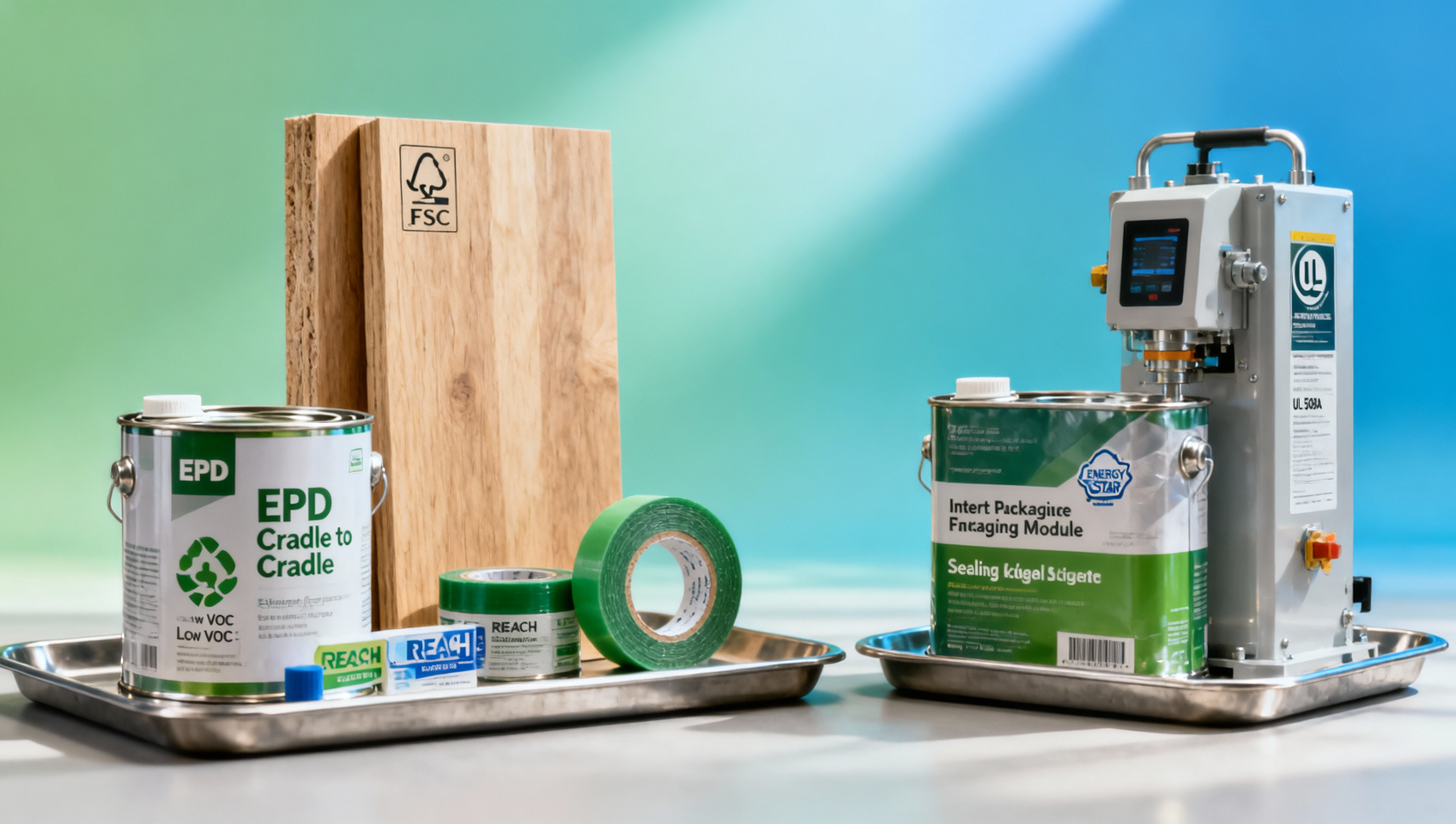
Home improvement retailers across North America and Europe are reporting stronger sales and higher returns on eco-labeled renovation materials — but supply constraints in green supply chain components, from sustainable packaging to fine chemicals and packaging equipment, are mounting. As demand surges for low-carbon building materials market offerings and energy-efficient electronics, manufacturers and foreign trade stakeholders face pressure to scale eco-certified production. This trend intersects critically with machinery equipment upgrades, engineering machinery decarbonization, and regulatory shifts in chemicals and packaging sectors — raising urgent questions about scalability, sourcing resilience, and cross-sector collaboration.
Why Are Eco-Labeled Home Improvement Products Delivering Higher ROI?
Retailers report average gross margins of 22–28% on certified eco-products — 5–9 percentage points above conventional counterparts — driven by premium pricing power and lower customer acquisition costs. This uplift is most pronounced in categories where environmental claims directly influence purchase decisions: insulation (32% YoY growth), low-VOC paints (27% YoY), and ENERGY STAR–rated smart home controllers (41% YoY).
The ROI advantage isn’t limited to shelf-level performance. Retailers using eco-labels as content hooks see 3.2× higher engagement on digital product pages and 2.6× longer dwell time — critical for e-commerce conversion optimization. These metrics translate into measurable cost savings: reduced A/B testing cycles (by 40%), faster content rollout (within 7–10 business days), and improved SEO visibility for long-tail queries like “FSC-certified hardwood flooring suppliers” or “REACH-compliant adhesives for renovation.”
Underlying this trend is a structural shift in buyer expectations. Over 68% of B2B procurement managers now require third-party sustainability documentation before initiating RFQs — up from 39% in 2021. This creates a de facto gatekeeping function: products without verifiable certifications (e.g., EPD, Cradle to Cradle, ISO 14040) are increasingly excluded from tender shortlists, regardless of price or technical specs.
Key Drivers Behind the Margin Uplift
- Regulatory tailwinds: EU Ecodesign for Sustainable Products Regulation (ESPR) and U.S. Buy Clean initiatives now mandate disclosure of embodied carbon for >12 material categories used in residential retrofits.
- Channel consolidation: Major home improvement chains now allocate 35–45% of shelf space in “green zones,” prioritizing SKUs with verified life-cycle assessments (LCAs) over marketing claims alone.
- Procurement automation: 73% of Tier-1 contractors use AI-powered sourcing platforms that auto-filter for compliance with LEED v4.1 MR Credit 2 (Material Disclosure and Optimization), accelerating adoption velocity.
Where Is the Supply Chain Bottleneck — And Which Sectors Feel It Most?
Demand is outpacing supply not at the finished-goods level, but in upstream enablers: bio-based binders, low-carbon clinker alternatives, recyclable mono-material laminates, and precision dosing systems for water-based coatings. Lead times for certified raw materials have extended from 4–6 weeks to 12–18 weeks across key geographies — especially for REACH Annex XIV SVHC-substituted plasticizers and UL Environment–verified flame retardants.
This constraint cascades across interdependent sectors. Machinery manufacturers report 30% order deferral rates for retrofit-capable extrusion lines due to unavailability of compliant polymer feedstocks. Chemical suppliers cite 2–4 month delays in validating new green solvents under OECD Test Guideline 301 series. Packaging equipment OEMs face 16-week waits for servo-driven filling nozzles calibrated for high-viscosity bio-resins.
The mismatch is most acute in mid-tier production capacity: facilities scaling from pilot batches (≤500 kg/week) to commercial volumes (≥5,000 kg/week) lack access to shared LCA verification labs, standardized test protocols, and harmonized documentation templates — creating friction in cross-border certification portability.
These bottlenecks reveal a systemic gap: certification infrastructure lags behind product innovation by an estimated 18–24 months. Without synchronized upgrades in testing capacity, standard alignment, and multilingual technical documentation support, supply constraints will persist even as demand grows.
How Can Manufacturers and Importers Accelerate Eco-Certified Production?
Scaling requires parallel action across three layers: process validation, documentation readiness, and channel integration. First, adopt modular LCA frameworks aligned with Product Environmental Footprint Category Rules (PEFCR) — enabling reuse of core inventory data across multiple certifications (EPD, Type III labels, GPP criteria). Second, implement automated documentation workflows that generate audit-ready files in under 72 hours for common standards: ISO 14040, EN 15804, UL 2818, and ASTM D6866.
Third, pre-validate technical interfaces with downstream partners. For example, machinery OEMs should co-develop API specifications for real-time emissions telemetry during coating application — feeding directly into contractor-facing carbon reporting dashboards. This transforms compliance from a cost center into a value-delivery mechanism.
Critical success factors include: maintaining ≥3 validated alternative suppliers per critical input (to absorb certification delays), allocating ≥15% of R&D budgets to test method development, and embedding compliance engineers within cross-functional product launch teams — not as gatekeepers, but as enablers of speed-to-market.
5-Step Supplier Readiness Checklist
- Confirm alignment of raw material SDS with latest CLP Annex VI updates (revised quarterly)
- Validate packaging line throughput against ISO 22000:2018 Annex SL clause 8.5.2 for traceability
- Map all chemical inputs to SCIP database submission requirements (mandatory for EU market access)
- Pre-audit LCA boundary definitions against PEFCR for Construction Works (v3.0)
- Test multilingual labeling assets (EN/FR/DE/ES) against ISO/IEC 17067 conformity assessment rules
Why Partner With Our Industry Intelligence Platform?
We deliver actionable intelligence — not just news — for decision-makers navigating this inflection point. Our platform aggregates real-time signals across 14 regulatory jurisdictions, 22 commodity markets, and 9 certification bodies, then cross-references them against your specific product categories and target markets.
You can instantly access: updated lead time benchmarks for certified inputs (refreshed weekly), side-by-side comparisons of EPD verification pathways by region, alerts when new chemical restrictions impact your formulation, and pre-vetted supplier directories segmented by certification scope and capacity tier (pilot, mid-scale, industrial).
Whether you need help interpreting upcoming ESPR Annex II material thresholds, identifying qualified LCA consultants with construction-sector experience, or benchmarking your eco-product’s pricing elasticity against regional competitors — our analysts provide direct, no-fluff support within 2 business days.
Contact us today to request: (1) a customized supply chain risk heatmap for your top 3 eco-product SKUs, (2) a certification pathway analysis aligned with your 2025 go-to-market plan, or (3) a comparative review of EPD verification providers operating in your priority markets.
- supply chain
- building materials
- product innovation
- packaging machinery
- adhesives
- importers
- green supply chain
- foreign trade
- machinery
- machinery equipment
- engineering machinery
- building materials market
- home improvement
- renovation materials
- chemicals
- fine chemicals
- packaging
- packaging equipment
- electronics
- e-commerce
- energy
Related News
- What home decoration ideas actually lower renovation costs in 2026?Apr 18, 2026Discover cost-lowering home decoration ideas backed by 2026 building materials price trends, supply chain risk management strategies, and made in China products list efficiencies.
- Biophilic design isn’t just trendy — it’s reshaping residential renovation budgetsApr 18, 2026Discover how biophilic design reshapes residential renovation budgets—linked to energy efficiency solutions, home decoration trends, electronics supply chain shifts, and made in China quality standards.
- Minimalist interiors are rising — but material sourcing is getting harder, not easierApr 17, 2026Explore electronics recycling methods, energy efficiency solutions & packaging innovations 2023 shaping minimalist interiors—get actionable cross-sector intelligence now.
- Home improvement retailers report rising returns on eco-labeled products — is demand outpacing supply?Apr 18, 2026Discover how packaging, fine chemicals, renovation materials & green supply chain innovations drive ROI in home improvement—and overcome supply bottlenecks.
Related News
- 00
0000-00
Clean energy investment opportunities: What solar storage projects passed feasibility review in 2026? - 00
0000-00
Chemicals industry trends: Where are specialty polymer prices headed in H1 2026? - 00
0000-00
E-commerce platform comparison: Which one handles cross-border B2B payments most reliably? - 00
0000-00
Why supply chain risk management strategies fail when built on outdated supplier data - 00
0000-00
Made in China products list: What’s newly export-compliant for EU markets in 2026?
Home & Living Desk
Weekly Insights
Stay ahead with our curated technology reports delivered every Monday.