





In a market shaped by fragmented signals and delayed reporting, machinery industry business intelligence is becoming essential for faster, smarter decisions. From manufacturing industry market analysis to foreign trade policy impact on manufacturing, businesses need reliable data to track building materials price fluctuations, supply chain shifts, and emerging opportunities. This article explores how closing the data gap helps buyers, operators, and decision-makers turn industry updates into practical advantage.
For most readers searching for insights on the machinery industry data gap, the real question is not simply what business intelligence means. It is how to reduce blind spots in purchasing, operations, market assessment, and strategic planning when the available information is incomplete, delayed, or scattered across many channels. The short answer is clear: companies that can collect, verify, and interpret industry signals faster usually make better decisions on sourcing, pricing, inventory, market entry, and risk control.
The biggest concern for machinery buyers, operators, analysts, and business leaders is practical usefulness. They want to know which data matters, where the gaps are, how those gaps affect costs and timing, and what kind of intelligence system can support real decisions. That means this topic should focus less on abstract definitions and more on decision value, data reliability, use cases, and implementation priorities.
Why the machinery industry still struggles with a serious data gap
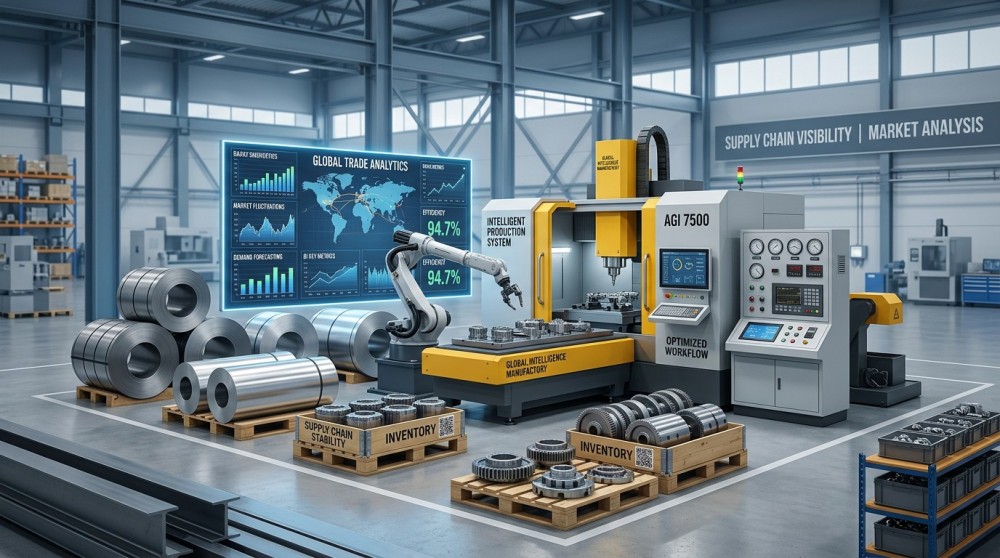
The machinery sector depends on a wide network of suppliers, distributors, manufacturers, logistics providers, policy bodies, and overseas trade channels. Because of that complexity, market information is often fragmented. One source may report equipment demand, another may track raw material pricing, while another covers export controls or industrial policy changes. By the time these signals are manually collected and compared, the market may already have moved.
This is the core of the data gap in machinery industry business intelligence: businesses do not lack information in absolute terms, but they lack organized, timely, comparable, and decision-ready information. For example, a procurement team may know steel prices are changing, but not how those changes affect machinery component lead times. A business evaluation team may see growing export demand, but not the policy or freight risks behind it. An operations manager may detect supply problems only after production schedules are disrupted.
In practice, the gap usually appears in five areas:
- Delayed reporting of market movements and industrial demand shifts
- Weak visibility into supplier conditions and cross-border trade changes
- Insufficient integration of policy, pricing, and operational data
- Overreliance on manual tracking, informal networks, or outdated reports
- Lack of clear interpretation that turns data into action
For decision-makers, this gap creates a direct business problem. It increases the risk of paying too much, buying too late, misreading demand, missing new opportunities, or reacting slowly to external shocks.
What different target readers actually need from machinery market intelligence
Although all readers want better information, their priorities are not exactly the same.
Information researchers need a structured way to track policy updates, market trends, company movements, technology developments, and international trade changes across sectors. They value breadth, source reliability, and the ability to identify meaningful patterns rather than isolated news items.
Users and operators care more about production continuity, equipment availability, maintenance trends, replacement cycles, and potential delays in parts or materials. They need intelligence that connects external developments to workflow impact.
Procurement teams are highly sensitive to building materials price fluctuations, component cost trends, vendor stability, and delivery risk. Their goal is to improve timing, negotiation leverage, and supply resilience.
Business assessment professionals want clearer signals for market sizing, competitor movement, category demand, regional expansion potential, and foreign trade policy impact on manufacturing. They need intelligence that supports evaluation, not just awareness.
Business leaders focus on bigger questions: where margins may tighten, which markets are becoming more attractive, what policies may change cost structures, and where the company should invest attention, resources, or partnerships.
That is why effective machinery industry business intelligence must do more than collect headlines. It must connect multiple forms of data to real business decisions for different roles.
Which data points matter most for faster and better decisions
Not all data has equal value. Many companies waste time tracking broad information but still miss critical indicators. The most useful intelligence in machinery and related industrial sectors usually comes from a combination of the following:
- Market demand signals: order activity, investment trends, industry capacity changes, and downstream sector performance
- Price intelligence: raw material shifts, building materials price fluctuations, energy costs, freight changes, and component pricing
- Policy and regulatory updates: industrial incentives, environmental rules, customs adjustments, export restrictions, and local compliance changes
- Supply chain indicators: supplier expansion or distress, logistics bottlenecks, lead time changes, and regional disruption risks
- Corporate developments: new product launches, factory investment, mergers, financing activity, and strategic partnerships
- Technology signals: automation adoption, smart manufacturing trends, material innovation, and efficiency improvements
- Trade intelligence: destination market trends, tariff changes, foreign trade policy impact on manufacturing, and import-export flow shifts
For many organizations, the challenge is not identifying a single important metric. It is building a mechanism to observe how these metrics interact. A policy change may affect energy costs. Energy costs may affect materials pricing. Materials pricing may affect production schedules and customer quotations. This chain reaction is where manufacturing industry market analysis becomes genuinely valuable.
How the data gap hurts procurement, operations, and strategy
The impact of weak intelligence is often underestimated because it does not always appear as one dramatic failure. More often, it shows up as repeated inefficiency.
In procurement, poor visibility can lead to buying at the wrong time, depending too heavily on unstable suppliers, or failing to anticipate cost increases. Even small pricing errors across large-volume industrial purchases can significantly reduce margins.
In operations, delayed information can create production interruptions, inventory imbalance, and missed delivery targets. If a team learns too late that a key component is constrained or a logistics route is disrupted, the cost is no longer just informational. It becomes operational and financial.
In market evaluation and leadership planning, the data gap can distort judgment. A company may expand into a region with hidden policy risks, underestimate competitor moves, or miss a high-potential niche because market signals were scattered and poorly interpreted. Strategic mistakes are often rooted in incomplete visibility rather than bad intentions.
This is why closing the data gap matters beyond research efficiency. It improves response speed, reduces avoidable risk, and creates a stronger basis for action.
What a practical business intelligence approach looks like in the machinery sector
A useful intelligence framework does not need to be overly complex at the beginning. What matters most is consistency, relevance, and cross-functional value. For machinery businesses and industry-facing teams, a practical system usually includes four layers.
First, source integration. Gather updates from industry news, official policy releases, trade data, pricing channels, company announcements, supply chain feedback, and sector-specific platforms. A comprehensive industry news platform can add value here by reducing the time needed to monitor multiple sectors and converting scattered updates into a usable stream.
Second, signal filtering. Not every update deserves equal attention. Teams should classify information by urgency, business relevance, and likely impact on cost, supply, demand, or compliance.
Third, contextual analysis. This is where raw updates turn into business intelligence. Instead of simply saying that a policy changed or a material price moved, the analysis should explain who is affected, what may happen next, and what actions should be considered.
Fourth, role-based delivery. Procurement teams need different outputs from executives. Operators need different alerts from market researchers. If intelligence is not delivered in the right format to the right people, even good analysis may go unused.
For example, a weekly intelligence summary for leadership might highlight demand shifts, competitor investment, and trade risks. A daily operations alert might focus on supplier disruptions or logistics changes. A procurement dashboard might track pricing volatility and vendor developments. The value comes from decision alignment.
How to evaluate whether your intelligence process is actually useful
Many businesses say they follow industry developments, but fewer can show that their information process improves decisions. To judge whether your machinery industry business intelligence is working, ask a few practical questions:
- Can your team detect major market or supply changes early enough to respond?
- Are policy, price, supply, and company updates connected in one decision view?
- Do procurement, operations, and management receive information tailored to their needs?
- Can analysts explain why a trend matters, not just that it exists?
- Has access to better information improved timing, cost control, supplier choices, or risk management?
If the answer is no to several of these questions, the issue is probably not a lack of data volume. It is a lack of intelligence design. Businesses need systems that transform updates into judgment support.
Useful results often appear in measurable ways: shorter reaction time, better sourcing outcomes, fewer surprise disruptions, stronger market positioning, and improved confidence in planning. These are the signs that the data gap is narrowing.
Where the biggest opportunities are for companies that close the gap first
In a competitive and fast-changing industrial environment, better information is not just defensive. It is also offensive. Companies that close the data gap earlier can identify supplier alternatives before shortages spread, adjust quotations before input costs rise, spot export openings before competitors react, and align content or communication with actual market demand.
This matters especially in cross-sector environments where machinery is linked to building materials, chemicals, electronics, packaging, home improvement, and energy. Signals from one sector often influence another. A platform that tracks multiple industries can help businesses detect these connections earlier and make more informed moves.
For content teams, this also creates a strategic advantage. Instead of publishing broad or outdated summaries, they can produce timely, high-value material based on real manufacturing industry market analysis and foreign trade policy impact on manufacturing. That improves audience trust and commercial relevance.
For investors, buyers, and executives, the opportunity is even more direct: more reliable information supports better capital allocation, stronger negotiation positions, and more resilient growth decisions.
Conclusion: business intelligence is no longer optional in the machinery industry
The machinery industry data gap is not simply a research inconvenience. It is a decision problem that affects procurement, operations, market assessment, and strategic planning. In a market defined by fragmented signals, price volatility, policy shifts, and supply chain complexity, relying on scattered updates is no longer enough.
The businesses that perform better are usually not those with the most data, but those with the clearest, fastest, and most relevant intelligence. By focusing on actionable signals, connecting market changes to business impact, and delivering insights to the right people, companies can turn industry information into practical advantage.
For readers across research, operations, procurement, evaluation, and management, the key takeaway is simple: closing the data gap is one of the most realistic ways to improve decision quality in the machinery sector today.
- manufacturing trends
- market analysis
- supply chain
- building materials
- industry news
- business intelligence
- investment trends
- foreign trade policy
- manufacturing
- smart manufacturing
- cement
- distributors
- foreign trade
- international trade
- machinery
- home improvement
- chemicals
- packaging
- electronics
- energy
- policy updates
- manufacturing industry market analysis
- foreign trade policy impact on manufacturing
- building materials price fluctuations
- machinery industry business intelligence
Related News
- How to Screen an Engineering Machinery Supplier Beyond PriceApr 20, 2026Engineering machinery supplier sourcing goes beyond price. Learn supplier sourcing strategies, factory audit report template checks, quality inspection checklist essentials, and compliance steps to reduce risk and choose reliable suppliers.
- Machinery equipment maintenance tips that prevent downtimeApr 21, 2026Machinery equipment maintenance tips that prevent downtime, plus global trade risk assessment, foreign trade policy changes, and smart manufacturing case studies to help buyers reduce costs and source smarter.
- Machinery industry business intelligence and weak demand signalsApr 22, 2026Machinery industry business intelligence reveals weak demand signals early through machinery supply chain optimization, building materials market analysis, and electronics manufacturing trends.
- Machinery Industry Business Intelligence and the Data GapApr 22, 2026Machinery industry business intelligence reveals the data gap shaping manufacturing industry market analysis, foreign trade policy impact on manufacturing, and faster supply chain decisions.
Related News
- 00
0000-00
Two Supreme Organs Issue Anti-Bribery Judicial Interpretation (II) - 00
0000-00
Yangtze River Delta: 163 Projects Boost Manufacturing Sourcing Hub - 00
0000-00
China’s 'AI+Education' Action Plan Opens Standardization Window for AI Ed-Tech Exports - 00
0000-00
HKMA Sets Q3 2026 Timeline for First Stablecoin Licenses - 00
0000-00
China-Sri Lanka Joint Operation Repatriates 125 Telecom Fraud Suspects
Machinery Industry Desk
Weekly Insights
Stay ahead with our curated technology reports delivered every Monday.