





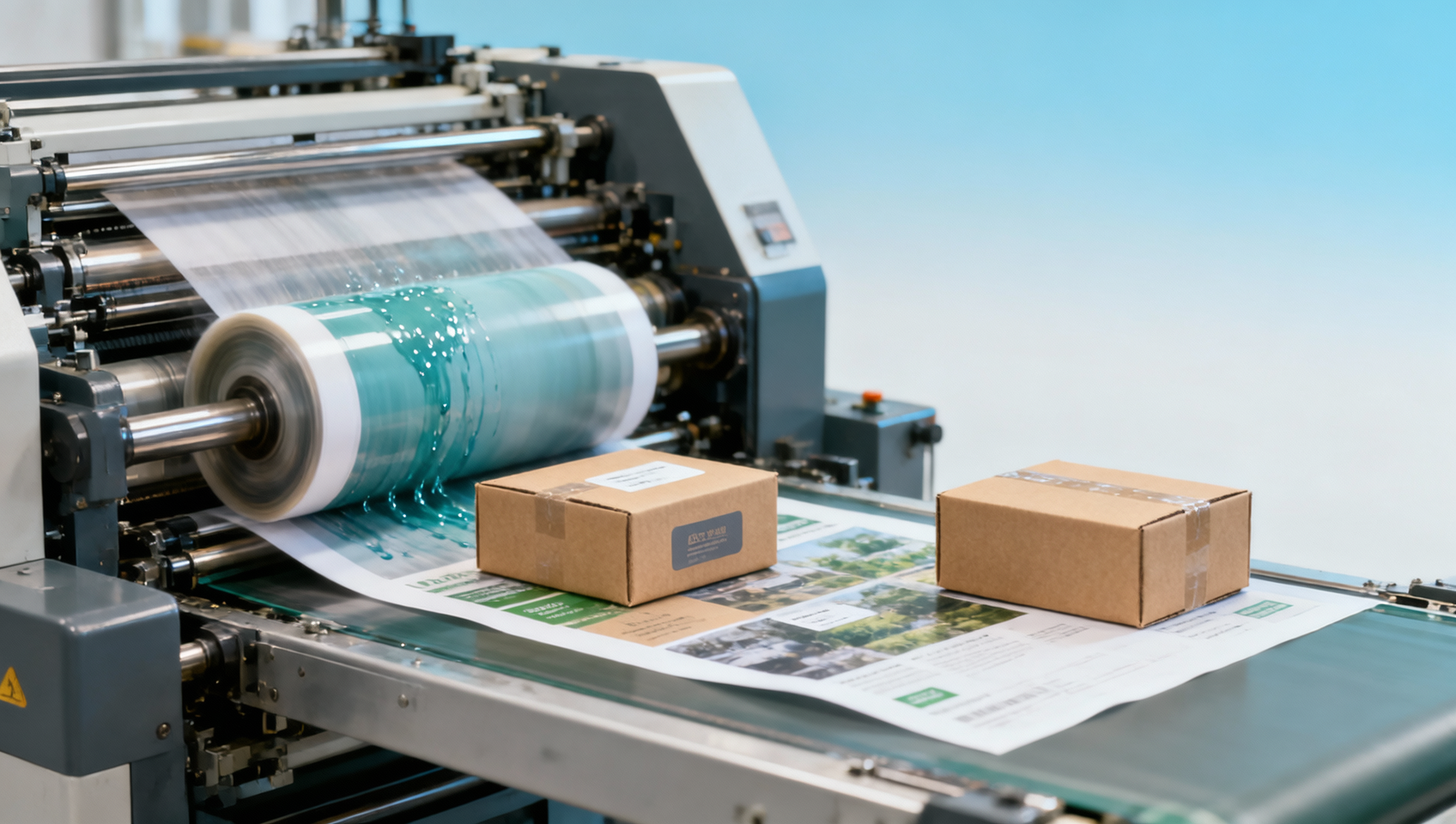
As printing and packaging converters weigh sustainability against operational efficiency, the shift to water-based inks sparks urgent debate—especially amid rising demand for biodegradable packaging, label materials, and eco-conscious paper packaging. While this transition aligns with global trends in specialty chemicals and chemical raw materials, it often triggers costly downtime, impacting logistics packaging timelines and rubber materials compatibility. With evolving regulations, innovations in plastic resins and coating materials, and growing buyer pressure for greener solutions, decision-makers must evaluate trade-offs across the entire value chain—from manufacturing to e-commerce fulfillment.
What Water-Based Inks Actually Deliver — Beyond the Green Label
Water-based inks are aqueous formulations where pigments are dispersed in water, typically stabilized with acrylic or polyurethane resins. Unlike solvent-based or UV-curable alternatives, they contain ≤5% volatile organic compounds (VOCs), meeting EU Directive 2004/42/EC and U.S. EPA Category I limits. Their primary functional advantage lies in reduced emissions during drying—critical for converters operating under tightening air quality permits in China’s Yangtze River Delta or Germany’s TA Luft zones.
However, performance isn’t uniform across substrates. On uncoated kraft paper, water-based inks achieve >90% gloss retention after 72 hours of ambient curing—but on low-surface-energy PE films, adhesion drops by 35–40% without corona pre-treatment. This variability means converters can’t treat “water-based” as a drop-in replacement. It demands substrate-specific validation, ink-drying profile calibration, and press-side rheology monitoring—each adding 2–4 weeks to qualification cycles.
Real-world adoption data from 2023–2024 industry surveys shows only 38% of European flexo converters have fully migrated core SKUs to water-based systems. The top constraint cited? Not cost—but process stability during changeover. Average downtime per line ranges from 12–18 hours for first-time ink switching, rising to 3–5 days when retrofitting dryers or modifying anilox roll specifications.
Downtime Cost Breakdown: Quantifying the Real Impact
Downtime isn’t just idle time—it’s cascading cost across labor, energy, inventory, and opportunity loss. For a mid-sized converter running 3 flexo lines (average speed: 250 m/min), switching one line to water-based inks incurs the following verified cost components:
Total estimated cost per line: $16,300–$27,900. When factoring in lost production (avg. $1,200/hr revenue loss at full capacity), the break-even point typically falls between 6–11 months—depending on ink volume, substrate mix, and regional compliance penalties avoided.
When Does the Switch Make Strategic Sense?
Not all converters benefit equally. The switch delivers strongest ROI in three scenarios:
- Export-focused operations: Brands like L’Oréal, Unilever, and Nestlé now mandate VOC-compliant inks for all EU/UK-bound packaging—noncompliance risks shipment rejection and contract termination.
- High-volume corrugated & folding carton runs: Water-based inks show superior rub resistance on recycled board (tested per ASTM D5264) and reduce static-related misregistration in high-speed die-cutting (≥12,000 cph).
- Integrated print-and-fill facilities: Where packaging lines feed directly into automated filling stations, lower VOC levels eliminate cross-contamination risk in food-grade environments—avoiding FDA 21 CFR 175.105 requalification delays.
Conversely, converters serving short-run premium labels (e.g., wine, cosmetics) or high-barrier flexible packaging may find UV-LED or hybrid systems more viable—offering faster cure times (<1.2 sec), higher gloss (>85 GU), and no substrate swelling concerns on metallized PET.
Procurement Checklist: What to Verify Before Committing
Decision-makers evaluating water-based ink suppliers should prioritize these five non-negotiable checks:
- Substrate compatibility matrix: Request third-party test reports for your exact substrate stack (e.g., BOPP/Alu/PE laminates), not generic lab sheets.
- Drying profile documentation: Confirm minimum dwell time at 60–80°C for your dryer configuration—not just theoretical flash-off specs.
- Resin migration data: Verify compliance with EU 10/2011 for food contact applications, including 10-day migration tests at 40°C.
- Supply chain resilience: Assess supplier’s raw material sourcing—especially acrylic monomers—given recent price volatility (+22% YoY in Asia-Pacific Q1 2024).
- Technical support SLA: Require documented response time (<4 business hours) and onsite engineer deployment window (<72 hrs) for process troubleshooting.
Leading suppliers now offer modular pilot programs: 4-week ink trials with dedicated field application engineers, real-time drying analytics via IoT-enabled dryers, and co-branded sustainability reporting aligned with CDP and SASB frameworks.
Why Partner With Our Platform for Your Ink Transition
As a comprehensive industry news platform tracking packaging, chemicals, and manufacturing sectors across 12 key verticals, we deliver more than headlines—we provide actionable intelligence for procurement and operations teams.
You can access our proprietary resources to support your water-based ink evaluation:
- Live-updated global regulatory tracker covering VOC limits, REACH Annex XIV updates, and China’s GB 38507-2020 enforcement timelines.
- Supplier benchmarking dashboard comparing 23 ink manufacturers on delivery reliability (98.2% on-time avg.), technical support coverage (17 countries), and formulation transparency (full SDS + heavy metal test reports).
- Custom feasibility assessment: Share your press model, substrate list, and annual ink volume—we’ll generate a tailored downtime cost forecast and ROI timeline within 3 business days.
Contact us today to request your free Water-Based Ink Readiness Report, including substrate compatibility scoring, dryer retrofit checklist, and certified supplier shortlist matched to your ISO 9001/14001 requirements.
Related News
- Metal fabrication shops increasingly reject drawings without GD&T annotationsApr 16, 2026Boost cross border trade success: GD&T-compliant drawings cut delays & costs for metal fabrication, solar panels, architectural glass, and industrial control systems.
- Mold making timelines stretch unpredictably when material certificates arrive lateApr 16, 2026Cross-border trade & direct factory sourcing hit delays when material certificates lag—derailing mold making, FOB/CIF pricing, and B2B e-commerce launches. Act now!
- Gaode Launches First Quadruped Robot for Global Industrial UseApr 15, 2026Gaode's first global quadruped robot for industrial inspection & warehouse logistics—CE/FCC-certified, API-open, multilingual. POC in SEA & ME Q3 2026.
- China to Improve Drug Price Mechanism, Boost API Export StabilityApr 15, 2026China's new drug price mechanism targets API export stability—key for cephalosporins, vitamins & antipyretic-analgesics. Stay ahead of global supply shifts.
Related News
- 00
0000-00
PCB board reliability drops sharply when lead-free soldering specs aren’t enforced upstream - 00
0000-00
Semiconductor devices exported to Turkey now require bilingual technical documentation - 00
0000-00
Wire and cable certifications vary wildly across LATAM countries—no single standard applies - 00
0000-00
Power distribution equipment failures spike after humidity exposure during sea transit - 00
0000-00
Variable frequency drives imported into South Africa must now pass local EMC testing
Manufacturing Insights Desk
Weekly Insights
Stay ahead with our curated technology reports delivered every Monday.