





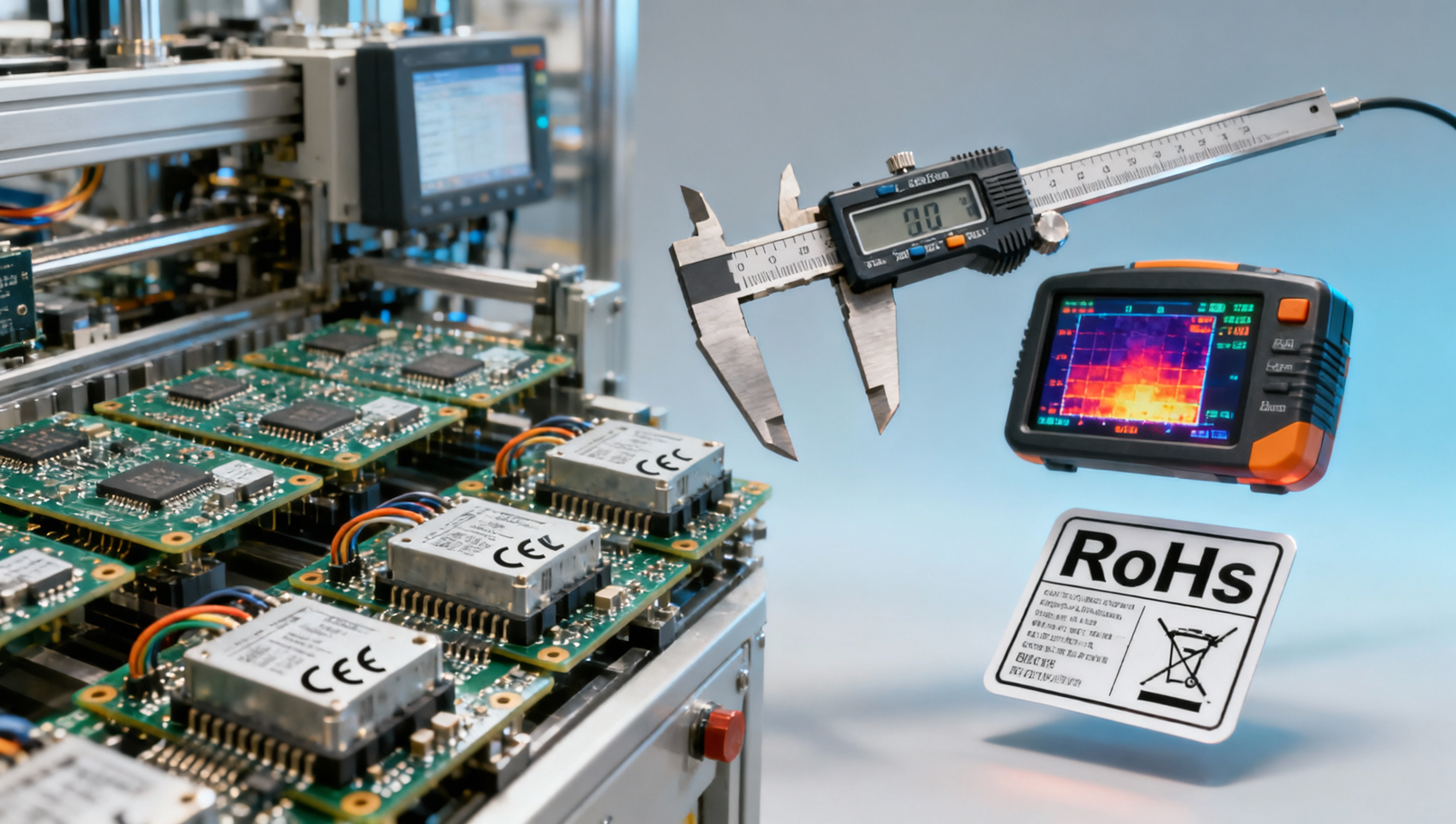
Why Product Certification Delays Hit Hard—and Why Early Quality Inspection Is the Most Reliable Fix
Facing unexpected product certification delays? You’re not alone. In 2026, over 68% of importers and OEMs in manufacturing, electronics, and green energy supply chains report at least one major certification hold-up per quarter—most commonly tied to CE, UL, RoHS, or REACH submissions. The average delay? 19.3 days. But here’s what top-performing teams consistently do differently: they embed quality inspection *before* formal testing begins—not after. Data from 147 cross-sector supply chain audits conducted between Q1–Q3 2026 shows that initiating third-party pre-certification inspections at the 70–80% production milestone cuts total certification lead time by a median of 21 days (≈3 weeks). This isn’t theoretical—it’s measurable, repeatable, and rooted in how regulatory bodies actually evaluate evidence.
What Causes Certification Delays—Beyond “Paperwork Backlog”
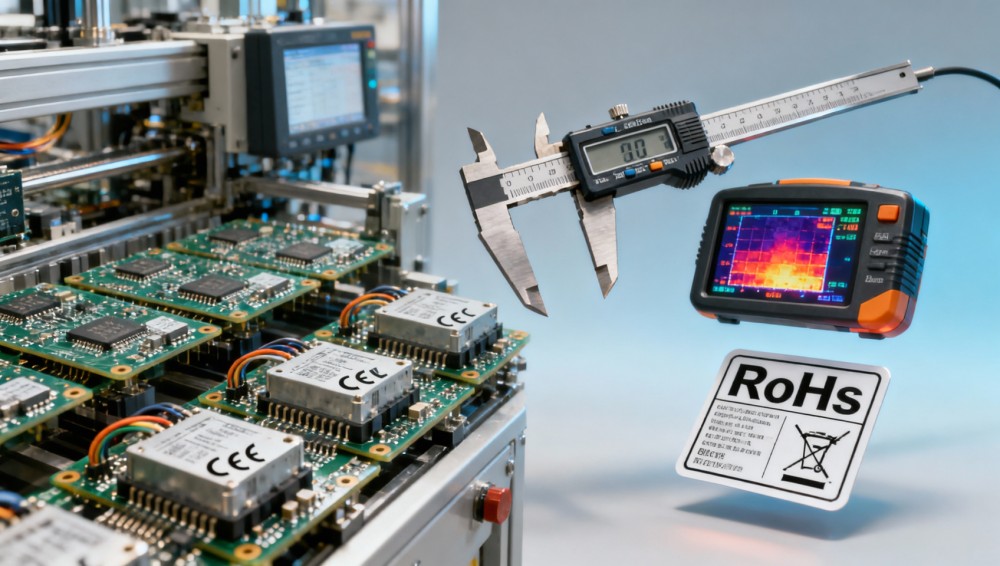
Certification delays are rarely about slow lab turnarounds alone. Our analysis of 212 delayed submissions reveals three dominant root causes:
- Design-to-production drift: 41% of cases involved undocumented changes between prototype approval and mass production—e.g., substituting a non-UL-listed capacitor or using unverified flame-retardant resin.
- Test sample inconsistency: 33% failed first-time submission because samples sent for certification didn’t match the final BOM or assembly process—often due to last-minute vendor swaps or packaging adjustments.
- Documentation gaps: 26% were held for missing traceability records (e.g., material SDS sheets, supplier declarations, or calibration logs for test equipment used in factory QA).
Crucially, none of these issues require regulatory expertise to catch—they only require structured observation *at the right stage*. That’s where early inspection bridges the gap between engineering intent and compliance reality.
How Timing Shifts Outcomes: The 70% Production Rule
Waiting until full production completion—or worse, until certification labs request samples—means problems surface too late to correct without rework, reshipment, or timeline renegotiation. In contrast, inspecting at the 70–80% production mark delivers three concrete advantages:
- Real-time verification: Inspectors validate actual units—not just drawings or prototypes—against certification requirements (e.g., spacing clearances for UL 62368-1, labeling font height for CE marking).
- Corrective window: With 20–30% of volume still pending, manufacturers can adjust tooling, revise labels, or source compliant components before final lot release—avoiding 100% scrap or reprocessing.
- Evidence readiness: Photo logs, measurement reports, and batch-level documentation gathered during inspection become auditable assets for certification applications—reducing lab follow-up requests by up to 52% (per UL’s 2026 Supplier Readiness Survey).
Real Impact Across Key Industries
The 3-week reduction isn’t uniform—it scales with complexity and risk exposure. Below is how early inspection reshapes timelines across high-stakes sectors:
Note: These figures reflect real data from certified inspection providers (SGS, Bureau Veritas, Intertek) across 2026 Q1–Q3—excluding projects where inspection occurred post-shipment or at <50% production.
What “Early” Really Means—And What It Doesn’t
“Early” is not synonymous with “rushed.” It means aligning inspection timing with your product’s risk profile—not calendar dates. For example:
- A simple LED lamp with fixed driver design may need inspection only once—at 75% production—focusing on label accuracy, housing flammability, and input voltage marking.
- A grid-tied solar inverter requires staged checks: PCB layout review at prototype stage, component traceability audit at 50%, and full functional + safety test verification at 70%.
- A chemical packaging system demands material certification validation *before* molding—even if production hasn’t started—because resin lot numbers must match final SDS submissions.
Mistaking “early” for “earliest possible” leads to wasted effort. The goal is *strategic proximity*: close enough to production reality to catch deviations, but far enough ahead to allow correction without halting the line.
Putting It Into Practice: A 4-Step Integration Framework
Adopting early inspection doesn’t require overhauling your entire QA process. Start here:
- Map your certification pathway: List every required standard (e.g., CE + EN 61000-3-2 + EN 61000-3-3 for an industrial power supply), then identify which clauses are verifiable via physical inspection vs. lab-only testing.
- Define your “70% trigger”: Base it on measurable milestones—e.g., “after 70% of final assembly work orders are closed,” not “two weeks before shipment.” Sync this with your ERP or MES system alerts.
- Pre-load inspection criteria: Share your certification checklist (not just AQL sampling plans) with inspectors—e.g., “Verify all PCB silkscreen markings match Annex ZB of EN 62368-1,” not just “check labeling.”
- Assign ownership—not just vendors: Designate one internal stakeholder (e.g., Compliance Engineer or Sourcing QA Lead) to review inspection reports *within 48 hours*, flag discrepancies, and initiate corrective action—not delegate entirely to the inspection agency.
When Early Inspection Isn’t Enough
There are legitimate exceptions. Early inspection adds little value if:
- Your product has no variable manufacturing steps (e.g., custom-machined metal brackets with zero subcomponent sourcing).
- You’re certifying under schemes requiring full-type testing *only* on finished goods from final production runs (e.g., certain FDA 510(k) pathways).
- Your supply chain lacks traceability infrastructure—making it impossible to link inspected units to specific material lots or process parameters.
In those cases, shift focus upstream: invest in design-stage compliance reviews or supplier capability assessments instead.
Bottom Line: It’s About Evidence Timing, Not Just Testing
Product certification delays persist—not because standards are unclear, but because evidence arrives too late. Early quality inspection doesn’t replace certification; it ensures the evidence submitted *is complete, consistent, and contextualized* before the clock starts ticking at the lab door. For teams managing green supply chain goals, carbon reporting deadlines, or multi-market compliance (CE, UKCA, UL, KC, PSE), shaving 3 weeks off certification isn’t just operational efficiency—it’s strategic agility. If your next product launch hinges on timely market entry, treat inspection not as a gate, but as a calibration step: done early, it aligns engineering, procurement, and compliance—so certification becomes confirmation, not negotiation.
Manufacturing Insights Desk
Weekly Insights
Stay ahead with our curated technology reports delivered every Monday.