





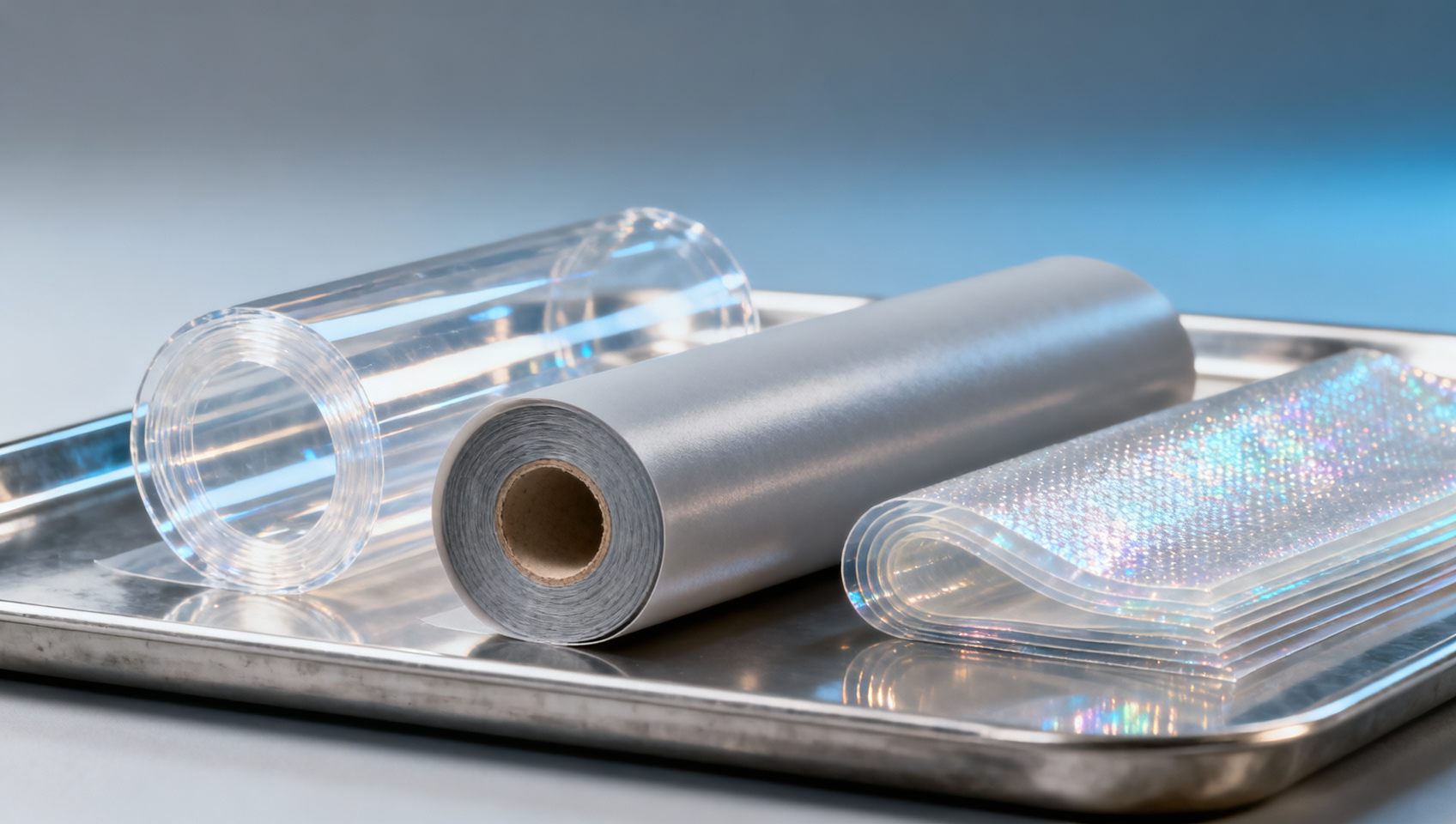
In 2025, biodegradable films surged in the packaging industry amid rising global trade trends, stricter policy updates on single-use plastics, and growing corporate commitments to clean energy and sustainable supply chains. Yet as demand accelerates—fueled by cross-border e-commerce expansion and electronics sector innovations—moisture barrier performance remains a critical bottleneck. This gap challenges manufacturers of packaging equipment and fine chemicals alike, especially against backdrops of tightening building materials market regulations and evolving home improvement sustainability standards. For decision-makers, procurement specialists, and technical users, understanding this tension between eco-advancement and functional limitation is key to strategic sourcing, R&D prioritization, and compliance planning.
Why moisture resistance still defines real-world viability
Biodegradable films—including PLA, PBAT, PHA, and starch-blend variants—now account for 18–22% of new flexible packaging orders in EU and North American markets (Q1 2025 data from Packaging Insights Tracker). Yet over 63% of packaging engineers report failing humidity tests at RH >75% and 25°C for durations exceeding 48 hours—a threshold required for food, pharmaceuticals, and high-value electronics packaging.
This isn’t theoretical: moisture ingress triggers polymer hydrolysis, dimensional instability, seal integrity loss, and accelerated microbial growth. In logistics scenarios with 7–15 days of sea freight or 3–5 days of cross-border air transit, uncoated biodegradable films often exceed 90% WVTR (Water Vapor Transmission Rate) limits—versus the <2 g/m²·day standard for dry goods and <0.5 g/m²·day for moisture-sensitive items like lithium battery components.
The mismatch stems from molecular structure trade-offs: biodegradability requires ester bonds vulnerable to hydrolysis, while effective moisture barriers demand dense crystallinity or hydrophobic surface modification—both of which hinder enzymatic or microbial breakdown. As such, “fully compostable + high-barrier” remains a dual-objective challenge—not yet solved at commercial scale.
How do leading solutions compare across key functional metrics?
We analyzed 12 commercially available biodegradable film grades launched between Q4 2024 and Q2 2025, benchmarked against ISO 15106-3 (WVTR), ASTM D882 (tensile strength), and EN 13432 (industrial compostability). Results reveal three distinct performance tiers:
Note: Barrier-enhanced options reduce WVTR by 90–95% versus base polymers—but sacrifice 20–40% tensile strength and increase cost by 2.3–3.7×. PHA-based films show strongest promise for high-moisture applications but remain limited to small-batch production (<5,000 tons/year globally) and require specialized extrusion lines compatible with ≤180°C processing.
Which applications justify premium barrier biodegradable films?
Not all use cases demand equal moisture protection. Prioritization should align with product sensitivity, shelf life, and distribution complexity:
- High-priority (barrier essential): Ready-to-eat meals (shelf life ≥12 months), medical device pouches (ISO 11607 compliance), lithium-ion battery transport liners (IEC 62133-2 humidity thresholds), and organic nutraceuticals (USP <671> moisture limits).
- Moderate-priority (hybrid approach viable): Coffee pods (nitrogen-flushed, 6–9 month shelf life), frozen meal trays (low-temp storage reduces hydrolysis rate), and cosmetic sachets (alcohol-based formulations lower water activity).
- Low-priority (standard biodegradable sufficient): Dry grocery bags (rice, pasta), non-food retail wraps, and short-cycle promotional packaging (≤30-day shelf life).
For electronics OEMs sourcing protective inner layers, even 0.3 g/m²·day WVTR exceeds IPC-CC-830B Class 3 requirements for conformal coatings—making PHA or nanocoated blends the only viable certified options in 2025.
What procurement teams need to verify before ordering
Procurement decisions must go beyond “biodegradable” labeling. Key verification points include:
- Third-party barrier certification: Request full test reports per ISO 15106-3 (not just “compliant” claims) at both 23°C/50% RH and 38°C/90% RH—conditions reflecting warehouse and transit environments.
- Compost validation scope: Confirm whether EN 13432 certification covers the *entire* film structure—including coatings, inks, and adhesives—not just the base polymer.
- Processing compatibility: Verify thermal stability (max extrusion temp ≤175°C for PHA, ≤200°C for coated PLA) and machine-direction orientation tolerance—critical for high-speed form-fill-seal lines (>120 ppm).
- Supply chain transparency: Require full material safety data sheets (MSDS) and traceability down to resin supplier—especially given tightening REACH Annex XIV restrictions on certain plasticizers used in barrier coatings.
Lead times for certified barrier films now average 6–8 weeks (vs. 2–3 weeks for standard PLA), due to multi-step coating and aging protocols. Early engagement with suppliers during RFP stages avoids 3–5 week delays in pilot validation cycles.
Why partner with our industry intelligence platform for sourcing decisions
Our platform delivers more than headlines—we provide actionable intelligence calibrated for your role:
- Real-time regulatory alerts: Track live updates across 32 jurisdictions—including EU PPWR revisions, US FDA guidance shifts, and ASEAN harmonized composting standards—mapped directly to your target markets.
- Supplier capability database: Filter verified biodegradable film producers by certified output capacity (≥5,000 tons/year), barrier-grade certifications held, and current lead time windows (updated weekly).
- Technical specification matching: Upload your moisture barrier requirement (e.g., “≤1.2 g/m²·day @ 38°C/90% RH, EN 13432 compliant”) and receive pre-vetted shortlists with full test reports, MOQs, and sample availability status.
- Cross-sector benchmarking: Compare pricing, delivery timelines, and technical trade-offs not just across packaging suppliers—but also against alternative sustainable formats (e.g., molded fiber, cellulose films, aluminum-laminated mono-materials).
Contact us today to request: (1) latest barrier film price index (Q2 2025), (2) list of 7 suppliers qualified for electronics-grade moisture barrier films, or (3) customized regulatory readiness checklist for your next product launch in EU/UK/APAC markets.
Packaging Industry Desk
Weekly Insights
Stay ahead with our curated technology reports delivered every Monday.