





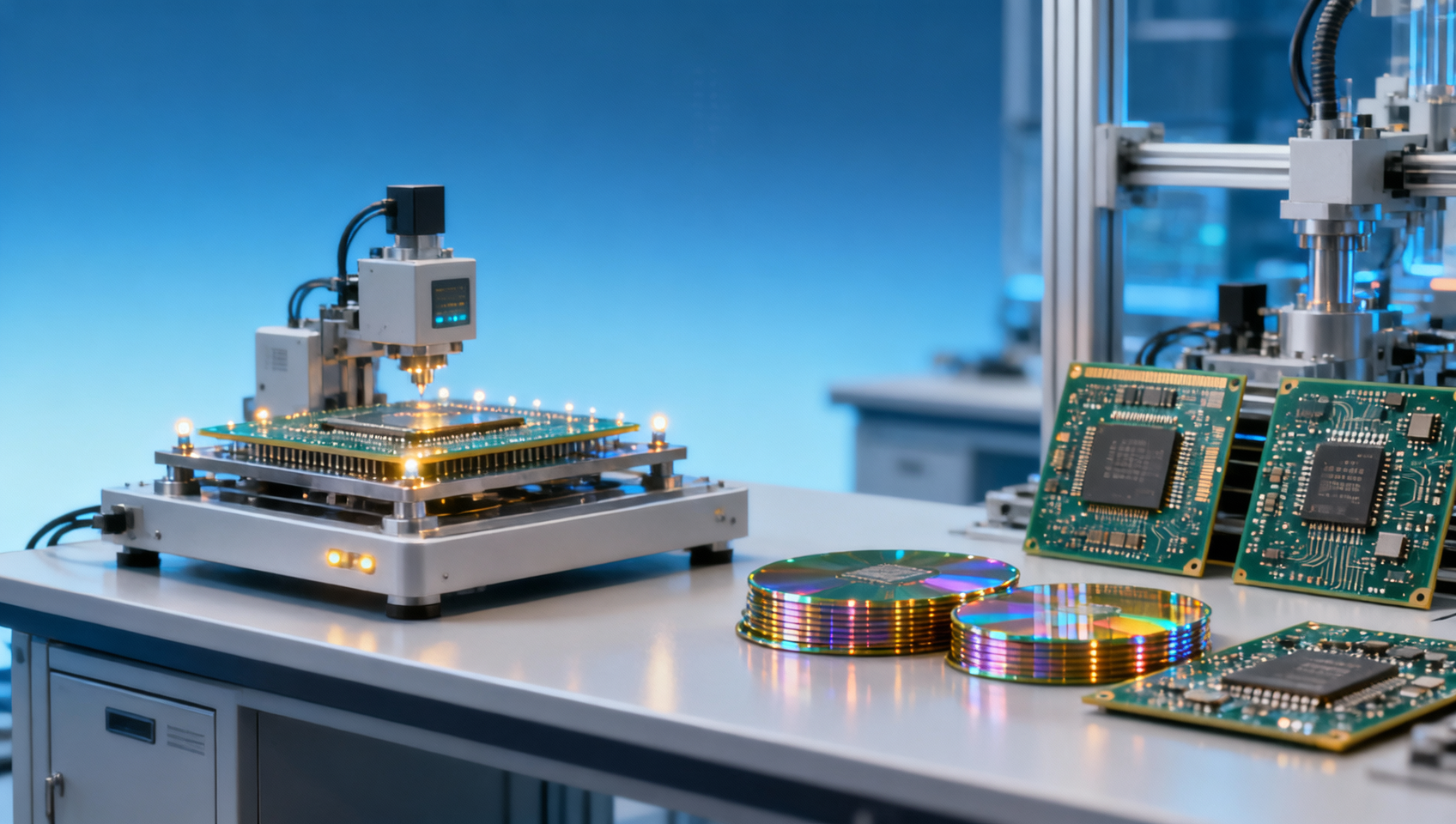
The Chinese Ministry of Education has announced adjustments to the 2026 'Strong Foundation Plan,' shifting focus from purely theoretical disciplines to specialized fields like integrated circuits, intelligent equipment, and new materials. This move aims to align talent supply with the demands of high-end manufacturing, offering new opportunities for foreign tech firms in China.
Event Overview
The 2026 'Strong Foundation Plan' will reduce enrollment in theoretical disciplines while expanding integrated bachelor-master-doctorate programs in high-demand sectors such as integrated circuits, smart manufacturing, and advanced materials. The policy emphasizes industry-academia collaboration, including joint labs and domestic industrial software adaptation.
Impact on Key Industries
Semiconductor & Integrated Circuits
The policy directly supports China's semiconductor self-sufficiency goals. Increased talent supply in IC design and manufacturing could accelerate local R&D capabilities, potentially reducing reliance on foreign expertise.
Industrial Automation & Smart Equipment
With expanded training in intelligent equipment, manufacturers may see improved adoption of automation solutions. Foreign automation providers should note growing local technical support capabilities.
Advanced Materials
New materials research will receive structured talent support, particularly in areas like semiconductor materials and lightweight alloys, benefiting both domestic and joint-venture projects.
Key Considerations for Businesses
Monitor Implementation Details
Watch for provincial-level execution plans and specific university-industry partnership models emerging in 2024-2025.
Assess Local Talent Pool Evolution
Foreign firms should track graduate quality from revised programs when planning technical hiring or R&D center expansions.
Explore Collaboration Opportunities
The policy encourages校企联合 (industry-academia) projects, particularly in industrial software localization - a potential area for international technology transfer.
Industry Perspective
分析来看,this adjustment signals China's strategic shift from general STEM education to targeted high-tech talent cultivation. While immediate impacts may be limited, the 5-year timeline suggests structural changes in China's engineering workforce capabilities by 2030. Current industry players should view this as both a competitive pressure and potential partnership opportunity in China's innovation ecosystem.
Conclusion
The 2026 Strong Foundation Plan revisions represent a calibrated response to China's high-tech talent needs. For international businesses, this development suggests: 1) Growing local technical capabilities may alter market dynamics 2) Policy-driven collaboration channels are expanding 3) Talent strategies for China operations may require reassessment by 2026.
Sources
Chinese Ministry of Education policy announcement (exact date unspecified). Implementation details to be confirmed through subsequent provincial and institutional guidelines.
Related News
- 00
0000-00
Manufacturing trends suggest reshoring isn’t accelerating — but nearshoring is gaining real traction - 00
0000-00
Guangxi FTZ Expands with AI Cross-Border Pilot, New ASEAN Smart Hardware Export Model - 00
0000-00
China's 2026 'Strong Foundation Plan' Adjusts to Boost High-End Manufacturing Talent - 00
0000-00
CCMT2026 First 'Low-Altitude Economy & Machine Tool Synergy' Seminar: Surging Demand for eVTOL Structural Component Processing Drives Upgrades in Domestic Five-Axis Machine Tool Precision and Lightweight Adaptability - 00
0000-00
Global trade volume growth stalled in Q1 2026 — but industrial equipment exports kept rising
Market Research Desk
Weekly Insights
Stay ahead with our curated technology reports delivered every Monday.