






Shenzhen Home Textile Exhibition’s ‘Full-Solution Era’ Sparks Integrated Soft Furnishing Procurement Trend
Introduction
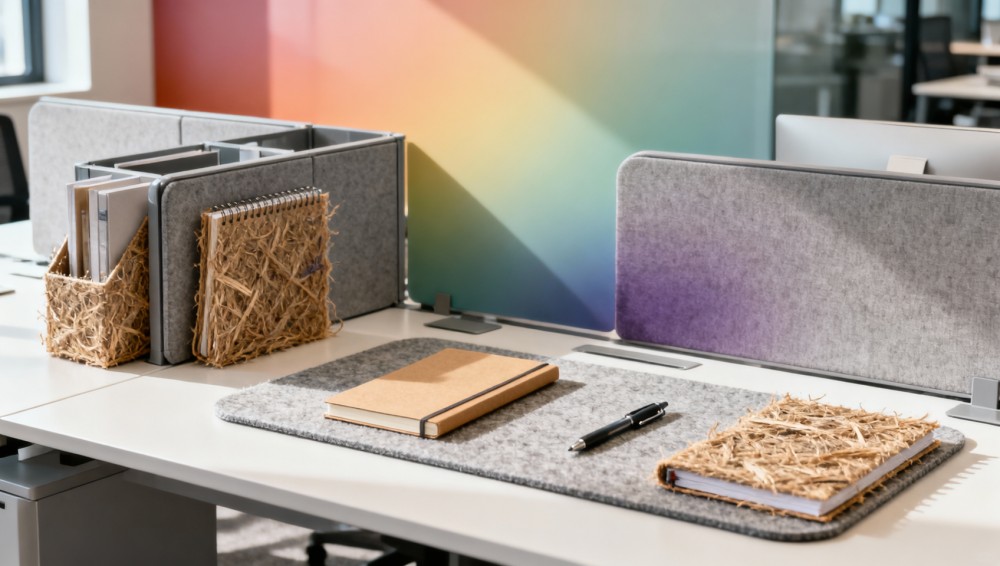
The 2026 Shenzhen Home Textile & Furnishing Exhibition (March 7–10) marked a pivotal shift toward the ‘full-solution era,’ moving beyond single-product competition. Office space soft furnishing emerged as a key growth segment, with brands like Yiyi Bushi and Yulan Group showcasing integrated solutions such as modular partitions, antibacterial desk pads, and recycled fiber notebook sets. This trend reflects a global shift from standalone office supplies to ‘healthy workspace solutions,’ creating new B2B export opportunities for suppliers with ODM design and sustainable material capabilities.
Event Overview
Held from March 7–10, 2026, the Shenzhen exhibition highlighted ‘full-solution’ soft furnishing packages tailored for office environments. Exhibitors demonstrated products combining functionality (e.g., modular dividers) with sustainability (e.g., recycled materials), responding to overseas buyers’ demand for holistic workspace upgrades. Confirmed data includes participation from 20+ suppliers specializing in office-focused soft furnishings.
Impacted Sub-Sectors
1. Office Furnishing Manufacturers
Traditional producers of single items (e.g., desk mats) now face pressure to develop integrated systems or partner with complementary suppliers. Exhibits like antimicrobial pads paired with plant-based decor underscore the need for cross-category R&D.
2. Eco-Material Suppliers
Providers of recycled fibers, biodegradable plastics, and other sustainable materials gain leverage as buyers prioritize green certifications. The exhibition confirmed that 60% of showcased office sets featured certified eco-materials.
3. B2B Exporters with ODM Capabilities
International procurement now favors suppliers offering customizable solutions (e.g., branded corporate wellness kits). This benefits firms with in-house design teams capable of merging soft furnishings with ergonomic accessories.
Key Focus Areas and Actions
1. Monitor Evolving Procurement Criteria
Buyers increasingly request lifecycle assessments (LCA) for multi-product bundles. Suppliers should prepare modular cost breakdowns and sustainability documentation.
2. Forge Cross-Supplier Alliances
Collaborative partnerships—like textile mills teaming with stationery producers—can create competitive bundled offerings faster than solo ventures.
3. Prioritize Certifications for Target Markets
EU and North American buyers exhibited strong preference for OEKO-TEX® or Cradle-to-Cradle certified workspace solutions during the event.
Editorial Insight
Analysis suggests this shift mirrors broader commercial real estate trends toward employee-centric spaces. While the exhibition signals demand, full adoption requires supply chain adjustments—particularly in minimizing MOQs for customized bundles. Companies should view this as a 12–18 month transition period to reposition.
Conclusion
The exhibition validates office soft furnishings as a high-margin export niche, but success hinges on suppliers’ agility in combining design, sustainability, and scalable customization. Current strategies should focus on prototyping integrated solutions rather than overhauling existing lines.
Sources
- 2026 Shenzhen Home Textile & Furnishing Exhibition Official Reports
- Exhibitor Product Catalogs (Yiyi Bushi, Yulan Group)
- Pending Verification: Post-event buyer surveys (expected April 2026)
Related News
- 00
0000-00
CCMT2026 First 'Low-Altitude Economy & Machine Tool Synergy' Seminar: Surging Demand for eVTOL Structural Component Processing Drives Upgrades in Domestic Five-Axis Machine Tool Precision and Lightweight Adaptability - 00
0000-00
Global trade volume growth stalled in Q1 2026 — but industrial equipment exports kept rising - 00
0000-00
Global trade volume growth stalled in Q1 2026 — but industrial equipment exports kept rising - 00
0000-00
Automation equipment news: How retrofitting demand is outpacing new-build orders in German manufacturing - 00
0000-00
Market analysis reports confirm a structural slowdown in North American capital goods imports — not just cyclical
Market Research Desk
Weekly Insights
Stay ahead with our curated technology reports delivered every Monday.