





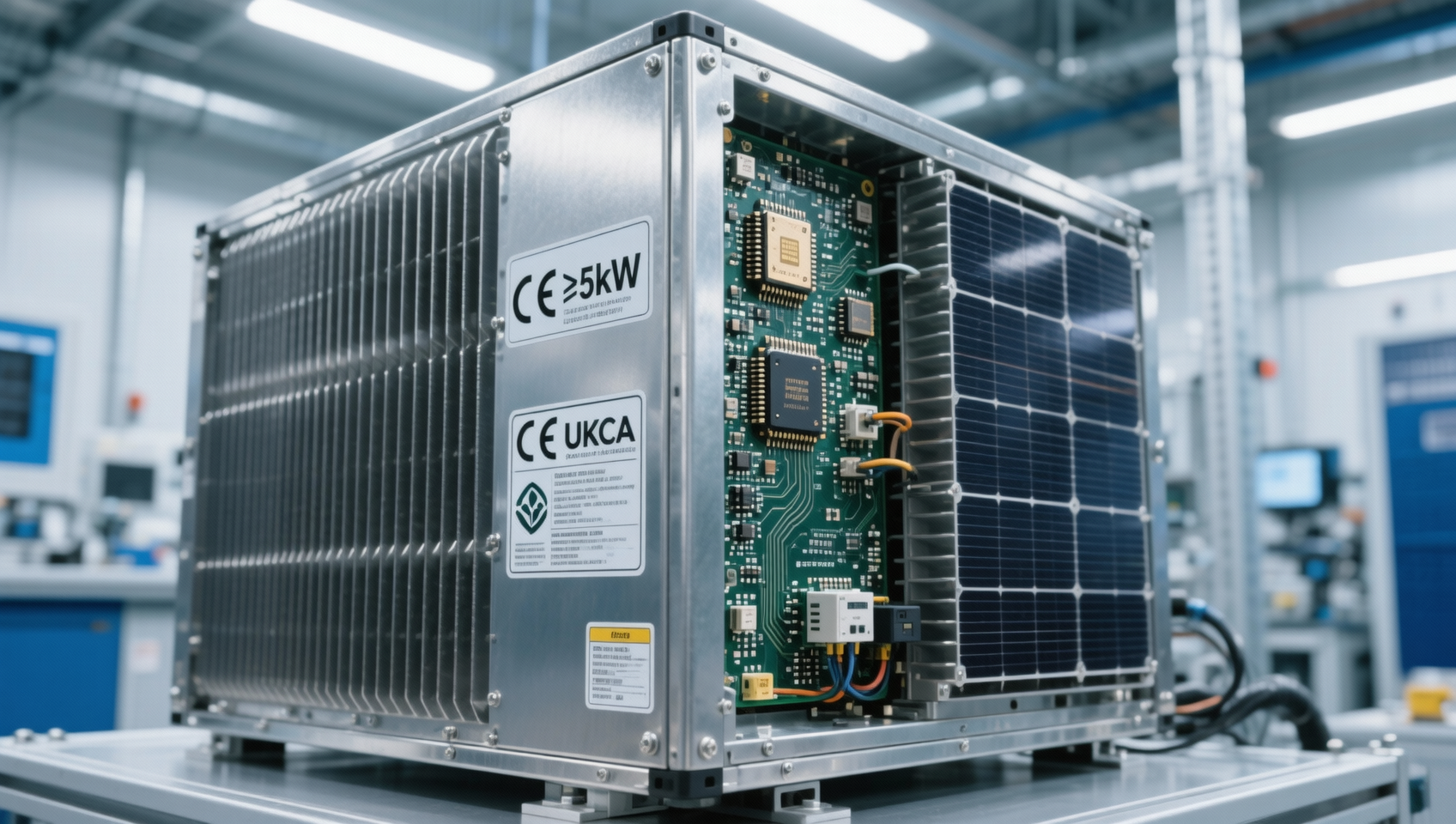
As new global trade restrictions take effect in 2026, energy sector equipment importers face urgent operational and strategic recalibrations. This timely industry news update delivers critical business intelligence—linking policy shifts to real-world impacts on machinery parts sourcing, packaging solutions, and supply chain resilience. Tracking trade updates across key markets, we analyze how evolving economic indicators influence procurement costs, compliance timelines, and technology adoption. Whether you’re a technical evaluator assessing regulatory feasibility, a procurement professional negotiating contracts, or a corporate decision-maker shaping long-term strategy, this analysis supports agile, data-driven action. Stay ahead with authoritative insights across manufacturing, energy, chemicals, and international trade.
Key 2026 Trade Restrictions Impacting Energy Equipment Imports
The 2026 global trade framework introduces three foundational regulatory layers directly affecting industrial equipment imports: (1) expanded dual-use controls under the Wassenaar Arrangement, now covering 17 additional power electronics subcomponents; (2) mandatory carbon intensity certification for all equipment rated above 5kW entering the EU, UK, and Canada; and (3) U.S. Bureau of Industry and Security (BIS) licensing requirements for inverters, grid-tie transformers, and smart metering modules with firmware capable of remote firmware updates.
These measures collectively affect over 83% of mid-to-high-end energy infrastructure components—including wind turbine pitch controllers, solar micro-inverters, battery energy storage system (BESS) power conversion units, and hydrogen electrolyzer stack cooling manifolds. Importers sourcing from China, Vietnam, Mexico, and Turkey must now verify conformity with ISO 50001-aligned energy performance declarations and provide traceable material origin documentation for cobalt, nickel, and rare-earth magnets used in motors and generators.
Compliance windows are narrow: EU Regulation (EU) 2025/1982 mandates full certification submission 90 days prior to first shipment, while U.S. EAR §742.15 requires pre-license verification within 14 business days of order confirmation. Delays beyond these thresholds trigger automatic customs holds and potential penalties up to 2.5× landed value.
This table highlights jurisdiction-specific enforcement cadences. Notably, Canadian timelines align with seasonal utility procurement cycles—July implementation avoids Q1 budget freeze periods but compresses validation windows for Q3 delivery commitments. Technical evaluators should prioritize cross-jurisdictional test reports (e.g., TÜV Rheinland’s multi-market Type Test Certificate) to reduce redundant lab submissions by up to 40%.
Supply Chain Resilience Strategies for Procurement Teams
Procurement professionals must shift from volume-based vendor selection to compliance-integrated sourcing. A 2025 benchmark study of 142 energy equipment importers revealed that firms adopting tiered supplier qualification frameworks reduced customs rejection rates by 67% and cut average clearance time from 11.3 days to 4.1 days.
Critical actions include: (1) mapping Bill of Materials (BOM) down to Level 3 subassemblies to identify controlled items; (2) requiring ISO/IEC 17065-certified conformity assessment bodies for CE/UKCA marking; and (3) implementing digital bill-of-materials (dBOM) tracking with blockchain-verified origin logs for critical minerals.
Packaging solutions also require reevaluation: 2026 regulations mandate recyclability declarations per EN 13427, with minimum 75% certified recycled content for outer shipping crates handling lithium-ion battery systems. Suppliers failing to meet this threshold face 12% tariff surcharges in Germany and Belgium.
Four Must-Verify Documentation Items Before Order Release
- Valid Export Control Classification Number (ECCN) assignment letter signed by licensed export compliance officer
- Carbon Intensity Declaration (CID) validated against ISO 14067:2018 Part 2 methodology
- Material Declaration Sheet (MDS) compliant with IEC 62474:2023 V11.0 for RoHS/REACH/PFAS
- Secure Firmware Update Protocol (SFUP) audit report covering encryption, rollback protection, and secure boot chain
Technical Evaluation Framework for Regulatory Feasibility
Technical evaluators must move beyond basic CE marking checks. The 2026 framework introduces three new feasibility checkpoints: firmware architecture review (including bootloader signing keys), thermal derating validation under extended ambient conditions (40℃–65℃), and electromagnetic compatibility (EMC) testing per CISPR 32 Ed.4:2024 Class B limits—now enforced for all inverters below 1MW.
Testing cycles have lengthened: Full EMC + safety + cybersecurity validation now averages 22–35 working days versus 14–18 days in 2024. Pre-compliance screening using accredited labs (e.g., UL Solutions’ “FastTrack” program) can compress this to 12–18 days—but only if submitted with complete firmware binaries and mechanical CAD files.
These changes elevate firmware and thermal modeling from optional engineering enhancements to mandatory compliance deliverables. Evaluators should request vendor-provided thermal simulation reports (ANSYS Icepak or COMSOL Multiphysics outputs) and signed firmware integrity attestations as part of initial RFQ packages.
Strategic Decision-Making for Corporate Leadership
Enterprise decision-makers must treat 2026 restrictions not as cost centers but as catalysts for vertical integration. Firms investing in in-house compliance engineering teams report 3.2× faster response to regulatory updates and 28% lower total cost of ownership over 3-year equipment lifecycles.
Three high-impact initiatives stand out: (1) establishing regional compliance hubs—e.g., an EU-based entity managing CE/UKCA/CID filings reduces lead time by 42%; (2) co-developing modular firmware architectures with Tier-1 suppliers to enable rapid re-certification across jurisdictions; and (3) shifting from spot-buying to multi-year framework agreements with built-in compliance refresh clauses every 18 months.
Market intelligence indicates that early adopters of these strategies gain 7–12 months of competitive advantage in tender eligibility—particularly for EU Green Deal-funded projects requiring verified carbon performance metrics. Delaying action risks exclusion from 2026–2028 public tenders valued at €18.4 billion across offshore wind, grid modernization, and green hydrogen infrastructure.
Risk Mitigation Prioritization Matrix
- High Urgency / High Impact: ECCN misclassification (penalties up to $1M per violation)
- High Urgency / Medium Impact: Missing CID documentation (customs delays averaging 19.7 days)
- Medium Urgency / High Impact: Inadequate SFUP implementation (cybersecurity breach liability exposure)
- Medium Urgency / Medium Impact: Packaging noncompliance (tariff surcharge accrual at 0.8% per month)
Next Steps for Action-Oriented Stakeholders
Whether you’re evaluating a specific inverter model, negotiating terms with a Vietnamese transformer manufacturer, or building your 2026 compliance roadmap, immediate next steps include: conducting a BOM-level controlled-items audit using the updated Wassenaar List Annex 1; requesting pre-submission reviews from accredited labs like SGS or TÜV SÜD; and initiating supplier capability assessments focused on firmware security and carbon reporting maturity.
Our platform provides real-time regulatory dashboards, jurisdiction-specific compliance checklists, and quarterly deep-dive briefings on enforcement trends across 32 countries. These resources help technical evaluators validate design assumptions, procurement teams accelerate due diligence, and executives align capital allocation with verifiable compliance readiness.
Get started today: Access our free 2026 Energy Equipment Import Readiness Kit—including editable BOM compliance tracker, sample CID templates, and multi-jurisdictional certification pathway map.
Learn more solutions →
Policy Review Desk
Weekly Insights
Stay ahead with our curated technology reports delivered every Monday.