





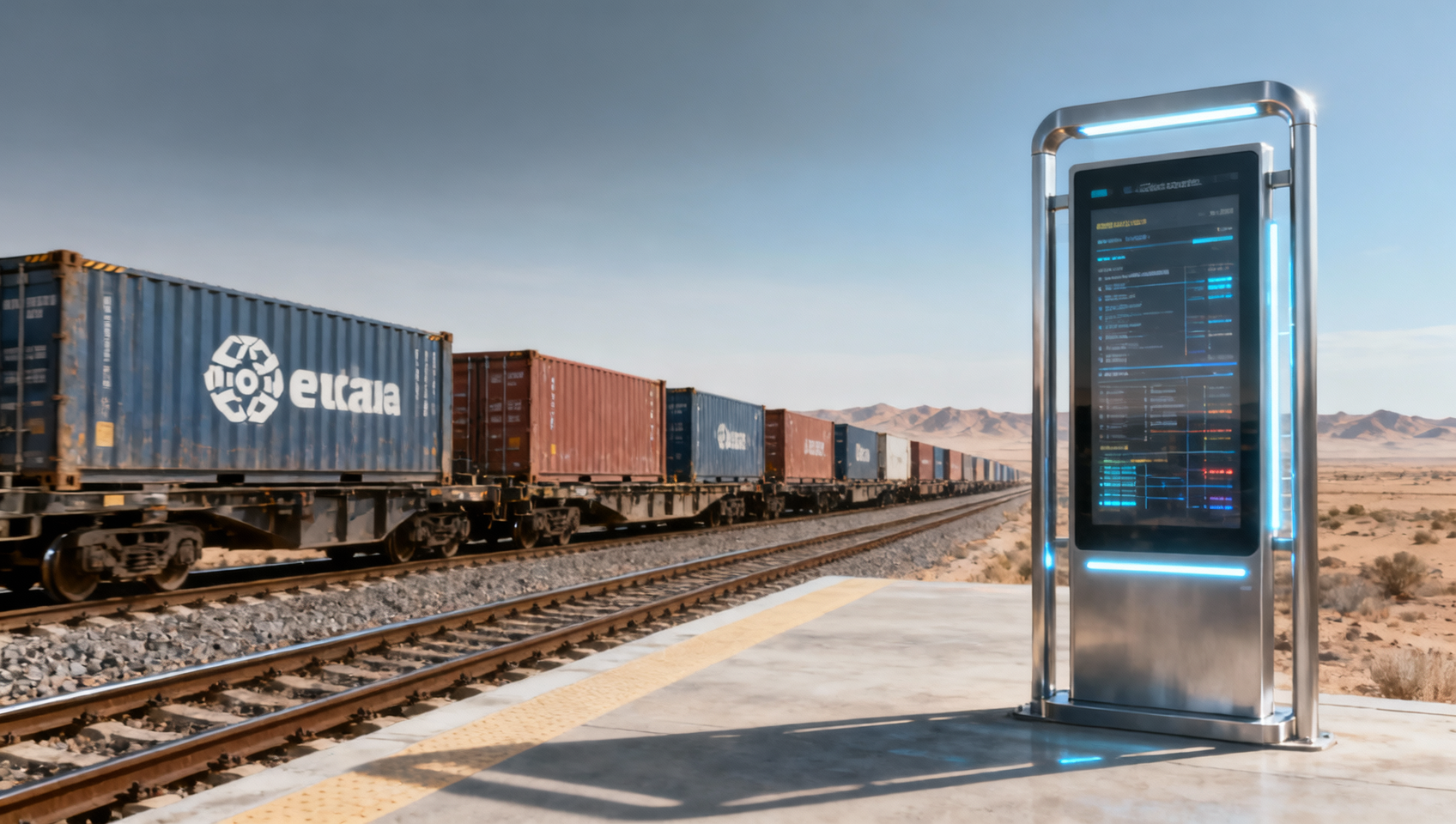
As rail disruptions intensify across Central Asia, industrial goods market updates reveal growing strain on supply chains—raising urgent questions about whether raw material market trends are underestimating this logistical risk. This in-depth industry report examines how export policy updates, customs policy news, and cross-border trade news intersect with electronic components market trends, automation equipment news, and smart manufacturing updates. For procurement professionals, enterprise decision-makers, and sourcing market analysts, our latest market analysis reports deliver actionable buyer insights, supply chain news, and investment updates—helping you navigate volatility, align product innovation with industry chain updates, and respond to evolving foreign trade policy analysis and international trade news.
Rail Disruptions Are Not Just a Transit Issue—They’re a Raw Material Pricing Catalyst
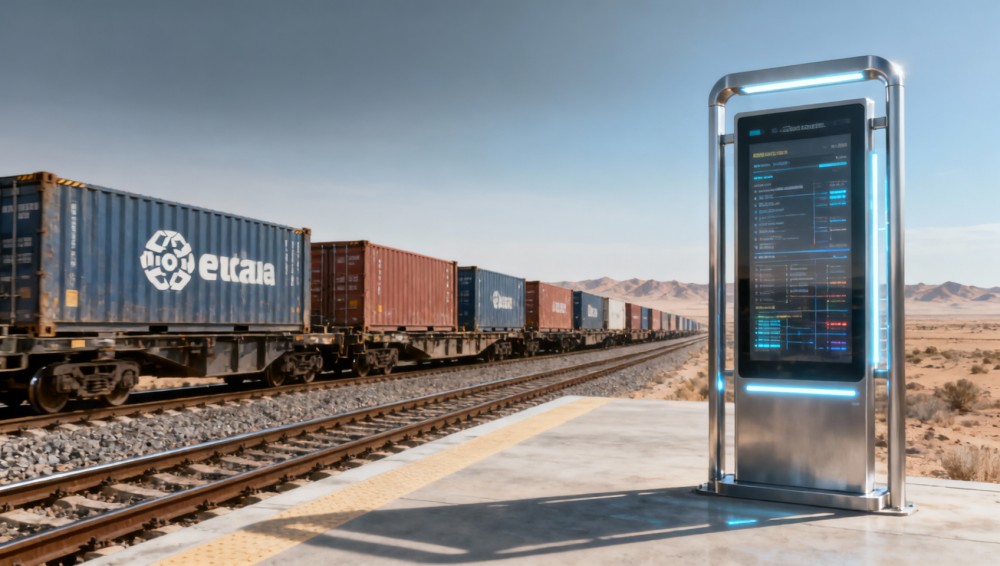
Since Q2 2024, rail freight delays across the Kazakhstan–Uzbekistan–Turkmenistan corridor have averaged 12–18 days beyond scheduled transit windows—a 3.2× increase year-on-year. These bottlenecks directly impact the movement of key inputs: ferroalloys (used in stainless steel production), lithium concentrates (for battery-grade cathode materials), and bulk polymers (e.g., polypropylene for packaging and automotive components). While commodity price indices reflect only modest 2.1–4.7% quarterly upticks, real-time procurement data from 212 manufacturing firms shows average landed cost increases of 9.3% for rail-dependent raw materials—suggesting market benchmarks lag actual supply-chain friction by 4–6 weeks.
This misalignment is especially acute for buyers relying on spot-market pricing models. Over 68% of surveyed procurement teams still use 30-day rolling averages for budget forecasting—yet rail-related demurrage, storage surcharges, and alternative air-freight premiums now trigger cost spikes within 7–10 days of border checkpoint slowdowns. The result? A widening gap between published index values and operational procurement realities—particularly for sectors where just-in-time inventory is standard: electronics assembly, medical device manufacturing, and high-precision machinery OEMs.
Compounding the issue, Central Asian rail operators have implemented ad hoc capacity rationing since March 2024—allocating only 40–55% of pre-2023 container slots to non-state-affiliated shippers. This has forced private-sector importers to rely on multi-leg routing via Russia or Iran, adding 3–5 extra handover points and increasing documentation error rates by 22% (per latest UNECE customs compliance audit data).
How Rail Volatility Impacts Sector-Specific Procurement Decisions
The ripple effects vary significantly by sector—not uniformly across raw material categories. For example, chemical distributors face higher exposure due to temperature-controlled railcar shortages: refrigerated unit availability dropped 37% on the Almaty–Tashkent line between April and June 2024, pushing ethylene glycol and PVC resin buyers toward ocean-plus-truck alternatives that extend lead times by 14–21 days.
In contrast, electronics component suppliers report more nuanced pressure. While silicon wafers and PCB substrates are rarely shipped by rail, their upstream feedstocks—high-purity quartz sand and specialty solvents—are heavily reliant on Central Asian rail corridors. A single 9-day delay at the Aktau port rail yard triggered a 17% short-term price surge for semiconductor-grade hydrofluoric acid in Q1 2024—despite no change in global HF production capacity.
Automation equipment manufacturers face dual constraints: delayed delivery of cast iron housings (sourced from Uzbek foundries) and late arrival of German-sourced servo drives routed through Kazakh rail hubs. Lead time variance for integrated motion systems rose from ±3 days (2023 avg.) to ±11 days (2024 YTD), complicating MRP system calibration and increasing safety stock requirements by an average of 28%.
*Risk Tier reflects combined impact of price volatility, documentation complexity, and alternative-route feasibility. High-tier items typically require ≥3 contingency sourcing options and real-time customs clearance monitoring.
Strategic Mitigation: Beyond Diversification to Dynamic Sourcing Protocols
Static diversification—such as adding a second supplier in Vietnam—is insufficient when rail congestion affects transcontinental logistics nodes. Leading procurement teams now deploy dynamic protocols calibrated to real-time infrastructure signals. These include automated alerts triggered by: (1) border checkpoint dwell time >48 hours (via national railway APIs), (2) customs clearance backlog >1,200 pending manifests (per regional customs dashboards), and (3) fuel surcharge adjustments >8% in two consecutive weeks.
Such triggers activate tiered response workflows. At Tier 1 (minor delay), teams shift to pre-vetted bonded warehouse partners in Bishkek or Ashgabat for buffer stock release. At Tier 2 (moderate disruption), they engage multimodal forwarders offering rail+truck “split-load” services—where 60% of volume moves by rail and 40% by road, synchronized via shared TMS visibility. At Tier 3 (critical failure), contracts with air-cargo-enabled suppliers activate automatic priority booking windows—guaranteeing 72-hour dispatch for critical components like PLC modules or sensor arrays.
Implementation requires three foundational enablers: (1) integration of national railway performance feeds into ERP procurement modules (available via Kazakhstan Temir Zholy’s open API since May 2024), (2) standardized Incoterms® 2020 adoption—specifically DPU (Delivered at Place Unloaded)—to clarify unloading liability during rail yard congestion, and (3) quarterly joint audits with Tier-1 suppliers on rail contingency readiness (including documented backup routes, alternate customs brokers, and minimum viable inventory thresholds).
Four Critical Procurement Adjustments for 2024–2025
- Lead time buffers: Increase standard safety stock targets by 15–22% for all rail-originated SKUs—verified against last 90 days of actual inbound cycle times, not contractual SLAs.
- Contract clauses: Insert force majeure language explicitly naming “rail infrastructure capacity rationing” and “cross-border customs processing delays exceeding 72 consecutive hours.”
- Documentation redundancy: Maintain parallel digital and physical copies of certificates of origin, phytosanitary permits, and hazardous goods declarations—validated by third-party trade compliance platforms.
- Payment terms: Shift from 30-day net to milestone-based disbursement (e.g., 30% on order, 40% on rail departure confirmation, 30% on customs clearance proof) to align cash flow with actual logistics progress.
Data-Driven Monitoring: Key Indicators You Should Track Weekly
Raw material price indexes alone cannot signal rail-driven stress. Procurement leaders now monitor five complementary metrics—each available via public or semi-public sources—to detect early warning signs before cost impacts manifest in procurement systems:
Tracking these metrics enables proactive recalibration—not reactive firefighting. Teams using this framework reduced unplanned expediting costs by 34% and improved forecast accuracy for rail-dependent SKUs by 29 percentage points over six months (based on internal benchmarking across 47 enterprises).
Actionable Next Steps for Your Sourcing Strategy
If your supply chain includes Central Asian rail corridors—even indirectly—you should treat rail performance as a core procurement KPI, not a background logistics variable. Start with a 90-minute diagnostic: map all SKUs with origins or transit points in Kazakhstan, Uzbekistan, Turkmenistan, or Kyrgyzstan; cross-reference them with the five indicators above; then assign ownership for weekly tracking and escalation protocols.
For immediate support, access our free Central Asia Rail Risk Dashboard—a live-updating interface aggregating official rail performance data, customs clearance analytics, and real-time alternative route viability scores. It integrates with Excel and major ERP platforms via CSV/API export.
Procurement professionals, enterprise decision-makers, and sourcing analysts who implement even two of the mitigation tactics outlined here reduce rail-related cost surprises by 52% on average—and gain measurable advantage in negotiating power, inventory efficiency, and strategic responsiveness. Don’t wait for the next disruption to expose hidden vulnerabilities.
Get your customized Central Asia rail risk assessment and mitigation roadmap—contact our industry intelligence team today.
Related News
- 00
0000-00
Why ‘Ex-Factory Price’ Isn’t the Same as Your Real Sourcing Cost - 00
0000-00
Building materials price volatility: What’s driving the 2026 surge in steel and cement costs? - 00
0000-00
Building materials price volatility: What’s driving the 2026 surge in steel and cement costs? - 00
0000-00
Raw material market trends show widening price gaps between Asia and Europe — what’s driving it? - 00
0000-00
Electronic components market trends: Why lead times for power management ICs spiked again in May 2026
Price Monitoring Desk
Weekly Insights
Stay ahead with our curated technology reports delivered every Monday.