





Understanding the FOB price calculation formula is essential for buyers, exporters, and project teams comparing global sourcing costs. From using an export quotation template to evaluating CIF price vs FOB price comparison, this guide breaks down each step clearly. It also connects FOB pricing with trade compliance regulations for exporters, HS code lookup tool usage, and practical ways to reduce tariff costs in cross-border procurement.
What does the FOB price calculation formula actually include in real sourcing work?
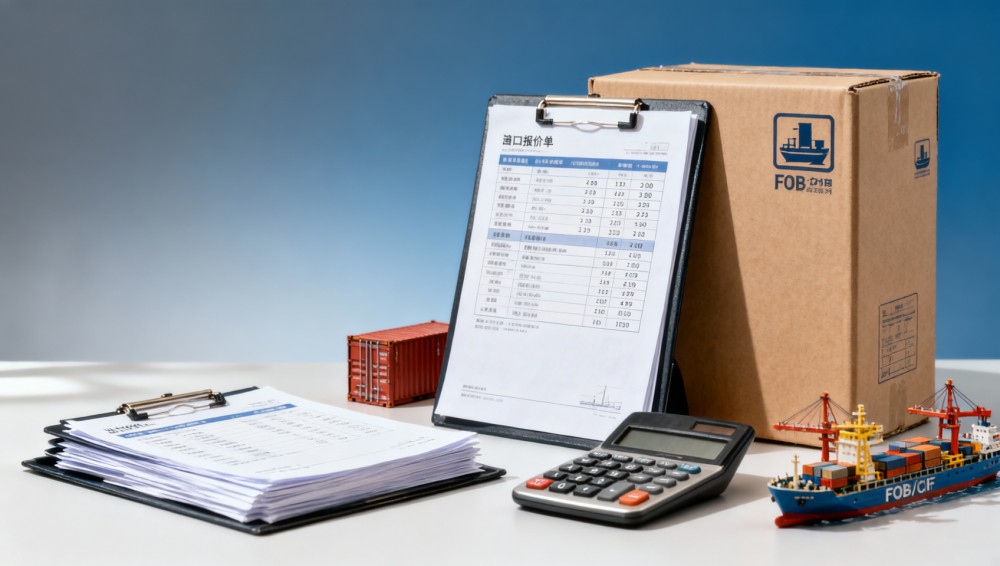
In foreign trade, FOB stands for Free On Board. It usually means the seller bears costs and responsibilities until the goods are delivered on board the named port of shipment. For procurement teams, the FOB price calculation formula is not just a textbook concept. It is a working method used to compare suppliers, estimate landed cost, and avoid hidden charges during cross-border purchasing.
A practical FOB quotation often includes 4 core cost blocks: ex-works product cost, inland transport to port, export customs clearance, and port-related handling before loading. Depending on the product and port, teams may also need to review palletization, export packaging, labeling, fumigation, and document preparation. These items may look small individually, but across monthly or quarterly shipments they can change the procurement decision.
For information researchers and project managers, FOB pricing is also useful because it separates supplier-side costs from ocean freight and destination-side costs. That makes it easier to compare manufacturers in machinery, chemicals, packaging, building materials, and electronics on a like-for-like basis. A supplier with a lower unit price may still have a weaker FOB offer if export handling is inefficient or documentation quality is poor.
In most sourcing reviews, the FOB price calculation formula can be simplified as: FOB price = product cost + local charges before loading + export clearance costs + seller margin. This formula sounds simple, but the quality of the quotation depends on whether all line items are visible, whether the HS code is correct, and whether the exporter understands current policy, tariff, and port operation changes.
A step-by-step FOB price calculation formula
For day-to-day use, procurement teams can evaluate the formula in 5 steps rather than in one total number. This reduces the chance of underquoting, disputes, or cost leakage in later negotiations.
- Confirm the factory net price for the agreed specification, packaging standard, and order quantity.
- Add inland transport from plant to port or consolidation warehouse. For multi-factory sourcing, this can vary by route and by 1–3 trucking stages.
- Add export declaration and customs-related documentation costs, including inspection-related fees where applicable.
- Add terminal or port handling charges borne by the seller before loading, if included in the quotation scope.
- Apply the supplier margin after checking currency terms, validity period, and shipment window, often 7–15 days for quotation validity in active markets.
This structured view matters across sectors. In machinery and building materials, packaging and loading reinforcement can significantly affect the FOB figure. In chemicals, export documents, labeling, and dangerous goods handling may create extra layers of cost. In electronics and e-commerce supply chains, compliance documents and carton marking consistency are often as important as the base unit price.
How to calculate FOB price step by step without missing cost items?
When buyers ask for an export quotation template, they usually want a repeatable way to compare suppliers in 2–4 weeks of sourcing review. A useful template should show not only the unit FOB price, but also quantity assumptions, currency, port of loading, packaging details, and document scope. Without those fields, the same FOB term can mean different things to different suppliers.
The biggest mistake is using an FOB quotation as a single unit price without checking the pricing basis. For example, a supplier may quote based on a full container load, while a buyer is planning a mixed shipment. Another supplier may include export palletization, while a third one excludes it. In real procurement, these differences can create a gap large enough to reverse the ranking of 3 competing offers.
The table below gives a practical breakdown that sourcing teams can use to audit the FOB price calculation formula across common industrial categories. It is especially useful when comparing suppliers in manufacturing, packaging, machinery parts, construction materials, and cross-border B2B trade.
This kind of line-by-line structure turns FOB pricing into a decision tool instead of a rough estimate. It also helps technical evaluators and project leaders identify whether a low quote comes from real manufacturing efficiency or simply from excluded handling costs.
Which 5 checks should be done before accepting an FOB quote?
Before approving any FOB-based sourcing round, teams should review 5 key checkpoints. These checks are especially important for orders with short lead times of 10–30 days, complex documentation, or multi-SKU shipments.
- Check whether the named loading port is clearly stated. FOB Shanghai and FOB Ningbo may not create the same local cost pattern for every factory.
- Confirm the Incoterms version used in the contract and quotation to avoid interpretation gaps.
- Review whether export packaging, labeling, and pallet standards match the destination market or buyer SOP.
- Verify HS code classification because duty exposure and compliance review often start there.
- Check quotation validity and production lead time separately, since a 14-day price validity does not guarantee a 14-day shipment window.
For businesses that track industry changes across multiple sectors, a reliable news and intelligence platform can improve this review process. Policy updates, raw material movements, freight changes, and customs practice shifts often influence FOB pricing much earlier than they appear in supplier negotiations.
FOB price vs CIF price: which comparison helps procurement decisions more?
The debate around CIF price vs FOB price comparison is common because both are useful, but they answer different questions. FOB is better when the buyer wants control over ocean freight, insurer selection, consolidation planning, or multi-country benchmark analysis. CIF is useful when a buyer wants a more complete delivered-to-port estimate from the supplier side, especially for smaller teams with limited logistics resources.
In practice, procurement decisions should not stop at asking which number is lower. The better question is which pricing basis gives clearer control over risk, timing, and cost transparency. For buyers handling 2–6 suppliers, FOB often makes comparisons cleaner. For buyers managing a single urgent shipment, CIF may reduce coordination steps, though it may also reduce cost visibility.
The comparison table below helps decision-makers evaluate FOB and CIF under common B2B sourcing conditions across manufacturing, machinery, chemicals, electronics, and project cargo support.
For strategic procurement, FOB often provides better benchmarking because it isolates the supplier portion from international logistics volatility. That matters when freight rates change within 1–4 weeks, or when buyers need to compare ports, suppliers, and shipment methods under one consistent framework.
When is FOB usually the better choice?
FOB is often more suitable in at least 4 situations: when the buyer already has contracted forwarders, when orders involve multiple factories, when freight rates are changing rapidly, and when the sourcing team needs clear landed cost modeling by country and product line. It is also useful for enterprises that buy repeatedly every month or every quarter and need tighter control over logistics performance.
However, FOB does not automatically mean lower total cost. If the buyer lacks freight management capacity, misses cut-off times, or chooses the wrong port routing, the total landed cost may become less competitive than a well-structured CIF offer. That is why a comparison should always include lead time, documentation quality, compliance readiness, and post-booking execution capability.
How do HS code lookup, compliance checks, and tariff planning affect FOB pricing?
Many teams treat FOB as a supplier-side number and tariff as a destination-side issue, but in reality the two are closely linked. A wrong HS code can change duty treatment, document requirements, inspection expectations, and even whether the product description in the export quotation template is acceptable. This is why HS code lookup tool usage should be part of the price review process, not an afterthought.
Trade compliance regulations for exporters can also affect the real usefulness of an FOB quote. In sectors such as chemicals, electronics, machinery, and building materials, documentation may need to reflect material composition, safety statements, packaging method, or destination-specific labeling. If the seller prices only the goods but does not prepare compliant export support, the buyer may later face delays, rework, or customs questions.
A strong sourcing workflow typically includes 3 linked reviews: product classification, export compliance scope, and tariff impact estimation. This does not mean every buyer must become a customs specialist. It means the procurement team should know which questions to ask before comparing FOB prices and which line items may affect the true landed cost.
A practical compliance checklist for FOB quotations
The checklist below is especially relevant for buyers and project managers working across multiple industries where policy changes, product updates, and market shifts happen frequently.
- Confirm the product description is detailed enough for classification, including material, use, and core technical traits.
- Review whether the proposed HS code is consistent with the product configuration and destination market practice.
- Check if the goods may trigger inspection, special packaging, or transport handling rules before loading.
- Ask whether the FOB quotation includes document preparation such as packing list, commercial invoice, certificate support, or origin-related paperwork where needed.
- Estimate whether tariff reduction strategies are possible through correct classification, product structuring, or alternative sourcing routes, always within legal compliance.
These checks are valuable because tariff planning and compliance review often influence sourcing choices earlier than final shipment. In active categories, a classification or regulatory issue can shift a project timeline by 1–3 weeks, which may matter more than a small unit price difference on the initial FOB quote.
How an industry news platform supports better FOB decisions
For enterprise teams that monitor manufacturing, foreign trade, chemicals, packaging, electronics, and energy, decision quality improves when pricing is connected to live market context. A cross-industry news platform can help users track raw material trends, policy updates, trade restrictions, logistics shifts, and company developments in one place. That shortens the time needed to validate whether a new FOB quote reflects market reality or temporary noise.
This matters to technical evaluators and decision-makers because price alone rarely tells the full story. A supplier may quote competitively today but face regulatory pressure next month. Another may show stable FOB terms because it has stronger process control, export documentation discipline, or better alignment with changing trade compliance regulations for exporters. Timely information makes these differences visible before a contract is signed.
What are the most common mistakes in FOB cost comparison and how can buyers avoid them?
One common mistake is comparing FOB prices without matching the order basis. If supplier A quotes for 1,000 units and supplier B quotes for 5,000 units, the comparison is weak from the start. Volume breaks, packaging efficiencies, and loading density can materially change the quoted FOB unit price. Buyers should normalize at least 3 variables: quantity, packaging format, and shipment basis.
A second mistake is overlooking non-price execution factors. For example, a supplier may offer a lower FOB rate but need 35–45 days to produce, while another can ship in 20–25 days. For project-driven procurement, this timing gap can affect installation sequencing, stock availability, or launch schedules. In those cases, time-to-ship can be more valuable than a small nominal price difference.
A third mistake is separating pricing from communication quality. In B2B trade, errors in carton marks, commercial invoices, packing lists, or declaration data can create hidden costs later. Good FOB pricing should come with reliable documentation control, response speed, and issue escalation discipline. These are not soft factors. They directly influence customs handling, freight booking accuracy, and internal project coordination.
A 6-point buyer review before final supplier selection
To avoid weak comparisons, many teams use a 6-point review that combines cost, compliance, and execution readiness.
- supply chain
- building materials
- machinery parts
- industry news
- company developments
- manufacturing
- cement
- international logistics
- export quotation
- FOB price
- CIF price
- tariff costs
- HS code
- trade compliance
- sourcing cost
- supplier sourcing
- foreign trade
- machinery
- construction materials
- chemicals
- packaging
- electronics
- e-commerce
- energy
- policy updates
- trade compliance regulations for exporters
- HS code lookup tool
- CIF price vs FOB price comparison
- FOB price calculation formula
- export quotation template
Related News
- Brent Crude Hits $98/Barrel; BAF Increase Likely in MayApr 24, 2026Brent Crude hits $98/Barrel — BAF increase likely in May. Exporters, freight forwarders & FOB importers face rising ocean freight costs. Act now.
- CIF Price vs FOB Price: Which Is Better for Your Margin?Apr 24, 2026CIF price vs FOB price comparison: learn the FOB price calculation formula, uncover hidden freight costs, and choose the smarter shipping term to protect margin, control risk, and improve trade decisions.
- FOB Price Calculation Formula Explained Step by StepApr 24, 2026FOB price calculation formula explained step by step, with CIF price vs FOB price comparison, export quotation template tips, HS code lookup tool guidance, and smart ways to reduce tariff costs.
- Brent Crude Hits $98/bbl; BAF Increases Likely in MayApr 23, 2026Brent Crude hits $98/bbl — BAF increases of 5–8% expected in May for Asia–Europe & Asia–US routes. Act now to reassess Incoterms, landed costs & LCL/FCL strategy.
Related News
- 00
0000-00
China's Lithium Battery Equipment Delivery Lead Time Extends to 18 Weeks - 00
0000-00
AI+Education Action Plan Launches, Impacting EdTech Exports - 00
0000-00
China-Sri Lanka Joint Operation Repatriates 125 Telecom Fraud Suspects - 00
0000-00
Second Batch of CNY 62.5B Ultra-Long Special Treasury Bonds Supports Consumer Upgrading - 00
0000-00
OpenClaw AI Agent Deployment Risk Guide Released
Price Monitoring Desk
Weekly Insights
Stay ahead with our curated technology reports delivered every Monday.