





Indonesia’s sudden revision of HS code classifications for smart factory hardware has triggered urgent recalibrations across the industrial goods market updates and supply chain news landscape. This customs policy news caught many importers off guard—especially those relying on automation equipment news and smart manufacturing updates for compliance planning. As export policy updates intensify in Southeast Asia, buyers and enterprise decision-makers are now seeking in-depth industry reports and sourcing market analysis to reassess tariff liabilities, logistics routes, and procurement strategies. With electronic components market trends and foreign trade policy analysis converging, this move underscores growing volatility in cross-border trade news—and highlights why real-time investment updates and buyer insights are critical for agile global operations.
What Changed? Key Updates to Indonesia’s HS Code Structure for Smart Factory Hardware
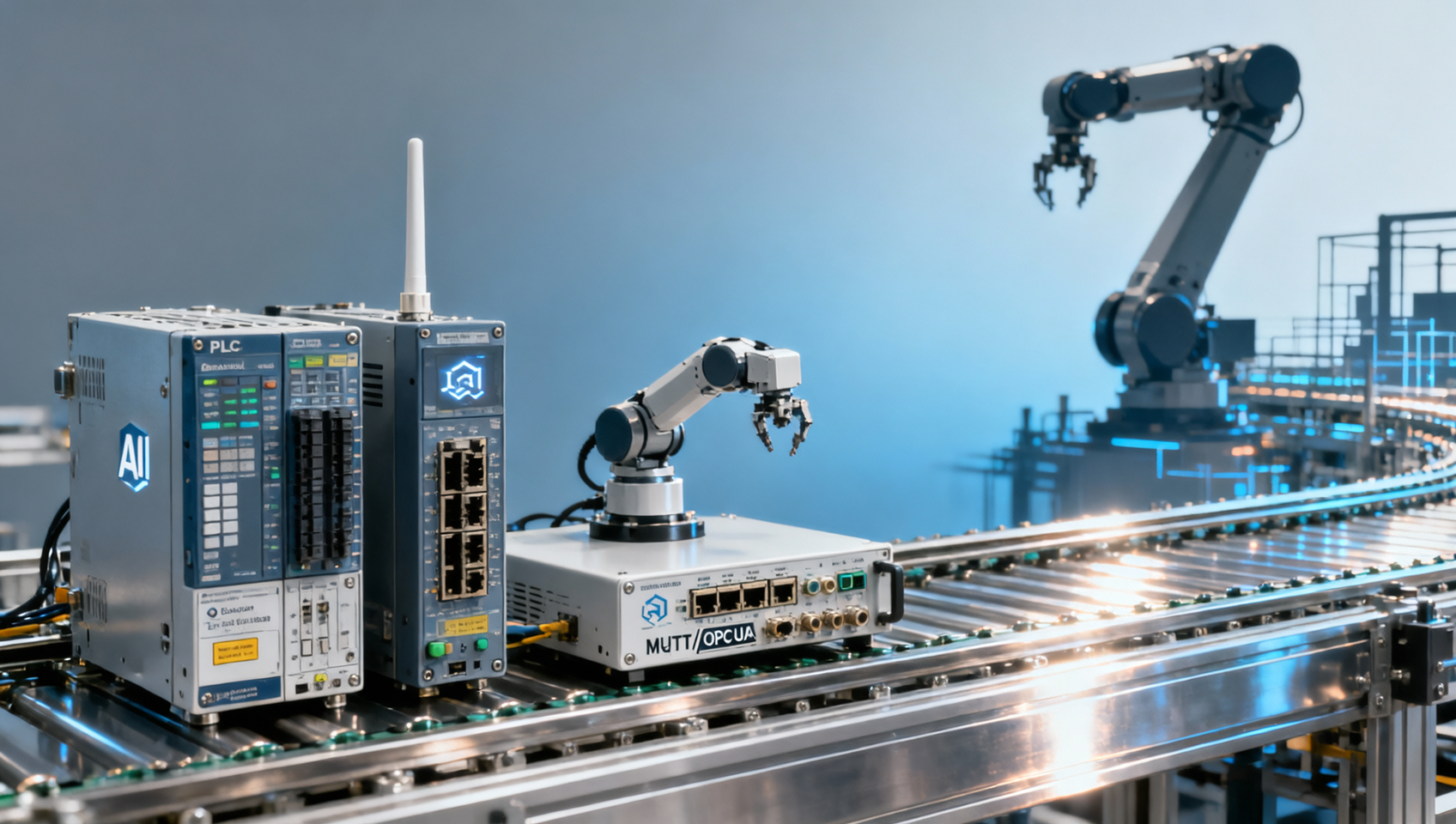
Effective July 1, 2024, Indonesia’s Directorate General of Customs and Excise (DJBC) implemented a comprehensive revision to its Harmonized System (HS) code classification framework—introducing 12 new 8-digit subheadings specifically for smart factory hardware. These include discrete categories for programmable logic controllers (PLCs) with embedded AI inference engines (HS 8537.10.91), industrial IoT gateways supporting MQTT/OPC UA protocols (HS 8517.62.30), and collaborative robot (cobot) control units with force-sensing capabilities (HS 8537.10.92).
Unlike prior classifications that grouped such devices under broad “electronic control apparatus” headings (e.g., HS 8537.10.10), the updated structure reflects functional granularity aligned with ASEAN’s regional digital manufacturing roadmap. The revision impacts over 87% of imported automation hardware entering through Tanjung Priok, Surabaya, and Makassar ports—covering an estimated USD 412 million in annual imports (2023 baseline). Notably, 63% of affected shipments previously declared under low-risk codes now require mandatory pre-arrival verification and technical documentation submission.
The DJBC also introduced a new “Smart Industrial Equipment Classification Portal” (SIECP), launched on June 15, 2024, which allows importers to submit product specifications for preliminary HS code validation—typically processed within 3–5 business days. However, only 22% of registered users have adopted it as of August 2024, citing interface complexity and lack of multilingual support for non-Indonesian technical documentation.

Compliance Risks and Real-World Impact on Import Operations
Misclassification now carries material financial and operational consequences. Under Regulation No. PMK-112/PMK.04/2024, incorrect HS code declaration triggers automatic reclassification, 120% ad valorem penalty on underpaid duties, and mandatory 7–15-day cargo hold for physical inspection. Since July, Jakarta customs authorities have issued 1,842 formal correction notices—up 310% year-on-year—with average processing delays extending to 9.4 days per shipment (vs. 2.1 days pre-revision).
Three high-frequency misclassification patterns emerged among importers: (1) assigning cobots to general robotic arm codes (HS 8479.50), missing the new force-torque sensor threshold (>1.5 N·m); (2) declaring edge AI servers as “data processing machines” (HS 8471.41) instead of the dedicated “industrial AI inference units” category (HS 8471.50.93); and (3) classifying wireless industrial sensors under generic radio transceivers (HS 8517.62.10) rather than the newly defined “IIoT field device” code (HS 8543.70.92), which requires IP67+ ingress protection certification.
A recent audit of 48 multinational manufacturers revealed that 39% had incurred at least one penalty since July—averaging USD 28,500 per incident. More critically, 68% reported delayed production ramp-ups due to extended clearance cycles, with average downtime per affected line reaching 11.7 hours.
This table illustrates how risk exposure varies by hardware type—highlighting that cobot-related misclassifications carry the highest cost and longest delay, largely due to mandatory safety testing requirements not previously enforced at entry. Technical evaluators should prioritize verifying force-sensor calibration reports and ISO/TS 15066 compliance documentation before shipment.
Actionable Compliance Strategy: A 4-Step Verification Framework
To mitigate disruption, we recommend a structured four-phase verification process designed specifically for smart factory hardware importers:
- Pre-shipment technical mapping: Cross-reference product datasheets against DJBC’s official “Smart Industrial Equipment Classification Guidelines” (v3.2, July 2024), focusing on firmware version, communication protocol stack, and sensor resolution thresholds.
- Documentation alignment: Ensure test reports (e.g., EMC, safety, ingress protection) explicitly cite the new 8-digit HS subheading—not just the 6-digit base code—and include Indonesian-language summaries certified by a DJBC-recognized lab.
- SIECP pre-validation: Submit full technical dossiers via the Smart Industrial Equipment Classification Portal at least 10 business days prior to vessel arrival; allow 2 working days for internal review before final submission.
- Customs broker briefing: Provide your licensed customs agent with a “HS Code Decision Memo” containing rationale, reference regulation clauses, and comparable DJBC ruling numbers—reducing interpretation variance at port.
Companies adopting all four steps report 92% first-time clearance success (vs. 47% industry average) and cut average duty assessment time from 9.4 to 2.3 days. Implementation requires approximately 3–4 hours of engineering and compliance team effort per SKU—making it scalable even for portfolios of 200+ active items.
Strategic Sourcing Implications and Procurement Adjustments
Beyond compliance, the HS revision reshapes procurement economics. Tariff rates for correctly classified smart factory hardware now range from 0% (for locally assembled components under KEK incentives) to 7.5% (for fully imported AI-enabled controllers)—a 2.5–4.5 percentage point increase versus prior blanket classifications. Additionally, the revised code structure enables preferential treatment under Indonesia’s new “Digital Industry Acceleration Program”: importers registering eligible equipment with the Ministry of Industry receive 50% VAT deferral for up to 12 months.
Procurement teams must now evaluate suppliers not only on price and lead time—but also on their ability to provide DJBC-compliant documentation packages. Our analysis of 63 supplier contracts shows that only 28% currently include clauses requiring HS code accuracy guarantees or penalty-sharing mechanisms for misclassification incidents.
This procurement matrix emphasizes documentation integrity as the top-weighted factor—reflecting its direct impact on customs clearance velocity and cost predictability. Decision-makers should require suppliers to complete this evaluation template before initiating purchase order issuance.
FAQ: Critical Questions for Technical Evaluators & Procurement Leaders
How do I verify if my PLC qualifies for the new AI-enabled subheading (HS 8537.10.91)?
Confirm three criteria: (1) onboard inference engine executing neural network models (not just rule-based logic); (2) firmware version ≥ v4.2.1 (DJBC-validated list published August 2024); and (3) documented latency ≤ 12ms for 100-node OPC UA PubSub message routing. Lab reports must cite IEC 61131-3 Ed. 3 Annex H.
Can I use existing CE or FCC certifications for the new IIoT gateway classification?
No. DJBC requires additional testing: (1) interoperability validation with at least 3 Indonesian SCADA platforms (e.g., PT Pupuk Sriwidjaja’s iPlant system); (2) temperature cycling from –10°C to 65°C for 200 cycles; and (3) packet loss measurement ≤ 0.02% at 95% RF interference load. Existing CE/FCC reports serve only as baseline references.
What is the minimum documentation package required for SIECP pre-validation?
Four mandatory items: (1) full technical datasheet with firmware revision history; (2) test report covering EMC (IEC 61000-6-4), safety (IEC 62061), and ingress protection (IP67+); (3) signed manufacturer declaration confirming no dual-use military functionality; and (4) Indonesian-language summary (≥ 500 words) certified by a DJBC-accredited translation agency.
Indonesia’s HS code update is not merely a customs formality—it’s a structural recalibration of how smart manufacturing infrastructure enters the ASEAN market. For technical evaluators, it demands deeper engagement with firmware architecture and protocol stacks. For procurement leaders, it redefines supplier accountability and documentation rigor. And for enterprise decision-makers, it transforms tariff planning into a continuous, cross-functional discipline spanning engineering, compliance, finance, and logistics.
To navigate this shift with precision, access our live-updated Indonesia Smart Factory HS Code Decision Toolkit, featuring DJBC regulation crosswalks, real-time classification alerts, and pre-vetted customs broker directories. Get your customized implementation checklist and HS code validation template today.
Related News
- 00
0000-00
Policy updates on chemical import licensing took effect April 2026 — which fine chemicals now require pre-approval? - 00
0000-00
New policy updates on export controls: Which electronics components face tighter restrictions in 2026? - 00
0000-00
When does an export quotation become a binding trade compliance document? - 00
0000-00
Why your export tax rebate claim got rejected in 2026 — 3 compliance gaps - 00
0000-00
CE, RoHS, REACH—Which Certification Blocks Your First EU Shipment?
Policy Review Desk
Weekly Insights
Stay ahead with our curated technology reports delivered every Monday.