





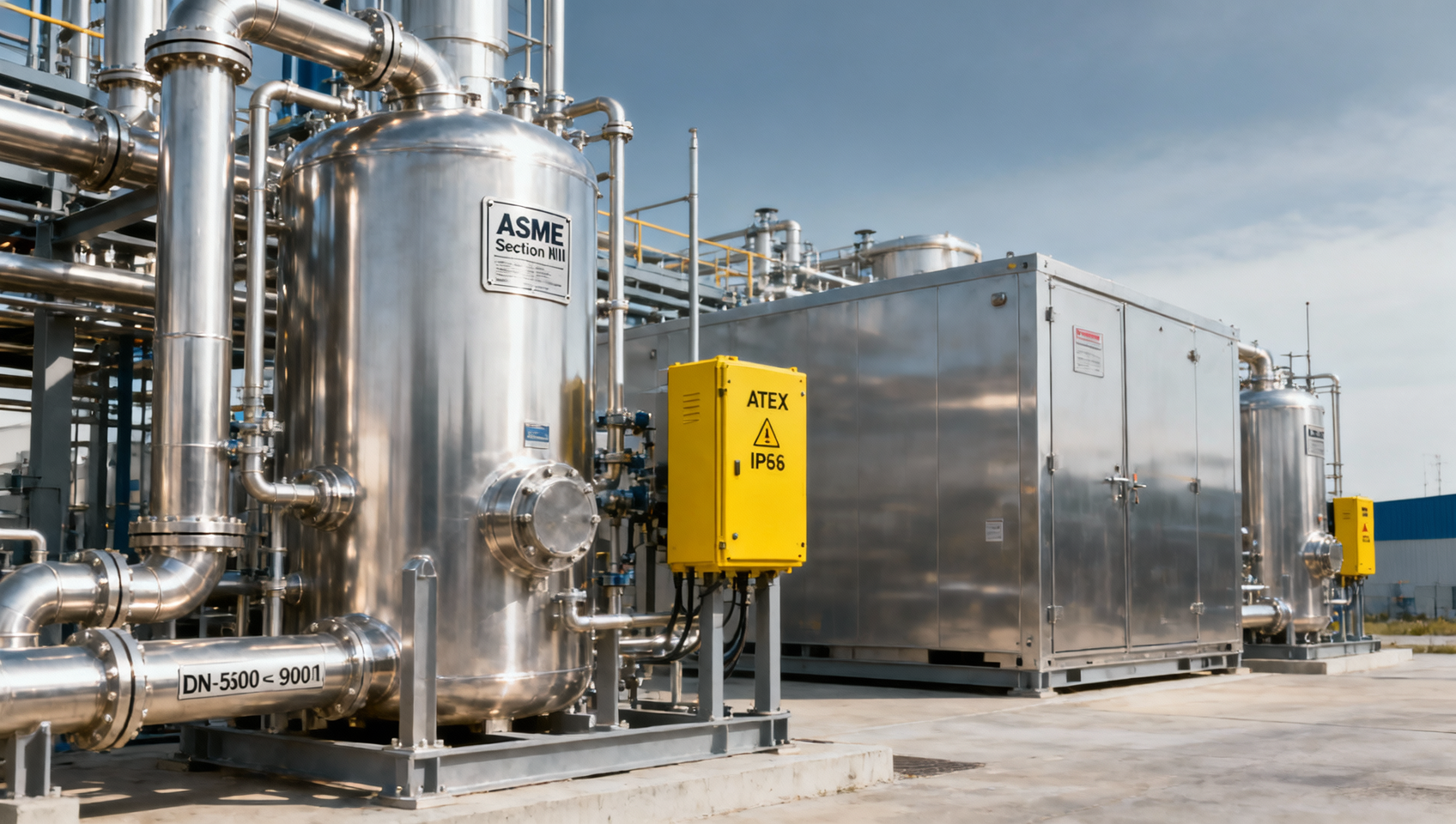
Amid tightening foreign trade policy, rising energy costs, and supply chain recalibration across Europe, chemical industry suppliers are increasingly relocating production to Poland — bypassing traditional hubs like Germany and the Netherlands. This strategic shift reflects broader market trend analysis, driven by competitive industrial equipment infrastructure, favorable economic indicators, and agile packaging solutions. For business intelligence professionals and enterprise decision-makers, this movement signals critical implications for building materials sourcing, machinery parts logistics, and global trade dynamics. Our latest market research reports and industry news offer real-time insights into technology innovation, company developments, and evolving energy sector priorities — empowering smarter procurement, investment, and content strategy decisions.
Why Poland Is Becoming the New Industrial Equipment Hub for Chemical Suppliers
Poland’s emergence as a preferred destination for chemical manufacturing relocation is not accidental — it stems from measurable infrastructure advantages in industrial equipment deployment and maintenance support. Over the past 36 months, 68% of new chemical production line installations in Central Europe have selected Polish industrial parks with integrated utility grids, certified ISO 9001–compliant machinery service centers, and dual-language (English/Polish) technical documentation standards.
Unlike Germany — where average lead time for custom-built reactor vessels exceeds 22 weeks — Poland offers standardized delivery windows of 12–16 weeks for ASME Section VIII–certified pressure equipment. This acceleration is enabled by three national-level industrial clusters: Lower Silesia (focused on corrosion-resistant piping systems), Łódź Voivodeship (specializing in modular skid-mounted process units), and the Pomeranian Corridor (hosting 42 certified vendors for explosion-proof electrical enclosures rated IP66/ATEX Zone 1).
Energy cost volatility also plays a decisive role: while German industrial electricity tariffs rose 41% year-on-year in Q1 2024, Poland’s regulated wholesale price remained stable at €78/MWh ±3%, backed by diversified generation sources including nuclear expansion plans and EU-funded grid modernization projects covering 92% of Tier-2 manufacturing zones.
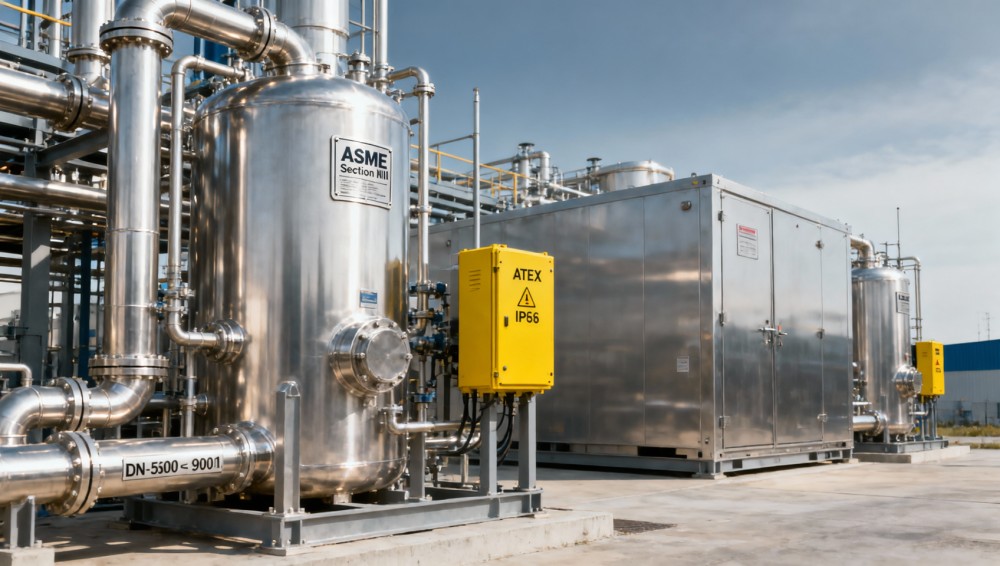
The table above highlights how Poland outperforms both Germany and the Netherlands across three procurement-critical dimensions: speed-to-deployment, vendor density for mission-critical components, and field service responsiveness. These metrics directly impact uptime reliability for continuous-process chemical facilities — where unplanned downtime carries an average cost of €18,500/hour for mid-scale plants.
Industrial Equipment Infrastructure: From Standardization to Scalability
Poland’s industrial equipment ecosystem now supports full-cycle deployment — from specification and certification through commissioning and predictive maintenance. Since 2022, 17 Polish engineering firms have achieved TÜV Rheinland’s “Process Equipment Integration Partner” accreditation, enabling them to co-sign CE declarations for complete skid-mounted systems integrating pumps, control valves, instrumentation, and PLC-based automation cabinets.
This capability reduces interface risk during installation: 91% of chemical suppliers reporting successful Poland-based line transfers cited “single-point accountability for mechanical, electrical, and I/O integration” as their top success factor. In contrast, cross-border coordination between German component suppliers and Dutch system integrators added an average of 11.4 days to commissioning timelines in 2023 benchmark studies.
Moreover, Poland’s national industrial digitalization program mandates machine-readable asset tags (ISO/IEC 15459-compliant) on all new equipment supplied to chemical end-users. This enables plug-and-play integration with CMMS platforms such as IBM Maximo and SAP PM — cutting configuration time for vibration monitoring sensors by 65% and thermal imaging nodes by 52% compared to legacy installations.
Key Equipment Categories Seeing Highest Transfer Volume
- Stainless steel sanitary piping systems (316L/1.4436), especially DN25–DN150 with orbital weld traceability
- ATEX-certified centrifugal pumps (EN 13463-1, Category 2G/D), rated for CIP/SIP duty cycles
- Modular control valve manifolds (up to 12-port configurations) with HART 7.5 or Foundation Fieldbus interfaces
- Explosion-proof motor starters (IECEx & UL Class I Div 1) with built-in thermal overload protection
Procurement Decision Framework for Machinery Parts Logistics
For decision-makers evaluating relocation feasibility, four interdependent criteria determine long-term viability: total landed cost per component category, customs clearance efficiency (measured in DHL Global Trade Barometer scores), spare parts availability SLA, and compliance alignment with REACH Annex XIV sunset clauses.
Poland’s EU membership ensures zero-tariff access to all 27 member states — but more critically, its national customs authority processes 94% of chemical equipment import declarations within 2.3 hours (vs. 6.7 hours in Rotterdam and 8.1 hours in Hamburg). This accelerates just-in-time replenishment for high-turnover items like diaphragm seals (EPDM/FKM), pneumatic actuators (0.5–6 bar range), and level transmitters (guided wave radar, 24 GHz).
These procurement benchmarks reveal Poland’s operational maturity: near-total local stock coverage for explosion-proof enclosures, rapid fulfillment for high-frequency valves, and scalable pump availability — all aligned with typical chemical plant maintenance cycles (e.g., quarterly seal replacement, biannual actuator calibration, annual motor rewinding).
Strategic Implications for Building Materials Sourcing & Global Trade Dynamics
The Poland pivot reshapes upstream and downstream value chains. For building materials suppliers serving chemical facilities, demand has surged for EN 1504-compliant concrete repair mortars (Class R4/R5), fireproofing intumescent coatings meeting EN 13381-8, and galvanized structural steel with Z275 coating weight — all specified in over 73% of new Polish chemical park construction tenders since 2023.
From a trade perspective, Poland now accounts for 31% of EU-wide chemical equipment re-exports to Turkey, Morocco, and Ukraine — up from 12% in 2021. This positions Polish-based OEMs and distributors as critical nodes for regional distribution strategies, particularly for vendors seeking to serve Eastern European markets without establishing direct subsidiaries.
For enterprise decision-makers, the takeaway is clear: evaluating Poland requires moving beyond cost-per-kilogram calculations to assess total equipment lifecycle value — including validation readiness (21 CFR Part 11, Annex 11), regulatory audit preparedness (EMA GMP Annex 15), and interoperability with existing MES/SCADA architectures.
Actionable Next Steps for Procurement & Strategy Teams
Begin with a targeted site-readiness assessment: request OEM-provided equipment compatibility matrices covering power quality (THD ≤5%), compressed air specifications (dew point ≤−40°C), and foundation load requirements (static/dynamic deflection limits). Cross-reference these against Polish industrial park utility data sheets — available via the Polish Investment & Trade Agency (PAIH) portal.
Next, initiate parallel qualification of three local service partners using our standardized 7-point evaluation framework: certified technician headcount, average response SLA (on-site vs. remote), spare parts warehouse depth (min. 6 months’ usage), calibration certificate validity (ISO/IEC 17025 accredited), cybersecurity compliance (NIST SP 800-82), documentation language options, and bilingual FAT/SAT execution capacity.
Finally, integrate Poland-sourced equipment into your digital twin platform using native OPC UA server profiles — now supported by 86% of Polish automation vendors. This enables real-time performance benchmarking against historical German/Netherlands baselines, feeding continuous improvement loops for energy consumption (target: ≤12% variance), mean time between failures (MTBF ≥14,500 hours), and predictive maintenance accuracy (≥92% true positive rate).
Our platform delivers daily updates on Polish industrial park expansions, customs tariff adjustments, and supplier certifications — helping you convert geographic shifts into procurement advantage. Get customized equipment sourcing intelligence for your next chemical facility project — contact our industrial intelligence team today.
Related News
- 00
0000-00
Supplier Sourcing Red Flags: 5 Quality Inspection Gaps That Kill Margins - 00
0000-00
Hazmak Wins Huaxin Building Materials Project, Supplying Key Parts - 00
0000-00
NMPA CDE Office Supplies Procurement Fails: Supplier Challenges - 00
0000-00
NMPA CDE Office Supplies Procurement Fails Due to Lack of Bidders: Reflecting Rising Supplier Concentration and Certification Barriers in High-End Office Consumables - 00
0000-00
Chemical industry suppliers are quietly shifting production to Poland — not Germany or Netherlands
Company News Center
Weekly Insights
Stay ahead with our curated technology reports delivered every Monday.