





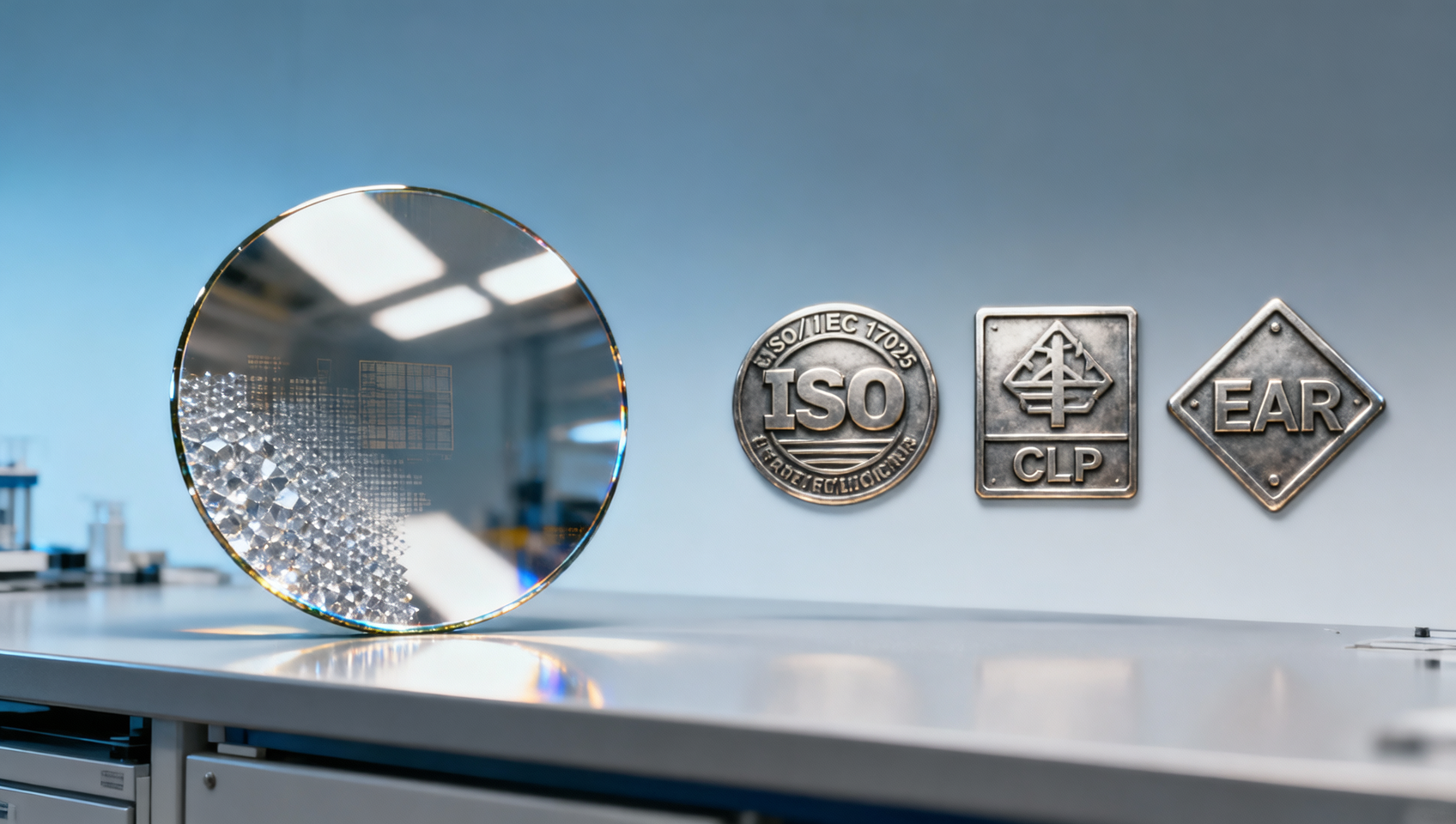
Semiconductor-grade silicon carbide (SiC) suppliers worldwide are reporting extended qualification timelines — a development with ripple effects across global trade trends, clean energy adoption, and electronics supply chains. As demand surges in renewable energy inverters, EV power modules, and high-efficiency packaging equipment, delays highlight bottlenecks tied to policy updates on material standards, cross-border e-commerce logistics, and fine chemicals purity requirements. This slowdown impacts building materials market innovation, home improvement tech integration, and corporate investment decisions. For business decision-makers and electronics procurement teams, understanding the root causes — from regulatory harmonization gaps to semiconductor manufacturing capacity constraints — is critical to strategic planning and risk mitigation.
Why Are SiC Qualification Cycles Stretching Beyond 12–18 Weeks?
Qualification for semiconductor-grade silicon carbide is no longer a linear process. Industry sources confirm average qualification timelines have expanded from the historical 8–12 weeks to 14–22 weeks — with some Tier-1 automotive and energy storage clients reporting up to 26 weeks for full AEC-Q101 or IEC 60747-19 validation. This delay isn’t driven by a single factor but by interlocking constraints across upstream chemistry, midstream wafer processing, and downstream testing infrastructure.
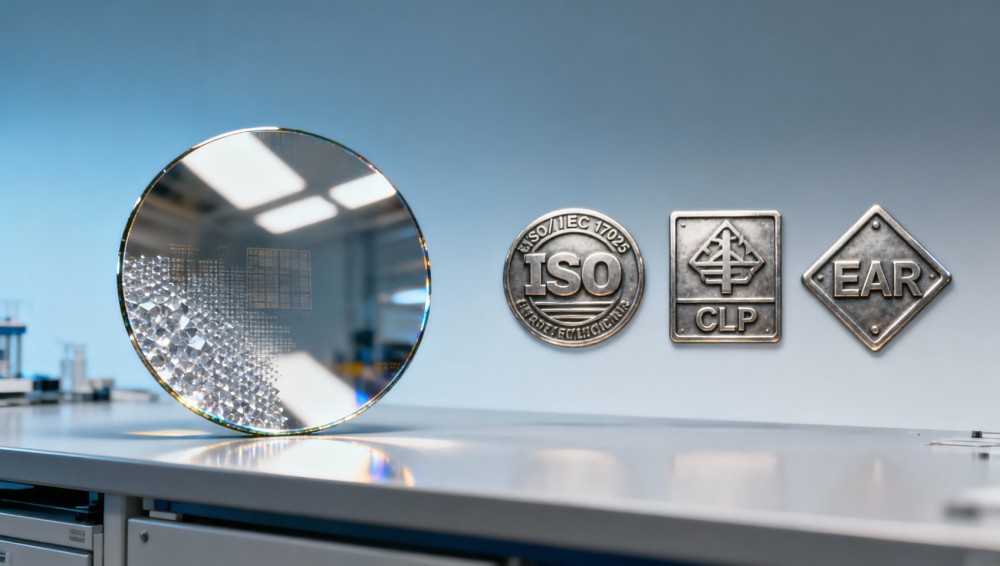
Three primary pressure points stand out: (1) tighter traceability requirements for precursor gases and dopants under ISO/IEC 17025-accredited labs; (2) increased scrutiny of crystal defect density (<1 cm⁻² for 150mm wafers vs. <5 cm⁻² for legacy 100mm); and (3) growing dependence on dual-source certification — especially where EU REACH Annex XIV substances or U.S. EAR-controlled equipment are involved in epitaxy or ion implantation steps.
Unlike standard industrial SiC used in refractory ceramics or abrasives, semiconductor-grade material must meet sub-ppb metallic impurity thresholds (e.g., Fe, Ni, Cu < 0.1 ppb), oxygen content < 10¹⁶ cm⁻³, and micropipe density < 0.1/cm². Each specification adds at least 5–7 working days to analytical verification cycles — particularly when cross-border lab coordination is required.
How Do Regional Compliance Frameworks Impact Supply Readiness?
Regional divergence in chemical registration, packaging labeling, and export control triggers cascading qualification delays. For example, China’s newly enforced GB/T 39442–2020 mandates batch-level carbon isotope ratio tracking (¹²C/¹³C) for all SiC powders entering integrated circuit fabrication — adding 3–5 days per lot. Meanwhile, the EU’s updated CLP Regulation (EC No 1272/2008) requires new SDS formats with nano-specific hazard statements for SiC nanoparticles used in slurry-based polishing — impacting 40% of foreign-sourced pre-epi wafers.
U.S. exporters face parallel friction: BIS licensing reviews now routinely extend beyond the statutory 30-day window for shipments containing >10kg of 4H-SiC substrates destined for advanced packaging lines in Southeast Asia. These overlapping compliance layers mean one physical shipment may require three separate qualification dossiers — each with distinct documentation formats, language requirements, and notarization rules.
These regulatory overlays explain why identical SiC wafers qualified in Japan may require re-testing upon entry into Germany or Vietnam — even when technical specifications remain unchanged. Procurement teams must now allocate buffer time not just for engineering validation, but for jurisdictional reconciliation.
What Should Procurement Teams Prioritize During Extended Waits?
Extended qualification doesn’t mean passive waiting. Forward-looking buyers are activating four proactive levers: (1) early engagement with supplier quality teams to co-develop test plans aligned with end-customer acceptance criteria; (2) parallel sourcing of non-critical components (e.g., packaging substrates, thermal interface materials) to compress downstream assembly timelines; (3) requesting interim certificates — such as ISO 9001-compliant manufacturing records or third-party SEM/EDS reports — to validate progress before final release; and (4) locking in volume commitments during qualification to secure priority queue placement post-approval.
For electronics OEMs scaling 800V EV platforms, this means initiating qualification at least 6 months ahead of production ramp — not 3. For building materials firms integrating SiC-based smart sensors into HVAC systems, it means selecting suppliers offering pre-validated reference designs compliant with UL 2900-1 cybersecurity requirements.
Top 5 Procurement Checklist Items for SiC Buyers
- Confirm whether supplier maintains dual accreditation: ISO/IEC 17025 (testing) + ISO 9001 (manufacturing)
- Verify minimum defect-free area per wafer: ≥95% for 150mm 4H-SiC substrates per JEDEC JESD22-A108F
- Require traceable gas chromatography data for all precursor batches (NH₃, SiH₄, C₃H₈)
- Check if supplier supports split-lot qualification — enabling partial release while final stress tests complete
- Validate compatibility with your existing metrology stack (e.g., KLA Surfscan SP5, Bruker Dimension Icon)
Why Partner With a Cross-Industry Intelligence Platform for SiC Sourcing?
Navigating these complexities demands more than supplier catalogs or static price lists. Our platform delivers real-time intelligence across 12 industrial verticals — including live updates on SiC-related regulatory amendments in 28 jurisdictions, quarterly purity benchmarking across 17 wafer suppliers, and verified lead times for key testing services (e.g., TEM cross-section analysis turnaround: 11–19 days vs. industry avg. 26+).
We support procurement and engineering teams with actionable deliverables: customized qualification roadmaps (including jurisdiction-specific documentation templates), comparative analysis of 4H vs. 6H polytype trade-offs for your target application, and direct access to vetted SiC material specialists — available for technical alignment calls within 48 hours of request.
If your team is evaluating SiC suppliers for EV traction inverters, solar micro-inverters, or next-gen power packaging equipment, contact us today for a free qualification timeline assessment — including gap analysis against your target launch date, recommended alternative chemistries, and certified lab partner referrals.
Related News
- 00
0000-00
Suppliers of semiconductor-grade silicon carbide report extended qualification timelines — what’s causing the delay? - 00
0000-00
Supplier Sourcing Red Flags: 5 Quality Inspection Gaps That Kill Margins - 00
0000-00
Hazmak Wins Huaxin Building Materials Project, Supplying Key Parts - 00
0000-00
NMPA CDE Office Supplies Procurement Fails: Supplier Challenges - 00
0000-00
NMPA CDE Office Supplies Procurement Fails Due to Lack of Bidders: Reflecting Rising Supplier Concentration and Certification Barriers in High-End Office Consumables
Company News Center
Weekly Insights
Stay ahead with our curated technology reports delivered every Monday.