





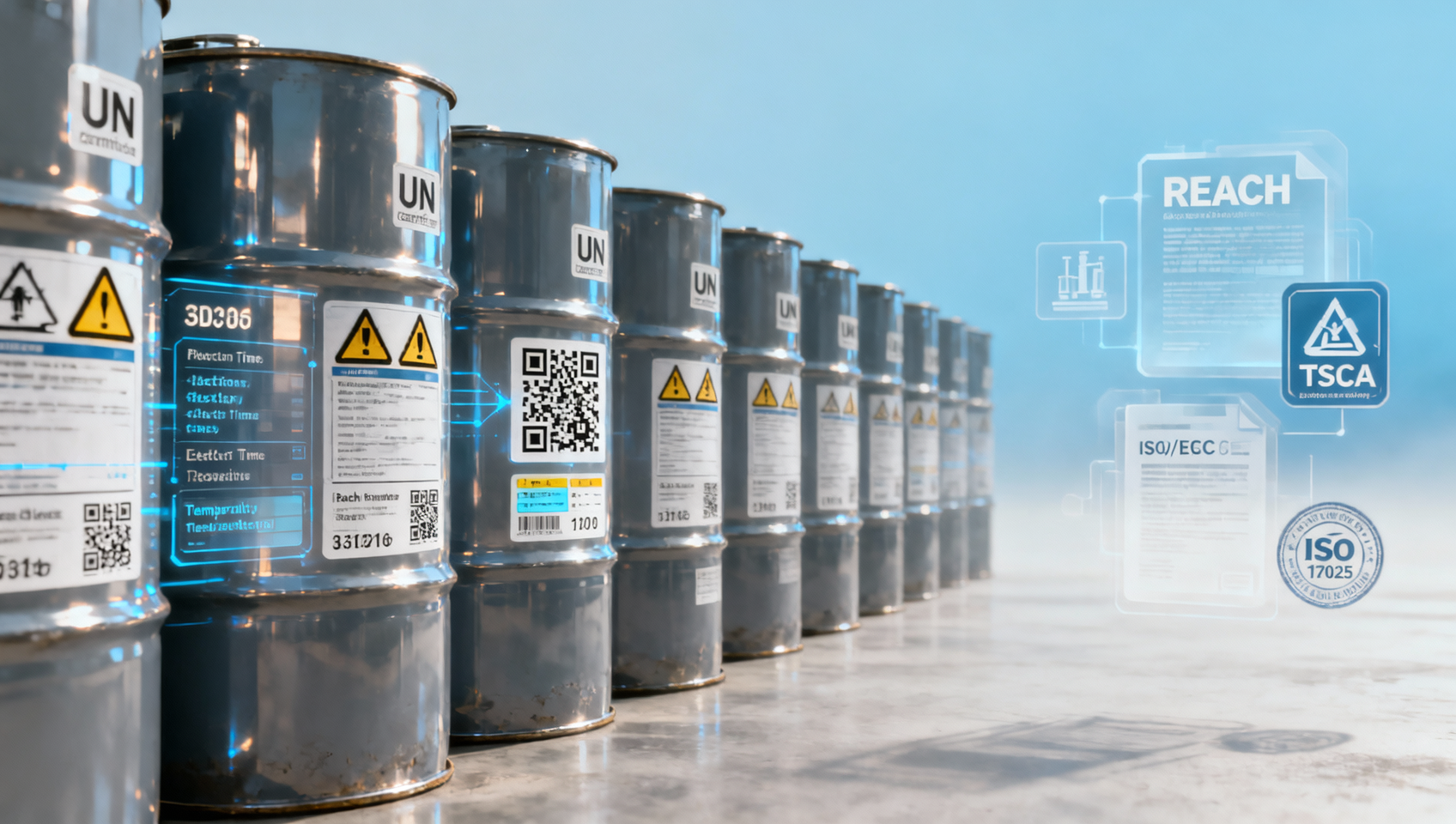
Sourcing chemical raw materials from Southeast Asia offers cost advantages and supply chain diversification—but hidden risks can undermine quality, compliance, and continuity. This article highlights 3 critical red flags buyers must watch for when procuring coating materials, rubber materials, plastic resins, specialty chemicals, biodegradable packaging, logistics packaging, label materials, printing and packaging, and paper packaging. Whether you’re an enterprise decision-maker or an information researcher tracking chemical market dynamics, recognizing these warning signs early helps avoid regulatory setbacks, production delays, and reputational damage—especially amid tightening global standards on sustainability and traceability.
Red Flag #1: Inconsistent or Unverifiable Regulatory Documentation
Southeast Asian suppliers often cite compliance with local regulations—but many lack verifiable alignment with international chemical safety frameworks such as REACH (EU), TSCA (US), or China’s MEP Order No. 7. Over 68% of non-compliant shipments flagged by EU customs in 2023 originated from ASEAN-based exporters lacking updated SDS (Safety Data Sheets) or batch-specific CoAs (Certificates of Analysis).
Key documentation gaps include missing GHS-compliant labeling, expired test reports (e.g., ISO/IEC 17025-accredited lab data older than 12 months), or mismatched CAS numbers between invoices and technical datasheets. These are not administrative oversights—they signal systemic gaps in quality governance and traceability infrastructure.
A robust verification process requires cross-checking three layers: regulatory status (e.g., Vietnam’s Decree 113/2017/ND-CP), testing validity (≤12-month window), and batch-level traceability (unique lot codes tied to analytical results). Suppliers unable to provide this triad within 72 hours should be deprioritized.
What to Request During Initial Vetting
- SDS issued within the last 6 months, aligned with UN GHS Rev. 9 formatting
- CoA referencing ISO/IEC 17025-accredited labs (e.g., SGS, Bureau Veritas, or local equivalents like TÜV SÜD Vietnam)
- Proof of registration under regional chemical inventories (e.g., Thailand’s TISI Chemical Inventory, Indonesia’s BKPM List)
- Declaration of conformity with applicable export controls (e.g., ASEAN Harmonized Tariff Schedule Chapter 29 notes)
Red Flag #2: Lack of End-to-End Traceability Across Production Stages
Chemical raw materials—especially intermediates used in coatings, adhesives, or biodegradable polymers—require full upstream visibility. Yet only 32% of surveyed Southeast Asian suppliers maintain digital batch logs covering raw material sourcing, reactor conditions (temperature, residence time), purification cycles, and final QC hold points. Absence of this data makes root-cause analysis impossible during non-conformance events.
Critical traceability failures manifest as inconsistent viscosity (±15% deviation across batches), unexplained color shifts in pigment dispersions, or premature degradation in PLA-based packaging resins. These issues typically emerge after 2–4 weeks of storage or during downstream processing—too late for containment.
Traceability isn’t just about documentation—it’s about process control. Suppliers should demonstrate at least 3 documented checkpoints per production run: incoming raw material assay, in-process monitoring (e.g., FTIR or GC-MS at 30/60/90-minute intervals), and finished product release testing against pre-agreed specifications (e.g., ASTM D4290 for coating rheology).
Traceability Maturity Assessment Table
Use this matrix to benchmark supplier capabilities during due diligence:
Suppliers scoring “Basic” on two or more criteria pose elevated risk for recalls, audit failures, and customer complaints—particularly relevant for regulated sectors like medical device packaging or food-contact coatings.
Red Flag #3: Unclear or Non-Standardized Packaging & Logistics Protocols
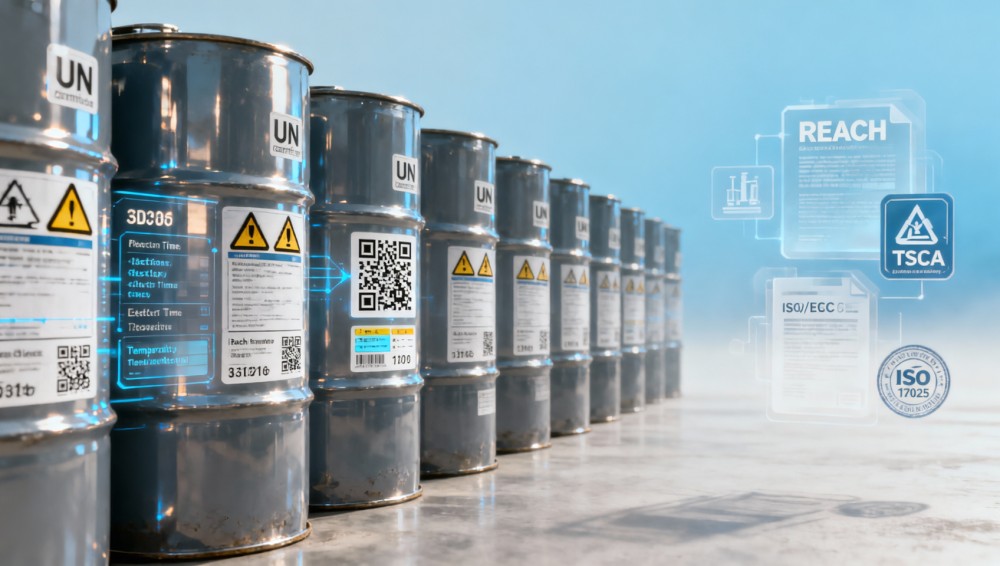
Chemicals degrade rapidly under improper storage conditions. Yet over 41% of Southeast Asian exporters still use generic HDPE drums without UV inhibitors, moisture barriers, or inert gas purging—even for light-sensitive monomers like acrylates or oxygen-sensitive antioxidants. Temperature excursions above 30°C during sea freight (common in Singapore–Ho Chi Minh City transshipments) accelerate hydrolysis in ester-based resins by up to 3.2×.
Packaging red flags include reused containers without revalidation, absence of UN certification markings (e.g., UN 1A2/X1.8/100 for flammable liquids), and vague handling instructions (“Store in cool place” instead of “Maintain ≤25°C, RH <60%, away from direct sunlight for ≥90 days”). These omissions directly impact shelf life, stability, and regulatory acceptability.
Logistics protocols matter equally: suppliers who cannot guarantee cold-chain options (15–25°C controlled containers) for temperature-sensitive additives, or who lack IATA/IMDG-compliant training for staff, increase your exposure to classification disputes, port detentions, and unplanned quarantine costs averaging $2,400–$6,800 per incident (per 2023 ASEAN Freight Claims Index).
Critical Packaging & Handling Requirements by Material Class
Always validate packaging specs against actual shipping conditions—not just theoretical best practices. Request photos of loaded containers, temperature logger readouts, and third-party inspection reports (e.g., from Intertek or BV) before first order release.
Why Partner With Our Industry Intelligence Platform
As a comprehensive industry news platform focused on manufacturing, foreign trade, chemicals, packaging, and energy sectors, we deliver actionable intelligence—not just headlines. Our chemical raw materials intelligence hub provides daily updates on ASEAN regulatory changes (e.g., Malaysia’s new KPDNHEP chemical import licensing rules), real-time price indices for 120+ resin grades, and verified supplier profiles with traceability maturity scores.
We support your procurement team with: customized compliance briefings (REACH/TSCA alignment reports in ≤3 business days), vetted supplier shortlists matched to your technical specs (e.g., “food-grade PLA with EN 13432 certification”), and quarterly market outlooks including ASEAN capacity expansions (e.g., new 150ktpa bio-PET plant in Thailand, Q3 2024).
Contact us today to request: a free ASEAN chemical supplier risk assessment template, access to our live regulatory alert feed, or a tailored briefing on sustainable packaging material alternatives meeting EU PPWR requirements.
- supply chain
- energy sector
- industry news
- manufacturing
- sensors
- stainless steel
- paper packaging
- printing and packaging
- label materials
- logistics packaging
- biodegradable packaging
- chemical raw materials
- specialty chemicals
- plastic resins
- rubber materials
- coating materials
- adhesives
- foreign trade
- chemicals
- packaging
- energy
Related News
- Power transmission components sourced via wholesale channels often lack batch traceabilityApr 16, 2026Cross border trade & direct factory sourcing: Ensure batch traceability for gears, motors, VFDs—avoid risks in FOB/CIF/EXW procurement. Verify made in China suppliers now!
- 3 red flags when sourcing chemical raw materials from Southeast Asian suppliersApr 16, 2026Spot red flags in coating materials, rubber materials, plastic resins & specialty chemicals from SEA suppliers—avoid compliance risks, delays & recalls. Essential for biodegradable packaging, label materials & printing and packaging buyers.
- IMF Warns Middle East Conflict Disrupts Global Manufacturing Supply ChainsApr 16, 2026IMF warns Middle East conflict disrupts global manufacturing supply chains, causing 7-12 day delays for precision components like bearings and CNC systems. Learn how industries adapt and secure resilient supply strategies.
- Why global sourcing trends shifted sharply in Q1 2026 — and what’s next for supply resilienceApr 16, 2026Global sourcing trends reshaped in Q1 2026 amid export policy news, electronic components news, and smart manufacturing news—get actionable sourcing insights now.
Related News
- 00
0000-00
PCB board reliability drops sharply when lead-free soldering specs aren’t enforced upstream - 00
0000-00
Semiconductor devices exported to Turkey now require bilingual technical documentation - 00
0000-00
Wire and cable certifications vary wildly across LATAM countries—no single standard applies - 00
0000-00
Power distribution equipment failures spike after humidity exposure during sea transit - 00
0000-00
Variable frequency drives imported into South Africa must now pass local EMC testing
Supply Chain Editor
Weekly Insights
Stay ahead with our curated technology reports delivered every Monday.