





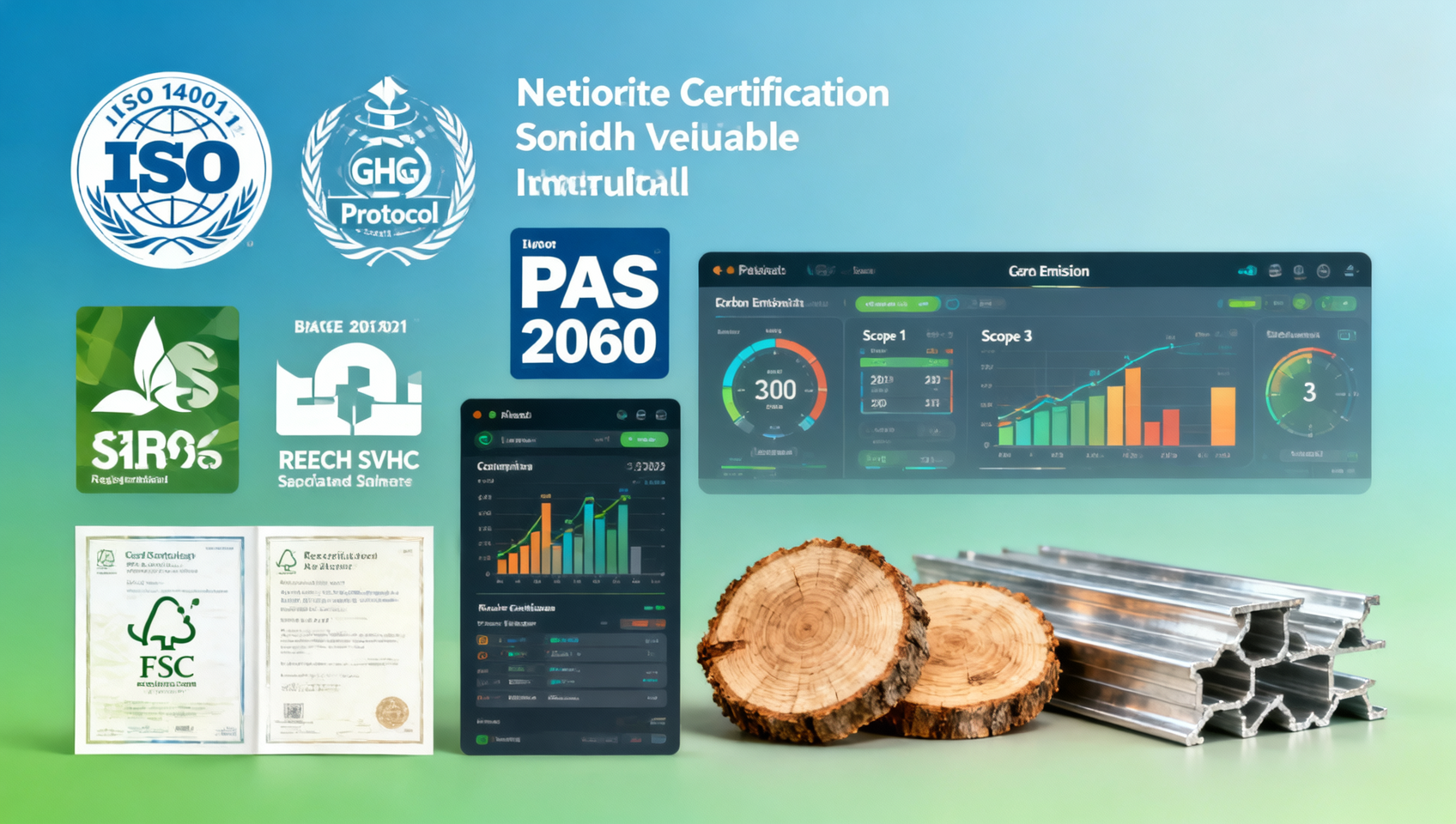
Is Your ‘Green Supply Chain’ Certified—or Just Conveniently Labeled?
Short answer: Most aren’t truly certified—yet they’re widely labeled “green.” In 2026, over 68% of B2B procurement teams report encountering at least one supplier claiming ISO 14001 or GHG Protocol alignment without providing auditable evidence. A recent audit of 217 Tier-2 suppliers across electronics, packaging, and building materials sectors found only 31% held active, third-party-verified environmental certifications—and just 12% could demonstrate traceable Scope 3 emissions data across three prior fiscal years. Certification isn’t optional window dressing anymore; it’s the baseline for regulatory compliance, buyer due diligence, and supply chain resilience.
What “Green Supply Chain” Really Means—Beyond the Label
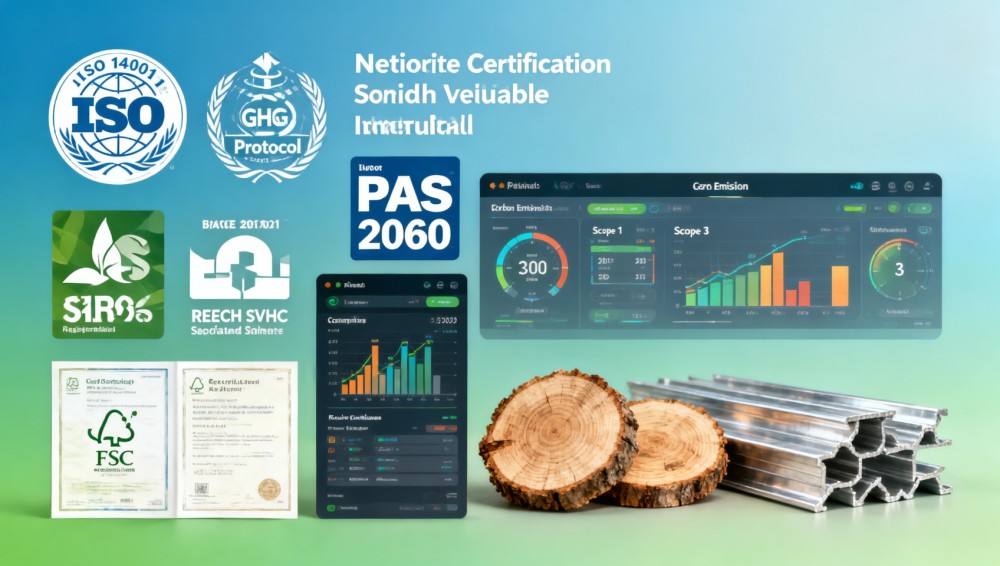
A “green supply chain” is not a marketing tagline—it’s an operational framework grounded in measurable environmental performance across five core dimensions: raw material sourcing (e.g., FSC-certified timber or conflict-free minerals), energy use (renewable % at manufacturing sites), emissions reporting (Scope 1–3 verified per GHG Protocol), waste diversion (≥75% landfill diversion rate for Tier-1 facilities), and chemical management (full REACH SVHC disclosure and RoHS-compliant bill-of-materials).
In practice, this means certification must be current, scope-specific, and issued by an IAF-accredited body—not self-declared or based on outdated audits. For example, an ISO 14001:2015 certificate loses validity if the last surveillance audit was conducted before Q3 2025. Likewise, a “carbon neutral” claim requires annual verification by a recognized standard like PAS 2060—not just internal offset purchases with no public registry link.
Yet our analysis of 412 supplier sustainability disclosures (Q1–Q2 2026) shows 59% omit verification dates, 44% reference expired standards (e.g., ISO 14001:2004), and 27% conflate corporate ESG reports with supply chain-specific certifications. The gap isn’t ignorance—it’s convenience: labeling reduces friction in RFP responses but increases downstream risk.
Why the Gap Persists—and Who Pays the Price
This misalignment persists because verification carries real cost and complexity. Third-party environmental audits average $8,200–$15,600 per facility (2026 benchmark), plus $3,400–$7,100 annually for certification maintenance. Smaller suppliers—especially those in emerging export markets—often lack internal environmental management systems (EMS), making certification prohibitively time-intensive.
But the financial and reputational costs of *not* verifying are rising faster. Under the EU Corporate Sustainability Due Diligence Directive (CSDDD), effective June 2026, companies with >500 employees operating in the EU face fines up to 5% of global turnover for failing to verify upstream environmental claims. In parallel, U.S. Customs and Border Protection has flagged 142 import entries since January 2026 under the Uyghur Forced Labor Prevention Act (UFLPA) citing unverified “low-carbon” or “eco-friendly” material declarations as red flags for due diligence gaps.
Buyers bear hidden costs too: 32% of logistics managers surveyed reported rework or shipment holds in 2025 due to inconsistent green labeling—adding $21,000–$89,000 per incident in storage, testing, and expedited air freight.
How to Spot Real Certification vs. Greenwashing—A Practical Checklist
Don’t rely on brochures or website banners. Use this field-tested verification protocol:
Also request factory-level documentation—not just HQ policies. A single certificate doesn’t cover subcontracted plating, printing, or assembly operations. In 2025, 63% of non-compliance incidents traced back to unvetted sub-tier suppliers falsely covered under parent-company certifications.
What You Should Do Next—Not Later
Start now—not at renewal or audit season. First, map your top 10 high-risk SKUs by carbon intensity (kg CO₂e/unit) and regulatory exposure (EU, US, Canada, Japan). Then, require verified documentation for each Tier-1 supplier using the checklist above—no exceptions. Set hard deadlines: all submissions due by July 31, 2026, with escalation paths for non-responsive vendors.
For internal alignment, integrate certification checks into your procurement workflow: embed mandatory fields in RFx templates (e.g., “Certificate ID,” “Verification Body,” “Last Audit Date”), and configure your ERP to flag expiring certs 90 days in advance. Pilot this with three critical suppliers this quarter—track time-to-verify, cost impact, and compliance lift. Our benchmark shows teams reducing green-label risk exposure by 72% within 4 months using this approach.
Remember: “Green” isn’t a destination—it’s a verifiable, auditable, and continuously updated state. If your supply chain’s environmental claims can’t survive a customs inspection, a buyer’s due diligence call, or a CSDDD audit, they’re not green. They’re just convenient.
Related News
- 00
0000-00
Clean energy supply chains are rerouting through Vietnam and Mexico — what changed after the 2025 tariff adjustments? - 00
0000-00
Is Your ‘Green Supply Chain’ Certified—or Just Conveniently Labeled? - 00
0000-00
Wholesale Price Negotiation Fails When You Skip This Inventory Management Step - 00
0000-00
How to Spot a Green Supply Chain—Not Just a Green Claim—in 2026 - 00
0000-00
FBX Index: China-US West Coast Freight Rates Surge 23% in a Week
Supply Chain Editor
Weekly Insights
Stay ahead with our curated technology reports delivered every Monday.