





Renewable energy supply chain challenges are no longer a background issue for the clean energy sector. They now affect purchasing timelines, equipment availability, project budgets, production planning, and even market competitiveness. For manufacturers, buyers, operators, and business decision-makers, the main question is no longer whether disruption exists, but how to identify the most critical risks early and respond before delays, cost swings, or policy changes damage business outcomes.
Across energy, manufacturing, electronics, chemicals, machinery, and building materials, supply chain pressure is being shaped by a mix of trade policy, raw material volatility, component shortages, logistics uncertainty, localization requirements, and faster technology upgrades. That makes renewable energy market analysis more important than ever. Companies that treat supply chain monitoring as a strategic capability—not just a procurement task—are better positioned to protect margins, secure supply, and make better investment decisions.
Why renewable energy supply chain challenges are getting harder to ignore
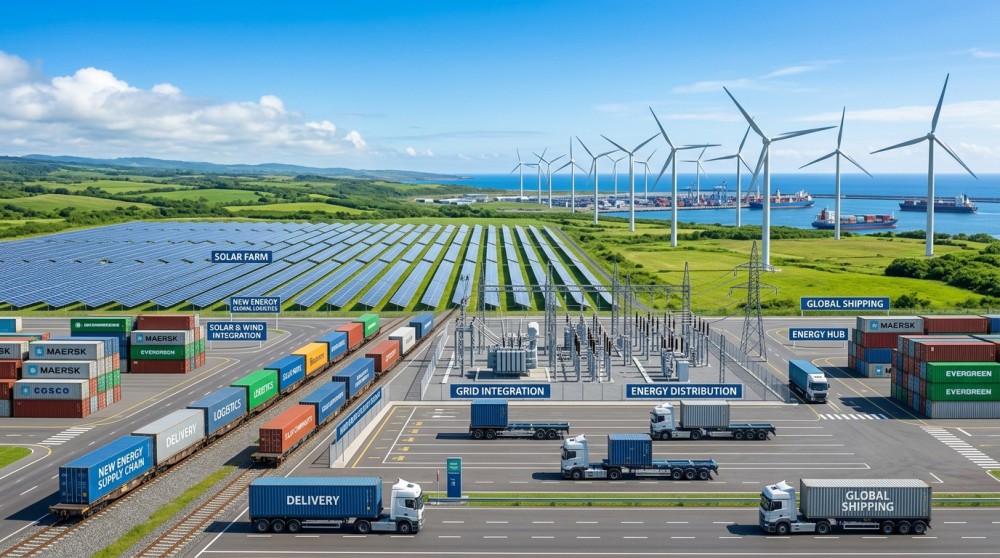
The pressure has intensified because renewable energy deployment is expanding at the same time that the global industrial environment is becoming more fragmented. Solar, wind, battery storage, power electronics, transformers, and grid-related equipment all depend on complex upstream and cross-border supply networks. When one part of that system tightens, the impact can quickly spread across multiple industries.
For many businesses, the warning signs are already visible:
- Longer lead times for key components such as inverters, transformers, semiconductors, cables, and battery materials
- Price fluctuations in metals, chemicals, building materials, and transport services
- Higher compliance pressure due to carbon rules, traceability demands, and local content requirements
- Greater exposure to foreign trade policy impact on manufacturing, including tariffs, export controls, and anti-dumping measures
- More frequent planning changes caused by policy incentives, subsidy revisions, and grid investment bottlenecks
This is why the issue can no longer be treated as a temporary procurement inconvenience. It is now a business risk that directly affects product pricing, delivery commitments, capital planning, and market timing.
What buyers, operators, and decision-makers are most concerned about
The target audience for this topic usually wants practical answers, not broad commentary. Their concerns tend to fall into five areas.
1. Will supply disruptions delay projects or production?
Buyers and operators need to know which categories face the greatest risk. In renewable energy, the most vulnerable areas often include semiconductors, battery cells, specialty chemicals, copper-based electrical products, rare earth materials, power conversion equipment, and large grid connection components. Even when finished products are available, one missing upstream part can create expensive delays.
2. Will price instability damage margins?
Business evaluation teams and managers are highly sensitive to input cost changes. Building materials price fluctuations, freight costs, currency movements, and raw material volatility can all alter project economics. In sectors with fixed-price contracts, sudden increases in equipment or material costs can quickly reduce profitability.
3. How should policy and trade changes be interpreted?
Renewable energy supply chains are heavily influenced by incentives, trade restrictions, localization policies, sustainability reporting rules, and industrial strategy. Companies want timely energy market analysis tools that help them understand whether a policy shift creates risk, opportunity, or both.
4. Which suppliers are still dependable?
Supplier evaluation now requires more than checking price and basic capacity. Procurement teams need visibility into geographic concentration, exposure to trade disputes, financial health, technology roadmap alignment, and delivery resilience.
5. What actions should be taken now?
Decision-makers want a response framework. They need to know what to monitor, where to diversify, when to lock in contracts, and how to prioritize limited resources.
Which supply chain pressure points matter most in renewable energy today
Not every disruption has the same business impact. The most valuable analysis focuses on the pressure points most likely to change cost, availability, or strategic flexibility.
Critical minerals and processed materials
Lithium, nickel, cobalt, graphite, copper, aluminum, polysilicon, and rare earth elements remain central to renewable energy manufacturing. But the issue is not only resource availability. Processing capacity, environmental compliance, export policy, and regional concentration are equally important. A market may appear well supplied in theory while remaining highly vulnerable in practice due to refining concentration or transport constraints.
Semiconductor supply chain updates
Power semiconductors, control chips, sensors, and other electronic components are essential for solar inverters, battery systems, charging infrastructure, smart energy devices, and industrial automation. Semiconductor supply chain updates matter because delays in electronics often spread beyond the energy sector into machinery, e-commerce hardware, factory systems, and connected equipment.
Grid and transmission equipment bottlenecks
In many markets, renewable generation growth is now constrained less by panel or turbine production and more by the availability of transformers, switchgear, cables, interconnection equipment, and skilled installation capacity. This creates a less visible but highly important bottleneck for energy project schedules.
Freight, logistics, and port risk
Shipping volatility has eased compared with peak disruption periods, but logistics risk remains a serious concern for internationally sourced materials and components. Port congestion, route changes, insurance costs, customs delays, and geopolitical disruptions can still affect landed cost and delivery certainty.
Localization and compliance complexity
Many governments want more domestic production of clean energy equipment. While this can create opportunity for regional manufacturing, it also introduces complexity. Companies may need to redesign sourcing strategies to meet local content rules, qualify new suppliers, or restructure production footprints.
How foreign trade policy and industrial policy are reshaping sourcing decisions
One reason renewable energy supply chain challenges are becoming harder to ignore is that market logic alone no longer determines sourcing outcomes. Trade and industrial policy increasingly influence where companies buy, where they manufacture, and how they invest.
For example, tariffs and trade defense measures can raise import costs or shift demand toward alternative suppliers. Export controls may restrict access to certain technologies or materials. Subsidy programs can rapidly change the competitiveness of domestic manufacturing versus imports. Carbon border mechanisms and traceability requirements can also affect supplier selection, especially for businesses serving international customers.
For procurement and strategy teams, this means supplier comparison must include policy exposure. The lowest-cost source on paper may carry the highest long-term risk if it is vulnerable to regulatory disruption or trade friction. Strong business intelligence for market analysis helps companies compare sourcing options more realistically by combining price, policy, logistics, and compliance factors.
What companies should do now to reduce renewable energy supply chain risk
The most effective response is not simply “buy earlier” or “switch suppliers.” Companies need a more structured approach that combines market monitoring with operational decision-making.
Map supply chain dependencies beyond tier-one suppliers
Many firms know their direct suppliers but have limited visibility into upstream exposure. Mapping dependencies for critical materials, subcomponents, and production regions helps identify where concentration risk is highest.
Segment purchases by risk, not just by spend
Some low-cost items can stop entire production lines or projects if unavailable. Procurement teams should classify categories based on business criticality, replacement difficulty, lead-time volatility, and policy sensitivity.
Build scenario-based sourcing plans
Instead of relying on a single forecast, create sourcing plans for multiple scenarios: price increase, trade restriction, shipment delay, demand surge, and policy reversal. This supports faster action when conditions change.
Use contract strategy more actively
In volatile markets, contract structure matters. Companies may benefit from a mix of long-term agreements for critical categories, flexible volume arrangements where demand is uncertain, and indexed pricing models where fixed pricing is too risky.
Track market signals continuously
Regular monitoring of policy changes, raw material prices, supplier announcements, logistics conditions, and technology updates allows businesses to act before supply disruptions become severe. This is where an industry news platform adds practical value: it helps teams connect developments across sectors instead of viewing each issue in isolation.
Coordinate procurement, operations, and leadership
Supply chain resilience is not only a procurement issue. Operators need realistic delivery expectations, finance teams need cost visibility, and leadership needs decision-ready intelligence on risk and opportunity. Cross-functional communication improves response speed and reduces avoidable losses.
How to judge whether a supply chain issue is temporary noise or a strategic shift
Not every disruption deserves a major response. One of the most useful skills for business readers is separating short-term volatility from structural change.
A supply issue is more likely to be strategic when it shows several of these characteristics:
- It affects multiple regions or multiple tiers of the supply chain
- It is linked to policy, infrastructure, or capacity constraints that take years to resolve
- It changes total cost, not just spot pricing
- It reduces supplier choice or increases geographic concentration
- It is tied to long-term technology demand growth, such as grid upgrades, battery expansion, or electrification
By contrast, a short-lived issue may involve temporary logistics delays, seasonal price movements, or isolated factory disruptions that do not significantly alter long-term supply balance.
For decision-makers, this distinction is important because overreacting can increase cost unnecessarily, while underreacting can leave the business exposed to deeper disruption later.
Why better market intelligence is now a competitive advantage
As renewable energy markets become more interconnected with manufacturing, electronics, chemicals, and international trade, businesses need more than periodic updates. They need relevant, timely, and actionable information that helps them compare risks across sectors.
This is especially important for:
- Information researchers who need credible signals, not fragmented headlines
- Operators who need to anticipate delays and adjust execution plans
- Procurement teams who need stronger supplier and sourcing decisions
- Business evaluation teams who need realistic assumptions for forecasting and investment analysis
- Corporate leaders who need clearer judgment on timing, risk exposure, and strategic response
Companies that consistently monitor policy, pricing, supply capacity, and trade developments are often better prepared to secure supply, negotiate effectively, and identify opportunity ahead of slower competitors.
Conclusion
Renewable energy supply chain challenges are getting harder to ignore because they now affect far more than equipment availability. They influence project timing, input costs, supplier strategy, compliance burden, and long-term competitiveness. For businesses operating across energy and adjacent sectors, the right response starts with better visibility: understanding which risks are structural, which signals matter most, and which actions can reduce exposure without overcomplicating operations.
The most practical takeaway is clear: treat supply chain intelligence as a core business capability. Companies that combine renewable energy market analysis, semiconductor supply chain updates, trade policy awareness, and real-time pricing insight will be in a stronger position to make confident decisions in a market that is changing faster and becoming more complex.
- market analysis
- supply chain
- building materials
- energy sector
- industry news
- business intelligence
- raw material prices
- supply chain updates
- foreign trade policy
- manufacturing
- sensors
- switchgear
- electronic components
- solar inverter
- cement
- specialty chemicals
- energy man
- foreign trade
- international trade
- machinery
- chemicals
- electronics
- semiconductor
- e-commerce
- energy
- clean energy
- renewable energy
- energy market analysis
- renewable energy market analysis
- business intelligence for market analysis
- renewable energy supply chain challenges
- semiconductor supply chain updates
- foreign trade policy impact on manufacturing
- building materials price fluctuations
- energy market analysis tools
Related News
- Sourcing Cost Reduction Tips for Orders With Unstable DemandApr 20, 2026Sourcing cost reduction tips for unstable demand: improve ex factory price negotiation, wholesale price comparison, and supplier sourcing strategies to cut risk, lower MOQ pressure, and protect margins.
- Green Supply Chain Certification and What It Really ProvesApr 20, 2026Green supply chain certification explained: learn what it really proves for product certification standards, carbon footprint calculation methods, and supplier sourcing strategies to reduce risk and source smarter.
- Sourcing Cost Reduction Tips That Do Not Hurt Product QualityApr 20, 2026Sourcing cost reduction tips that protect quality: compare ex factory price, refine supplier sourcing strategies, use a quality inspection checklist, and cut total procurement cost with confidence.
- Energy industry supply chain management under grid pressureApr 22, 2026Energy industry supply chain management under grid pressure: track grid risk, renewable energy policy updates, clean energy business intelligence, and energy market analysis tools to optimize sourcing and investment.
Related News
- 00
0000-00
Two Supreme Organs Issue Anti-Bribery Judicial Interpretation (II) - 00
0000-00
Yangtze River Delta: 163 Projects Boost Manufacturing Sourcing Hub - 00
0000-00
China’s 'AI+Education' Action Plan Opens Standardization Window for AI Ed-Tech Exports - 00
0000-00
HKMA Sets Q3 2026 Timeline for First Stablecoin Licenses - 00
0000-00
China-Sri Lanka Joint Operation Repatriates 125 Telecom Fraud Suspects
Supply Chain Editor
Weekly Insights
Stay ahead with our curated technology reports delivered every Monday.