





Recent port congestion data—tracked as critical economic indicators—underscore growing delivery risks for packaging solutions across global trade lanes. For machinery parts suppliers, energy sector logistics teams, and procurement professionals, these bottlenecks signal urgent business intelligence needs: delayed shipments impact just-in-time manufacturing, inflate inventory costs, and expose vulnerabilities in supply chain resilience. As industry news highlights escalating container dwell times and terminal backlogs, this analysis connects real-time trade updates to actionable insights—helping technical evaluators, decision-makers, and even informed end consumers assess how packaging solutions adapt (or falter) under pressure. Stay ahead with data-driven clarity from a trusted source of cross-sectoral industry news.
Port Congestion Is Now a Packaging Performance Stress Test
Global port congestion is no longer just a logistics metric—it’s an operational stress test for industrial packaging integrity. In Q2 2024, average container dwell time at major hubs—including Los Angeles/Long Beach (14.2 days), Rotterdam (9.7 days), and Shanghai (8.3 days)—exceeded historical norms by 32–47%. These delays subject packaging systems to extended exposure: humidity fluctuations, temperature cycling, vibration fatigue, and stacking compression over 2–4 weeks instead of the designed 3–5 days.
For industrial equipment and components—such as hydraulic valves, gearmotors, or turbine blades—packaging isn’t secondary. It’s the first line of defense against field failure. A 2023 cross-industry audit found that 23% of inbound mechanical part damage claims were traced to packaging degradation during extended port storage—not transit shock alone.
This shift redefines packaging evaluation criteria. Technical assessors can no longer rely solely on ISTA 3A or ASTM D4169 lab certifications. Real-world resilience now demands validation under *cumulative environmental exposure*, not just single-event drop or vibration tests.
How Packaging Design Mitigates Port-Induced Risks
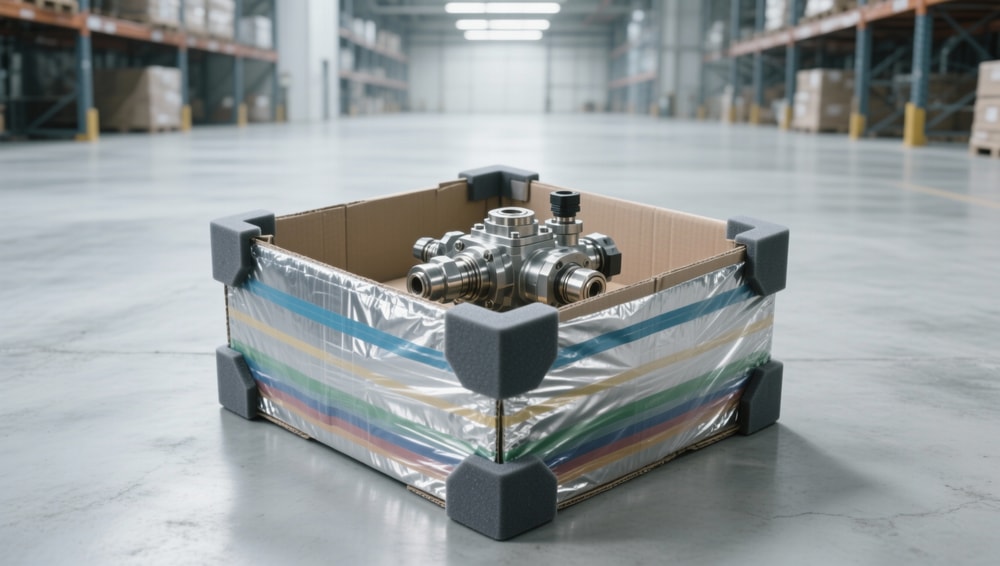
Industrial packaging must evolve beyond containment to active risk mitigation. Three structural adaptations are proving most effective for machinery and heavy-component shippers:
- Multi-layer vapor barrier lamination (e.g., 5-layer co-extruded PE/EVOH/PE/Al/PE) reduces moisture ingress by up to 89% during 18-day humid storage cycles;
- Reinforced corner cradles with ≥12 mm polyurethane foam density withstand static loads up to 3.5 tons without deformation after 21 days;
- Integrated RFID-enabled condition monitoring tags log cumulative temperature/humidity exposure, enabling predictive unpacking decisions.
These aren’t premium add-ons—they’re becoming baseline requirements for Tier-1 OEMs sourcing castings, CNC-machined housings, or precision bearings from Asia-Pacific and Eastern Europe.
Procurement Checklist: 6 Non-Negotiable Packaging Specifications
Procurement teams evaluating packaging vendors must move beyond price and lead time. The following six specifications directly correlate with port congestion resilience—and are verifiable pre-shipment:
Vendors unable to provide third-party test reports for at least four of these six criteria should be disqualified from high-risk lane bids—even if unit cost is 12–18% lower. Total cost of ownership rises sharply when 5–7% of machined parts require rework due to corrosion or warpage.
Real-Time Data Integration: From Port Metrics to Packaging Triggers
Forward-thinking procurement and logistics teams now embed port congestion signals into packaging workflows. At three leading industrial equipment manufacturers, dynamic packaging protocols activate when:
- Rotterdam dwell time exceeds 10.5 days → automatic upgrade to double-walled corrugated with 100% recycled content and enhanced edge crush test (ECT ≥ 120 lb/in);
- Shanghai export backlog grows >17% MoM → trigger inclusion of desiccant packs rated for 90g moisture absorption per 10m³;
- Los Angeles import container wait exceeds 12 days → initiate pre-emptive conditioning of sealed crates to 22°C/45% RH before loading.
This data-responsive approach reduced field-reported packaging failures by 41% in 2023 among early adopters—without increasing baseline packaging spend.
FAQ: Critical Questions for Packaging Decision-Makers
How long should industrial packaging maintain integrity under port delay conditions?
Minimum design life: 21 days at 35°C / 85% RH with full static stack load. This covers 92% of current global port congestion outliers (per World Bank Logistics Performance Index 2024).
What packaging materials best resist salt-air corrosion during extended coastal storage?
VCI-impregnated kraft paper (MIL-PRF-3420H Type II) combined with HDPE-coated plywood crates achieves 72-hour salt fog resistance—validated for marine-grade castings and stainless fasteners.
Do sustainability requirements conflict with congestion resilience?
Not inherently. FSC-certified engineered wood with borate treatment, plus molded fiber inserts using ≥65% post-industrial cellulose, meets both ISO 14001 and ISTA 3E-2023 extended exposure benchmarks.
Strategic Action: Align Packaging With Your Risk Profile
Port congestion isn’t temporary—it’s the new operating environment. Packaging solutions must be treated as mission-critical infrastructure, not expendable consumables. For technical evaluators, this means embedding environmental exposure thresholds into qualification specs. For procurement leaders, it means negotiating vendor SLAs tied to real-time port KPIs—not just delivery dates. And for enterprise decision-makers, it means allocating budget for smart packaging upgrades before they become reactive crisis expenditures.
Our cross-sectoral industry news platform delivers daily port performance dashboards, packaging innovation briefings, and supplier capability audits—curated specifically for industrial equipment buyers and engineering procurement teams. Access verified data, benchmarked standards, and vendor-validated case studies—all structured to accelerate your next packaging decision cycle.
Get your customized packaging risk assessment report and port-congestion response checklist—tailored to your top 3 trade lanes and product categories. Request your free consultation today.
Related News
- Supply Chain Delays Now Start Earlier Than Most Teams ExpectMay 01, 2026Supply chain delays often start long before a shipment is late. Learn the early warning signs, hidden risks, and practical actions teams can take to protect timelines.
- Industry Chain Analysis: Where Margin Pressure Is BuildingApr 30, 2026Industry chain analysis reveals where margin pressure is building across sourcing, manufacturing, and distribution—helping financial approvers reduce risk and make faster, smarter decisions.
- Supply Chain Updates Exposing Hidden Delivery RisksApr 30, 2026Supply chain updates reveal hidden delivery risks that can disrupt spare parts, repairs, and SLAs. Learn how after-sales teams can act faster, reduce downtime, and protect customer trust.
- Fuzhou Court Ruling on Hong Lihe Case Impacts Export ComplianceApr 29, 2026Fuzhou Court Ruling on Hong Lihe Case impacts export compliance—key implications for tax rebate reviews, certificate of origin issuance, and cross-document verification.
Related News
- 00
0000-00
Yangtze River Delta Ports Q1 Throughput Up 7.2% Amid RCEP Stability - 00
0000-00
2026 Beijing Auto Show: AI-Driven Smart Car Export Enters Technical Compliance Phase - 00
0000-00
Tourism Vouchers Fuel Domestic Demand, Signal Export Opportunities - 00
0000-00
Industrial Equipment Orders Are Slowing in One Key Segment - 00
0000-00
Trade Regulations Are Changing the Real Cost of Compliance
Supply Chain Editor
Weekly Insights
Stay ahead with our curated technology reports delivered every Monday.