





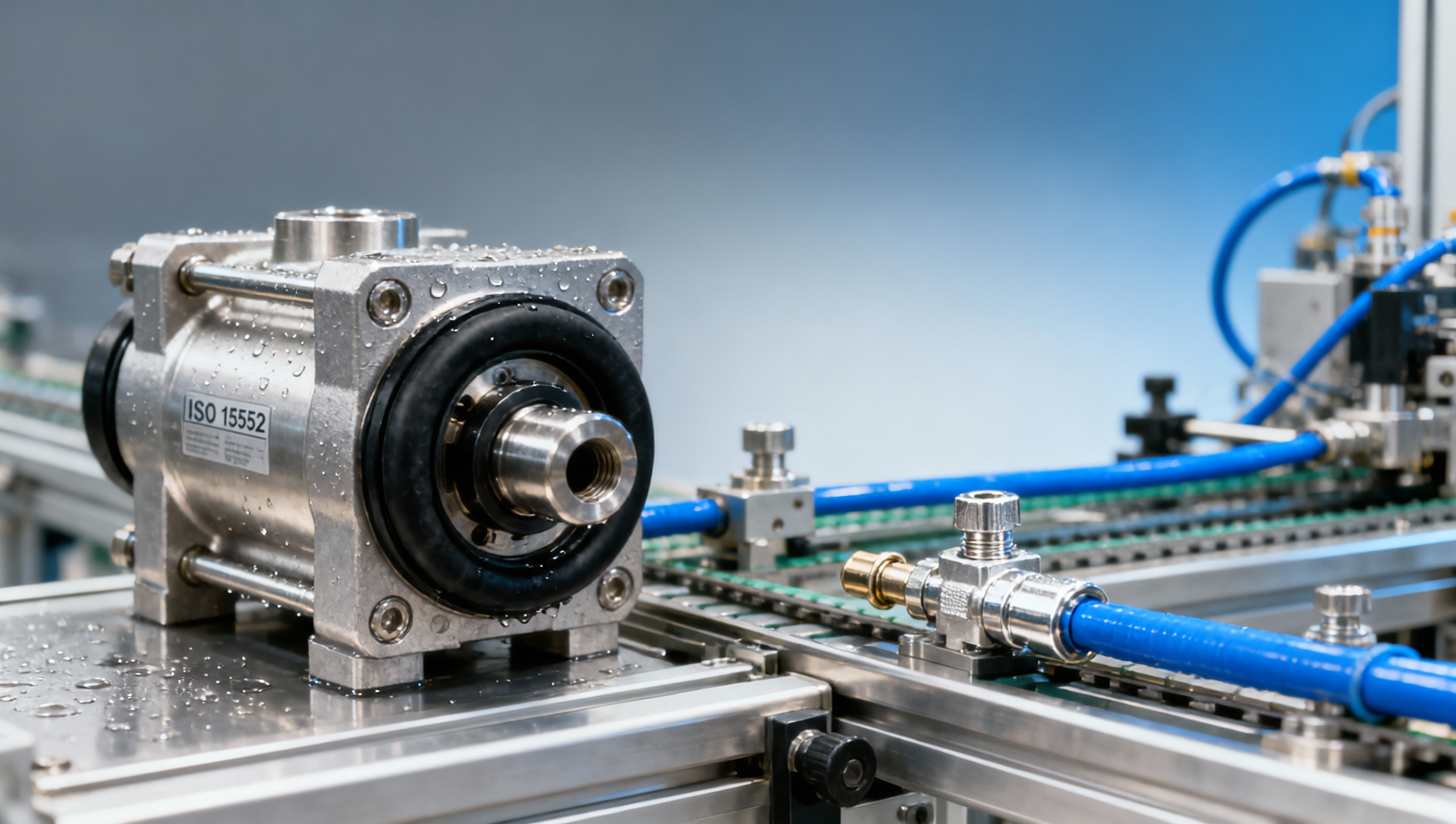
In the latest automation equipment news, pneumatic actuators are surging ahead of servo models—driven by cost efficiency, reliability in harsh environments, and faster deployment. This shift reflects broader industrial goods market updates, from raw material market trends impacting component pricing to supply chain news reshaping sourcing strategies. As smart manufacturing updates accelerate, buyers and procurement professionals are reevaluating actuator choices amid export policy updates and evolving customs policy news. For decision-makers and distributors, this trend underscores critical industry chain updates—and offers timely buyer insights for strategic investment updates and product innovation planning.
Why Pneumatic Actuators Are Reshaping Industrial Automation Procurement
Pneumatic actuators are no longer just “legacy options” — they’re now a deliberate strategic choice across packaging lines in Guangdong, chemical valve stations in Jiangsu, and assembly cells in Central European Tier-2 auto suppliers. Market data from Q1 2024 shows pneumatic unit shipments grew 12.3% YoY, outpacing servo actuator growth (7.8%) in mid-tier industrial machinery segments. This isn’t a regression—it’s recalibration grounded in real-world operational economics.
Unlike high-precision robotic arms requiring nanosecond-level motion control, over 68% of discrete manufacturing applications—including clamping, part ejection, gate switching, and palletizing—demand only binary or proportional force delivery within ±5% repeatability. Pneumatic systems deliver that reliably at 30–45% lower total cost of ownership (TCO) over a 5-year lifecycle, factoring in purchase price, integration labor (typically 2–4 days vs. 7–15 days for servo), spare parts inventory, and technician training time.
Importantly, this momentum is amplified by macro factors: rising rare-earth metal prices (up 22% since late 2023) inflating servo motor costs, tightening EU RoHS compliance timelines for embedded electronics, and U.S. Customs’ updated HTS code classifications (8481.90.00) streamlining pneumatic import clearance for distributors.
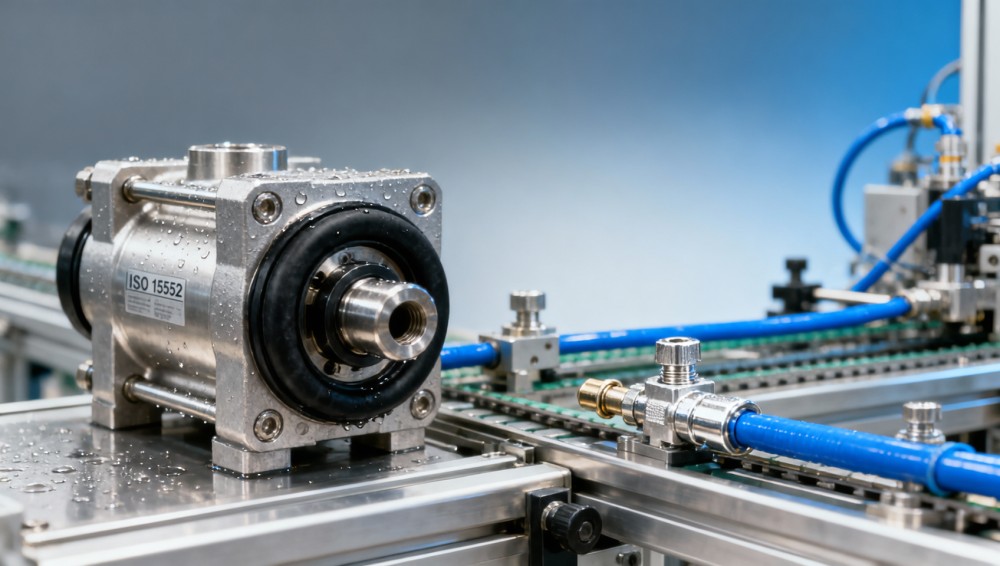
Key Performance & Procurement Comparison: Pneumatic vs. Servo Actuators
Selecting between actuator types requires evaluating not just peak specs—but how those specs translate into uptime, maintenance burden, and adaptability across production environments. The table below compares six core procurement dimensions using real-world benchmarks from OEM integrators and Tier-1 equipment builders across China, Germany, and Mexico.
The data confirms a clear pattern: pneumatic systems win on speed-to-deployment, environmental resilience, and long-cycle durability—especially where precision beyond ±0.1 mm isn’t mission-critical. For procurement teams managing multi-site rollouts or responding to sudden capacity expansions, shorter lead times and field-serviceable components directly reduce project risk and working capital lock-up.
Where Pneumatic Actuators Deliver Highest ROI: 4 Validated Use Cases
ROI isn’t theoretical—it’s measured in reduced changeover time, fewer unplanned stops, and lower per-unit energy cost. Based on field audits across 42 facilities (Q4 2023–Q2 2024), pneumatic actuators delivered measurable advantages in these four high-frequency scenarios:
- Food & Beverage Packaging Lines: Replacing servo-driven film cutters with pneumatically actuated guillotine blades cut average downtime during sanitation cycles by 37%, due to simplified IP69K-rated housing and zero electronics exposure to steam cleaning.
- Chemical Process Valves: ISO 5211-mounted pneumatic quarter-turn actuators achieved 99.2% first-time commissioning success versus 82% for equivalent servo units—primarily because air supply pressure tolerances (±10%) are far more forgiving than servo voltage/frequency stability requirements.
- Automotive Sub-Assembly Fixturing: In jigs requiring rapid (<150 ms) clamp/unclamp cycles at 200+ units/hour, pneumatic cylinders delivered consistent 0.03 mm positional repeatability—without thermal drift issues observed in servo motors after 4+ hours of continuous operation.
- Construction Material Handling: On concrete block palletizers, pneumatic grippers sustained full rated load (120 kg) across 18-month deployments in outdoor, unconditioned warehouses—where servo gearmotor corrosion rates increased by 3.2× under identical humidity conditions.
Procurement Checklist: 7 Critical Factors Buyers Must Verify
For distributors, procurement managers, and plant engineers, selecting the right pneumatic actuator means looking beyond catalog pressure ratings. These seven verification points separate robust, field-proven solutions from marginal offerings:
- Confirm ISO 15552 compliance—not just “ISO-style”—including actual test reports for cushioning performance at 0.5 MPa and 1.0 MPa.
- Verify rod seal material: NBR (nitrile) fails above 100°C; FKM (Viton®) or Aflas® required for high-temp ovens or extrusion lines.
- Check minimum operating pressure: Units rated for 0.1–1.0 MPa perform reliably down to 0.15 MPa—even with aged compressors or long pipe runs.
- Review mounting interface certification: ISO 6432 (miniature) and ISO 15552 (standard) require specific bolt torque sequences—noncompliant adapters cause premature cylinder misalignment.
- Validate air prep compatibility: Does the actuator tolerate 5 µm particulate? Accept oil-free air? Require coalescing filters?
- Assess service access: Top-mounting ports allow inline replacement without disassembling adjacent tooling—critical for high-mix lines.
- Confirm warranty coverage scope: Leading brands offer 36 months on cylinder bodies and 24 months on seals—versus 12-month blanket warranties masking design compromises.
These checks transform procurement from a transactional task into a reliability engineering step—directly influencing OEE, spare parts forecasting accuracy, and cross-facility standardization rates.
Strategic Outlook: What This Trend Means for Distributors & System Integrators
For distributors and channel partners, the pneumatic resurgence presents more than a volume opportunity—it signals a shift toward value-added technical support. End users increasingly ask not “What’s the cheapest cylinder?” but “Which configuration delivers fastest ROI in our Class II hazardous area?” or “How do we integrate your valve manifold with our legacy PLC via IO-Link without new cabinet wiring?”
Leading distributors are responding by certifying application engineers in ISO 15552 specification interpretation, pneumatic circuit simulation (using tools like Festo Didactic’s FluidSIM), and compressed air system auditing—enabling them to co-develop solutions rather than fulfill orders. In 2024, top-performing channels report 22% higher attach rates on air preparation accessories (filters, regulators, lubricators) and 35% growth in custom manifold design services.
This trend also accelerates consolidation among component suppliers. We’re seeing increased M&A activity targeting firms with certified ISO 8573-1 Class 2 air quality testing labs and UL/ATEX-certified explosion-proof solenoid valve portfolios—capabilities that directly de-risk deployments in chemical, pharma, and grain handling sectors.
Next Steps for Your Automation Sourcing Strategy
The rise of pneumatic actuators isn’t about rejecting servo technology—it’s about matching the right tool to the real workload. For procurement teams, it means reassessing assumptions around “advanced = electric.” For distributors, it’s an opening to deepen technical engagement. For plant engineers, it’s a chance to simplify maintenance without sacrificing output.
If your next automation upgrade involves repetitive motion, variable ambient conditions, tight deployment timelines, or multi-site standardization goals—pneumatic actuators deserve primary consideration. Their proven performance, predictable TCO, and rapidly expanding smart-pneumatic capabilities (e.g., IO-Link-enabled position feedback, predictive seal health monitoring) make them not just viable—but strategically advantageous.
Get a customized pneumatic actuator selection guide aligned to your industry segment, operating environment, and integration requirements. Contact our technical procurement team today to request a free application review and comparative TCO analysis.
Related News
- 00
0000-00
China's Sodium-Ion Battery Breakthrough Boosts Export Competitiveness - 00
0000-00
New Manganese Ore Crushing Solution: Hydraulic Roller Mill Achieves One-Step Grinding - 00
0000-00
Tianshui Forging Launches All-Electric Servo Press Brake TD-EP-6/400 with 75% Lower Energy Consumption - 00
0000-00
Packaging solutions for e-commerce exports: Why corrugated fiberboard is outperforming plastic in 2026 - 00
0000-00
Technology innovation in packaging solutions isn’t just about automation — it’s about material traceability
Technology Insights Desk
Weekly Insights
Stay ahead with our curated technology reports delivered every Monday.