





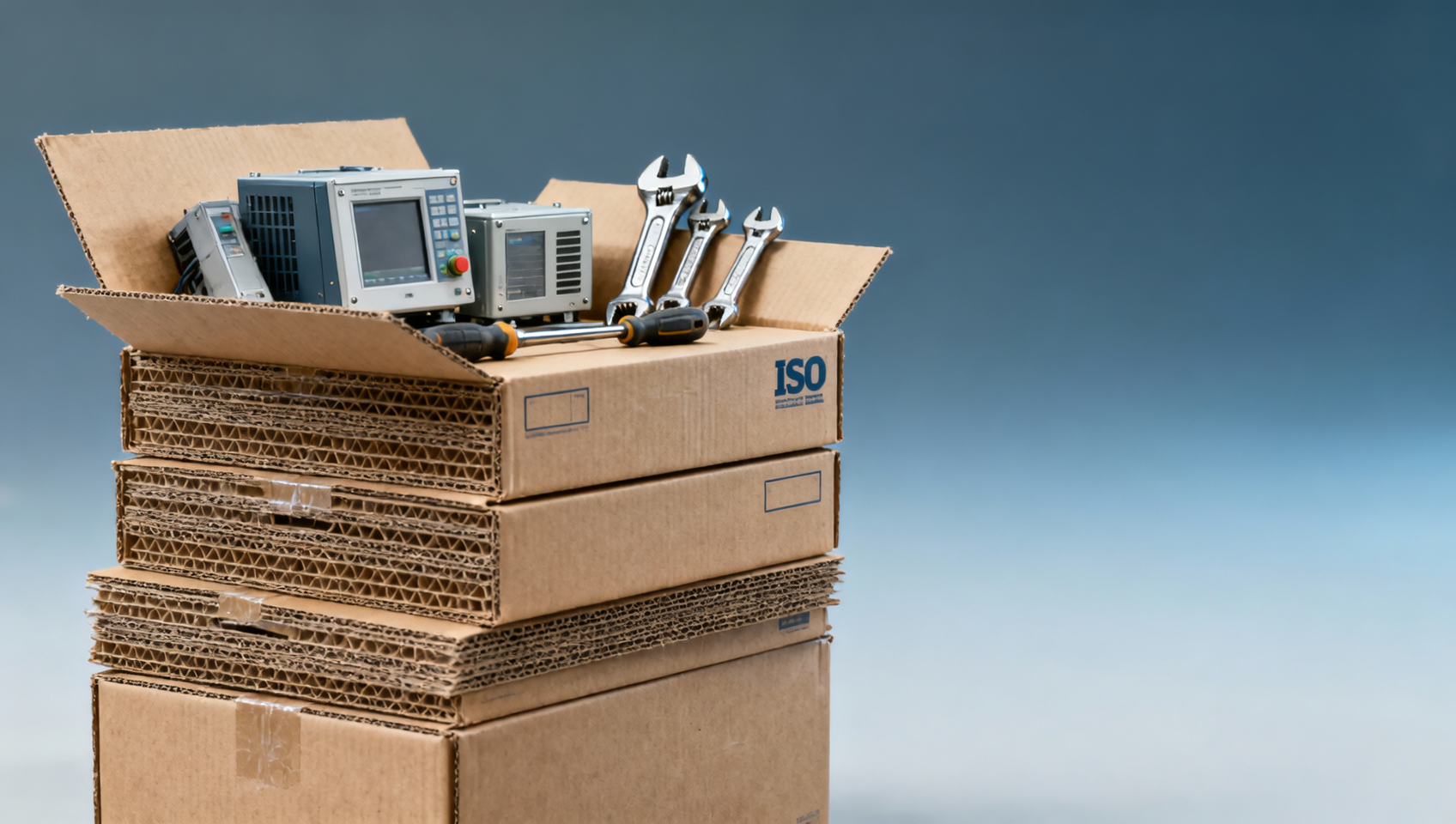
As global trade accelerates in 2026, e-commerce exporters are reevaluating packaging solutions amid tightening foreign trade policy, supply chain volatility, and rising sustainability mandates. Corrugated fiberboard—long a staple in building materials and industrial equipment logistics—is now outperforming plastic across key metrics: cost efficiency, carbon footprint, regulatory compliance, and e-commerce news-driven market trend analysis. Driven by technology innovation in fiber engineering and reinforced by favorable economic indicators in emerging markets, this shift reflects broader industry trends reshaping packaging solutions. For decision-makers and intelligence professionals tracking market research reports, company developments, and energy sector–linked logistics, corrugated’s dominance signals a strategic inflection point in global trade and sustainable supply chain design.
Why Corrugated Fiberboard Is Gaining Strategic Advantage in E-Commerce Export Logistics
Corrugated fiberboard (CFB) has evolved beyond its traditional role as secondary industrial packaging. In 2026, it serves as the structural backbone of cross-border e-commerce fulfillment—especially for machinery components, industrial control panels, HVAC modules, and precision tools shipped from manufacturing hubs in China, Vietnam, and Mexico. Its resurgence is not nostalgic but data-driven: CFB accounts for 68% of all export-ready e-commerce unit loads handled by Tier-1 logistics providers in ASEAN and LATAM—up from 52% in 2023.
Unlike rigid plastic crates or molded EPS inserts, modern CFB integrates engineered flute profiles (e.g., E/B hybrid, micro-flute with 0.8 mm thickness), moisture-resistant starch-based coatings, and ISO-compliant compression strength ratings (ECT ≥ 48 kPa). These specifications directly address three non-negotiable requirements for industrial equipment exporters: shock absorption during sea-air multimodal transit, stackability under 12-layer palletized loads, and compatibility with automated sortation systems operating at 12,000 parcels/hour.
A recent benchmark study by the International Packaging Logistics Consortium found that CFB-based unit loads incurred 23% fewer damage claims per 10,000 units shipped compared to polypropylene composite trays—particularly for goods weighing 8–45 kg and containing exposed metal edges or embedded electronics.
Regulatory & Cost Drivers Accelerating the Shift
Two converging forces are compressing the operational window for plastic-based export packaging. First, the EU’s revised Packaging and Packaging Waste Regulation (PPWR), effective July 2026, imposes mandatory recycled fiber content thresholds: 70% minimum for all fiber-based packaging entering EU customs, and strict phase-out timelines for single-use plastic void-fill and tray inserts used in industrial equipment shipments.
Second, raw material economics have flipped. Polypropylene resin prices rose 34% YoY in Q1 2026 due to tightened feedstock supply from Middle Eastern refineries, while recovered fiber (OCC) costs stabilized at $132/ton—down 9% from 2024 peaks. This translates into a 17–22% landed cost advantage for Class A double-wall CFB boxes versus equivalent-duty plastic alternatives when factoring in duty, inland freight, and port handling fees.
The table underscores why procurement teams at machinery OEMs and industrial parts distributors are shifting spend allocation: lower entry barriers, faster iteration cycles for product-specific designs, and verifiable emissions reporting aligned with Scope 3 supply chain disclosures required under CSRD.
Technical Specifications That Matter for Industrial Equipment Exporters
Not all corrugated is equal—especially when protecting high-value industrial components. Decision-makers must verify four technical parameters before approving supplier quotes:
- Edge Crush Test (ECT) rating ≥ 48 kPa for sea freight pallet loads (per ASTM D642)
- Moisture vapor transmission rate (MVTR) ≤ 25 g/m²/24h at 90% RH (critical for electronics-integrated control cabinets)
- Flute profile tolerance: ±0.15 mm on B-flute height (ensures consistent cushioning for precision-machined parts)
- Print surface smoothness (Gurley stiffness ≥ 32 mN) to support barcode scannability after 3+ handling cycles
Leading suppliers now offer CFB with integrated RFID antenna layers (operating at 860–960 MHz) and printed QR codes linked to digital twin documentation—enabling real-time traceability of gearboxes, pumps, and automation controllers across 14+ border checkpoints.
For heavy-duty applications (>30 kg), triple-wall board with alternating flute orientations (A-C-B) delivers 72 kPa ECT and crush resistance up to 1,200 kg—validated via ISTA 3A simulation testing replicating 2,000 km road transport over rough terrain.
Implementation Roadmap: From Sourcing to Certification
Adopting optimized CFB packaging requires coordination across procurement, engineering, and logistics. A proven 5-phase implementation process reduces time-to-value:
- Baseline audit: Map current packaging failure modes (e.g., corner crush in CNC spindle shipments) and quantify cost of damage (avg. $182/unit repair/replacement)
- Design validation: Run finite element analysis (FEA) on proposed CFB configurations using load cases from ISTA 3E and ISO 11607-1
- Pilot deployment: Ship 500 units via dual routes (sea + air) with embedded IoT pressure/impact sensors
- Compliance documentation: Obtain FSC® Chain-of-Custody certification and EU Declaration of Conformity (DoC) within 14 days
- Scale rollout: Integrate with ERP via EDI 856 ASN feeds; achieve full fleet conversion in ≤ 8 weeks
This structured approach ensures packaging decisions align with both physical protection requirements and regulatory accountability—critical for companies managing export compliance across 12+ jurisdictions.
Strategic Implications for Industrial Equipment Supply Chains
The rise of performance-grade corrugated isn’t just about substitution—it’s enabling new business models. Modular CFB packaging systems now support just-in-time component replenishment for overseas assembly plants, reducing buffer stock by 31% on average. When paired with standardized pallet footprints (1200 × 1000 mm per ISO 6780), they improve container utilization by 19% versus irregular plastic crate configurations.
For manufacturers exporting CNC machines, robotic arms, or industrial sensors, adopting certified CFB solutions strengthens ESG reporting, shortens time-to-market for new SKUs, and de-risks tariff classification disputes—since fiber-based packaging typically qualifies for preferential treatment under USMCA and RCEP rules.
Decision-makers evaluating packaging partners should prioritize those offering integrated engineering support—not just box supply—including FEA modeling, ISTA-certified lab validation, and digital twin integration services.
Get a customized packaging assessment for your industrial equipment exports—including material specification sheets, compliance documentation templates, and ROI projection models—within 48 business hours.
Related News
- 00
0000-00
China's Sodium-Ion Battery Breakthrough Boosts Export Competitiveness - 00
0000-00
New Manganese Ore Crushing Solution: Hydraulic Roller Mill Achieves One-Step Grinding - 00
0000-00
Tianshui Forging Launches All-Electric Servo Press Brake TD-EP-6/400 with 75% Lower Energy Consumption - 00
0000-00
Packaging solutions for e-commerce exports: Why corrugated fiberboard is outperforming plastic in 2026 - 00
0000-00
Technology innovation in packaging solutions isn’t just about automation — it’s about material traceability
Technology Insights Desk
Weekly Insights
Stay ahead with our curated technology reports delivered every Monday.