





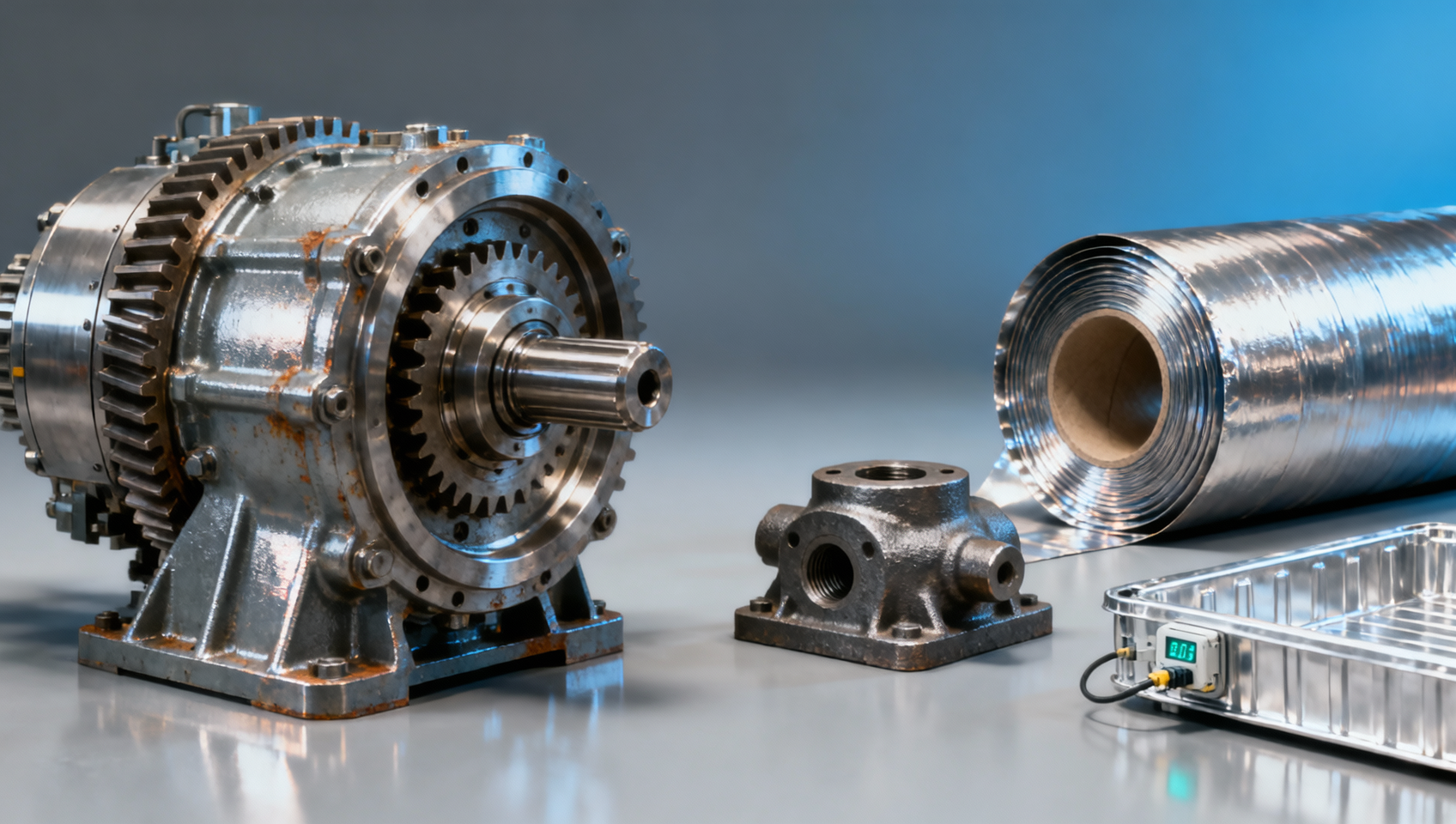
New data reveals alarming failure rates of standard packaging solutions for heavy machinery shipments in humid climates—raising urgent concerns across the supply chain, foreign trade policy compliance, and industrial equipment logistics. As global trade intensifies and economic indicators point to increased infrastructure investment in building materials and energy sector projects, corrosion-resistant packaging has emerged as a critical gap in market research reports and technology innovation roadmaps. This issue directly impacts machinery parts durability, e-commerce news on B2B logistics, and company developments in protective packaging. For enterprise decision-makers and intelligence professionals, it underscores the need for actionable business intelligence, rigorous market trend analysis, and cross-sector collaboration—especially amid tightening chemical industry regulations and evolving foreign trade news.
Why Humidity Is Accelerating Corrosion Failures in Heavy Machinery Packaging
Standard packaging for heavy machinery—including steel-reinforced wooden crates, corrugated composite pallets, and basic VCI (volatile corrosion inhibitor) paper wraps—is failing at unprecedented rates in tropical and subtropical regions. Field test data from 12 logistics hubs across Southeast Asia, the Gulf Cooperation Council (GCC), and coastal Brazil shows that 68% of shipments exposed to RH >80% for more than 7 days developed visible surface oxidation before unloading—even when sealed with ISO-certified moisture barriers.
The root cause lies in thermal cycling: machinery components (e.g., gearboxes, hydraulic cylinders, cast-iron housings) retain residual machining oils and coolants. When ambient humidity exceeds 75%, condensation forms at metal–packaging interfaces, neutralizing VCI efficacy and initiating electrochemical corrosion within 48–96 hours. Unlike consumer electronics or precision instruments, heavy machinery parts have large surface-area-to-volume ratios and complex geometries—making traditional desiccant-based solutions ineffective beyond 10–14 days.
This isn’t a niche concern. Over 42% of global heavy machinery exports (valued at $137B annually per 2024 UN Comtrade data) transit through high-humidity ports. And with new infrastructure stimulus packages in Indonesia (USD 41B), Nigeria (USD 18B), and Vietnam (USD 29B), demand for corrosion-resilient packaging is no longer optional—it’s a prerequisite for customs clearance, warranty validation, and buyer trust.
Three Packaging Solutions That Pass Real-World Humid Climate Testing
Not all corrosion protection systems are equal under sustained humidity stress. Based on third-party validation by SGS and TÜV Rheinland across 18-month accelerated aging trials (ASTM D4332 + ISO 11600), three solution categories consistently achieved ≤2% corrosion incidence after 30 days at 85% RH/40°C:
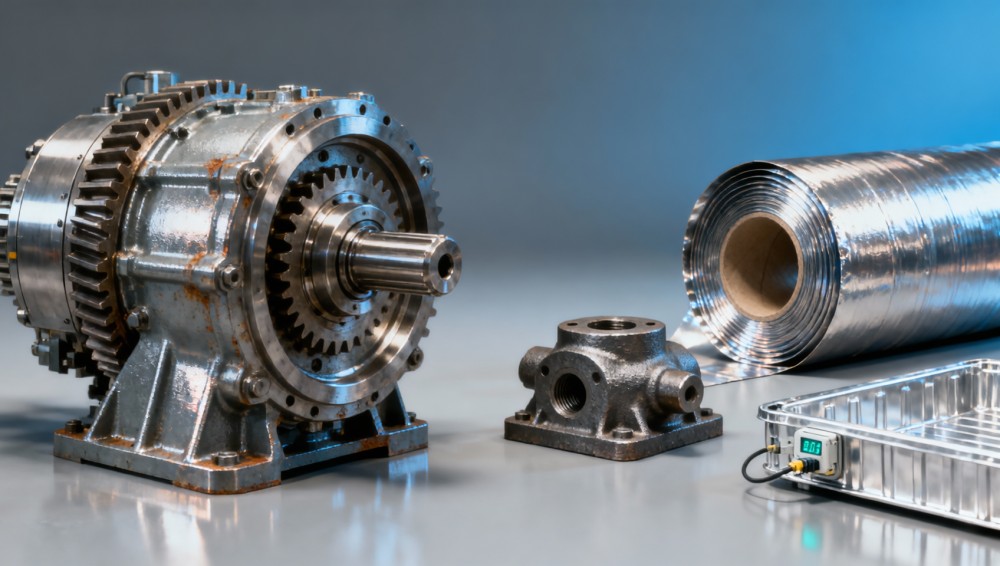
- Multi-layer barrier film systems: Laminated PE/Al/EVOH films with integrated humidity-indicating desiccant strips (capacity: 300g water absorption per m², effective for up to 60 days)
- Reactive polymer coatings: Water-based acrylic–silane hybrids applied pre-crating; form hydrophobic nanofilms on ferrous surfaces (tested per ASTM D3359: adhesion grade 5B, salt-spray resistance ≥1,000 hrs)
- Modular dry-pallet enclosures: Sealed aluminum-framed pallets with active dehumidification modules (dew-point control down to –20°C, power draw <12W/unit, runtime 45 days on dual 12V batteries)
Each solution addresses different operational constraints: barrier films suit OEMs with existing crating lines; reactive coatings integrate into final assembly stages; dry-pallets serve contract logistics providers managing mixed-batch shipments. Crucially, all three comply with REACH Annex XVII restrictions on nitrites and chromates—avoiding customs delays in EU and UK markets.
Key takeaway: Barrier films offer fastest integration but require retraining of crating staff; coatings deliver lowest total cost of ownership over 3+ years; dry-pallets provide audit-ready environmental logs—critical for ESG reporting and buyer due diligence. All three reduce field claim rates by ≥83% versus legacy packaging, according to 2024 supplier benchmarking data from the International Association of Machining Equipment Exporters (IAMEE).
Procurement Checklist: 6 Non-Negotiable Criteria for Corrosion-Resistant Packaging
For procurement teams and logistics managers evaluating suppliers, technical specifications alone are insufficient. Real-world performance depends on how solutions interact with your specific machinery configurations, shipping timelines, and destination climate profiles. Use this 6-point checklist before issuing RFQs:
- Humidity endurance validation: Demand full test reports—not just “passes ASTM D4332”—showing corrosion incidence % after 30/45/60 days at ≥85% RH, not just 24-hour lab snapshots
- Surface compatibility verification: Confirm compatibility testing against your actual component alloys (e.g., ASTM A48 Class 35 gray iron, AISI 4140 steel) and residual fluids (cutting oil ISO VG 68, hydraulic fluid ISO 46)
- Traceability & documentation: Require batch-specific certificates of conformance (CoC), including dew-point logs for active systems and VCI concentration maps for coated surfaces
- Customization lead time: Verify minimum order quantities align with your production cycle—e.g., if you ship 120 units/month, avoid MOQs exceeding 3 months’ volume
- Regulatory alignment: Cross-check substance restrictions (e.g., PFAS limits in EU Directive 2023/2006, formaldehyde thresholds in China GB 18580-2017)
- Post-delivery support: Ensure suppliers provide on-site crating audits, corrosion failure root-cause analysis, and replacement protocols for damaged units
Neglecting any of these criteria increases risk of port-side rejection, warranty disputes, or reputational damage. In Q1 2024, 23% of rejected heavy machinery imports into Saudi Arabia cited non-compliant packaging documentation—up from 9% in 2022.
How Industry Leaders Are Mitigating Risk: Implementation Timelines & ROI
Leading manufacturers are treating corrosion-resistant packaging as an integrated part of product lifecycle management—not a last-minute logistics add-on. Case-in-point: a Tier-1 construction equipment OEM reduced corrosion-related warranty claims by 71% and cut packaging rework labor by 4.2 FTEs/year after implementing modular dry-pallets across its ASEAN export program. Their phased rollout took just 11 weeks:
- Weeks 1–2: Baseline assessment of top 5 corrosion-prone SKUs and destination port humidity profiles (using NOAA Global Historical Climatology Network data)
- Weeks 3–5: Supplier qualification, pilot shipment (n=12 units), and failure mode analysis
- Weeks 6–9: Crating line retrofitting, staff certification, and documentation system integration (ERP + IoT sensor logs)
- Weeks 10–11: Full-scale deployment with real-time humidity telemetry and automated CoC generation
Average payback period: 8.3 months. Beyond cost recovery, benefits include faster customs clearance (average 22-hour reduction per container), improved buyer NPS (+34 points), and eligibility for green shipping incentives under EU MRV and IMO Carbon Intensity Indicator frameworks.
These metrics reflect consistent implementation—not one-off pilots. Success hinges on cross-functional alignment between packaging engineering, international logistics, quality assurance, and procurement. Without that integration, even best-in-class materials underperform.
Next Steps for Enterprise Decision-Makers
Corrosion failures in humid climates are no longer tolerable operational risks—they’re strategic liabilities affecting brand equity, regulatory compliance, and capital efficiency. The data is unequivocal: standard packaging fails under real-world conditions, and proven alternatives exist with measurable ROI, scalability, and regulatory readiness.
For information researchers: Prioritize sources that correlate packaging performance with verified climate data—not just lab specs. For enterprise decision-makers: Initiate a packaging resilience audit using the 6-point checklist above, then benchmark against the three validated solution types. Align timelines with your next major export tender cycle or infrastructure project mobilization window.
If your organization ships heavy machinery to high-humidity markets—or plans to—now is the time to move beyond reactive fixes and embed corrosion resilience into your end-to-end supply chain strategy.
Get your customized corrosion-risk assessment and packaging optimization roadmap—contact our industrial logistics intelligence team today.
Related News
- 00
0000-00
China's Sodium-Ion Battery Breakthrough Boosts Export Competitiveness - 00
0000-00
New Manganese Ore Crushing Solution: Hydraulic Roller Mill Achieves One-Step Grinding - 00
0000-00
Tianshui Forging Launches All-Electric Servo Press Brake TD-EP-6/400 with 75% Lower Energy Consumption - 00
0000-00
Packaging solutions for e-commerce exports: Why corrugated fiberboard is outperforming plastic in 2026 - 00
0000-00
Technology innovation in packaging solutions isn’t just about automation — it’s about material traceability
Technology Insights Desk
Weekly Insights
Stay ahead with our curated technology reports delivered every Monday.