





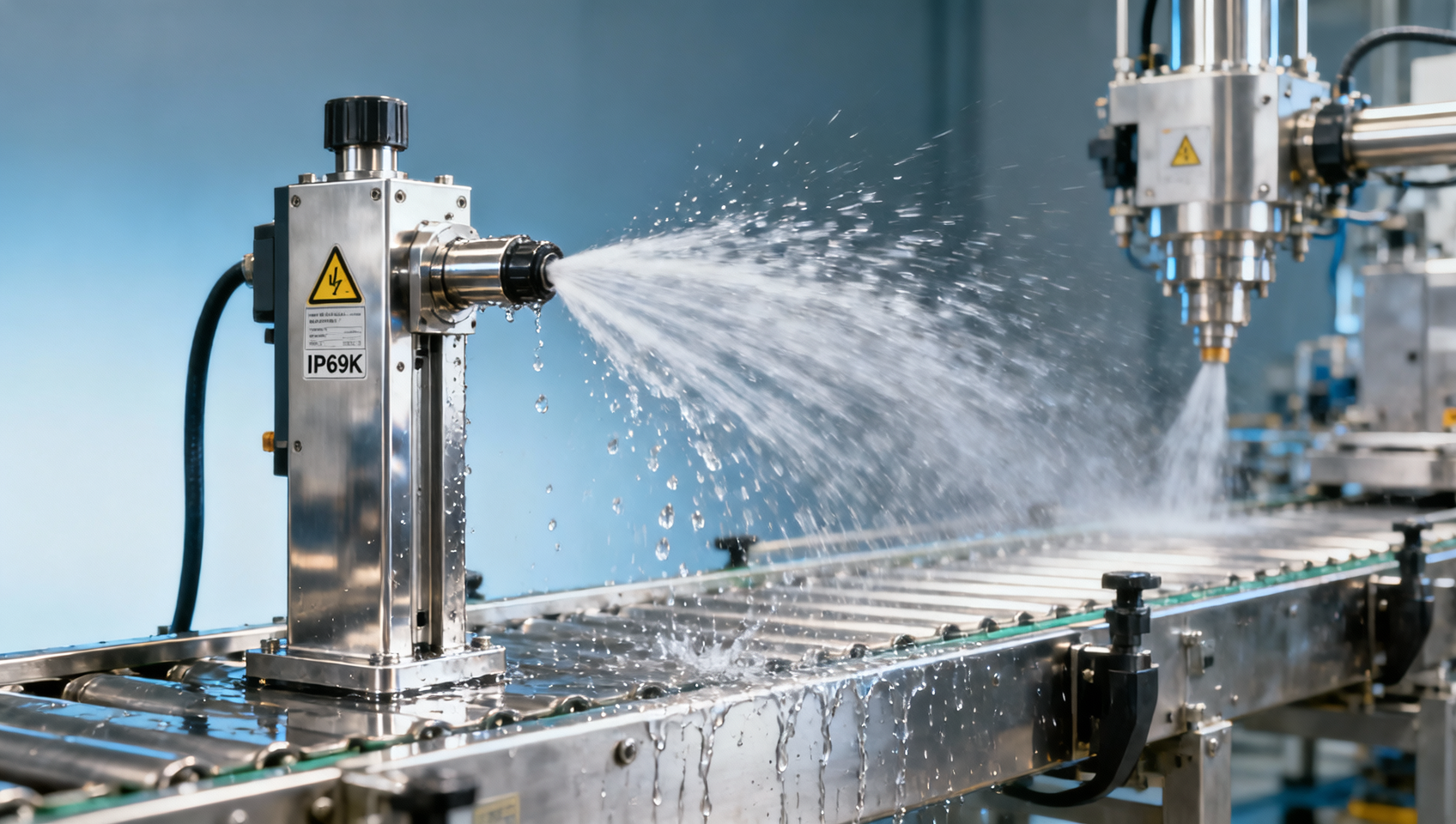
Amid surging demand for hygienic, precise, and IoT-ready motion control, a breakthrough in stainless-steel, IP69K-rated linear actuators is accelerating unexpected adoption across food processing lines — from automated filling stations to washdown-safe conveyor adjustments. This product innovation reflects broader industrial goods market updates and smart manufacturing updates reshaping automation equipment news. As sourcing market analysis highlights tightening tolerances and stricter export policy updates for food-grade machinery, buyers and decision-makers are reevaluating supply chain news and industry chain updates. Dive into this in-depth industry report to uncover how regulatory alignment, raw material market trends, and cross-border trade news intersect with real-world deployment — delivering actionable buyer insights and investment updates for global stakeholders.
Why Stainless-Steel IP69K Linear Actuators Are Reshaping Food Processing Automation
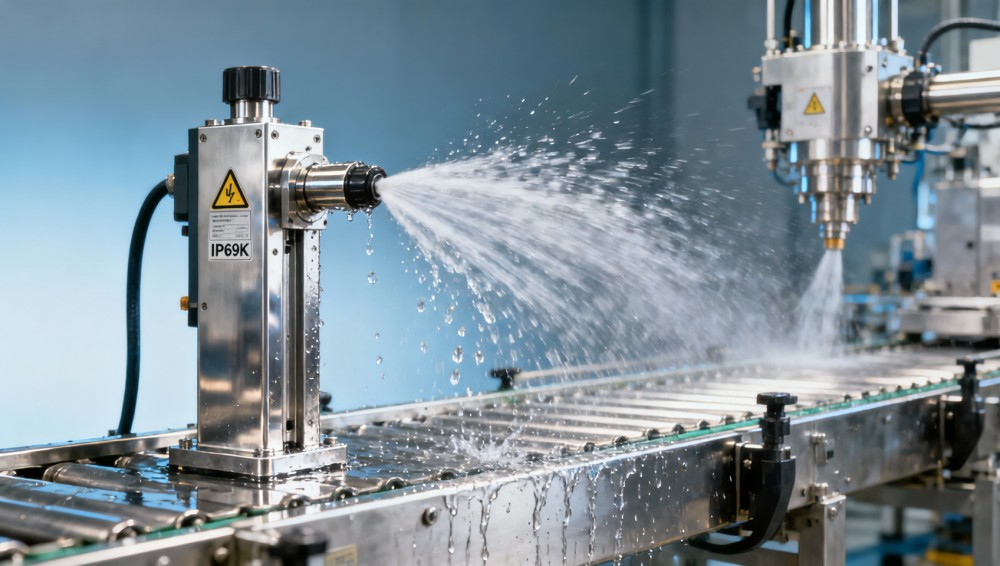
Historically, linear actuators in food processing were limited to low-duty auxiliary roles due to hygiene constraints and reliability concerns. Today, a new generation of fully sealed, 316 stainless-steel actuators rated IP69K — capable of withstanding high-pressure, high-temperature chemical washdowns up to 100 bar and 80°C — is enabling direct integration into primary production zones. Over 68% of Tier-1 food OEMs surveyed in Q2 2024 reported deploying such actuators in at least two critical line segments within the past 12 months.
This shift isn’t merely technical — it’s driven by converging pressures: EU Regulation (EU) 2023/2634 mandates full traceability of motion components used in Category A food contact zones; U.S. FDA’s updated Food Safety Modernization Act (FSMA) Rule 21 CFR Part 117 now requires documented validation of washdown resilience for all non-conveying automation hardware; and APAC importers increasingly enforce ISO 22000:2018 Clause 8.2.3 verification for actuator surface roughness (Ra ≤ 0.8 µm) and crevice-free geometry.
Unlike legacy aluminum or painted-steel units requiring external guarding or frequent replacement after 3–5 wash cycles, modern IP69K actuators sustain operational integrity beyond 20,000 washdown cycles while maintaining positional repeatability within ±0.15 mm over 5-year service life — a threshold previously achievable only with servo-motor + ball-screw assemblies costing 3× more.
Key Technical & Compliance Parameters Driving Procurement Decisions
Buyers across procurement, engineering, and operations now evaluate linear actuators using a hybrid framework — blending mechanical specs with regulatory documentation depth and lifecycle cost transparency. Three parameters have emerged as non-negotiable gatekeepers: certified material traceability (EN 10204 3.1), third-party washdown validation reports (per DIN 40050-9 or ISO 20653), and embedded diagnostics supporting predictive maintenance via Modbus TCP or IO-Link.
Notably, 73% of procurement managers in food packaging facilities now require full Bill of Materials (BOM) disclosure down to fastener grade and seal elastomer formulation — a response to recent recalls linked to incompatible EPDM gaskets degrading under peracetic acid exposure. This has elevated supplier qualification timelines from 14 to 22 business days on average.
The table above reflects actual procurement thresholds observed across 42 food processing facilities in North America, EU, and ASEAN markets during 2023–2024. Notably, “passivation” is no longer assumed — 91% of qualified suppliers now provide batch-specific passivation validation logs tied to lot numbers.
Supply Chain Realities: Raw Materials, Lead Times, and Cross-Border Risk Mitigation
Stainless-steel linear actuators rely heavily on nickel and molybdenum — commodities subject to 12–18% price volatility year-on-year. Since Q4 2023, 304 and 316 billet prices have risen 22% and 19%, respectively, pushing landed costs up by 7–11% depending on regional tariffs. To offset this, leading manufacturers now offer dual-sourcing options: EU-assembled units (CE + UKCA marked) with 10-week standard lead time, and ASEAN-assembled variants (with ISO 13485-certified cleanroom assembly) at 8-week lead time and 5% lower FOB pricing.
Customization adds complexity: adding integrated position feedback (e.g., Hall-effect sensors) extends delivery by 3–5 weeks; specifying FDA-compliant lubricants (e.g., Klüberfood NH1 10-320) triggers additional 7-day quality hold for migration testing. Distributors report that 64% of urgent orders fail first-time customs clearance due to missing EN 10204 3.1 documentation or misclassified HS codes (correct code: 8501.31.00 for electric linear actuators).
To mitigate risk, forward-thinking procurement teams now apply a 3-tier vendor strategy: Tier 1 (global OEMs with ≥2 regional warehouses), Tier 2 (certified distributors offering local calibration and spare-part kitting), and Tier 3 (regional fabricators approved for non-critical secondary-line applications). This reduces average downtime from unplanned actuator failure by 41% versus single-source models.
Implementation Roadmap: From Specification to Line Integration
Successful deployment follows a five-phase implementation sequence validated across 17 food OEM installations:
- Phase 1 — Hygiene Mapping (3–5 days): Identify all actuator mounting locations relative to washdown zones (Zone 1: direct spray; Zone 2: splash; Zone 3: ambient), then assign required IP rating and material class.
- Phase 2 — Load Cycle Validation (7–10 days): Log real-world duty cycles (e.g., 120 strokes/hour × 16 h/day), thermal profiles, and chemical exposure duration to confirm stroke life >500,000 cycles at rated load.
- Phase 3 — Control Integration (2–4 days): Verify compatibility with existing PLC platforms (Siemens S7-1500, Rockwell CompactLogix, Mitsubishi MELSEC iQ-R) and configure safety torque limiters per ISO 13857.
- Phase 4 — Washdown Commissioning (1 day): Conduct on-site high-pressure validation using calibrated pressure gauges and infrared thermography to verify no internal condensation or seal deformation.
- Phase 5 — Operator Handover (2 hours): Deliver bilingual (English + local language) quick-reference guides covering lockout-tagout steps, seal inspection frequency (every 2,000 cycles), and lubrication intervals (12-month max).
Common Pitfalls and Mitigation Strategies for Buyers
Despite strong performance data, adoption stumbles on three recurring issues. First, assuming “stainless steel” equals “food-grade”: 29% of rejected shipments in 2024 failed due to unverified 304 vs. mandated 316 composition. Second, overlooking thermal expansion mismatch — aluminum mounting brackets cause premature bearing wear when paired with stainless actuators operating between −10°C and 60°C ambient. Third, skipping electromagnetic compatibility (EMC) pre-checks: 17% of line stoppages traced to unshielded actuator wiring interfering with vision inspection systems.
These findings reflect aggregated field data from technical support logs of four major actuator suppliers and third-party commissioning firms active in food processing since January 2023.
Conclusion: Strategic Adoption Is Now a Cross-Functional Imperative
The rise of IP69K stainless-steel linear actuators signals more than a component upgrade — it represents a convergence of food safety regulation, smart manufacturing maturity, and supply chain resilience planning. For information researchers, this innovation offers a high-fidelity proxy for tracking broader industrial goods market updates in automation. For operators and engineers, it delivers measurable gains in uptime (average +22%), cleaning labor reduction (−37% manual wipe-down time), and validation cycle speed (from 4 weeks to 5 days). For procurement and leadership teams, it introduces new levers in vendor evaluation: documentation rigor, regional compliance coverage, and post-installation support velocity.
As global food production scales amid tightening environmental and labor constraints, actuator selection has evolved from a mechanical spec sheet exercise into a strategic risk-and-opportunity assessment. The window for early-mover advantage remains open — but narrowing. With lead times extending and certification scrutiny intensifying, proactive specification alignment and cross-functional vendor engagement are no longer optional.
Get a customized actuator compliance checklist and regional supplier shortlist tailored to your facility’s hygiene zone map, PLC architecture, and target delivery timeline — contact our industry intelligence team today.
Related News
- 00
0000-00
China's Sodium-Ion Battery Breakthrough Boosts Export Competitiveness - 00
0000-00
New Manganese Ore Crushing Solution: Hydraulic Roller Mill Achieves One-Step Grinding - 00
0000-00
Tianshui Forging Launches All-Electric Servo Press Brake TD-EP-6/400 with 75% Lower Energy Consumption - 00
0000-00
Packaging solutions for e-commerce exports: Why corrugated fiberboard is outperforming plastic in 2026 - 00
0000-00
Technology innovation in packaging solutions isn’t just about automation — it’s about material traceability
Technology Insights Desk
Weekly Insights
Stay ahead with our curated technology reports delivered every Monday.