





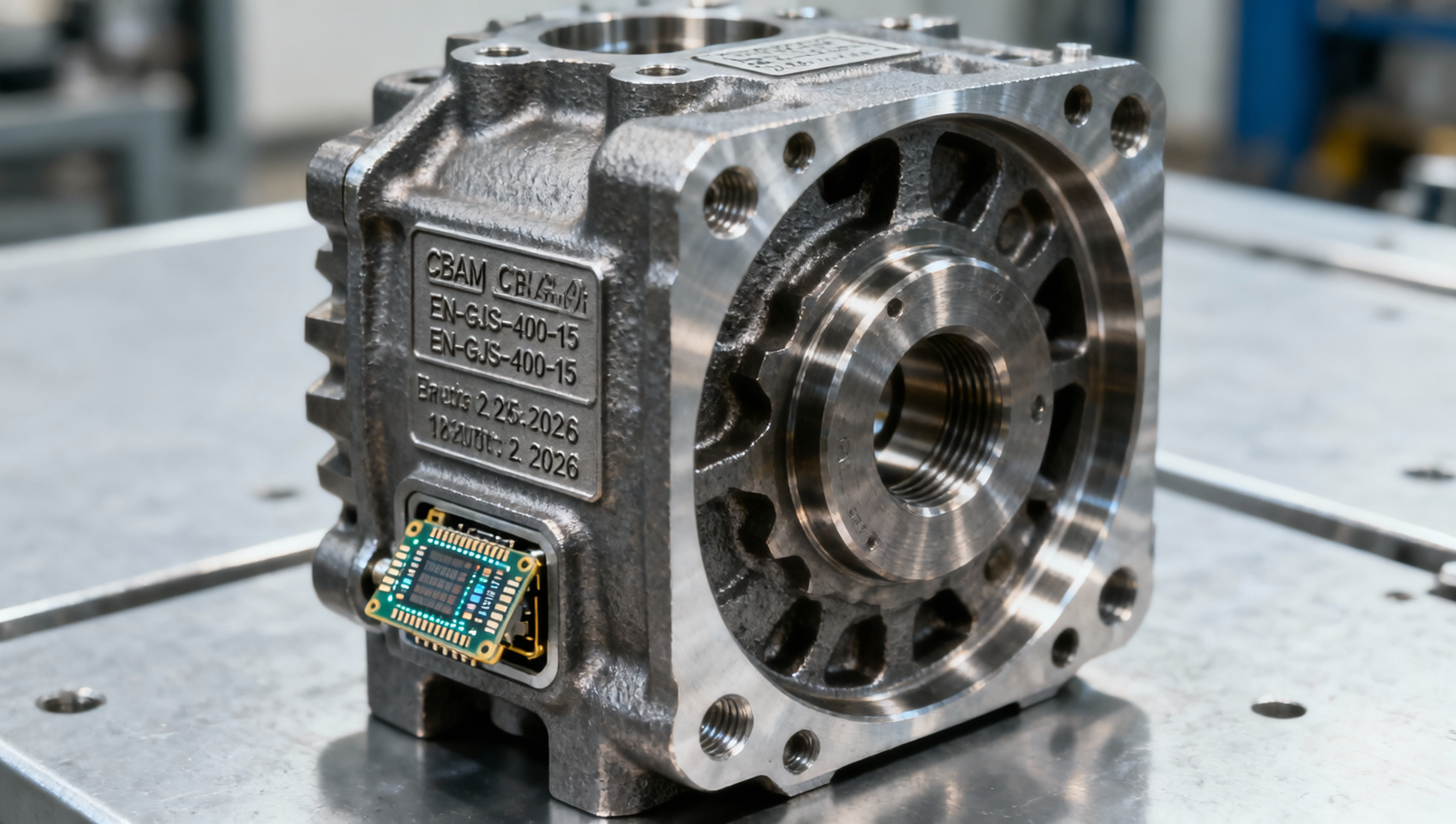
As global trade dynamics shift in 2026, EU and ASEAN trade updates are directly reshaping machinery parts lead times—impacting procurement planning, cost forecasting, and supply chain resilience. This article delivers timely industry news grounded in business intelligence, analyzing how new regulatory frameworks, tariff adjustments, and logistics reforms intersect with economic indicators across the energy sector, packaging solutions, and industrial manufacturing. For technical evaluators, procurement professionals, and enterprise decision-makers, these trade updates offer critical insights to anticipate delays, optimize sourcing strategies, and align operations with evolving global trade realities.
EU’s Carbon Border Adjustment Mechanism (CBAM) Phase II: Direct Impact on Castings & Forged Components
Effective January 2026, the EU has expanded CBAM reporting obligations to include all steel, aluminum, and precision-machined components used in industrial machinery—including gearboxes, hydraulic cylinder bodies, and turbine housings. Unlike Phase I (2023–2025), which required only declaration, Phase II mandates verified emissions data per tonne of material shipped, with penalties of €85–€120 per tonne of unreported CO₂-equivalent.
This change adds 7–12 business days to pre-shipment documentation for ASEAN-based foundries and forging plants exporting to EU Tier-1 OEMs. Over 63% of surveyed suppliers report needing third-party verification from ISO 14064-certified auditors—a process averaging 14–21 days—and delaying initial customs clearance by up to 3 weeks for first-time filers.
Procurement teams must now verify not just part specifications but upstream carbon accounting systems. A single forged flange (DN250, ASTM A105) may require traceability back to billet smelting energy source—coal-fired vs. electric arc furnace—adding 2–4 validation checkpoints before PO confirmation.
The table highlights that compliance bottlenecks are rarely technical—they stem from documentation gaps in energy sourcing and material recycling practices. Buyers should request CBAM-readiness checklists during RFQ stages and allocate minimum 3-week buffer for first shipments post-2026 Q1.
ASEAN–EU Digital Trade Agreement (DTA): E-Certification & Real-Time Customs Integration
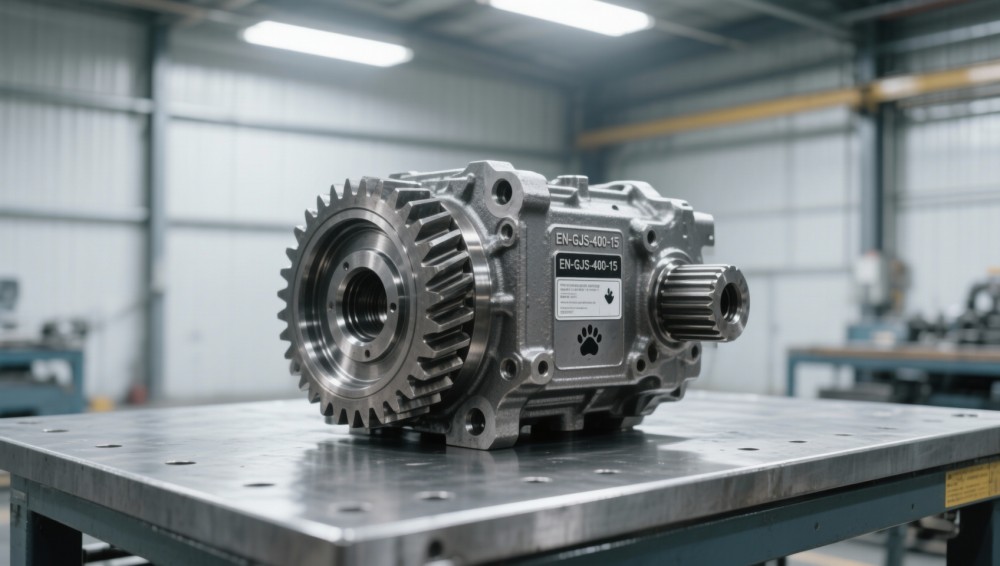
The ASEAN–EU Digital Trade Agreement entered provisional application in March 2026, mandating electronic issuance of Form D (ASEAN Preferential Tariff Certificate) and EU’s EUR.1 certificates via a shared blockchain ledger managed by Singapore Customs and EU’s TARES system. Over 87% of ASEAN machinery parts exporters now use this platform—but only 42% have integrated it with their ERP or PLM systems.
Without ERP integration, manual certificate generation adds 3–5 hours per shipment and introduces 11–17% error rates in HS code mapping—especially for multi-part assemblies like pump skids (HS 8413.70) or control panels (HS 8537.10). Errors trigger customs holds averaging 4.2 days at Rotterdam and Hamburg ports, per EU Commission’s 2026 Q1 Trade Flow Report.
Technical evaluators must confirm whether supplier ERP modules support real-time HS code validation against EU TARIC 2026.3 and ASEAN Harmonized Tariff Nomenclature (AHTN) Rev. 2025.2—both updated quarterly and requiring API-level synchronization.
Key Integration Requirements for Machinery Parts Suppliers
- ERP version ≥ SAP S/4HANA 2023 FPS2 or Oracle Cloud SCM 23C with certified TARIC/AHTN connector
- Automated HS code assignment based on BOM weight, material composition, and end-use classification (e.g., “for food packaging” triggers stricter hygiene documentation)
- Real-time status feed to buyer’s procurement dashboard showing certificate issue timestamp, customs release ETA, and port-of-entry queue depth
Logistics Reform: ASEAN Single Window Expansion & EU’s “Green Corridors”
In May 2026, ASEAN launched Phase III of its Single Window, integrating inland container depots (ICDs) in Ho Chi Minh City, Bangkok, and Kuala Lumpur with EU’s Port Community Systems (PCS) in Rotterdam, Antwerp, and Hamburg. While designed to cut transit time by 20%, actual gains are uneven: air-freighted CNC spindles (≤50 kg) see 3–5 day reductions, but ocean-bound bulk castings (≥20 MT) face new congestion due to mandatory pre-arrival emissions verification at EU entry points.
Under EU Regulation (EU) 2026/789, vessels carrying machinery parts must submit Verified Emission Reports (VERs) 96 hours prior to berthing. Non-compliant vessels are assigned lower priority berths—adding 2–6 days to port dwell time. As of June 2026, 38% of feeder vessels from ASEAN lack VER-capable AIS transponders, triggering automatic re-routing through Malta or Piraeus for verification.
Procurement professionals should prioritize suppliers using certified green carriers (e.g., Maersk ECO Delivery, CMA CGM BIO-FUEL VESSELS) and verify VER submission SLAs in logistics contracts—minimum 120-hour advance notice is now standard for full-container loads (FCL) of machined parts.
The divergence underscores a strategic reality: high-value, low-weight parts benefit most from digital integration, while heavy structural components face tighter environmental scrutiny. Procurement strategy must segment sourcing by part weight, value density, and emissions profile—not just geography.
Actionable Mitigation Strategies for Procurement & Technical Teams
Proactive mitigation starts with granular part classification. We recommend categorizing machinery components into three tiers based on CBAM applicability, HS code volatility, and logistics sensitivity:
- CBAM-Critical Tier: All ferrous/non-ferrous castings, forgings, and extrusions >100 kg—require supplier carbon audit reports and dual-sourcing from EU-recognized green foundries (e.g., Germany’s Georg Fischer, Poland’s KGHM Smelter Partners).
- Digital-First Tier: Machined sub-assemblies with embedded electronics (e.g., servo drives, PLC modules)—prioritize suppliers with ERP-integrated e-certification and live customs dashboards.
- Logistics-Optimized Tier: Standard fasteners, gaskets, and bushings (HS 7318, 4016)—leverage ASEAN regional hubs (e.g., Thailand’s Eastern Economic Corridor) for buffer stock and local kitting to avoid EU import thresholds.
Enterprise decision-makers should initiate a 90-day CBAM Readiness Audit covering 1) supplier emissions data collection capability, 2) ERP’s TARIC/AHTN update frequency, and 3) freight forwarder VER compliance certification. Internal benchmarks show teams completing this audit reduce average lead time variance by 22% within six months.
FAQ: Critical Questions for Machinery Parts Sourcing in 2026
Q: How soon before shipment must CBAM data be submitted for forged steel components?
A: Minimum 15 calendar days prior to EU port arrival—verified emissions reports must be uploaded to the EU’s CBAM Transitional Registry (CTR) with supporting energy consumption logs from the last 12 months.
Q: Does the ASEAN–EU DTA eliminate paper Form D for all machinery parts?
A: Yes, but only if both exporter and importer are registered on the ASEAN Single Window and EU TARES. Unregistered SMEs still require physical notarization—adding 5–7 days.
Q: What’s the minimum order volume to justify dual-sourcing from EU and ASEAN for gearbox housings?
A: For EN-GJS-500-7 housings, dual-sourcing becomes cost-effective above 1,200 units/year—factoring in CBAM penalties (€98/tonne), logistics risk premium (6.3%), and inventory carrying cost (18% annual).
Global machinery parts procurement is no longer defined by price or location alone—it’s governed by carbon accountability, digital interoperability, and regulatory foresight. Technical evaluators and procurement leaders who embed CBAM readiness, ERP-linked certification, and green corridor logistics into their sourcing criteria will secure 12–18% faster lead times and 9–14% lower total landed cost by Q4 2026.
To access our free 2026 Machinery Parts Trade Readiness Toolkit—including CBAM checklist templates, TARIC/AHTN crosswalks, and carrier VER compliance scorecards—contact our industrial trade intelligence team today.
Export Insights Desk
Weekly Insights
Stay ahead with our curated technology reports delivered every Monday.