
U.S. Launches Section 301 Probe Into Structural Overcapacity Across 16 Economies




The United States has opened a new trade policy front that could reshape the outlook for global manufacturing exporters. On March 11, the Office of the United States Trade Representative announced the launch of a Section 301 investigation focused on structural overcapacity in manufacturing across 16 economies.
The investigation covers a broad group of major industrial exporters, including China, the European Union, India, Japan, Vietnam, South Korea, and Mexico. At the center of the probe is the U.S. government’s concern that persistent industrial overcapacity in foreign markets may be distorting competition, weakening domestic manufacturing, and affecting the long-term position of U.S. producers.
Although the announcement does not immediately impose new tariffs or restrictions, the investigation is widely seen as an early-stage policy signal that could lead to more concrete trade actions later. These may include higher tariffs, import restrictions, quotas, or other market-access measures aimed at products or sectors considered sensitive by U.S. authorities.
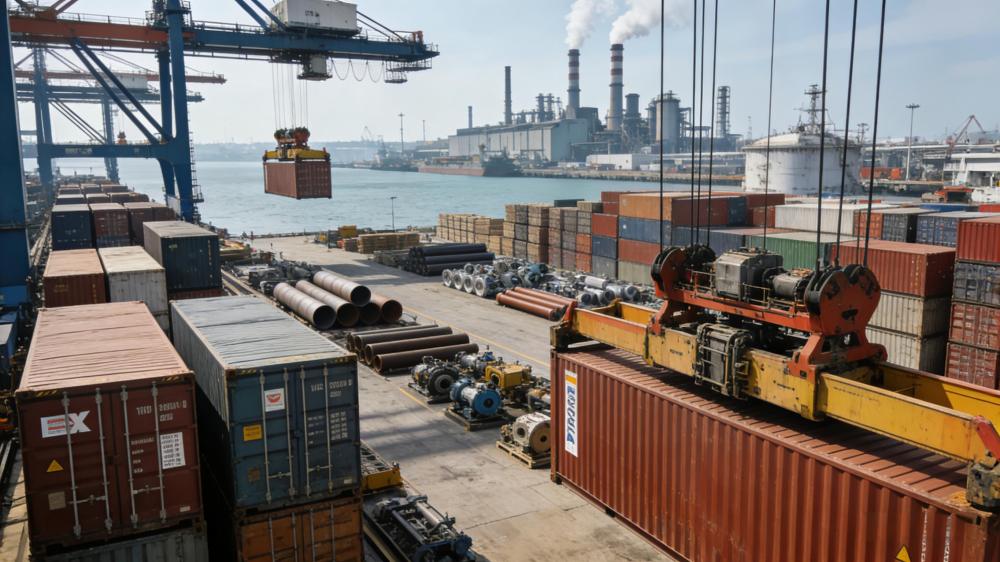
For export-oriented manufacturers, the importance of this investigation lies in its policy direction rather than its immediate legal effect. Section 301 actions have historically been used by the United States as a foundation for significant trade measures, especially when Washington believes foreign industrial policies or market conditions create unfair competitive pressure.
The investigation is likely to be closely watched by companies involved in machinery, industrial components, steel, chemicals, electronics, clean energy equipment, and other manufacturing-heavy sectors. Businesses with strong dependence on the U.S. market may need to prepare for the possibility of tighter trade scrutiny, more customer caution, and greater uncertainty in pricing and sourcing decisions.
The broader concern for exporters is that the issue of “structural overcapacity” is not limited to one single product line. It can become a policy framework that affects multiple sectors over time, especially if the U.S. chooses to connect industrial output, pricing pressure, state support, and trade flows within one larger enforcement narrative.
For B2B exporters, this means that trade risk management should begin before any final policy action is announced. Companies may need to reassess product exposure, monitor sector-specific developments, review customer concentration in the U.S. market, and explore supply chain or market diversification strategies.
The launch of the investigation also sends a message that future trade policy may increasingly focus on broader industrial structure, not just individual products. For manufacturers and export suppliers worldwide, that makes this investigation one of the most important policy developments to watch in the months ahead.
Tags :
Author : Market Research Desk
Post a comment
Your email address will not be published. Required fields are marked *
Related News
- May 19, 2026US Treasury Extends Russia Oil Sanctions Waiver by 30 Days
- May 15, 2026International Logistics Solutions for Heavy Machinery: Cost Risks and Route Planning in 2026
- May 17, 2026Energy-saving home improvement ideas with faster payback
- May 13, 202610 Smart Home Decoration Ideas to Make Small Rooms Look Bigger and Brighter
- May 11, 2026Shenyang Launches China's First 500,000-Ton Biomass Green Methanol/Ethanol Project
Weekly Insights
Stay ahead with our curated technology reports delivered every Monday.