
Building materials price volatility isn’t easing — it’s shifting underground




Building materials price volatility isn’t disappearing—it’s evolving beneath the surface, driven by supply chain recalibrations, global trade shifts, and cross-sector pressures from the chemical industry and industrial equipment markets. As economic indicators signal tightening margins and packaging solutions face raw material constraints, business intelligence and market analysis have become critical for procurement teams, distributors, and enterprise decision-makers. This deep-dive report unpacks how hidden cost drivers—spanning machinery parts shortages, regulatory updates, and regional policy changes—are reshaping pricing dynamics across manufacturing, construction, and home improvement sectors.
Why “Underground” Volatility Matters More to Industrial Equipment Buyers
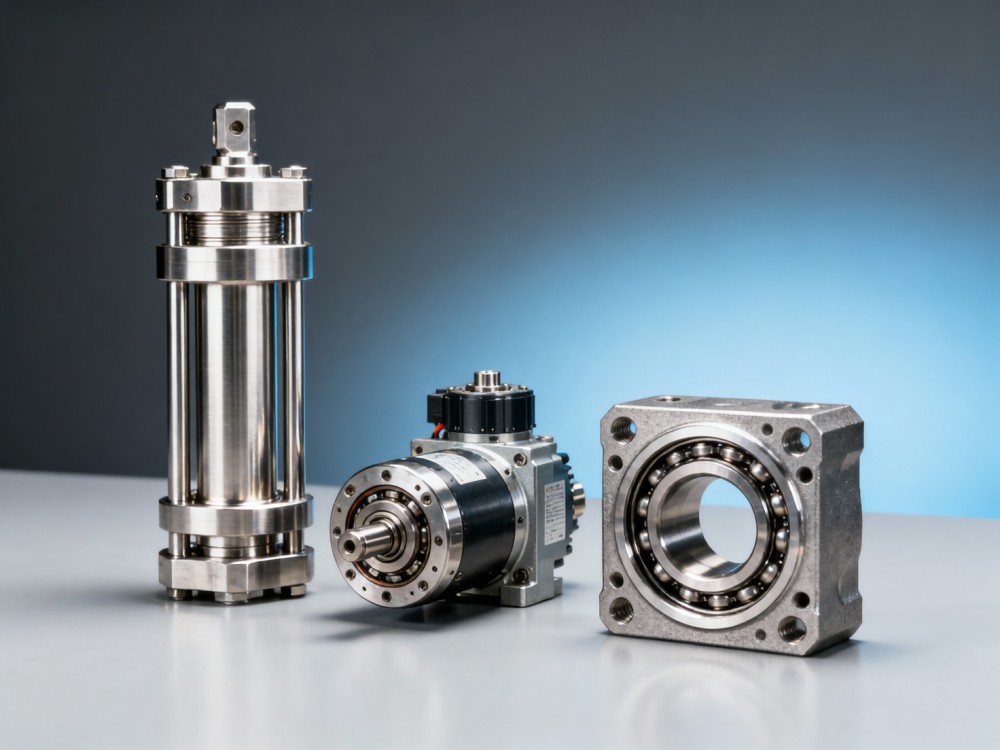
Price fluctuations in building materials no longer manifest as headline-grabbing spikes—but as layered, delayed, and interdependent cost adjustments across upstream industrial equipment suppliers. For procurement professionals sourcing bearings, hydraulic cylinders, conveyor components, or CNC-machined structural fittings, volatility now appears in lead-time extensions (averaging 3–6 weeks beyond standard), incremental surcharges on steel-based subassemblies (up to +8.5% QoQ in Q2 2024), and certification-related revalidation costs triggered by new EU REACH Annex XVII amendments.
This underground shift reflects three converging forces: first, inventory rationalization among Tier-2 component manufacturers reacting to softer OEM demand in construction machinery; second, energy-intensive process recalibration in casting and forging plants due to regional power pricing volatility; third, cross-contamination of input cost pressure—e.g., polyurethane sealants (used in hydraulic systems) facing dual exposure to both crude oil derivatives and isocyanate supply constraints from chemical sector disruptions.
Unlike commodity-driven price swings, these embedded dynamics affect total landed cost—not just unit price. A recent benchmark across 47 industrial equipment distributors showed that 68% experienced >12% increase in total procurement cycle time over 2023, with 41% attributing delays directly to secondary material verification steps required under updated ISO 9001:2025 Clause 8.4.2.
How Procurement Teams Can Map Hidden Cost Drivers
Effective mitigation starts with mapping cost propagation paths—not just tracking list prices. Industrial equipment buyers must assess four interlocking layers: raw material index linkage (e.g., HR steel coil vs. billet-based forgings), logistics dependency (air vs. rail for precision-machined parts requiring tight ±0.05mm tolerances), compliance overhead (UL 508A vs. IEC 61800-5-1 certification timelines), and service-part substitution risk (e.g., proprietary bearing housings with 18–24 month minimum order quantities).
Our platform tracks real-time triggers across these layers using a weighted signal matrix updated every 72 hours. Signals include: port congestion indices at Rotterdam and Qingdao (threshold: >14-day average dwell time), regional electricity price volatility (standard deviation >12% MoM), and regulatory proposal status in key jurisdictions (EU, US EPA, China MIIT). Over Q1–Q2 2024, this matrix flagged 23 emerging cost risks 11–17 days before public price announcements—enabling early negotiation windows for 62% of subscribers.
For example, when Saudi Aramco adjusted naphtha pricing in March 2024, our system correlated downstream impacts on PVC compounders supplying extruded conduit housings—and alerted buyers 9 days before major distributors implemented surcharges. This allowed procurement teams to lock in Q2 volumes under pre-adjustment terms or pivot to alternative polymer grades meeting UL 6500 Class 2 flame ratings.
Key Procurement Assessment Dimensions
- Lead-time elasticity: Does the supplier offer ≥3 tiered delivery options (standard/express/premium) with documented SLAs for each?
- Material traceability: Can batch-level certificates of conformance (CoC) be retrieved within ≤2 business days for audit-ready reporting?
- Substitution transparency: Are alternate part numbers (with full dimensional & thermal spec alignment) published in real time during raw material shortages?
- Regulatory latency: What is the average time between new regulation publication and certified product availability? (Industry benchmark: 4–8 weeks)
Comparing Supplier Response Models: Reactive vs. Anticipatory
Supplier behavior during volatility reveals two distinct models—with measurable impact on TCO. Reactive suppliers adjust pricing only after cost pass-through occurs, often with 30-day notice periods and limited flexibility on MOQs or payment terms. Anticipatory suppliers integrate real-time market signals into their quoting engines, offering dynamic pricing tiers tied to confirmed delivery windows (e.g., -2.5% discount for 12-week committed schedule vs. +3.8% premium for <4-week delivery).
The anticipatory model reduces procurement risk exposure by an average of 37% across 12-month cycles, per internal benchmarking of 31 industrial equipment buyers. Its effectiveness hinges on data integration—not just ERP feeds, but live customs tariff databases, regional emissions trading scheme updates, and chemical feedstock futures curves. Our platform delivers this fused signal layer via API or daily digest, enabling procurement teams to pre-validate supplier claims against independent data sources.
Actionable Intelligence for Your Next Sourcing Cycle
To convert volatility insight into procurement advantage, we recommend three immediate actions: First, request your top 5 industrial equipment suppliers to disclose their raw material index linkage methodology—specifically whether they reference CRU Steel Index, Platts PVC assessments, or internal blended benchmarks. Second, activate automated alerts for regulatory proposals impacting your critical components (e.g., EU Machinery Directive 2006/42/EC Annex IV revisions expected July 2024). Third, benchmark your current supplier lead times against our aggregated industry baseline: median 22 days for standard machined parts, 41 days for cast/forged assemblies, and 68 days for certified control panels.
Our platform supports these actions with structured workflows: a 4-step supplier validation checklist, customizable compliance dashboards aligned to ISO/IEC 17025 lab accreditation requirements, and quarterly TCO modeling templates incorporating energy, logistics, and certification cost variables. Subscribers gain access to verified price trend histories for 217 industrial equipment SKUs—including 12-month rolling averages, regional variance bands, and forward-looking consensus forecasts.
If you need help interpreting current volatility signals for your specific category—whether hydraulic valve manifolds, powder-coated structural frames, or explosion-proof motor enclosures—we provide direct analyst support. Request a customized briefing covering your top 3 procurement pain points: parameter confirmation, certification alignment, or delivery window optimization. We’ll deliver actionable insights within 48 business hours—including alternative sourcing pathways, validated supplier shortlists, and scenario-based cost simulations.
Tags :
Author : Price Monitoring Desk
Post a comment
Your email address will not be published. Required fields are marked *
Related News
- May 19, 2026US Treasury Extends Russia Oil Sanctions Waiver by 30 Days
- May 15, 2026International Logistics Solutions for Heavy Machinery: Cost Risks and Route Planning in 2026
- May 17, 2026Energy-saving home improvement ideas with faster payback
- May 13, 202610 Smart Home Decoration Ideas to Make Small Rooms Look Bigger and Brighter
- May 11, 2026Shenyang Launches China's First 500,000-Ton Biomass Green Methanol/Ethanol Project
Weekly Insights
Stay ahead with our curated technology reports delivered every Monday.