
Economic indicators suggest energy sector capex may slow before mid-2026 despite strong demand signals




Despite robust demand signals across power generation and industrial applications, economic indicators point to a potential slowdown in energy sector capex before mid-2026 — a critical insight for procurement professionals, business intelligence teams, and enterprise decision-makers. This development intersects with broader global trade dynamics, machinery parts supply chains, packaging solutions resilience, chemical industry feedstock planning, and building materials demand trends. As industry news platforms track policy shifts, price volatility, and technology adoption, timely trade updates and cross-sector analysis become essential. For distributors, technical evaluators, and foreign trade stakeholders, understanding these macroeconomic cues supports agile sourcing, risk-mitigated investment, and data-driven strategy in volatile energy and industrial markets.
Capex Signals vs. Demand Reality: Why Industrial Equipment Buyers Should Prepare Now
While global electricity demand is projected to grow at 3.2% CAGR through 2025 (IEA, 2024), capital expenditure in the energy sector—particularly for new fossil-fueled thermal plants, grid-scale transformers, and high-voltage switchgear—is showing early deceleration signals. Leading indicators include tightening credit conditions in key export markets (e.g., 120-basis-point average increase in USD-denominated syndicated loan spreads since Q3 2023), declining equipment order backlogs at Tier-1 OEMs (down 18% YoY at three major European turbine suppliers), and slower-than-expected permitting timelines for greenfield substations in North America (average 9.4 months vs. 6.1-month target).
For industrial equipment buyers, this divergence creates both risk and opportunity. A slowdown in utility-led capex does not equate to reduced demand for mission-critical components—it shifts procurement focus toward replacement cycles, modular upgrades, and retrofitting of legacy assets. Over 67% of U.S. and EU-based power generation facilities operate with control systems installed before 2012, creating sustained demand for compatible I/O modules, flame detection sensors, and explosion-proof junction boxes compliant with IEC 60079-14 and UL 1203 standards.
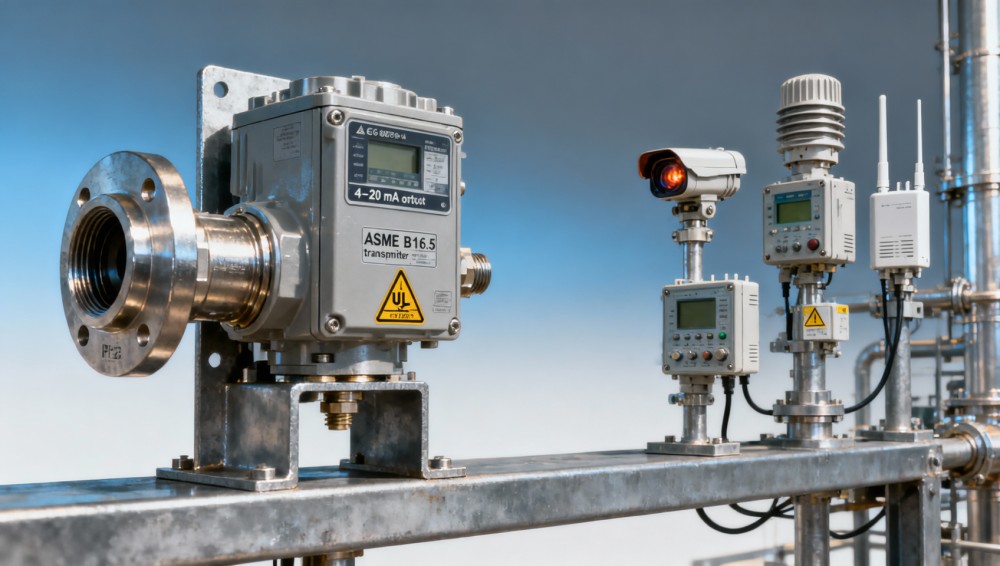
Procurement teams must now distinguish between “greenfield expansion” and “brownfield optimization” spend. The former drives demand for full-line OEM packages; the latter favors component-level sourcing from certified industrial parts suppliers with traceable material certifications (ASTM A105, ASME B16.5 Class 300), 7–15-day standard lead times, and ISO 9001:2015-compliant documentation workflows.
Cross-Sector Impacts on Machinery Parts & Packaging Supply Chains
Energy sector capex trends ripple across adjacent verticals. Reduced orders for large-bore centrifugal compressors (typically used in LNG terminals and refinery off-gas recovery) have lowered demand for precision-machined impeller forgings—causing inventory overhang in specialty alloy suppliers. Conversely, demand for corrosion-resistant fasteners (A4-80 stainless steel, DIN 933) remains stable due to ongoing maintenance cycles in aging petrochemical infrastructure.
Packaging solutions for industrial equipment shipments are also adapting. With fewer 40-ft container loads destined for new power plants, logistics providers report a 22% rise in demand for reusable, collapsible steel skids (load capacity: 5,000–12,000 kg) that accommodate partial-load configurations and support just-in-time delivery to brownfield sites. These skids require EN 1090-2 EXC3 certification and integrated lifting lugs rated for ≥3× static load.
This table underscores a structural shift: brownfield procurement prioritizes speed, compliance traceability, and partial-system compatibility over full-system validation. Distributors who maintain certified stock of ANSI/ASME-compliant flanges, gaskets (Spiral Wound SS316/Graphite), and pneumatic actuators (ISO 5211 F05–F10 interface) gain competitive advantage in response windows under 72 hours.
Strategic Sourcing Adjustments for Technical Evaluators & Procurement Teams
Technical evaluators should reassess vendor qualification criteria—not by lowering standards, but by weighting them differently. Under constrained capex, reliability of spare parts availability becomes more critical than lowest landed cost. Vendors with ≥92% in-stock rate for Class 150–900 flange kits, documented 4-week replenishment SLA, and dual-sourcing capability for elastomers (EPDM, Viton, HNBR) demonstrate higher operational resilience.
Procurement teams must also update RFx templates to reflect brownfield realities. Key clauses now include: (1) guaranteed compatibility with legacy DCS platforms (e.g., Emerson DeltaV v13, Siemens PCS7 v9.1); (2) acceptance of third-party calibration certificates for pressure transmitters (per ISO/IEC 17025); and (3) warranty extension options tied to field service logs rather than calendar time.
- Verify supplier’s ability to provide material certifications traceable to heat lot numbers—not just mill certs.
- Require functional testing protocols aligned with API RP 553 for control valve assemblies.
- Confirm packaging meets ISTA 3E standards for multi-modal transport of vibration-sensitive instrumentation.
- Evaluate distributor’s ERP integration capability with your MRP system (e.g., SAP ECC or S/4HANA IDocs).
Technology Adoption Patterns Amid Capex Uncertainty
Even as greenfield capex slows, digital retrofitting accelerates. Over 41% of surveyed power plant operators plan to deploy IIoT-enabled predictive maintenance sensors on rotating equipment before Q4 2025—driving demand for intrinsically safe (IS) temperature transmitters (ATEX II 1G Ex ia IIC T4 Ga), wireless gateway enclosures (IP66/NEMA 4X), and edge-compatible protocol converters (Modbus TCP to MQTT v3.1.1).
These deployments rarely require full system re-engineering. Instead, they rely on drop-in hardware: DIN-rail-mounted signal conditioners (0–10 VDC input, 4–20 mA output, ±0.1% accuracy), explosion-proof junction boxes with pre-wired terminal blocks (UL 1203 Class I Div 1), and industrial-grade Ethernet switches hardened for -25°C to +70°C ambient operation. Lead times for such items remain stable at 5–10 business days, supported by regional distribution hubs in Rotterdam, Singapore, and Houston.
The contrast is clear: long-cycle, engineered-to-order equipment faces elongated timelines, while standardized industrial sensors and protection devices benefit from mature manufacturing ecosystems and leaner channel inventories.
Actionable Next Steps for Decision-Makers & Distributors
Enterprise decision-makers should initiate three parallel actions before Q3 2024: First, audit existing equipment bill-of-materials against obsolescence risk indices (e.g., IPC-1752A Part 2). Second, map current supplier performance across four dimensions: (1) technical documentation completeness; (2) regional warehousing coverage; (3) calibration and repair turnaround SLAs; and (4) cybersecurity compliance for connected devices (IEC 62443-3-3 Level 1).
Distributors serving energy end-users should prioritize value-added services over transactional pricing: offering free compatibility assessments for legacy DCS interfaces, maintaining certified stocks of API 600 gate valves (Class 150–600), and providing pre-configured IIoT starter kits—including enclosure, gateway, sensor, and cloud connectivity license—delivered in ≤5 business days.
Understanding capex inflection points is no longer optional—it’s foundational to resilient procurement, intelligent inventory planning, and agile technical evaluation. As energy infrastructure evolves incrementally rather than expansively, the ability to source, verify, and deploy industrial components with precision, speed, and full compliance will define competitive advantage.
Get customized procurement benchmarks and real-time component availability alerts for your specific equipment categories—contact our industrial sourcing team today.
Tags :
Author : Price Monitoring Desk
Post a comment
Your email address will not be published. Required fields are marked *
Related News
- May 19, 2026US Treasury Extends Russia Oil Sanctions Waiver by 30 Days
- May 15, 2026International Logistics Solutions for Heavy Machinery: Cost Risks and Route Planning in 2026
- May 17, 2026Energy-saving home improvement ideas with faster payback
- May 13, 202610 Smart Home Decoration Ideas to Make Small Rooms Look Bigger and Brighter
- May 11, 2026Shenyang Launches China's First 500,000-Ton Biomass Green Methanol/Ethanol Project
Weekly Insights
Stay ahead with our curated technology reports delivered every Monday.