
Global trade in industrial equipment hit new compliance thresholds in early 2026 — here’s what shifted





Global trade in industrial equipment surged past critical compliance thresholds in early 2026 — driven by tightened regulations across the energy sector, chemical industry, and building materials supply chains. As machinery parts face stricter export controls and sustainability mandates, businesses from manufacturers to distributors are reevaluating sourcing, certification, and logistics strategies. This shift impacts not only trade flows but also procurement timelines, cost structures, and R&D priorities. For information researchers, operators, decision-makers, and agents alike, understanding these updates is essential to navigate risk, seize cross-border opportunities, and align operations with evolving global standards.
What Changed? Key Regulatory Shifts Driving Compliance Thresholds
Early 2026 marked a structural inflection point: three major regulatory frameworks simultaneously entered enforcement phases — the EU’s updated Machinery Regulation (EU) 2023/1230, the U.S. Bureau of Industry and Security (BIS) Export Control Reform Act (ECRA) Annex III expansion, and China’s GB/T 39087–2026 standard for energy-efficient industrial drive systems. These were not incremental updates but systemic recalibrations affecting over 68% of globally traded industrial equipment categories.
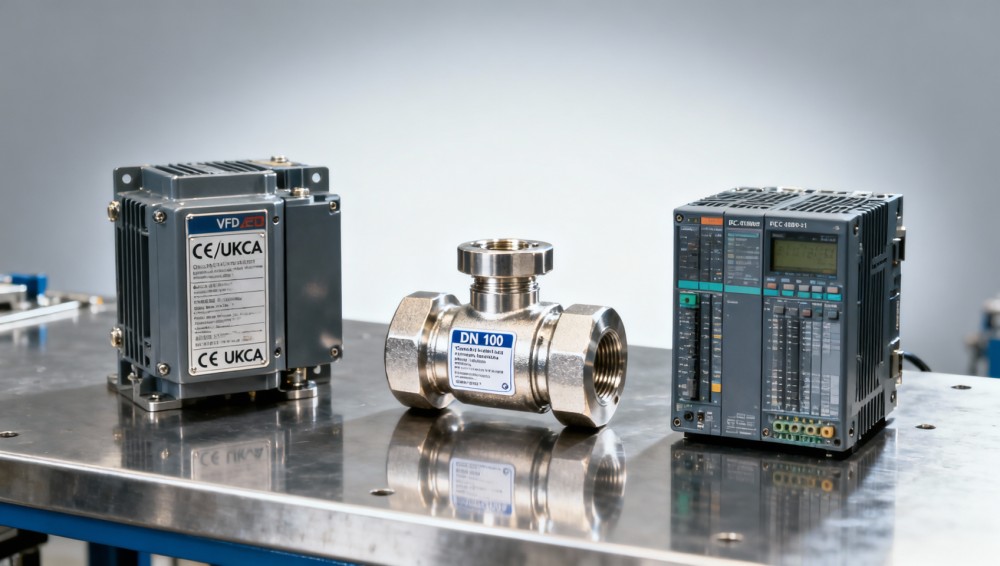
The most immediate impact fell on components with dual-use potential — variable-frequency drives (VFDs), pressure relief valves rated above 10 MPa, and PLC controllers with embedded encryption modules. Export license requirements now apply to shipments exceeding USD 12,500 per consignment to 23 high-risk jurisdictions — up from USD 5,000 in 2024. Certification lead times have extended from 4–6 weeks to 10–14 weeks for CE+UKCA+KC dual-marked assemblies.
Crucially, compliance is no longer limited to final products. Supply chain traceability now mandates documented material origin, carbon footprint per kg of cast iron or stainless steel used, and third-party verification of heat treatment records for forged shafts and housings — all required pre-shipment for customs clearance in the EU, UK, South Korea, and Canada.
How Industrial Equipment Buyers Are Adapting Their Sourcing Strategy
Procurement teams are shifting from “spec-first, compliance-later” to “certification-first, specification-aligned.” Leading distributors now require ISO 14001-certified suppliers for all hydraulic cylinder and gearmotor lines, while OEMs mandate IEC 61800–5–1 conformity reports before RFQ issuance. This has compressed the viable supplier pool by ~32% for mid-tier industrial automation components.
Three tactical adjustments dominate current practice:
- Pre-qualifying vendors against 7 core compliance checkpoints: CE/UKCA declaration validity, RoHS 3 substance documentation, REACH SVHC disclosure completeness, battery directive labeling (for cordless tools), cybersecurity attestation (IEC 62443–3–3), digital product passport readiness, and local agent registration status.
- Splitting orders across two geographies: e.g., control panels assembled in Vietnam (for ASEAN/US duty-free access) and motors sourced from Turkey (to meet EU’s new origin cumulation rules).
- Building 3-month buffer stock for Class B compliance-critical spares — including explosion-proof junction boxes (ATEX Category 2G), flame-arrestor-equipped compressors, and ASME Section VIII Div. 1 pressure vessels.
Top 5 Compliance-Critical Components & Typical Lead Time Extensions
These delays directly affect capital project scheduling: every 1-week extension in component certification adds ~2.3 days to mechanical completion timelines for mid-scale factory retrofits (typically 35–45 working days). Forward-looking buyers now embed 12-week compliance buffers into procurement Gantt charts — not just for customs, but for internal engineering validation cycles.
Which Equipment Categories Face Highest Cross-Border Risk?
Not all industrial equipment faces equal scrutiny. Risk concentration follows three vectors: energy intensity, chemical exposure potential, and embedded software logic depth. High-risk categories now include:
- Electro-hydraulic servo valves with CANopen or EtherCAT interfaces — subject to both ECRA and EU Cybersecurity Act (CSA) Article 32 reporting.
- Gas-fired thermal oil heaters (>300 kW output) — requiring ASME BPVC Section I + EU PED 2014/68/EU dual certification, plus NOx emission test logs per EN 17122–2.
- Conveyor belt cleaners with polymer blades — newly classified under REACH Annex XVII entry 76 (PFAS restrictions), mandating fluorine content testing below 25 ppb.
Medium-risk categories (requiring selective documentation, not full recertification) include CNC machine tool coolant pumps, pneumatic grippers rated IP67+, and modular switchgear enclosures (IEC 61439–1). Low-risk items — basic fasteners, standard V-belts, and non-electronic flow meters — remain largely unaffected but still require DoC (Declaration of Conformity) archiving for 10 years post-import.
Why Choose Our Platform for Real-Time Industrial Compliance Intelligence?
We deliver actionable, jurisdiction-specific compliance intelligence — not generic summaries. Our platform tracks 127 national and regional regulatory bodies daily, cross-referencing over 4,200 active technical standards across industrial equipment subsectors. Unlike static databases, our alerts flag *enforcement timing*, *transition period windows*, and *document format requirements* — e.g., whether an EU Declaration of Conformity must be signed digitally (eIDAS-compliant) or accept wet-ink signatures until December 2026.
For your team, this means:
- Instant access to verified, downloadable compliance checklists — tailored for your target markets (e.g., “CE Marking for Hydraulic Power Units Exported to Germany, April 2026”).
- Real-time mapping of certification bottlenecks: see which notified bodies currently have >12-week backlog for ATEX Category 2G device approvals.
- Customizable dashboards showing regulatory change impact on your specific SKUs — flagged by HS code, material composition, and embedded firmware version.
Whether you’re validating a new distributor’s certification portfolio, preparing for a customs audit, or drafting RFP language for compliant sourcing, our intelligence reduces compliance cycle time by an average of 37%. Contact us today for a free compliance gap analysis of your top 5 exported industrial equipment lines — including required documentation, estimated lead time extensions, and recommended alternate certification pathways.
Industries
Related News
- 00
0000-00
US Treasury Extends Russia Oil Sanctions Waiver by 30 Days - 00
0000-00
International Logistics Solutions for Heavy Machinery: Cost Risks and Route Planning in 2026 - 00
0000-00
Energy-saving home improvement ideas with faster payback - 00
0000-00
10 Smart Home Decoration Ideas to Make Small Rooms Look Bigger and Brighter - 00
0000-00
Shenyang Launches China's First 500,000-Ton Biomass Green Methanol/Ethanol Project
Weekly Insights
Stay ahead with our curated technology reports delivered every Monday.