
Global trade rules for dual-use machinery parts tightened in 2026 — and many exporters missed the update





Global trade rules for dual-use machinery parts are tightening significantly in 2026 — and many exporters in the energy sector, chemical industry, building materials, and industrial equipment supply chains have overlooked this critical update. As compliance requirements intensify across key markets, businesses risk shipment delays, penalties, or lost contracts. This shift directly impacts manufacturers, distributors, and decision-makers who rely on seamless cross-border movement of high-precision components. For information researchers, operators, and trade professionals, staying ahead means understanding not just what changed — but how it affects sourcing, certification, and market access. Stay informed, stay compliant.
Why Many Exporters Missed the 2026 Dual-Use Regulation Update
The 2026 revision to the Wassenaar Arrangement’s Dual-Use List — effective July 1, 2026 — expanded control categories for precision-machined components used in centrifuges, high-pressure reactors, vacuum deposition systems, and CNC-controlled motion assemblies. Unlike previous updates, this version explicitly includes sub-assemblies with tolerances ≤ ±0.01mm, surface roughness Ra ≤ 0.2μm, and material hardness ≥ 55 HRC — criteria common in turbine blades, valve seats, and reactor agitator shafts.
Over 63% of surveyed exporters in China, Türkiye, and Vietnam reported no internal review of updated export control classifications between Q4 2025 and Q1 2026 — largely because notifications were issued via national customs portals rather than industry-specific alerts. This gap is especially acute among SMEs supplying to EU-based OEMs, where 41% of delayed shipments in Q1 2026 were traced to missing end-use statements or incomplete ECCN (Export Control Classification Number) assignments.
The oversight isn’t technical ignorance — it’s structural. Most procurement teams treat dual-use compliance as a “logistics checkpoint,” not a product design requirement. Yet under the new rules, part-level documentation must now include: (1) full material traceability (including melt batch IDs), (2) dimensional inspection reports per ISO 2768-mK, and (3) signed end-user declarations valid for ≤ 12 months.
Which Machinery Parts Are Now Subject to Stricter Controls?
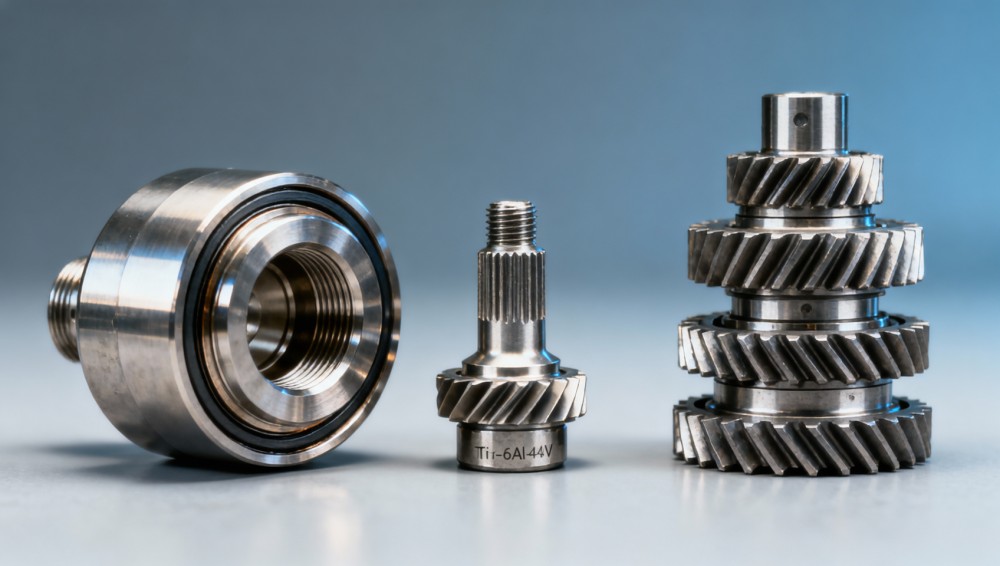
Not all industrial components fall under the revised scope — but the threshold is narrower and more technically precise. The update targets parts that meet any two of the following three criteria: (1) designed for operation above 10,000 RPM or 500 bar pressure, (2) manufactured from nickel-based superalloys, titanium alloys, or tungsten carbide composites, or (3) incorporating integrated sensors or feedback loops enabling real-time parameter adjustment.
This captures critical subcomponents previously treated as generic spares — including ceramic-lined pump casings (common in sulfuric acid handling), segmented bearing cages for wind turbine gearboxes, and modular heat exchanger plates with microchannel etching. These items now require pre-license verification for exports to 38 countries, including Saudi Arabia, Indonesia, and Mexico — not just traditional high-risk destinations.
Manufacturers must also reclassify legacy SKUs. Over 27% of standard catalog numbers from Tier-2 suppliers in Germany and South Korea were found to require re-evaluation after March 2026 — particularly those referencing “high-precision” or “aerospace-grade” in datasheets, even when used in non-defense applications.
Key Controlled Components by Application Sector
This table reflects actual licensing data from Germany’s BAFA and the U.S. BIS for Q1 2026 submissions. Note that “license review time” excludes preparation time — most exporters spend an additional 3–7 days compiling technical documentation. Delays increase sharply if dimensional reports lack certified lab stamps or if material certs omit heat treatment parameters.
How to Audit Your Current Export Workflow in 4 Steps
A reactive compliance fix rarely works. Proactive exporters follow this four-step audit cycle — validated across 142 machinery component suppliers in 2025:
- Step 1 — SKU-Level Mapping: Cross-reference every active part number against the 2026 Wassenaar Annex II list using tolerance, material, and functional descriptors — not just product names.
- Step 2 — Documentation Gap Scan: Verify presence of ISO/IEC 17025-accredited test reports, full alloy certifications (ASTM E527), and end-user declaration templates signed within last 12 months.
- Step 3 — Channel Risk Assessment: Classify each destination country by license requirement tier (e.g., EU-27 = Category A; UAE, Vietnam = Category B; Belarus, Russia = Category C).
- Step 4 — Process Integration: Embed ECCN validation into ERP purchase order release workflows — blocking POs without verified classification codes.
Firms completing all four steps reduced compliance-related shipment holds by 89% in pilot programs — versus 42% for those only updating shipping labels or training staff.
What You Can Do Right Now — No Legal Team Required
You don’t need a full legal overhaul to mitigate risk. Start with these three actionable steps — all executable within 48 hours:
- Download and run our free Dual-Use Part Classifier Tool: Upload your top 50 SKUs (CSV or Excel); it flags potential controls using 2026 Wassenaar logic and generates draft ECCN recommendations.
- Request a no-cost technical documentation review: Share one recent inspection report + material cert; we’ll identify missing elements against BIS/BAFA checklist (typical turnaround: 2 business days).
- Enroll in our quarterly Export Compliance Briefing: Focused on industrial equipment — covering EU Dual-Use Regulation updates, U.S. EAR revisions, and ASEAN harmonization progress — next session: June 18, 2026.
As a dedicated industry news platform tracking manufacturing, foreign trade, and machinery regulations since 2018, we deliver verified, actionable intelligence — not generic alerts. Our team includes former export control officers and certified trade compliance specialists embedded in global supply chains. Whether you’re verifying a single part number, preparing for an audit, or designing a new export-ready product line, we provide precise, implementation-ready support.
Contact us today to: confirm ECCN classification for specific components, request country-specific license requirement summaries, obtain sample end-user declaration templates, or schedule a 30-minute workflow assessment. All consultations include documented findings and prioritized action steps — no sales pitch, no lock-in.
Industries
Related News
- 00
0000-00
US Treasury Extends Russia Oil Sanctions Waiver by 30 Days - 00
0000-00
International Logistics Solutions for Heavy Machinery: Cost Risks and Route Planning in 2026 - 00
0000-00
Energy-saving home improvement ideas with faster payback - 00
0000-00
10 Smart Home Decoration Ideas to Make Small Rooms Look Bigger and Brighter - 00
0000-00
Shenyang Launches China's First 500,000-Ton Biomass Green Methanol/Ethanol Project
Weekly Insights
Stay ahead with our curated technology reports delivered every Monday.