
How to Evaluate Imported Components Under EU Machinery Directive 2026





What Changed in EU Machinery Directive 2026
The 2026 regulatory update places greater attention on how machinery manufacturers and importers assess the safety, technical suitability and traceability of components used within a larger machinery system. In practice, this means companies can no longer rely on supplier claims alone when evaluating imported parts.
The updated framework increases scrutiny in areas such as technical documentation completeness, safety-related design assumptions, component traceability, intended operating conditions, and the relationship between individual components and final machinery risk assessment. For businesses sourcing internationally, this creates a stronger need for structured component-level compliance review.
Which Imported Components Need Closer Technical Evaluation
Not every imported component carries the same compliance risk. The components that deserve closer review are usually the ones that directly affect machinery safety, control logic, functional reliability or regulatory documentation.
- Electrical control modules and embedded control systems
- Motors, drives and motion-control assemblies
- Sensors, limit devices and safety interlocks
- Mechanical transmission parts with critical load or motion functions
- Guarding systems and protective assemblies
- Pneumatic, hydraulic or electromechanical units linked to hazardous operations
- Components whose failure could affect machinery safety performance
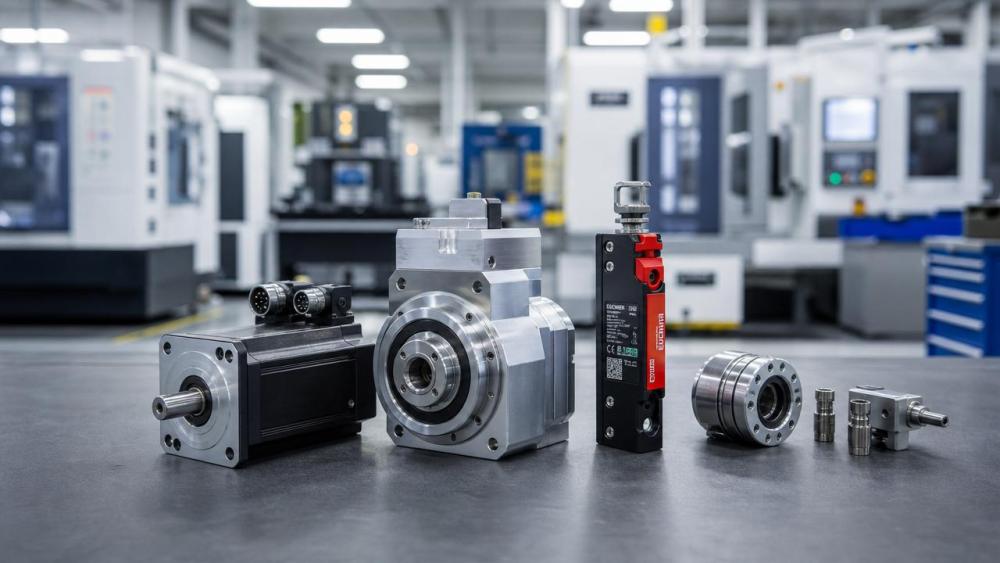
Imported components used in high-risk applications should be evaluated not only for specification fit, but also for their role in the final machinery compliance chain.
Key Compliance Checks for Imported Components
A practical evaluation process should focus on whether the component can be safely and properly integrated into the final machine. Buyers and technical teams should review the following points before approving suppliers or releasing purchase orders.
- Whether the component supports its intended technical and safety function
- Whether operating limits, load parameters and environmental conditions are clearly defined
- Whether the supplier can provide complete technical documentation
- Whether the component introduces additional risk that must be addressed in machinery assessment
- Whether labeling, identification and traceability information are sufficient
- Whether installation and maintenance instructions are clear enough for compliant use
- Whether supporting test reports or conformity-related evidence are available where needed
This review should be documented internally, especially for components used in systems where safety, reliability or regulatory exposure is high.
What Documents Importers Should Request from Suppliers
One of the most common compliance weaknesses is incomplete documentation. Importers should request and archive a clear technical package for each critical component, rather than depending on sales brochures or short-form quotations.
- Technical datasheets and product specifications
- Engineering drawings or dimensional references where relevant
- Material or performance declarations where applicable
- Test reports, validation records or certification references
- Installation and operating instructions
- Maintenance limitations and service requirements
- Safety-related information affecting final machinery design
- Batch, lot or traceability records
For higher-risk imported components, documentation should be reviewed by both sourcing and technical teams before the part is approved for use in production or integration.
Common Evaluation Mistakes Buyers and Importers Make
Many companies still evaluate imported components primarily through cost, delivery and general supplier reputation. Under the 2026 compliance environment, that approach is no longer enough.
- Assuming a supplier claim is sufficient without technical verification
- Treating a component as automatically suitable because it is already widely sold
- Reviewing commercial terms without checking documentation quality
- Ignoring the role of the component in final machinery risk assessment
- Failing to classify components by safety relevance or compliance impact
- Overlooking operating environment limits such as heat, vibration, corrosion or duty cycle
- Not keeping internal records of technical evaluation decisions
These mistakes often surface later during audits, customer reviews, certification work or post-installation performance issues.
How Manufacturers and Sourcing Teams Should Update Their Review Process
To adapt effectively, companies should move compliance evaluation earlier in the sourcing workflow. Imported component assessment should begin before final supplier approval, not after products are already committed to a project or production cycle.
- Create a component compliance checklist for imported parts
- Classify components by technical and regulatory risk level
- Require minimum document packages before supplier onboarding
- Involve engineering and compliance staff in component approval decisions
- Record evaluation outcomes for traceability and audit readiness
- Review higher-risk components again when application conditions change
This process helps reduce downstream compliance surprises, supplier disputes and rework costs when machinery systems are reviewed under EU requirements.
Conclusion
EU Machinery Directive 2026 makes imported component evaluation more important for companies that build, integrate, source or import machinery systems. The main challenge is not simply understanding the regulation at a high level, but translating it into a practical review process for real components used in real equipment.
Industries
Related News
- 00
0000-00
US Treasury Extends Russia Oil Sanctions Waiver by 30 Days - 00
0000-00
International Logistics Solutions for Heavy Machinery: Cost Risks and Route Planning in 2026 - 00
0000-00
Energy-saving home improvement ideas with faster payback - 00
0000-00
10 Smart Home Decoration Ideas to Make Small Rooms Look Bigger and Brighter - 00
0000-00
Shenyang Launches China's First 500,000-Ton Biomass Green Methanol/Ethanol Project
Weekly Insights
Stay ahead with our curated technology reports delivered every Monday.