
2026 Energy Industry Trend Report





1. Industry Overview
The energy industry is the backbone of the global economy, including traditional energy sources (oil, natural gas, coal) and renewable energy (solar, wind, hydro, nuclear). In 2026, the industry is undergoing a significant transformation. While traditional energy maintains stable output under economic and geopolitical influences, renewable energy is rapidly expanding, shaping the future energy mix.
2. 26-Year Historical Review
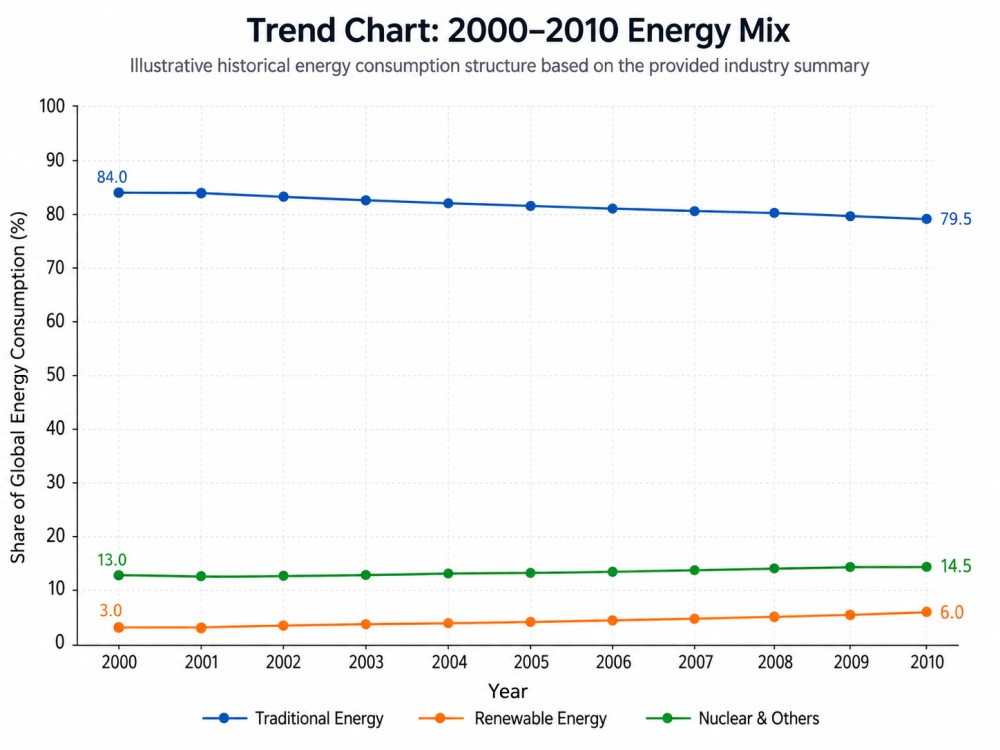
2000–2010: Traditional Energy Dominance
Global energy consumption was mainly oil and coal, accounting for over 80%. Renewable energy was in its infancy, with minimal solar and wind capacity. Oil price volatility and energy security became strategic concerns for nations.
2011–2015: Emergence of Renewable Energy
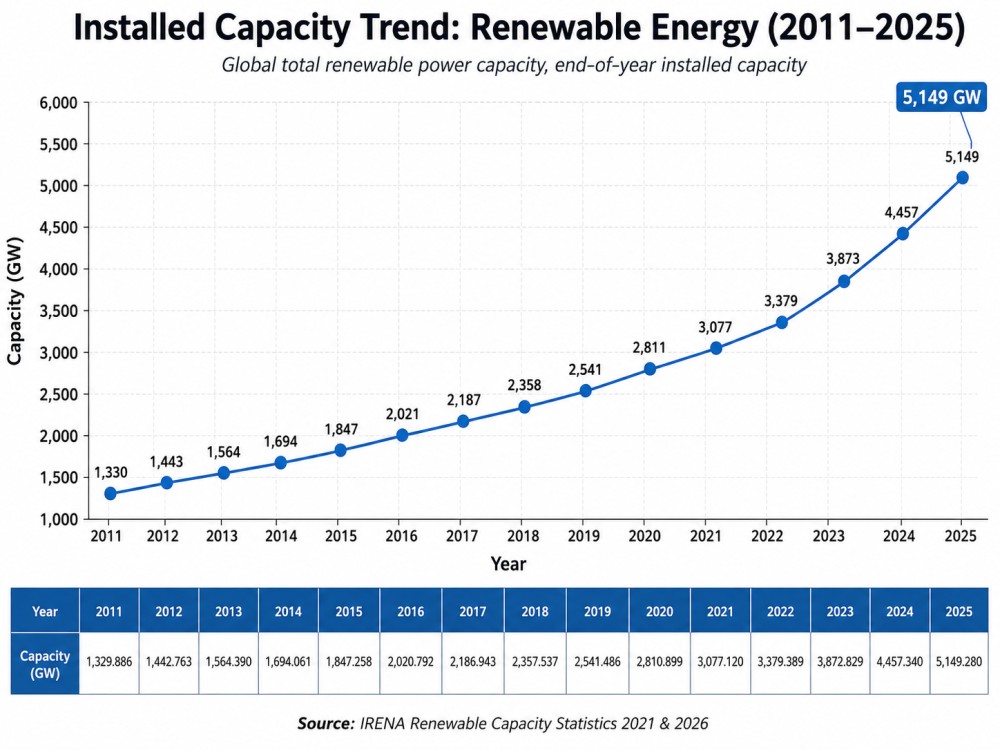
Cost reductions (~30%) in wind and solar made them increasingly competitive. Early climate commitments drove low-carbon initiatives. Energy storage technologies began R&D but limited commercial applications.
2016–2020: Digitalization and Smart Energy
Smart grids, energy IoT, and big data became key focus areas. Global wind and solar installations surpassed 600 GW. Storage costs declined, enabling pilot commercial applications.
2021–2025: Carbon Neutrality Driving Transformation
Global net-zero pledges accelerated energy restructuring. Distributed energy and storage systems became policy priorities. Renewable energy share increased significantly, with some regions exceeding 30% of generation from wind and solar.
3. Current Industry Analysis
3.1 Global Energy Consumption Structure
- Traditional energy: Coal and oil ~60% of total consumption; natural gas share rising, especially in power and industrial sectors.
- Renewables: Solar and wind growing rapidly; 2025 global PV capacity 1200 GW, wind 900 GW.
- Nuclear: Stable base-load power, limited growth due to policy and safety constraints.
3.2 Technological Innovation
- Energy storage: Lithium battery costs fall, higher capacity density supports grid peaking and distributed energy.
- Smart grids: AI and IoT applied for monitoring, prediction, and dispatching to balance supply-demand.
- Green hydrogen: Mature hydrogen production, storage, and transport technologies for industrial and transport sectors.
3.3 Policy and Market Environment
Governments worldwide offer subsidies and green finance incentives. Carbon trading expands, guiding enterprises toward optimized energy structures. Geopolitical tensions impact oil and gas supply, promoting diversification and strategic reserves.
3.4 Industry Chain Changes
- Upstream: Renewable materials (silicon wafers, turbine blades) expand, costs impacted by raw material prices.
- Midstream: Power transmission, storage, microgrids, and digital management systems scale rapidly.
- Downstream: Industrial, EV, and building sectors accelerate green transitions.
4. In-Depth Analysis
4.1 Investment Trends
Global renewable energy investment surpasses 50% of total energy investment by 2025. Smart grid, storage, and hydrogen attract significant capital, projected 10–15% growth in 2026.
4.2 Technology Comparison
4.3 Regional Differences
- North America: Policy incentives boost renewable capacity.
- Europe: Leading in carbon neutrality and energy optimization.
- Asia: Rapid renewable expansion, grid intelligence still maturing.
- Middle East: Traditional energy dominant; early-stage renewable investments.
4.4 Risks and Challenges
- Raw material price volatility: Key equipment depends on imports, impacting costs.
- Grid adaptability: Intermittent renewables challenge dispatch and stability.
- Policy changes: Subsidy or carbon trading adjustments may affect market expectations.
5. Future Development Trends (2026–2030)
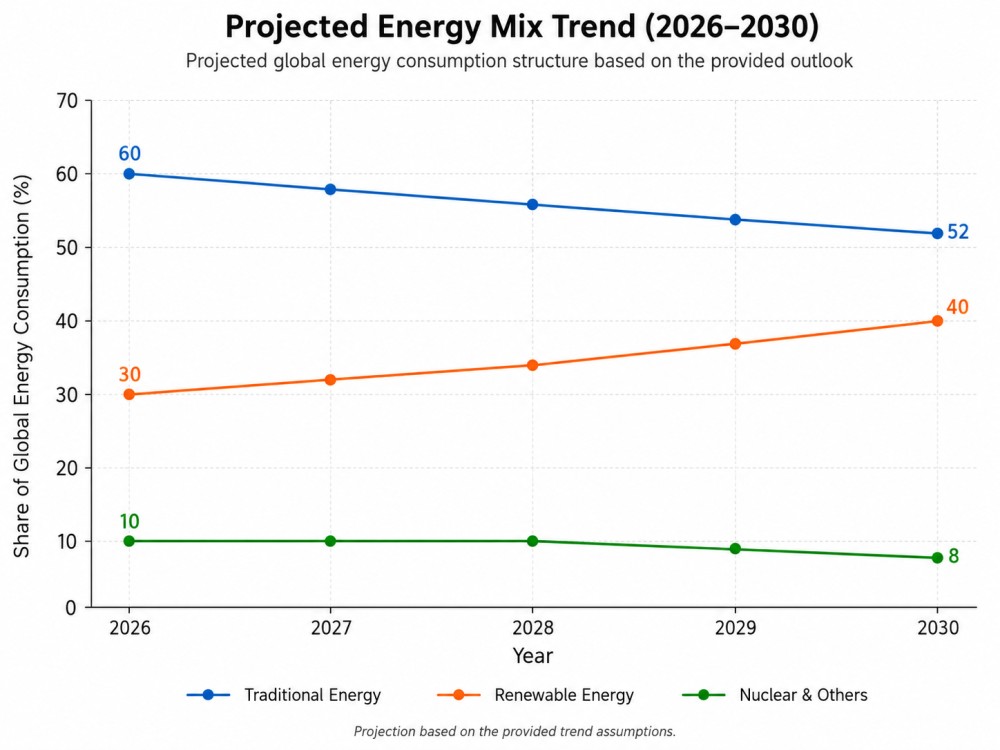
- Energy mix optimization: Renewables >35–40%, traditional energy decarbonized.
- Digitalization & intelligence: AI, IoT, blockchain for monitoring, prediction, and maintenance.
- Green hydrogen & storage: Production costs fall, scaled applications in transport and industry.
- Cross-industry synergy: Energy integrates with transport, buildings, and industrial upgrades.
- Global energy security: Supply chain diversification, smart dispatch, and renewable complementarity.
6. Conclusion
The 2026 energy industry is at a transformative phase. Rapid renewable growth, mature storage and smart grid technologies, clear green policies, and investment orientation mark the era. The next five years will see deeper low-carbon, digitalized, and cross-industry energy development. Enterprises must focus on innovation, policy adaptation, risk management, and supply chain optimization to balance economic and sustainable growth.
Industries
Related News
- 00
0000-00
US Treasury Extends Russia Oil Sanctions Waiver by 30 Days - 00
0000-00
International Logistics Solutions for Heavy Machinery: Cost Risks and Route Planning in 2026 - 00
0000-00
Energy-saving home improvement ideas with faster payback - 00
0000-00
10 Smart Home Decoration Ideas to Make Small Rooms Look Bigger and Brighter - 00
0000-00
Shenyang Launches China's First 500,000-Ton Biomass Green Methanol/Ethanol Project
Weekly Insights
Stay ahead with our curated technology reports delivered every Monday.