
E-commerce Industry 26-Year Trend Report





1. Industry Overview
The e-commerce industry has undergone transformative growth from the early 2000s, evolving from basic online storefronts to a globally interconnected digital ecosystem. By 2026, the sector encompasses cross-border trade, advanced logistics solutions, digital payment systems, AI-driven marketing, and omnichannel retail integration. The industry not only affects consumer behavior but also reshapes supply chain dynamics, platform competition, and regulatory frameworks worldwide.
2. 26-Year Historical Review
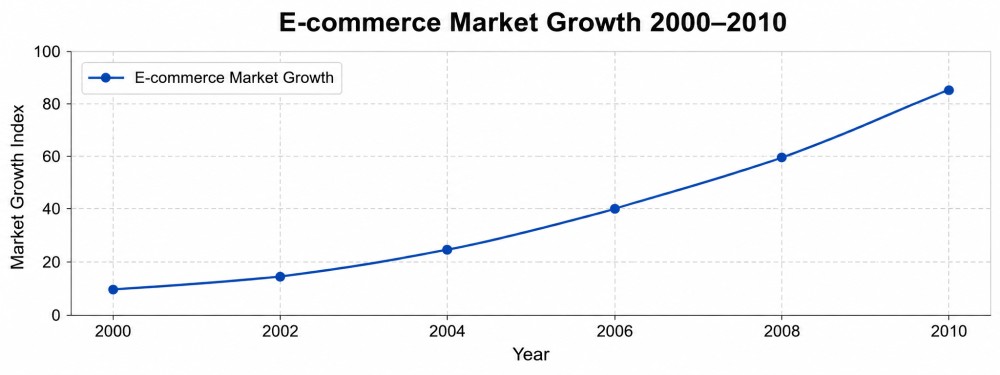
2000–2010: Early Online Retail Emergence
During this decade, e-commerce adoption was gradual. Infrastructure limitations, low internet penetration, and consumer hesitation constrained market expansion. Leading platforms such as Amazon and Alibaba laid foundational infrastructure. Payment systems, security protocols, and logistics networks were still rudimentary, leading to high friction in cross-border transactions.2011–2015: Platform Expansion and Mobile Adoption
The proliferation of smartphones catalyzed mobile commerce, while social media integration enabled viral marketing campaigns. Cross-border e-commerce began scaling, with payment gateways like PayPal and Alipay facilitating secure international transactions. Logistics networks began automation pilots, improving last-mile delivery efficiency.
2016–2020: Data-Driven Transformation
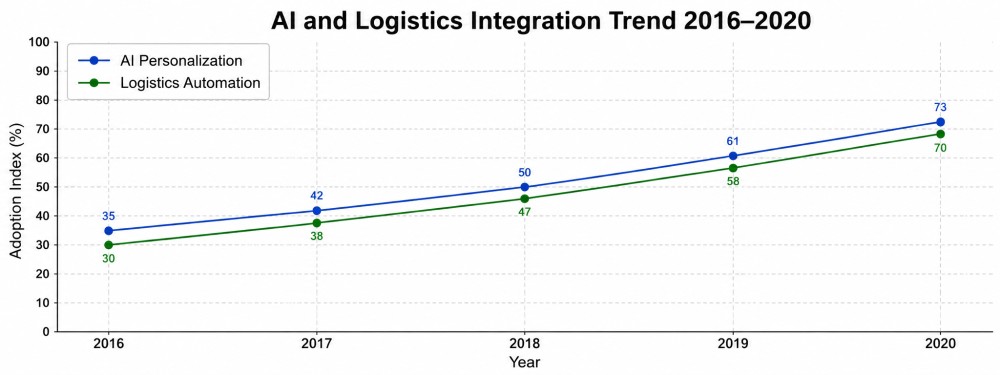
AI and big data analytics enhanced product recommendations and personalized user experiences. Cloud-based infrastructure allowed scalable platform expansion. Global e-commerce GMV surpassed $3 trillion by 2020. Omnichannel strategies started bridging offline and online retail, with fulfillment centers leveraging automation for inventory optimization.
2021–2025: Post-Pandemic Surge and Market Maturation
COVID-19 accelerated digital adoption, particularly in emerging markets. Direct-to-consumer models matured, and automated fulfillment centers became industry standard. Cross-border logistics and multi-platform strategies matured, with digital payment systems, real-time tracking, and AI-based demand forecasting becoming mainstream.
3. Current Industry Analysis
3.1 Market Structure
- Dominant Platforms: Amazon, Alibaba, Shopify, JD.com, eBay.
- Market Segments: B2C, B2B, C2C, cross-border e-commerce.
- Supporting Technologies: AI recommendation engines, automated logistics, mobile payments, cloud infrastructure.
3.2 Technological Drivers
- AI personalization and product recommendation engines improving conversion rates.
- Automated warehouses and last-mile delivery optimizing fulfillment efficiency.
- Cross-border platforms enabling seamless international trade.
3.3 Policy and Market Environment
Government incentives support digital trade, taxation compliance, and consumer protection. Regulations on cross-border e-commerce shape international expansion, while data privacy laws enforce stricter handling of consumer data.
3.4 Industry Chain Changes
- Upstream: Digitization of supplier networks and global sourcing strategies.
- Midstream: Development of e-commerce platforms, integrated logistics, and cloud services.
- Downstream: AI-driven marketing, post-sales customer service, omnichannel integration.
4. In-Depth Analysis
4.1 Investment Trends
Global investments focus on cloud infrastructure, AI, automated logistics, and cross-border trade platforms. CAGR for digital commerce investments remains above 10%, driven by scalability and high ROI of tech-enabled solutions.
4.2 Technology Comparison
4.3 Regional Differences
- North America: Mature markets, advanced logistics, high AI adoption.
- Europe: Strong cross-border compliance, growing emphasis on green logistics.
- Asia: Rapid mobile adoption, fast-growing platforms, enormous consumer base.
- Latin America: Emerging e-commerce, infrastructure development ongoing.
4.4 Risks and Challenges
- Data privacy and cybersecurity threats.
- Intense platform competition and policy compliance challenges.
- Supply chain disruption risks affecting fulfillment reliability.
5. Future Development Trends (2026–2030)
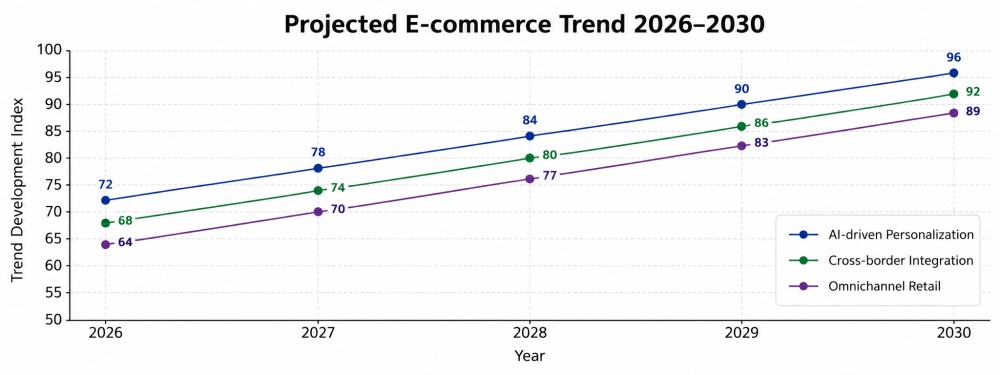
- AI-driven personalization and predictive marketing for better engagement.
- Seamless cross-border integration with logistics optimization and digital payments.
- Omnichannel retail combining physical stores with digital storefronts.
- Green logistics and sustainable packaging adoption across regions.
Blockchain for transparent supply chains and smart contracts.
6. Conclusion
The e-commerce industry has matured from basic online retail to a complex, AI-driven global ecosystem. Sustainable growth will depend on technology adoption, logistics optimization, regulatory compliance, and strategic investments. Enterprises focusing on automation, personalization, and green operations will maintain a competitive edge.
Industries
Related News
- 00
0000-00
US Treasury Extends Russia Oil Sanctions Waiver by 30 Days - 00
0000-00
International Logistics Solutions for Heavy Machinery: Cost Risks and Route Planning in 2026 - 00
0000-00
Energy-saving home improvement ideas with faster payback - 00
0000-00
10 Smart Home Decoration Ideas to Make Small Rooms Look Bigger and Brighter - 00
0000-00
Shenyang Launches China's First 500,000-Ton Biomass Green Methanol/Ethanol Project
Weekly Insights
Stay ahead with our curated technology reports delivered every Monday.