
Electronics & Technology Industry 26-Year Trend Report





1. Industry Overview
The electronics and technology industry has undergone massive transformation over the past 26 years, from semiconductor-based innovations to AI-driven consumer electronics and industrial IoT solutions. By 2026, it encompasses semiconductors, smart devices, advanced industrial electronics, automation, and emerging AI technologies. This sector drives productivity, innovation, and global competitiveness across industries.
2. 26-Year Historical Review
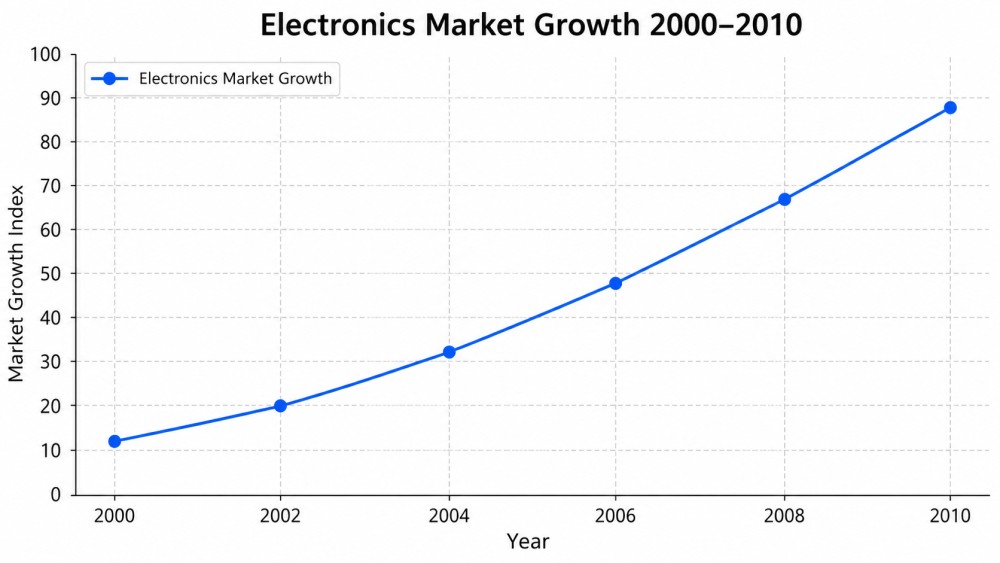
2000–2010: Semiconductor & Hardware Boom
Early 2000s saw the rise of high-performance computing and mobile phones. Semiconductor manufacturing capacity expanded significantly. Consumer electronics, including PCs and early smartphones, shaped global demand patterns.
2011–2015: Mobile & IoT Emergence
Smartphone adoption accelerated, creating ecosystems of apps, sensors, and wireless connectivity. IoT concept began integration into industrial and consumer devices. Cloud computing started supporting large-scale device data management.
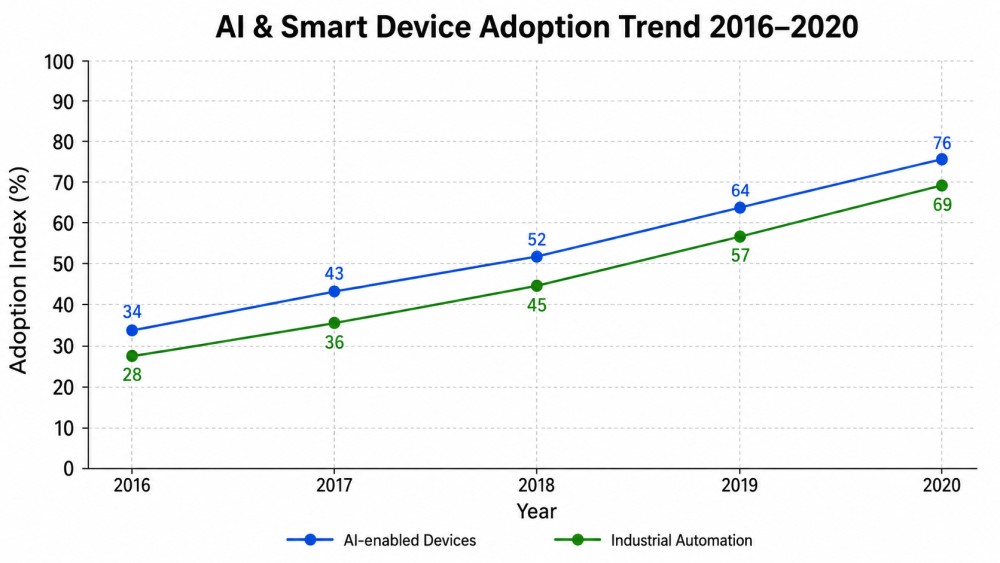
2016–2020: AI & Smart Devices
AI-enabled consumer electronics, robotics, and industrial automation grew rapidly. Semiconductor innovation focused on AI chips, GPUs, and advanced microcontrollers. Industry 4.0 concepts emerged, integrating connectivity and analytics in manufacturing.
2021–2025: Advanced Connectivity & Automation
5G and edge computing enabled faster industrial automation and connected devices. Consumer electronics innovation focused on smart homes, AR/VR, and wearable tech. Semiconductor shortages highlighted supply chain vulnerabilities, prompting diversification and investment in localized production.
3. Current Industry Analysis
3.1 Market Structure
- Core Segments: Semiconductors, consumer electronics, industrial electronics, AI-enabled devices.
- Supporting Technologies: 5G/6G, AI chips, robotics, IoT connectivity.
- Global Leaders: US, China, South Korea, Japan, EU-based manufacturers.
3.2 Technological Drivers
- AI and machine learning for industrial and consumer applications.
- Edge computing reducing latency for IoT networks.
- Advanced materials and chip design boosting performance and efficiency.
3.3 Policy and Market Environment
Government incentives for domestic semiconductor production and AI research are shaping regional competitiveness. Trade regulations and export controls affect technology flow globally. Environmental compliance is increasingly critical for electronics manufacturing.
3.4 Industry Chain Changes
- Upstream: Semiconductor wafer production, advanced materials, component sourcing.
- Midstream: Electronics assembly, smart device integration, AI system development.
- Downstream: Consumer markets, industrial automation, robotics, smart infrastructure deployment.
4. In-Depth Analysis
4.1 Investment Trends
Global R&D and infrastructure investment focus on AI chips, semiconductor fabrication, IoT platforms, and automation systems. Venture capital emphasizes AI hardware startups and next-generation communication tech.
4.2 Technology Comparison
4.3 Regional Differences
- North America: Advanced AI, semiconductor innovation, software-driven solutions.
- Europe: Emphasis on green electronics and industrial automation standards.
- Asia: Mass manufacturing, consumer electronics leadership, growing AI hardware production.
- Others: Emerging tech adoption in Latin America and Middle East markets.
4.4 Risks and Challenges
- Supply chain vulnerabilities in semiconductors and components.
- Rapid technology obsolescence and competitive pressures.
- Trade and export restrictions impacting global collaboration.
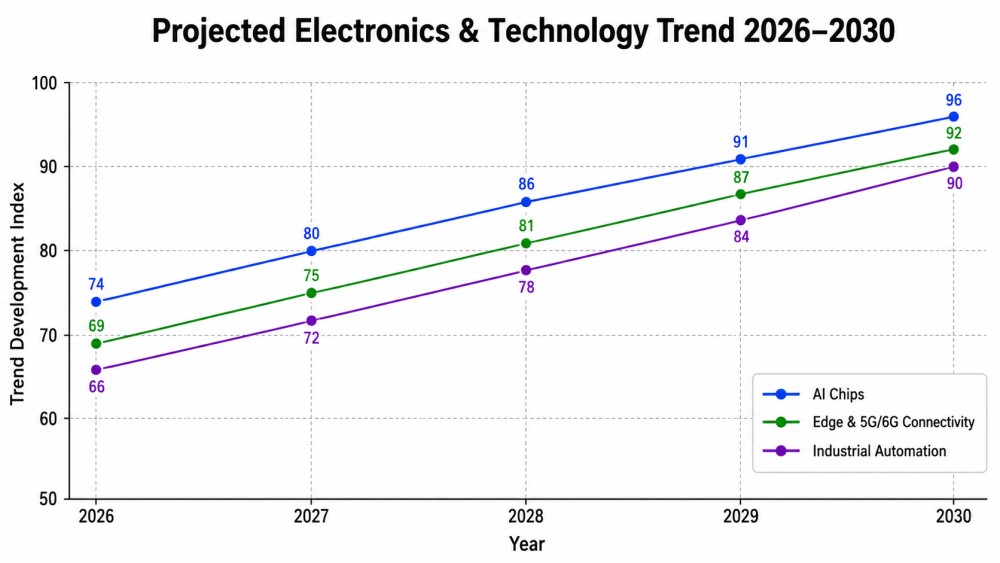
5. Future Development Trends (2026–2030)
- AI chip proliferation across consumer and industrial electronics.
- Expansion of edge computing and 5G/6G connectivity for smart devices.
- Industrial automation adoption accelerating Industry 4.0 implementation.
- Green electronics: sustainability, energy efficiency, and recycling in manufacturing.
Global semiconductor supply diversification to reduce geopolitical risks.
6. Conclusion
The electronics and technology industry is transitioning into an AI-driven, connected, and sustainable future. Investment in semiconductors, IoT, and AI devices will determine regional competitiveness. Enterprises integrating innovation, risk mitigation, and green strategies will thrive in the next decade.
Industries
Related News
- 00
0000-00
US Treasury Extends Russia Oil Sanctions Waiver by 30 Days - 00
0000-00
International Logistics Solutions for Heavy Machinery: Cost Risks and Route Planning in 2026 - 00
0000-00
Energy-saving home improvement ideas with faster payback - 00
0000-00
10 Smart Home Decoration Ideas to Make Small Rooms Look Bigger and Brighter - 00
0000-00
Shenyang Launches China's First 500,000-Ton Biomass Green Methanol/Ethanol Project
Weekly Insights
Stay ahead with our curated technology reports delivered every Monday.