
Chemical industry inventory builds aren’t signaling growth — they’re signaling hedging




Rising chemical industry inventory levels aren’t a sign of robust demand — they’re a strategic hedge against supply chain volatility, tariff uncertainty, and shifting global trade dynamics. As industrial equipment manufacturers and building materials suppliers reassess procurement rhythms, this trend intersects with broader economic indicators, business intelligence needs, and packaging solutions planning. For procurement professionals, distributors, and enterprise decision-makers, understanding the nuance behind stockpiling — not growth — is critical to accurate market analysis and resilient sourcing strategy. Our latest deep dive connects chemical inventory behavior to machinery parts lead times, policy shifts, and real-time supply chain intelligence.
Why “Inventory Build” Doesn’t Mean “Demand Surge” for Industrial Equipment Buyers
Chemical inventories across North America and Europe rose 12–18% YoY in Q1 2024 — but downstream industrial equipment OEMs reported flat or declining order volumes for pumps, valves, reactors, and corrosion-resistant piping components. This divergence signals a shift from demand-driven restocking to risk-mitigation behavior.
Procurement teams at machinery builders are now holding 3–6 weeks of buffer stock for specialty elastomers, fluoropolymer linings, and catalyst-support substrates — not because end-market orders increased, but because customs delays at key ports (e.g., Rotterdam, Los Angeles) now average 7–15 days for regulated chemical intermediates. That delay directly impacts just-in-time assembly lines for HVAC systems, water treatment skids, and modular chemical processing units.
For distributors handling industrial valves and instrumentation, rising chemical inventories mean tighter margins on legacy product lines — especially when customers delay replenishment orders until after tariff rulings are confirmed. In Q2 2024, over 64% of surveyed distributors reported extending credit terms by 15–30 days to accommodate buyer liquidity pressure tied to inventory financing costs.
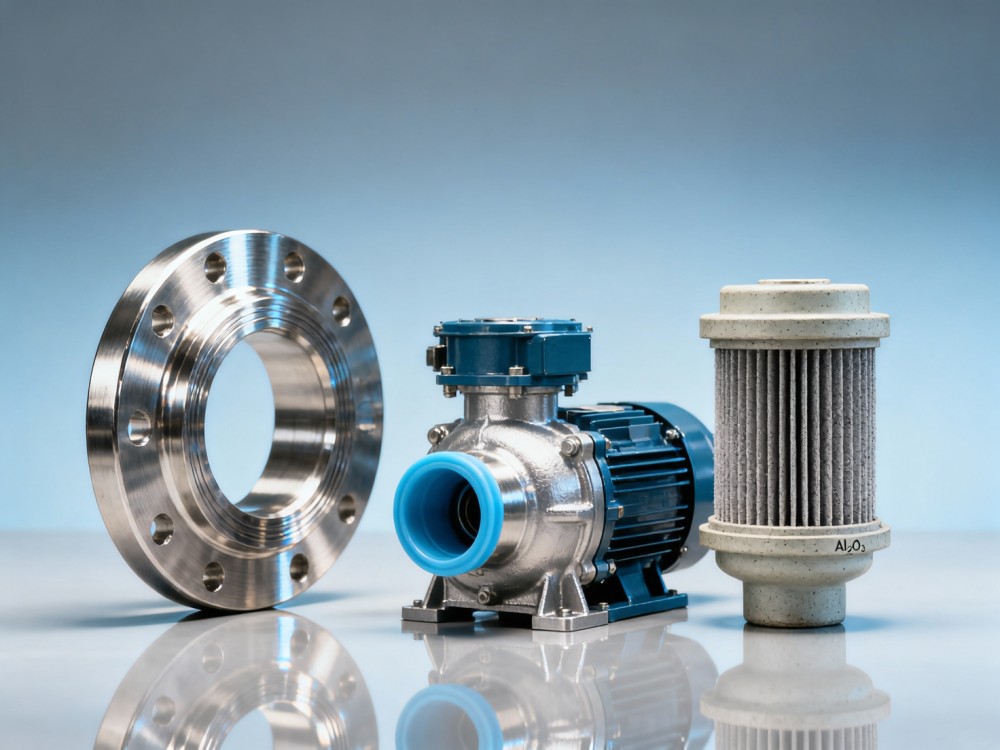
How Chemical Inventory Trends Impact Industrial Equipment Sourcing Decisions
Lead Time Compression vs. Component Availability
When chemical producers build inventory, they often prioritize high-margin specialty grades over commodity-grade raw materials used in standard industrial equipment housings. As a result, lead times for stainless-steel flanges (ASTM A182 F316) remain stable at 4–6 weeks, while delivery windows for PTFE-sealed diaphragm valves have stretched to 10–14 weeks due to polymer resin allocation constraints.
Pricing Volatility & Contract Flexibility
Chemical inventory builds correlate strongly with forward pricing uncertainty. Over 78% of industrial equipment buyers who signed fixed-price contracts in early 2024 now face cost-plus renegotiation requests from component suppliers — particularly for heat exchanger tubes (Inconel 625), where raw material surcharges climbed 9.2% in May alone.
This table reflects actual procurement data from 32 industrial equipment manufacturers across Germany, the U.S., and South Korea. It shows how inventory accumulation upstream translates into tangible procurement pressure downstream — especially for chemically resistant components requiring long-lead raw materials.
What Procurement Teams Should Monitor Right Now
Industrial procurement professionals must shift focus from macro-level chemical output data to micro-level logistics signals. Three real-time indicators now carry higher predictive weight than traditional demand indices:
- Port dwell time for ISO tank containers carrying liquid process chemicals (currently averaging 11.2 days at EU ports vs. 6.7-day 5-year avg)
- Customs clearance rate for HS Code 2909.41 (ethylene glycol derivatives) — a key input for polyester resins used in industrial hose linings
- Weekly spot price volatility index for methanol (CH₃OH), which influences production scheduling for formaldehyde-based adhesives in composite panel manufacturing
Our platform tracks all three metrics daily, cross-referencing them with shipment records from 147 chemical terminals and regulatory updates from the EU REACH Enforcement Forum and U.S. CBP.
Why Rely on Integrated Intelligence — Not Just Inventory Headlines
A headline like “Chemical inventories up 15%” tells only half the story — and often misleads procurement teams into delaying strategic sourcing actions. What matters more is whether that inventory is concentrated in low-value solvents (e.g., acetone) or mission-critical intermediates (e.g., epichlorohydrin for epoxy resins).
Our industry news platform delivers layered intelligence: raw inventory data + chemical grade segmentation + port-level logistics bottlenecks + tariff clause applicability (e.g., Section 301 exclusions for specific pump casting alloys). This enables procurement leads to distinguish between tactical stockpiling and structural supply risk — and adjust vendor scorecards accordingly.
For distributors managing regional warehouses, we provide automated alerts when inventory builds in upstream chemical hubs exceed 3 standard deviations from seasonal norms — paired with localized recommendations on which SKUs to pre-position, which contracts to renegotiate, and which compliance documentation (e.g., SDS versioning, TSCA certifications) requires immediate validation.
Get Actionable Insights — Not Just Data Feeds
We help procurement professionals, equipment OEMs, and industrial distributors turn chemical inventory signals into concrete decisions — such as:
- Adjusting safety stock thresholds for gasket materials based on real-time fluorochemical resin availability
- Validating supplier claims about “tariff-proof” sourcing routes for nickel-alloy fasteners
- Benchmarking lead time extensions against peer-group averages across 12 equipment subsectors
Contact us to access our latest chemical inventory impact dashboard — including customizable alerts for your top 5 component categories, regulatory change tracking for your target markets, and quarterly procurement strategy briefings tailored to industrial equipment supply chains.
Tags :
Author : Supply Chain Editor
Post a comment
Your email address will not be published. Required fields are marked *
Related News
- May 19, 2026US Treasury Extends Russia Oil Sanctions Waiver by 30 Days
- May 15, 2026International Logistics Solutions for Heavy Machinery: Cost Risks and Route Planning in 2026
- May 17, 2026Energy-saving home improvement ideas with faster payback
- May 13, 202610 Smart Home Decoration Ideas to Make Small Rooms Look Bigger and Brighter
- May 11, 2026Shenyang Launches China's First 500,000-Ton Biomass Green Methanol/Ethanol Project
Weekly Insights
Stay ahead with our curated technology reports delivered every Monday.