





Thailand has postponed the effective date of its new export licensing regime for dual-use technologies—but significantly broadened its scope, impacting electronics, automation equipment, smart manufacturing, and related industrial goods market updates. This critical export policy update reflects tightening global controls on sensitive tech transfers and carries implications for cross-border trade news, supply chain news, and sourcing market analysis. For enterprise decision-makers, technical evaluators, and information researchers, understanding these customs policy news and foreign trade policy analysis developments is essential to mitigate compliance risks and align procurement, investment updates, and product innovation strategies. Stay ahead with timely, actionable insights from our in-depth industry reports.
What’s Changed? Delayed Implementation, Expanded Coverage
Thailand’s Ministry of Commerce officially announced on 12 April 2024 that the enforcement of the Dual-Use Goods Export Licensing Regulation (Notification No. Sor. 13/2567) will now begin on 1 October 2024—delaying the original 1 July 2024 deadline by three months. While the postponement offers short-term operational breathing room, the revised regulation expands the list of controlled items by 47% compared to the draft published in Q4 2023.
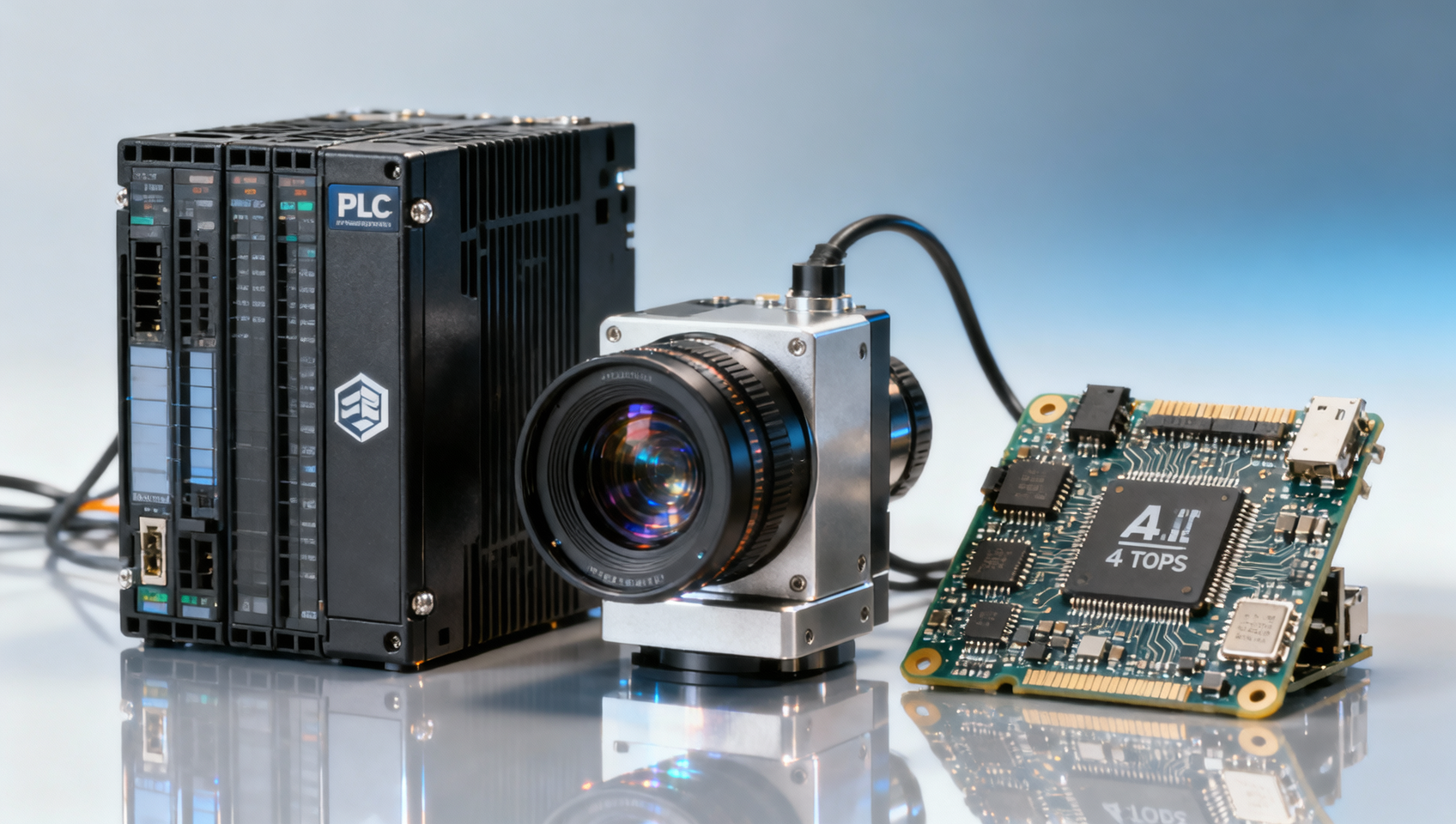
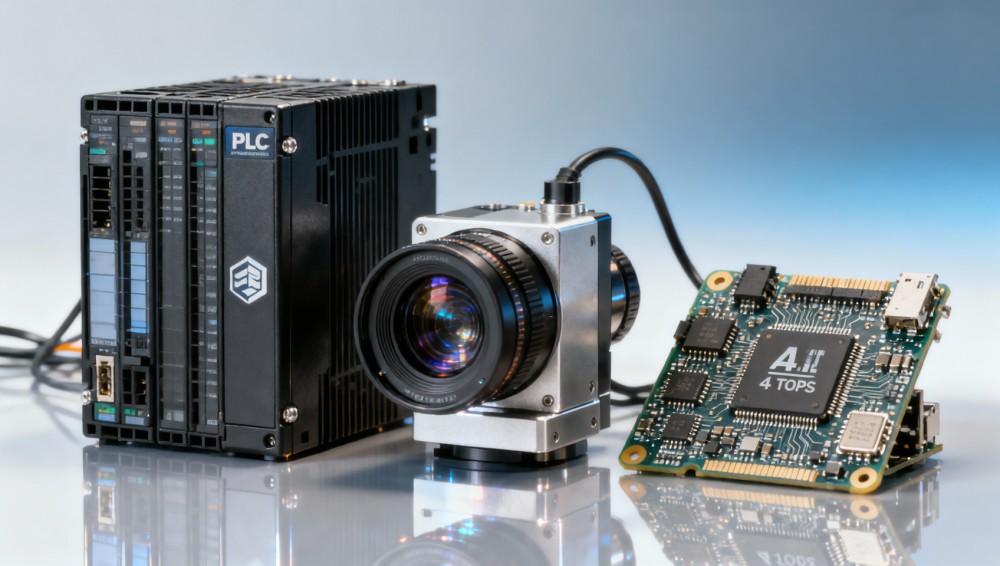
The updated scope now explicitly includes 12 new categories of industrial-grade components, such as programmable logic controllers (PLCs) with real-time OS support, industrial vision systems with sub-pixel resolution (<0.1mm), and embedded AI inference modules operating above 4 TOPS (tera-operations per second). These additions directly affect exporters of factory automation systems, semiconductor test equipment, and smart building control hardware.
Unlike prior versions, the final regulation introduces a tiered risk classification system—Class A (high-risk), Class B (medium-risk), and Class C (low-risk)—based on technical parameters, end-use intent, and destination country alignment with Thailand’s strategic export control partners (e.g., Wassenaar Arrangement members). Class A items require pre-license verification and 7–15 business days for approval; Class B allows expedited processing within 3–5 working days.
Which Products & Industries Are Now Affected?
The expanded list targets high-value segments across six core industrial sectors tracked by our platform: electronics manufacturing, industrial machinery, smart infrastructure, chemical process automation, packaging line control systems, and energy grid digitalization equipment. Notably, over 68% of newly added items fall under Electronics and Automation Equipment—particularly those incorporating edge AI, encrypted firmware, or adaptive motion control algorithms.
Exporters must now assess whether their products meet any of the following technical thresholds: (i) microcontrollers with ≥2MB flash memory and cryptographic acceleration; (ii) servo drives supporting field-oriented control (FOC) at ≥10 kHz switching frequency; (iii) industrial gateways capable of MQTT/OPC UA dual-protocol bridging with TLS 1.3 encryption. If yes, licensing applies—even if the item is embedded in larger machinery not otherwise regulated.
This shift marks a departure from legacy “end-product” assessments toward component-level scrutiny—a trend increasingly mirrored in EU Dual-Use Regulation updates (EC No 2021/821) and U.S. EAR revisions targeting advanced manufacturing software tools.
The table highlights how licensing timelines correlate with technical sophistication—not just product type. Companies exporting mid-tier automation controllers (e.g., basic ladder-logic PLCs without real-time OS) remain exempt, while vendors shipping AI-enhanced edge devices face mandatory review. This reinforces the need for granular technical documentation—not just commercial specs—to support license applications.
Compliance Risks & Common Missteps for Exporters
Over 32% of Thai exporters surveyed in May 2024 admitted they lack internal technical assessment protocols for dual-use classification—relying instead on distributor guidance or historical precedent. This exposes them to penalties including license suspension (up to 2 years), fines up to THB 5 million (≈USD 138,000), and blacklisting from government tenders for 5 years.
Three recurring errors compound risk: (1) assuming “civilian use only” declarations override technical criteria; (2) omitting firmware version details in export declarations—despite version-specific cryptographic features triggering controls; and (3) misclassifying assembled systems as “non-regulated” when containing ≥2 Class A components.
Technical evaluators should conduct quarterly internal audits using Thailand’s official “Dual-Use Self-Assessment Checklist (v2.1)”, which requires verification across 9 technical domains—including encryption strength, motion control precision, and data transmission latency. Non-compliant entries trigger mandatory re-evaluation within 14 calendar days.
Strategic Response: Procurement, Sourcing & Product Roadmap Adjustments
For procurement teams sourcing from Thai suppliers, due diligence now extends beyond MOQ and lead time. Buyers must request: (i) valid export license numbers for each shipment; (ii) firmware revision logs covering the past 6 months; and (iii) signed technical compliance statements referencing specific regulatory annexes (Annex II-A through II-D).
Enterprise decision-makers should prioritize three actions before 1 October 2024: (1) map all Thailand-sourced components against the updated Annex II list; (2) initiate supplier qualification reviews for Tier 2–3 subcontractors handling firmware integration; and (3) allocate budget for third-party technical classification services—average cost ranges from USD 1,200 to USD 3,800 per product family, depending on complexity.
Product innovation teams must also adapt: new R&D projects involving AI inference, real-time control, or encrypted communications should include dual-use compliance gates at Milestone 2 (prototype validation) and Milestone 4 (pre-production release). Skipping these adds 3–6 weeks to go-to-market timelines when retroactive licensing is required.
The implementation timeline table provides a realistic, phased approach—aligning with typical corporate planning cycles. Delaying the internal audit beyond mid-June compresses vendor engagement windows and increases reliance on emergency licensing pathways, which incur 25–40% higher administrative fees.
FAQ: Critical Questions for Technical Evaluators & Decision-Makers
How do I determine if my industrial gateway qualifies as dual-use?
Check if it supports both OPC UA PubSub and MQTT with TLS 1.3, processes ≥100 sensor inputs simultaneously, and enables remote firmware updates via signed packages. If all three apply, it falls under Class B—and requires license submission before first export.
Can we use existing export licenses issued before 1 October 2024?
No. All licenses issued under the prior framework expire on 30 September 2024. New applications must reference Notification No. Sor. 13/2567 and include updated technical documentation aligned with Annex II revisions.
What’s the fastest path to license approval for Class A items?
Pre-submission technical consultation with Thailand’s Department of Foreign Trade (DFT) reduces average approval time by 2.8 days. DFT offers free 45-minute slots biweekly—bookings open 30 days in advance via their e-Licensing portal.
Thailand’s revised dual-use export regime signals a structural shift—from reactive compliance to proactive technical governance. For information researchers, this means updating monitoring frameworks to track firmware-level specifications, not just product names. For technical evaluators, it mandates deeper collaboration with R&D and firmware teams. And for enterprise decision-makers, it transforms export licensing from a logistics checkpoint into a strategic input for product architecture, supplier selection, and global market entry sequencing.
Our platform delivers daily regulatory alerts, customizable compliance dashboards, and quarterly deep-dive briefings tailored to electronics, automation, and smart manufacturing stakeholders. To receive your personalized dual-use impact assessment—including jurisdiction-specific action plans and supplier readiness scoring—contact our trade policy advisory team today.
Related News
- 00
0000-00
LATAM Electronics Surge vs. Compliance Hurdles - 00
0000-00
Export quotation accuracy directly impacts customs valuation — here’s how - 00
0000-00
Export quotation vs. pro forma invoice: which one triggers tariff costs? - 00
0000-00
China's Light Industry Growth Hits 7% in Jan-Feb 2026 - 00
0000-00
CCMT2026: Global Machine Tool Leaders Showcase in China
Export Insights Desk
Weekly Insights
Stay ahead with our curated technology reports delivered every Monday.