





Introduction
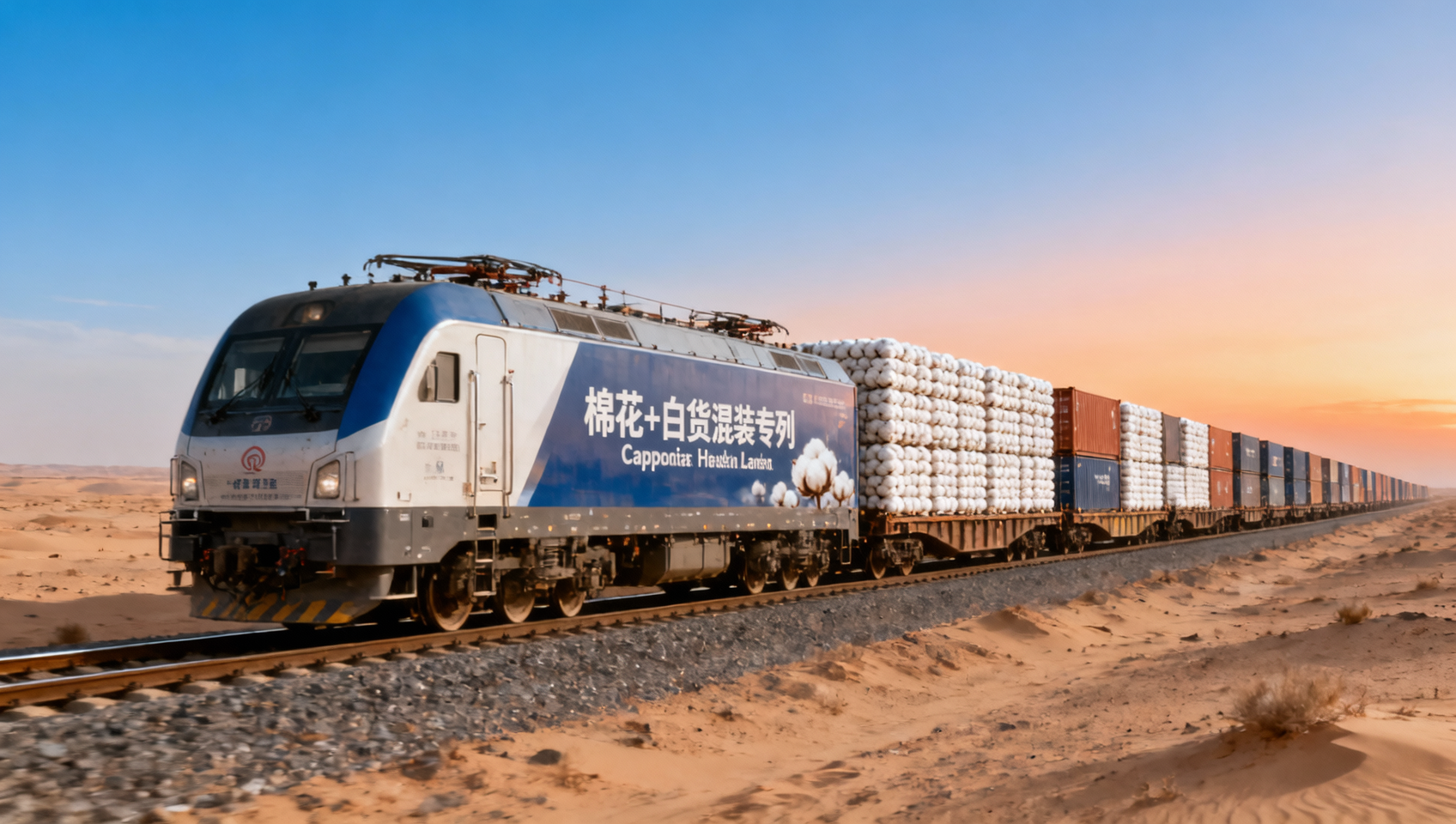
Xinjiang Railway Bureau has introduced China's first mixed-load export train combining cotton and light textile white goods (including garment accessories, home textiles, and knitted semi-finished products). This innovation, featuring 'single customs declaration, one bill of lading, and one container,' significantly shortens export consolidation cycles to Central Asia and Russia. The move benefits SMEs in textile trade, enhances responsiveness to small-batch, high-frequency orders, and strengthens regional distribution networks. Industries such as textile manufacturing, logistics, and cross-border trade should take note of this development.
Event Overview
The Xinjiang Railway Bureau recently launched a pioneering 'cotton + white goods' mixed-load export train, streamlining textile exports to Central Asia and Russia. The model reduces consolidation time by 30% and lowers per-container costs for SMEs. Key features include unified customs clearance and end-to-end tracking, marking a shift toward agile supply chains for emerging markets.
Impact on Sub-Sectors
Textile Manufacturers
Small and medium-sized exporters gain cost efficiency for fragmented orders, particularly in knitwear and home textiles. The model aligns with fast-fashion procurement trends.
Logistics Providers
Forwarders must adapt to integrated rail solutions, as the 'one-container' approach demands tighter coordination with rail operators and customs.
Cross-Border Traders
Distributors targeting Central Asia can leverage faster turnaround times to compete in spot markets and Just-In-Time inventory models.
Key Takeaways for Businesses
Monitor Policy Expansion
Track potential replication of this model in other inland hubs like Shaanxi or Chongqing.
Optimize SKU Mix
Prioritize high-margin, lightweight textile products suitable for mixed-load rail transport.
Reassess Lead Times
Update supply chain calculations to reflect 30% faster consolidation for Central Asian routes.
Industry Perspective
Analysis shows this initiative signals China's push to upgrade overland trade infrastructure. While operational now, its long-term success hinges on sustained demand from Central Asian buyers and scalability across commodity types. Stakeholders should view it as a pilot for future multimodal innovations.
Conclusion
This development redefines cost benchmarks for textile exports to Eurasia. Businesses should evaluate its applicability to their niche segments while recognizing it as part of broader regional connectivity strategies.
Sources
Xinjiang Railway Bureau official release. Note: Actual adoption rates among SMEs require further tracking.
Related News
- Cross-border trade updates expose inconsistent enforcement of origin documentation across EU and ASEAN portsApr 15, 2026Stay ahead with machinery industry news & manufacturing trends: cross-border trade updates reveal critical EU-ASEAN origin enforcement gaps—impacting customs policy, electronics market analysis, and price trends.
- Xinjiang Launches China's First 'Cotton + White Goods' Mixed Export Train, Boosting Textile Efficiency by 30%Apr 15, 2026Xinjiang launches China's first 'cotton + white goods' mixed export train, boosting textile efficiency by 30%. Discover how this innovation benefits SMEs, cuts logistics costs, and transforms Central Asia trade routes. Learn key takeaways for your business now.
- LATAM Electronics Surge vs. Compliance HurdlesApr 12, 2026Global trade trends meet LATAM compliance reality: electronics exports rose 33%, but policy updates stall launches. Navigate semiconductor, energy, chemicals & e-commerce hurdles.
- Export quotation accuracy directly impacts customs valuation — here’s howApr 11, 2026Export quotation accuracy drives tariff costs, export tax rebate eligibility, and trade compliance—avoid costly customs valuation disputes. Learn how.
Related News
- 00
0000-00
Machinery updates confirm slower-than-anticipated rollout of IoT integration in legacy production lines - 00
0000-00
Electronics market analysis points to tightening component availability — not just pricing pressure - 00
0000-00
Manufacturing trends suggest reshoring isn’t accelerating — but nearshoring is gaining real traction - 00
0000-00
Cross-border trade updates expose inconsistent enforcement of origin documentation across EU and ASEAN ports - 00
0000-00
China's New E-commerce Pricing Rules Impact Cross-Border Trade
Export Insights Desk
Weekly Insights
Stay ahead with our curated technology reports delivered every Monday.