





As sustainability becomes a core driver of construction and sourcing decisions, the latest building materials sustainability report reveals how policy shifts, building materials price fluctuations, and clean energy market trends are reshaping the sector. For buyers, analysts, and decision-makers, these trends offer valuable business intelligence for market analysis and sharper home improvement business intelligence in a rapidly evolving industry landscape.
For most readers searching for building materials sustainability report trends worth watching, the real question is not simply “what is changing,” but “which changes will affect procurement, compliance, pricing, supplier choice, and investment decisions next.” The short answer is clear: sustainability reporting in building materials is moving from a branding exercise to a commercial requirement. Companies that can verify carbon data, product transparency, energy performance, and responsible sourcing are gaining an advantage in tenders, partnerships, financing, and market positioning. Those that cannot may face higher costs, slower approvals, and weaker buyer confidence.
This matters across the value chain. Procurement teams want to know which materials may carry future compliance or price risk. Operations teams need practical reporting frameworks. Market researchers are watching how regulation and customer demand reshape product categories. Business leaders need to decide where sustainability spending creates real return. The most useful reports now connect environmental data with business outcomes: cost stability, supply resilience, policy readiness, and product competitiveness.
Why building materials sustainability reports now matter far beyond compliance
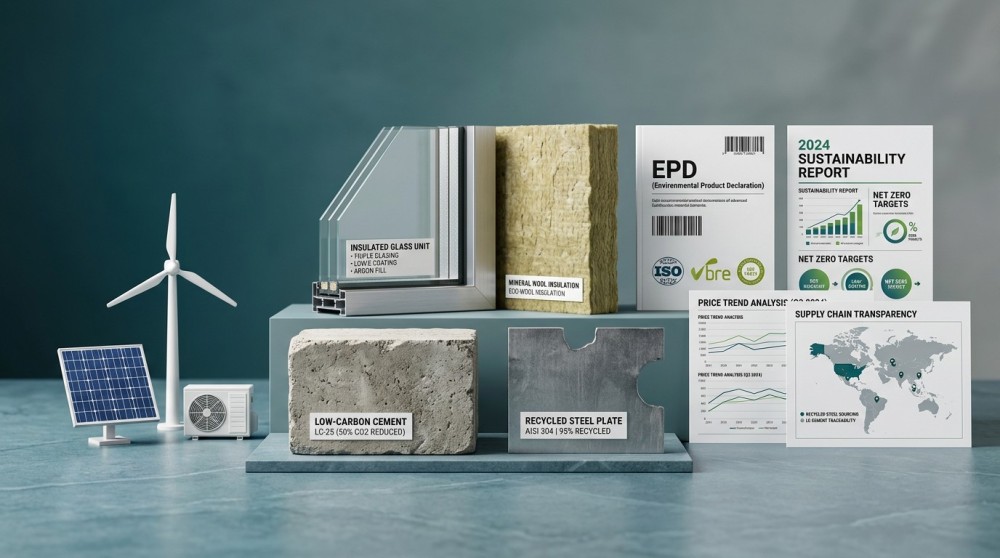
The biggest shift worth watching is that sustainability reports are becoming decision tools rather than public relations documents. In the building materials sector, reporting increasingly influences:
- Bid eligibility: Large construction projects, public procurement programs, and international buyers are asking for verified environmental data.
- Supplier screening: Buyers want evidence on emissions, recycled content, sourcing practices, energy use, and certifications.
- Financing and investor trust: Lenders and investors increasingly assess transition risk, carbon exposure, and environmental disclosures.
- Product positioning: Materials with transparent sustainability credentials are more competitive in green building and premium home improvement markets.
- Risk management: Reports help companies spot future cost pressure linked to carbon regulation, energy intensity, and raw material sourcing.
For decision-makers, the value of a building materials sustainability report lies in whether it helps answer practical questions: Will this supplier remain compliant? Will this product face cost inflation? Will sustainability claims stand up to buyer scrutiny? Can we use this information to support sales, market access, and product strategy?
The report trends most likely to shape procurement and market decisions
Several trends are becoming especially important in building materials market analysis.
1. Carbon disclosure is becoming more product-specific
Companies are moving beyond broad corporate sustainability statements and toward product-level disclosure. Environmental Product Declarations, lifecycle assessments, and category-specific carbon data are becoming more common. This is important because buyers increasingly compare materials not only on price and performance, but also on embodied carbon.
For procurement and commercial teams, this means generic sustainability claims are losing value. Reports that quantify emissions by product line, manufacturing process, or plant location are far more useful. They support clearer supplier comparison and reduce the risk of weak or unverifiable claims.
2. Energy sourcing is now tied directly to cost competitiveness
Another trend worth watching is the connection between sustainability and energy strategy. Clean energy market trends are affecting building materials producers, especially in energy-intensive categories such as cement, glass, ceramics, steel-related products, insulation, and chemicals used in construction.
Reports that show renewable energy adoption, efficiency upgrades, electrification progress, or alternative fuel use may indicate more than environmental progress. They may also suggest stronger resilience against fuel volatility, carbon pricing exposure, and future regulatory pressure. For buyers and analysts, this can be an early signal of which producers are better positioned for long-term price stability.
3. Circularity metrics are becoming commercially relevant
Recycled content, reuse potential, waste reduction, and take-back systems are now appearing more often in sustainability reports. This matters because circularity is increasingly linked to both compliance readiness and brand value. In some segments, it can also reduce dependence on volatile virgin material markets.
However, readers should look beyond headline percentages. The most useful reports explain where recycled inputs come from, whether supply is stable, how quality is controlled, and whether circular claims are verified under recognized standards.
4. Water, chemicals, and traceability are receiving more scrutiny
In some product categories, emissions are not the only concern. Water use, hazardous substances, indoor air quality, and upstream traceability are becoming more visible in both regulatory discussions and buyer requirements. This is particularly relevant for coatings, adhesives, composites, insulation materials, and certain interior finishing products.
For users and sourcing teams, the trend means sustainability reports should be read alongside safety data, certification documentation, and market access requirements. Strong reports increasingly combine environmental, operational, and supply chain transparency.
How policy shifts and building materials price fluctuations are changing what readers should look for
Many readers in this sector are not reading sustainability reports for environmental interest alone. They are using them as forward-looking business intelligence. That makes policy and price signals especially important.
Policy shifts can influence which report trends matter most. Carbon disclosure rules, green public procurement standards, building codes, extended producer responsibility frameworks, and import-related reporting obligations are all pushing the industry toward better data quality and more comparable reporting. A report that aligns with emerging rules may indicate that a company is better prepared for cross-border trade and large-project participation.
At the same time, building materials price fluctuations have made buyers more cautious. If a supplier’s sustainability transition depends on unstable inputs, expensive offsets, or early-stage technology with uncertain economics, procurement teams need to know. On the other hand, if a company’s sustainability report shows real process efficiency, energy diversification, and waste reduction, those measures may support stronger cost control over time.
In other words, readers should not separate sustainability from pricing. The most valuable reports show how environmental strategy affects operating cost, supply security, and pricing power.
What procurement teams and business evaluators should check before trusting a report
Not all sustainability reports are equally useful. For buyers, analysts, and business evaluation teams, the key is to distinguish strategic reporting from superficial reporting.
Look for the following signals:
- Clear boundaries: Does the report specify which sites, products, and operations are included?
- Year-on-year comparability: Are metrics tracked consistently over time?
- Third-party verification: Are key claims, carbon figures, or certifications independently reviewed?
- Material relevance: Does the report focus on issues that actually matter to the product category?
- Link to operations: Are there concrete actions such as process upgrades, sourcing changes, or waste reduction investments?
- Connection to commercial outcomes: Does the report explain impacts on efficiency, product innovation, customer demand, or market access?
It is also wise to watch for warning signs. These include vague targets without timelines, selective disclosure, broad claims without methodology, and heavy emphasis on marketing language instead of measurable progress. For professional readers, a useful building materials sustainability report should support due diligence, not just branding.
How these trends affect home improvement, manufacturing, and cross-sector market intelligence
The influence of sustainability reporting is extending beyond major construction projects. In home improvement and broader building product distribution, sustainability data is becoming part of product differentiation, retailer requirements, and content strategy. This creates new value for teams working in market research, merchandising, and industry media.
For example, home improvement business intelligence increasingly depends on understanding which product categories can market low-emission performance, recycled content, durability, or healthier indoor material profiles. Retailers and distributors may use this information to shape assortment planning, supplier partnerships, and customer education.
Manufacturing and foreign trade professionals should also pay attention. International buyers are becoming more selective about supply chain transparency and environmental documentation. Sustainability reporting can affect export opportunities, supplier onboarding, and competitiveness in markets where environmental criteria are rising. For industry news platforms and content teams, this means sustainability reports are no longer niche corporate documents; they are a source of insight into pricing trends, policy exposure, production shifts, and future demand patterns.
What to watch next: the sustainability indicators with the strongest business value
Going forward, the most important trends are likely to be the ones that combine regulatory relevance with commercial usefulness. These include:
- Product-level embodied carbon data for specification and procurement decisions
- Energy transition progress as a signal of future cost and compliance resilience
- Recycled and circular material integration tied to both supply security and market appeal
- Supply chain traceability for international trade and buyer confidence
- Verified reporting frameworks that improve trust, comparability, and investment credibility
For readers making sourcing or strategy decisions, the smartest approach is to treat sustainability reports as part of a broader market intelligence process. Compare disclosure quality across suppliers. Link environmental claims to price trends and policy developments. Watch which companies turn reporting into operational change, not just communication.
Ultimately, the building materials sustainability report trends worth watching are the ones that reveal competitive direction. The sector is moving toward deeper transparency, stricter buyer expectations, and stronger links between sustainability, cost structure, and market access. For procurement professionals, analysts, operators, and business leaders, the takeaway is practical: the best reports help you identify which suppliers and product categories are more resilient, more credible, and better aligned with where the market is heading.
- market analysis
- supply chain
- building materials
- industry news
- business intelligence
- price trends
- product innovation
- manufacturing
- cement
- insulation materials
- adhesives
- distributors
- foreign trade
- international trade
- building materials market
- home improvement
- chemicals
- energy
- clean energy
- renewable energy
- building materials sustainability report
- business intelligence for market analysis
- home improvement business intelligence
- clean energy market trends
- building materials price fluctuations
- building materials market analysis
Related News
- Building Materials Market Price Analysis After Freight VolatilityApr 20, 2026Building materials market price analysis after freight volatility: compare wholesale and landed costs, improve supplier sourcing strategies, and cut risk with smarter negotiation and compliance planning.
- What product innovation in building materials is worth watchingApr 21, 2026Product innovation in building materials: track low-carbon, modular, and smart materials alongside construction materials price trends, foreign trade policy changes, and global trade risk assessment.
- Building materials market analysis is getting harder to trustApr 22, 2026Building materials market analysis is getting harder to trust—discover how chemicals industry trends report, clean energy business intelligence, and building materials price fluctuations reveal clearer buying signals.
- Building Materials Sustainability Report Trends Worth WatchingApr 22, 2026Building materials sustainability report trends worth watching: track building materials price fluctuations, clean energy market trends, and home improvement business intelligence to spot supplier risk, pricing shifts, and smarter sourcing opportunities.
Related News
- 00
0000-00
Two Supreme Organs Issue Anti-Bribery Judicial Interpretation (II) - 00
0000-00
Yangtze River Delta: 163 Projects Boost Manufacturing Sourcing Hub - 00
0000-00
China’s 'AI+Education' Action Plan Opens Standardization Window for AI Ed-Tech Exports - 00
0000-00
HKMA Sets Q3 2026 Timeline for First Stablecoin Licenses - 00
0000-00
China-Sri Lanka Joint Operation Repatriates 125 Telecom Fraud Suspects
Building Materials Desk
Weekly Insights
Stay ahead with our curated technology reports delivered every Monday.