





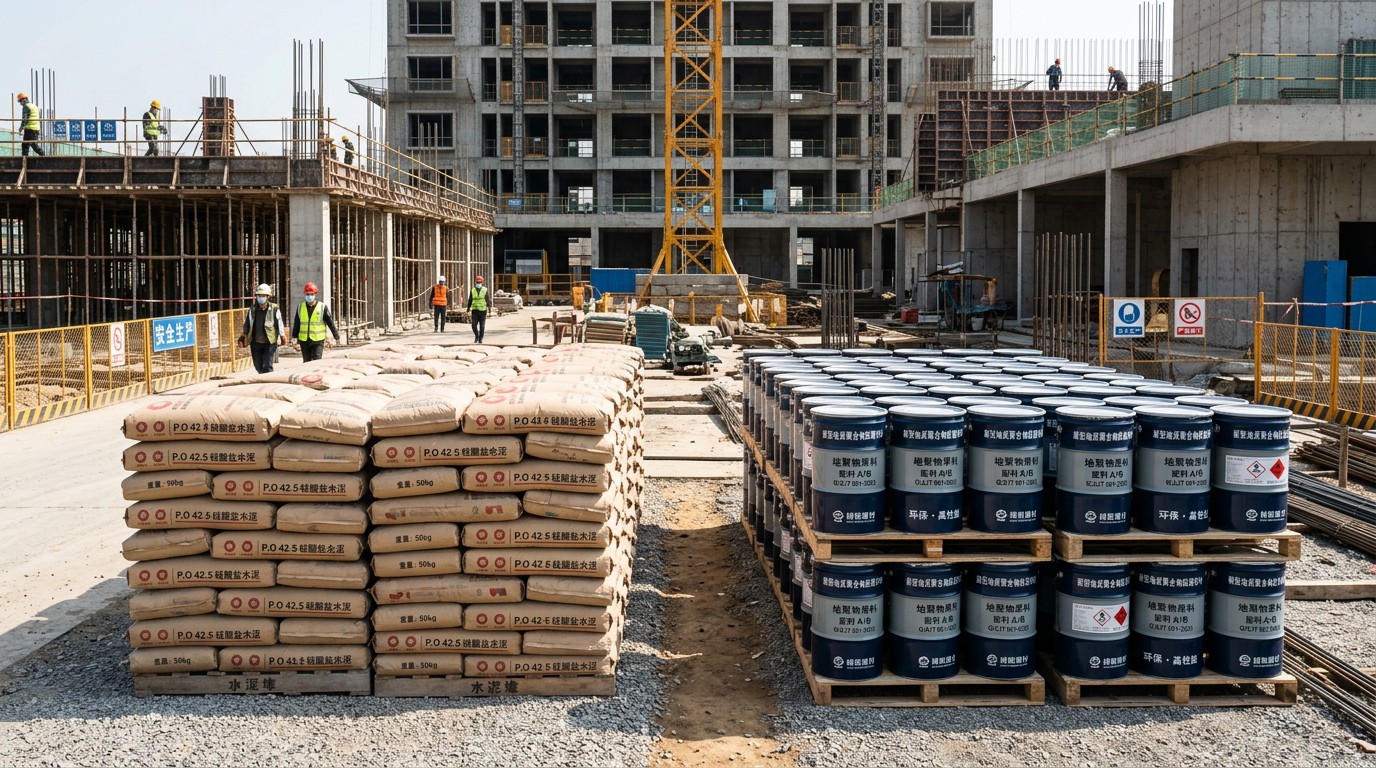
As construction teams weigh cost-efficiency and sustainability for mid-rise developments, building materials price trends are shifting rapidly—especially between traditional cement and emerging geopolymers. This analysis cuts through volatility in the building materials price trends, linking data to real-world ROI, while connecting to broader supply chain risk management strategies and clean energy investment opportunities. Whether you’re a procurement professional evaluating made in China products list options, a business decision-maker assessing home improvement cost calculator inputs, or an analyst tracking chemicals industry trends and renewable energy market analysis, this comparison delivers actionable insights grounded in current market movements and policy shifts.
How Cement and Geopolymers Are Priced Today — Real-Time Market Snapshot
Cement prices across major export hubs—including Hebei, Jiangsu, and Guangdong—averaged USD 98–112 per metric ton in Q2 2024, reflecting a 7–12% YoY increase driven by coal cost inflation and tightening emissions compliance timelines under China’s “Dual Carbon” policy framework.
Geopolymer binder pricing remains regionally segmented: bulk orders (≥500 tons) from certified producers in Shandong and Sichuan range from USD 210–285 per ton—3.2–4.1× cement’s landed cost—but with 18–24 month supply contracts now available to lock in rates amid raw material volatility in fly ash and slag sourcing.
Importantly, cement’s price index shows 5.3% standard deviation over the past 12 months, whereas geopolymers’ index fluctuates within ±2.7%—a critical factor for procurement teams managing fixed-budget mid-rise tenders requiring 3–6 month delivery windows.
Key Price Drivers Across Supply Chains
- Cement: Energy input (coal accounts for ~65% of production cost), clinker ratio (0.85–0.95), carbon levy exposure (RMB 50–80/ton CO₂ in pilot provinces), and port handling fees (USD 12–18/20ft container).
- Geopolymers: Aluminosilicate feedstock availability (fly ash purity ≥75%, slag activity index ≥105%), alkali activator formulation (NaOH + sodium silicate blends at molar ratios of 1.2–1.6), and regional logistics surcharges for pH-sensitive transport (±USD 15–22/ton).
ROI Comparison for Mid-Rise Projects: 6–12 Story Commercial & Residential Builds
ROI isn’t just about upfront cost—it’s total lifecycle value across procurement, installation, durability, and compliance. For a typical 8-story mixed-use building (≈22,000 m² floor area), we modeled two identical structural shell packages using ASTM C1202 chloride permeability and ISO 1920-2 compressive strength benchmarks.
Cement-based systems required 3.8 kg/m² of reinforcing steel due to higher shrinkage cracking risk, while geopolymer mixes reduced rebar demand by 14–19% (to 3.1–3.3 kg/m²) and cut formwork reuse cycles by 27% thanks to faster demolding (18–22 hr vs. 32–40 hr at 20°C).
The table reveals a pivotal insight: although geopolymer material costs are higher, their labor efficiency gains and carbon monetization potential shift breakeven toward 10–14 months for projects with ≥30% green financing or ESG-linked loan covenants. That window shortens further when factoring in China’s new Green Building Label Tier-2 incentives—up to RMB 80/m² rebate for low-carbon structural elements certified under GB/T 51141–2023.
Procurement Decision Framework: What Buyers Must Verify Before Sourcing
For procurement professionals evaluating made-in-China products lists, verifying technical alignment is non-negotiable. Unlike cement—governed by universal standards like GB 175–2020—geopolymer suppliers vary widely in activation chemistry, setting kinetics, and long-term alkali-silica reaction (ASR) mitigation performance.
We recommend validating five core criteria before issuing RFQs: (1) ASTM C618 Class F fly ash compliance (loss-on-ignition ≤6%, SiO₂+Al₂O₃+Fe₂O₃ ≥70%), (2) 28-day compressive strength consistency (±5 MPa tolerance across 3 batches), (3) documented thermal stability up to 80°C (critical for summer pours), (4) third-party leaching test reports per HJ/T 299–2007, and (5) batch traceability logs covering raw material origin, activator lot numbers, and curing temperature/humidity profiles.
Top 3 Red Flags in Geopolymer Supplier Documentation
- Missing alkali modulus (Ms = SiO₂/Na₂O) specification—values outside 1.2–1.6 indicate inconsistent setting behavior and elevated efflorescence risk.
- No verification of slag activity index per GB/T 18046–2017—substandard slag (<100 index) causes delayed strength gain beyond 7 days, disrupting schedule-critical milestones.
- Absence of accelerated carbonation testing (per ISO 1920-10) results—essential for façade applications where CO₂ ingress affects surface integrity over 15+ years.
Why Partner With Our Platform for Your Next Materials Assessment
As a comprehensive industry news platform tracking real-time developments across manufacturing, chemicals, building materials, and energy sectors, we deliver more than price snapshots—we provide decision-grade intelligence. Our proprietary database integrates 24/7 monitoring of 127 Chinese provincial price bulletins, 42 global trade policy updates (including EU CBAM implementation timelines), and verified supplier capability reports from 3,800+ certified factories.
When you contact us, you’ll receive: (1) customized cement vs. geopolymer ROI modeling for your exact project specs (floor count, location, timeline), (2) vetted supplier shortlists with audit-ready compliance documentation, (3) live freight + customs duty estimates for key ports (Ningbo, Qingdao, Guangzhou), and (4) quarterly trend alerts on feedstock volatility—especially fly ash availability in Yangtze River basin power plants.
Ready to align your mid-rise material strategy with both fiscal discipline and regulatory readiness? Reach out today for a no-cost assessment—covering parameter validation, sample coordination, certification review, and multi-scenario budgeting support.
- market analysis
- supply chain
- building materials
- industry trends
- price trends
- cement
- made in china
- home improvement
- chemicals
- energy
- clean energy
- renewable energy
- chemicals industry trends
- energy market analysis
- made in china products list
- renewable energy market analysis
- building materials price trends
- clean energy investment opportunities
- home improvement cost calculator
- supply chain risk management strategies
Related News
- Building materials price trends: Cement vs. geopolymers — which delivers better ROI for mid-rise projects?Apr 19, 2026Building materials price trends analysis: Cement vs. geopolymers ROI for mid-rise projects—linking supply chain risk management strategies, clean energy investment opportunities & made in China products list insights.
- Building materials price trends: Why steel rebar spiked 18% in March 2026 — and what’s nextApr 18, 2026Building materials price trends alert: Steel rebar spiked 18% in March 2026. Discover root causes, supply chain risk management strategies, and actionable solutions for home improvement cost calculator accuracy, clean energy investment opportunities, and made in China products list reliability.
- Indonesia Mandates CNAS Lab Reports for Imported Building Materials from July 2026Apr 16, 2026Indonesia mandates CNAS lab reports for imported building materials from July 2026—key for tiles, paints & waterproofing. Stay compliant & avoid delays!
- Cross border e commerce for building materials faces unique certification hurdlesApr 18, 2026Cross border e commerce for building materials? Navigate CE, ASTM & GCC certification hurdles fast—with made in china supplier verification, FOB/CIF price clarity, and procurement management support.
Related News
- 00
0000-00
AI Lobster Clerk Debuts at Retail Expo, Draws SEA Procurement Inquiries - 00
0000-00
Henan Brain-Computer Interface Rehab Tech Center Launched - 00
0000-00
Russia-China Talks: RUB-CNY Settlement & Standards Mutual Recognition Accelerated - 00
0000-00
Xiaomi Auto Appoints Hu Zhengnan CTO, Ex-Tesla Exec as Chief of Staff - 00
0000-00
China Launches First 100,000-Home Natural Gas Blending with Hydrogen Project
Building Materials Desk
Weekly Insights
Stay ahead with our curated technology reports delivered every Monday.