





Adhesives for construction industry can fail at several critical points, affecting bond strength, durability, and project safety. For information researchers, business evaluators, and decision-makers, understanding these common failure mechanisms also connects with broader topics such as specialty chemicals market analysis, policy updates for chemical industry, and industry trends in digital transformation, helping teams assess material risks, sourcing choices, and future market opportunities more effectively.
In practice, adhesive failure is rarely caused by a single issue. It usually results from a chain of variables involving substrate condition, formulation selection, environmental exposure, application process, curing control, and long-term maintenance. For businesses tracking building materials, chemicals, machinery, and project delivery risks, these failure points matter not only on-site but also in procurement planning, supplier assessment, and product portfolio decisions.
This article examines the most common failure points in construction adhesives from a B2B perspective. It is designed for teams comparing suppliers, evaluating material suitability, monitoring industry developments, or planning construction-related product strategies across sectors such as building materials, home improvement, chemicals, and manufacturing.
Why adhesive failure matters in construction supply chains
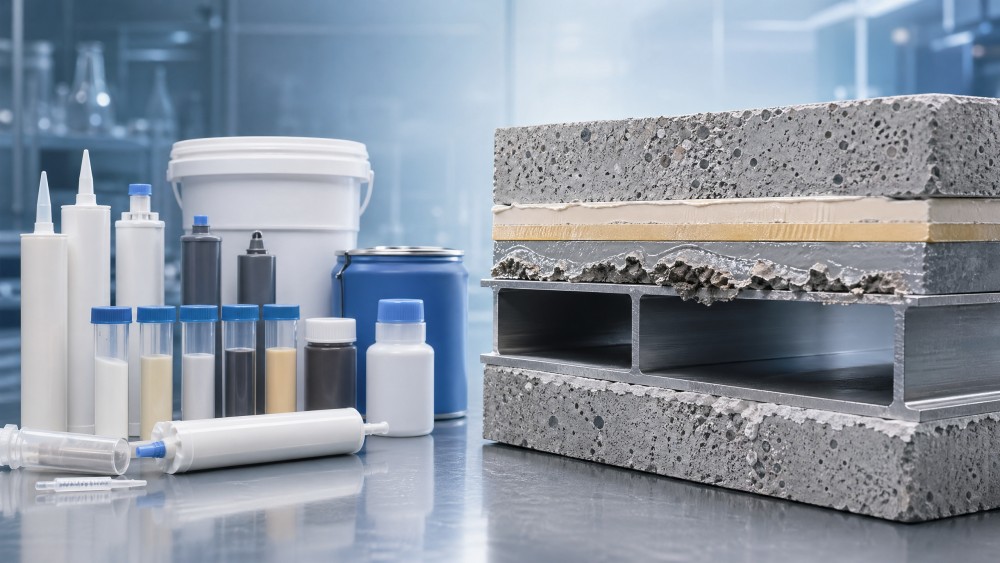
Construction adhesives are used in flooring, façade systems, insulation bonding, tile installation, seal-and-bond assemblies, panel lamination, and interior fit-out work. In many of these applications, the adhesive layer is only 1–5 mm thick, yet it directly influences structural stability, moisture resistance, vibration tolerance, and service life. A small bond-line defect can therefore trigger rework costs far beyond the adhesive price itself.
From a commercial viewpoint, adhesive failure often creates a 3-level impact. First, contractors face delays of 2–10 days for repair and retesting. Second, distributors and buyers may absorb replacement, logistics, and warranty costs. Third, decision-makers may need to reassess approved vendor lists, especially when projects involve regulated materials, public procurement, or export-market compliance requirements.
For industry researchers and evaluators, common failure points also provide signals about wider market movement. A rise in failures linked to moisture-sensitive chemistry, for example, may reflect supply quality inconsistency, formulation shifts caused by raw material pricing, or changes in installation labor skill. These are useful indicators when reading chemicals market updates or building materials trend reports.
Failure is often hidden until late-stage inspection
Unlike mechanical fasteners, adhesives can look acceptable immediately after installation while already containing risk. Debonding may only become visible after 7–30 days, especially under thermal cycling, humidity, or loading. This delay makes root-cause analysis harder and can complicate liability discussions between contractor, adhesive supplier, and substrate manufacturer.
In multi-sector projects, the adhesive may also interact with coatings, concrete additives, insulation boards, composite panels, or metal treatments sourced from different vendors. That means failure analysis should go beyond the adhesive product data sheet and include the full material system, storage history, and application environment.
Key business risks linked to bond failure
- Schedule disruption in projects with fixed delivery windows of 14, 30, or 60 days.
- Higher total installed cost due to removal, surface repair, and reapplication labor.
- Supplier performance disputes when batch traceability or storage records are incomplete.
- Reputational risk for manufacturers, traders, and project owners in high-visibility buildings.
For procurement and strategic planning teams, understanding these risks supports more disciplined sourcing. It can also improve how companies read sector news on pricing, regulation, sustainability, and digital quality control in specialty chemicals and construction materials.
The most common technical failure points in construction adhesives
Most adhesive failures in construction fall into 5 broad technical categories: poor surface preparation, incompatible adhesive selection, incorrect mixing or application, uncontrolled curing conditions, and long-term environmental degradation. These categories appear across both interior and exterior installations, although the dominant cause varies by substrate and project type.
Surface contamination is one of the most frequent problems. Dust, laitance, oil, release agents, old coatings, and excess moisture can reduce wetting and create weak interfacial adhesion. On porous substrates such as concrete, the moisture content often needs to be controlled within the adhesive supplier’s acceptable range, which may be below 4% or within a specified relative humidity limit depending on the system.
Material mismatch is another major failure point. Not every adhesive performs well on cement board, aluminum, glass, PVC, stone, or composite panels under the same stress profile. A product suitable for dry interior bonding may fail rapidly in façade zones exposed to UV, rain, and temperature swings from -10°C to 50°C. Chemical compatibility with primers, backings, and sealants also needs verification.
Application and curing errors are often underestimated
Even a suitable adhesive can fail when the application method is inconsistent. Common issues include wrong spread rate, excessive open time, poor bead geometry, trapped air, uneven pressure, or two-component ratio deviation. In epoxy and polyurethane systems, a mix ratio error of even 5–10% can reduce final strength, elongation, or chemical resistance.
Curing conditions are equally important. Many construction adhesives are specified for installation at 10°C–35°C, with tighter humidity limits for some systems. If curing is interrupted by early loading, water exposure, or cold weather, the adhesive may skin over without fully developing internal cohesion. This often leads to cohesive failure, edge lifting, or progressive debonding over several weeks.
The table below summarizes common failure points, how they appear in the field, and what business teams should monitor during product evaluation and project review.
The key takeaway is that adhesive failure should be analyzed as a system problem rather than a product-only problem. For buyers and evaluators, this means technical review should include substrate data, application steps, environmental records, and post-installation exposure conditions before making supplier or product judgments.
How to evaluate adhesive suitability before procurement or project approval
A reliable selection process starts before the purchase order is issued. In construction and building materials procurement, price per cartridge or kilogram is only one variable. Teams should compare adhesive chemistry, substrate compatibility, movement capability, cure speed, service temperature, VOC profile, packaging format, storage life, and field support availability. In many projects, 6–8 evaluation criteria are more useful than a single “strongest bond” claim.
For interior installations such as panels, flooring, and trim, decision-makers often prioritize cure time, odor, clean application, and compatibility with common substrates. For exterior or semi-exposed systems, resistance to water, thermal expansion, UV exposure, and cyclic movement usually becomes more important than initial grab strength. This distinction is critical when reviewing samples or alternative suppliers during cost pressure periods.
Batch consistency is another procurement issue. Adhesives with nominally similar technical descriptions may perform differently due to filler balance, resin quality, catalyst sensitivity, or storage condition. For projects larger than 1,000 square meters or recurring supply contracts over 3–12 months, sample testing across more than one batch is a prudent control step.
Practical selection checklist for B2B teams
- Confirm whether the adhesive is designed for porous, non-porous, or mixed substrates.
- Review installation temperature and humidity limits, especially for seasonal projects.
- Check workable time, full cure time, and when mechanical loading can begin.
- Verify shelf life, common packaging sizes, and storage conditions such as 5°C–25°C.
- Ask whether primers, abrasion, or moisture barriers are required before bonding.
The comparison table below can help procurement, technical, and commercial teams align on a structured evaluation framework when screening construction adhesive options.
A structured procurement matrix helps separate technical suitability from commercial negotiation. It also supports faster cross-functional communication between sourcing teams, project engineers, and market analysts following specialty chemical trends or construction cost movements.
Implementation controls that reduce on-site adhesive failure
Once a construction adhesive has been selected, field execution becomes the next risk point. Many failures can be prevented through a disciplined 5-step implementation approach: substrate inspection, environmental check, trial application, controlled installation, and cure verification. This is particularly important in projects involving multiple subcontractors or compressed handover schedules.
Substrate inspection should document dust level, porosity, flatness, coating condition, and moisture behavior. In renovation work, the presence of residual adhesive, paint, or aged sealant is a common issue. Even when the new product is technically correct, these residual layers can create a false bond surface that fails within weeks or months.
Environmental checks should not be treated as formality. If the air temperature is below the product’s specified minimum, or if the substrate is colder than the surrounding air, condensation can interfere with adhesion. On large projects, recording temperature and humidity at least 2–3 times per shift provides stronger quality evidence than a one-time reading.
Recommended site control process
- Inspect and clean the surface; remove dust, oil, and loose material mechanically or chemically as appropriate.
- Confirm storage history and condition of adhesive packs, especially if shelf life is close to expiry.
- Run a small-area trial, ideally 24–48 hours before full installation in high-risk applications.
- Control bead size, spread rate, pressure, and open time according to project procedure.
- Verify cure before loading, sealing over, or exposing the assembly to water or movement.
Digital transformation is improving quality control
A notable trend across construction, chemicals, and manufacturing is the use of digital checklists, QR-based batch tracking, and photo-based installation records. These tools do not eliminate adhesive failure, but they can shorten investigation time and improve accountability. For distributors and project owners, digital traceability is increasingly valuable in projects with several supply tiers or international sourcing.
For business evaluators, this trend also matters because it changes how material risk should be assessed. A supplier with average pricing but strong technical documentation, clear batch coding, and faster issue response may present lower total risk than a cheaper supplier with limited quality records.
Market and policy factors influencing adhesive failure risk
Common failure points in construction adhesives are not purely technical. They are also influenced by policy changes, raw material volatility, sustainability requirements, labor conditions, and shifts in product formulation. When chemical regulations tighten around VOCs, solvents, or hazardous ingredients, manufacturers may reformulate products. Even well-managed reformulation can alter cure speed, flexibility, or surface sensitivity.
Raw material price movement in resins, isocyanates, fillers, plasticizers, and additives can affect sourcing decisions and substitution patterns. During periods of cost pressure, buyers may be offered alternative products with similar headline specifications but different long-term performance profiles. This is why market intelligence and technical due diligence should be linked, not handled as separate functions.
Labor and installation capability also affect failure rates. In markets facing skilled labor shortages, application errors may rise even if adhesive products remain unchanged. A product requiring tight mix ratios, fast application windows, or complex priming may create higher field risk than a more forgiving system, especially on projects with variable contractor experience.
What decision-makers should monitor
- Policy updates affecting chemical content, labeling, transport, and workplace use.
- Lead-time changes of 2–6 weeks for imported raw materials or finished adhesive products.
- Supplier notifications about formulation changes, replacement grades, or packaging updates.
- Technical support capacity, especially for training installers and resolving site issues quickly.
For an industry news platform serving information researchers, business evaluators, and enterprise decision-makers, adhesive failure topics should therefore be read in connection with specialty chemicals trends, construction material demand, cross-border trade, and digital quality management. The business value lies in seeing how technical performance, sourcing conditions, and policy movement interact.
FAQ for sourcing and evaluation teams
How can buyers identify high-risk adhesive applications early?
Focus on 4 variables: substrate complexity, outdoor exposure, movement expectation, and cure sensitivity. If an application includes mixed materials, wet conditions, temperature variation, or heavy loading within the first 24–72 hours, it should be flagged for higher technical review and trial testing.
Are low-cost substitutes always a bad option?
Not necessarily, but substitution should be validated carefully. A lower-cost product may be acceptable in low-stress interior use, while the same change could be risky in façade, flooring, or wet-area applications. A trial across at least 1 representative substrate combination is usually more reliable than comparing datasheets alone.
What is the usual lead time for evaluating a new construction adhesive supplier?
A practical review cycle is often 1–3 weeks for document screening and sample assessment, then another 1–2 weeks for site trial and internal approval if the project schedule allows. More complex systems or regulated projects may require longer coordination between procurement, technical, and compliance teams.
Which documents matter most during supplier comparison?
At minimum, request a technical data sheet, application guide, storage guidance, shelf-life information, and any relevant safety or compliance documentation. For recurring or large-volume supply, batch traceability and change-notification practices are also important, especially when market conditions are volatile.
Common failure points in adhesives for the construction industry should be viewed as a combined technical and business issue. Surface condition, adhesive selection, curing control, labor execution, and market-driven product changes all influence bond reliability. For organizations tracking chemicals, building materials, manufacturing, and trade developments, this perspective supports better sourcing decisions, stronger risk control, and more informed market analysis.
If your team is evaluating construction adhesive risks, reviewing supplier alternatives, or monitoring specialty chemicals and building materials trends, now is a good time to build a more structured assessment process. Contact us to get tailored industry insights, compare material-related developments, and explore more solutions for procurement analysis, product strategy, and business decision support.
- market analysis
- supply chain
- building materials
- chemical industry
- industry news
- chemicals market updates
- industry trends
- manufacturing
- cement
- specialty chemicals
- adhesives
- distributors
- machinery
- construction materials
- home improvement
- chemicals
- packaging
- policy updates
- industry trends in digital transformation
- policy updates for chemical industry
- adhesives for construction industry
- specialty chemicals market analysis
Related News
- Common failure points in adhesives for construction industryApr 27, 2026Adhesives for construction industry: discover common failure points, supplier evaluation tips, and specialty chemicals market analysis to reduce risk and improve project decisions.
- Indonesia’s New Energy Label Law Enters Legislative ProcessApr 27, 2026Indonesia’s new energy label law advances—impacting AC, LED, ceramic tile & aluminum exporters. SNI certification and Bahasa labeling required by Q3 2026. Act now!
- Labor Shortage Solutions in Construction Industry NewsApr 27, 2026Discover Labor Shortage Solutions in Construction Industry News. Get the latest industry news for construction sector pros, building materials market forecasts, and market trend analysis for investors.
- Housing Demand Impact on Building Materials ForecastApr 27, 2026Access our building materials market forecast and industry news for construction sector to gain expert market trend analysis for investors. Stay ahead of price trends and digital shifts today!
Related News
- 00
0000-00
Yangtze River Delta Ports Q1 Throughput Up 7.2% Amid RCEP Stability - 00
0000-00
2026 Beijing Auto Show: AI-Driven Smart Car Export Enters Technical Compliance Phase - 00
0000-00
Tourism Vouchers Fuel Domestic Demand, Signal Export Opportunities - 00
0000-00
Metro China Leadership Reshuffle: Supply Chain Impact - 00
0000-00
Which biodegradable packaging solutions keep food fresh longer?
Building Materials Desk
Weekly Insights
Stay ahead with our curated technology reports delivered every Monday.