





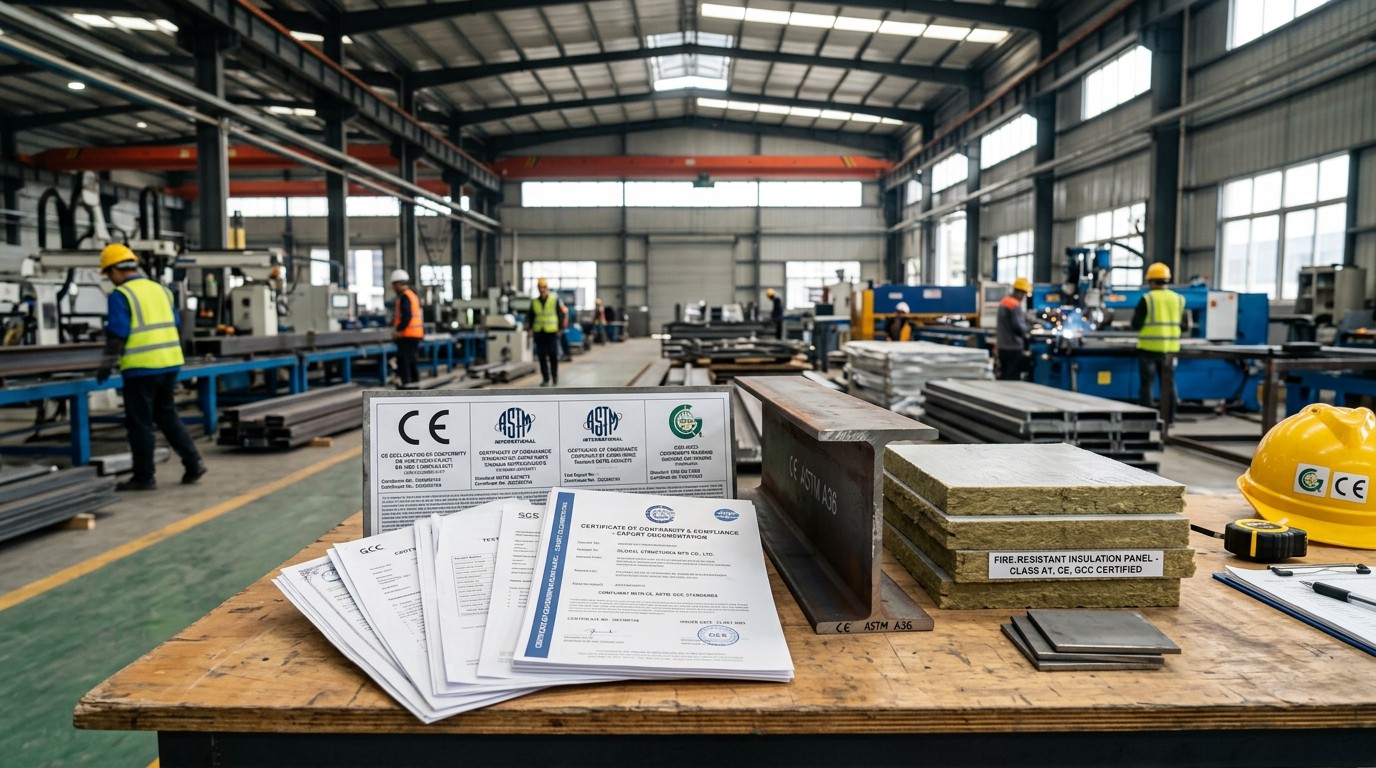
Cross border e commerce for building materials is booming—but certification hurdles remain a critical bottleneck for exporters and buyers alike. From flooring materials and architectural glass to steel products and waterproof materials, compliance with international standards (e.g., CE, ASTM, EN) directly impacts cross border trade efficiency. Whether you're pursuing direct factory sourcing, evaluating FOB price vs. CIF price, or managing procurement management across container shipping lanes, navigating certifications affects ex factory price competitiveness and overseas marketing success. As made in china suppliers scale B2B e commerce and independent website strategies, understanding these regulatory gateways becomes essential—not just for compliance, but for accelerating time-to-market and winning global buyer trust.
Why Certification Is the First Gatekeeper in Global Building Materials Trade
Unlike consumer electronics or apparel, building materials face layered regulatory scrutiny—not only at national borders but also at project-level acceptance. A single non-compliant batch of structural steel or fire-rated insulation can trigger full shipment rejection, on-site rework, or even liability exposure for contractors and developers.
Certification isn’t a one-time box-ticking exercise. It spans product testing (e.g., EN 13501-1 for fire performance), factory audits (e.g., ISO 9001 + product-specific modules), and technical documentation in local language—often requiring 7–15 business days per standard. For multi-standard exports (e.g., CE + ASTM + GCC Conformity), cumulative lead time extends to 4–6 weeks before first shipment clearance.
Misalignment between supplier claims and verifiable evidence remains widespread. Over 62% of building materials listed on B2B platforms lack publicly accessible test reports or valid certificate numbers—raising red flags for procurement teams vetting Tier-2 or Tier-3 Chinese manufacturers.
Core Certification Types by Destination Market
- EU/UK: CE marking (mandatory for construction products under CPR Regulation 305/2011), plus UKCA post-Brexit; requires DoP (Declaration of Performance) and notified body involvement for Classes I–III.
- USA/Canada: ASTM standards (e.g., ASTM C90 for concrete masonry), UL listing for electrical components, and ICC-ES Evaluation Reports for innovative systems.
- Middle East: SASO (Saudi Arabia), ESMA (UAE), and GSO (GCC) certifications—each demanding local-language labeling, third-party lab testing, and sometimes pre-shipment inspection.
- Australia/NZ: AS/NZS standards (e.g., AS/NZS 1530.3 for fire resistance), with mandatory WaterMark for plumbing products and BRANZ appraisal for engineered timber.
How Certification Impacts Procurement Decisions—and Real Costs
Certification status directly shapes total landed cost. Suppliers quoting low ex-factory prices often exclude certification-related expenses: third-party lab fees ($800–$3,500 per test series), notified body audit retainers ($2,000–$6,000 annually), translation & notarization ($150–$400 per document), and customs broker surcharges for non-standard declarations.
More critically, certification gaps delay order fulfillment. Buyers report average delays of 11–18 days when verifying certificates mid-process—versus 2–4 days for pre-validated suppliers. In fast-track infrastructure projects, such lags translate into penalty clauses (typically 0.1–0.5% of contract value per day).
This table underscores why procurement managers increasingly treat certification readiness as a primary selection criterion—not secondary to pricing or MOQ. Pre-validated suppliers reduce procurement cycle time by up to 40%, while cutting compliance-related rework costs by an average of $14,200 per container shipment.
What to Verify Before Placing Your First Order
Don’t rely solely on supplier-provided PDFs. Cross-check every claim against official databases: EU NANDO for CE-notified bodies, UL Product iQ for North America, SASO’s SABER portal, and GSO’s online registry. Invalid certificate numbers or expired audit dates are red flags—even if the document looks authentic.
Request 3 specific items during due diligence: (1) Original test report with lab accreditation number, (2) Valid DoP or Certificate of Conformity showing exact product model and batch scope, and (3) Factory audit summary (not just certificate copy) confirming ongoing surveillance frequency (e.g., biannual vs. annual).
For complex items like prefabricated façade systems or seismic isolation bearings, insist on project-specific certification—not generic material approvals. These require system-level testing (e.g., EN 13830 for curtain walls), which adds 3–5 weeks and $5,000–$12,000 in validation costs.
5 Critical Checks for Every Building Material Certificate
- Is the certificate issued by a recognized body in the target market? (e.g., TÜV Rheinland for CE, Intertek for GCC)
- Does the scope explicitly cover your exact product name, grade, and application (e.g., “C30/37 ready-mix concrete for structural slabs” not just “concrete”)?
- Are test parameters aligned with local code requirements? (e.g., ASTM E84 flame spread ≤25 for interior finishes in California)
- Is the issue date within the last 12 months for dynamic standards like fire or seismic?
- Does the DoP include declared performance values (e.g., thermal conductivity λ = 0.032 W/mK) matching your spec sheet?
Why Choose Our Platform for Certification Intelligence
As a comprehensive industry news platform tracking regulations across manufacturing, foreign trade, building materials, and e-commerce, we deliver actionable certification intelligence—not just policy summaries. Our team monitors over 230 regulatory updates monthly, including real-time alerts on standard revisions (e.g., EN 14351-1:2023 update for windows), enforcement shifts (e.g., UKCA transition deadlines), and regional lab capacity changes.
We help procurement professionals and decision-makers cut verification time by providing: (1) Verified certificate database access for top 1,200+ Chinese building materials exporters, (2) Standard-specific checklists tailored to your destination country and product category, and (3) Direct liaison support with accredited labs and notified bodies for expedited reporting—reducing typical turnaround from 8 weeks to under 3 weeks for priority cases.
Contact us today to request a free certification gap analysis for your next building materials procurement project—including recommended test protocols, estimated timeline, and cost breakdown for CE, ASTM, or GCC compliance.
- building materials
- industry news
- manufacturing
- bearings
- consumer electronics
- steel products
- cement
- architectural glass
- waterproof materials
- flooring materials
- cross border e commerce
- B2B e commerce
- independent website
- overseas marketing
- container shipping
- procurement management
- direct factory sourcing
- FOB price
- CIF price
- ex factory price
- factory audit
- made in china
- foreign trade
- cross border trade
- electronics
- e-commerce
Related News
- Indonesia Mandates CNAS Lab Reports for Imported Building Materials from July 2026Apr 16, 2026Indonesia mandates CNAS lab reports for imported building materials from July 2026—key for tiles, paints & waterproofing. Stay compliant & avoid delays!
- Cross border e commerce for building materials faces unique certification hurdlesApr 18, 2026Cross border e commerce for building materials? Navigate CE, ASTM & GCC certification hurdles fast—with made in china supplier verification, FOB/CIF price clarity, and procurement management support.
- Flooring materials face unexpected testing delays under new Middle East import rulesApr 18, 2026Cross border trade in flooring materials faces new GCC testing delays—impact on FOB price, CIF price, and direct factory sourcing from China. Get actionable compliance insights now.
- Waterproof materials fail real-world performance tests—even with passing lab reportsApr 17, 2026Cross border trade buyers: Why waterproof materials fail in real-world use despite passing lab tests—critical insights for made in China sourcing, FOB/CIF pricing, and procurement management.
Related News
- 00
0000-00
Clean energy investment opportunities: What solar storage projects passed feasibility review in 2026? - 00
0000-00
Chemicals industry trends: Where are specialty polymer prices headed in H1 2026? - 00
0000-00
E-commerce platform comparison: Which one handles cross-border B2B payments most reliably? - 00
0000-00
Why supply chain risk management strategies fail when built on outdated supplier data - 00
0000-00
Made in China products list: What’s newly export-compliant for EU markets in 2026?
Building Materials Desk
Weekly Insights
Stay ahead with our curated technology reports delivered every Monday.