





As fine chemicals suppliers accelerate the shift from batch to continuous manufacturing, drivers like efficiency gains, regulatory pressure, and green supply chain demands are reshaping production across chemicals, electronics, packaging, and renovation materials. This transformation also impacts building materials market dynamics, machinery equipment upgrades, and foreign trade competitiveness—especially for manufacturers of packaging equipment and engineering machinery. For information researchers and enterprise decision-makers, understanding this pivot is critical to aligning product strategy, procurement planning, and sustainability goals amid tightening environmental policies and evolving global market expectations.
Why Are Fine Chemicals Suppliers Moving Away from Batch Production?
Batch manufacturing has long dominated fine chemicals synthesis—especially for high-value intermediates used in pharmaceuticals, agrochemicals, and specialty polymers. But rising cost pressures, stricter emissions reporting under EU REACH and China’s “Dual Carbon” policy, and demand for consistent quality in electronics-grade precursors are accelerating adoption of continuous flow systems.
A 2023 industry survey across 87 chemical equipment integrators found that 68% reported double-digit annual growth in orders for modular continuous reactors—particularly those supporting 2–4 week commissioning cycles and ±0.3°C thermal control. These systems enable tighter residence time distribution, reduced solvent use by up to 40%, and lower operator exposure to hazardous reagents—key compliance advantages for exporters serving EU or U.S. markets.
This transition isn’t limited to API synthesis. It’s increasingly visible in functional additives for building materials (e.g., superplasticizers), conductive inks for flexible electronics, and UV-curable resins for home improvement coatings—all segments tracked daily by our platform for price volatility, raw material substitution trends, and regional certification updates.
How Does Continuous Manufacturing Impact Procurement Across Sectors?
For procurement teams sourcing fine chemicals, the shift changes evaluation criteria beyond purity and price. Buyers now assess supplier capability across five dimensions: process validation documentation, real-time analytics integration (e.g., PAT tools), scalability from lab-scale (50 mL/min) to pilot (5 L/min), traceability of raw material batches, and alignment with ISO 22000 or ICH Q5A for biologics-adjacent applications.
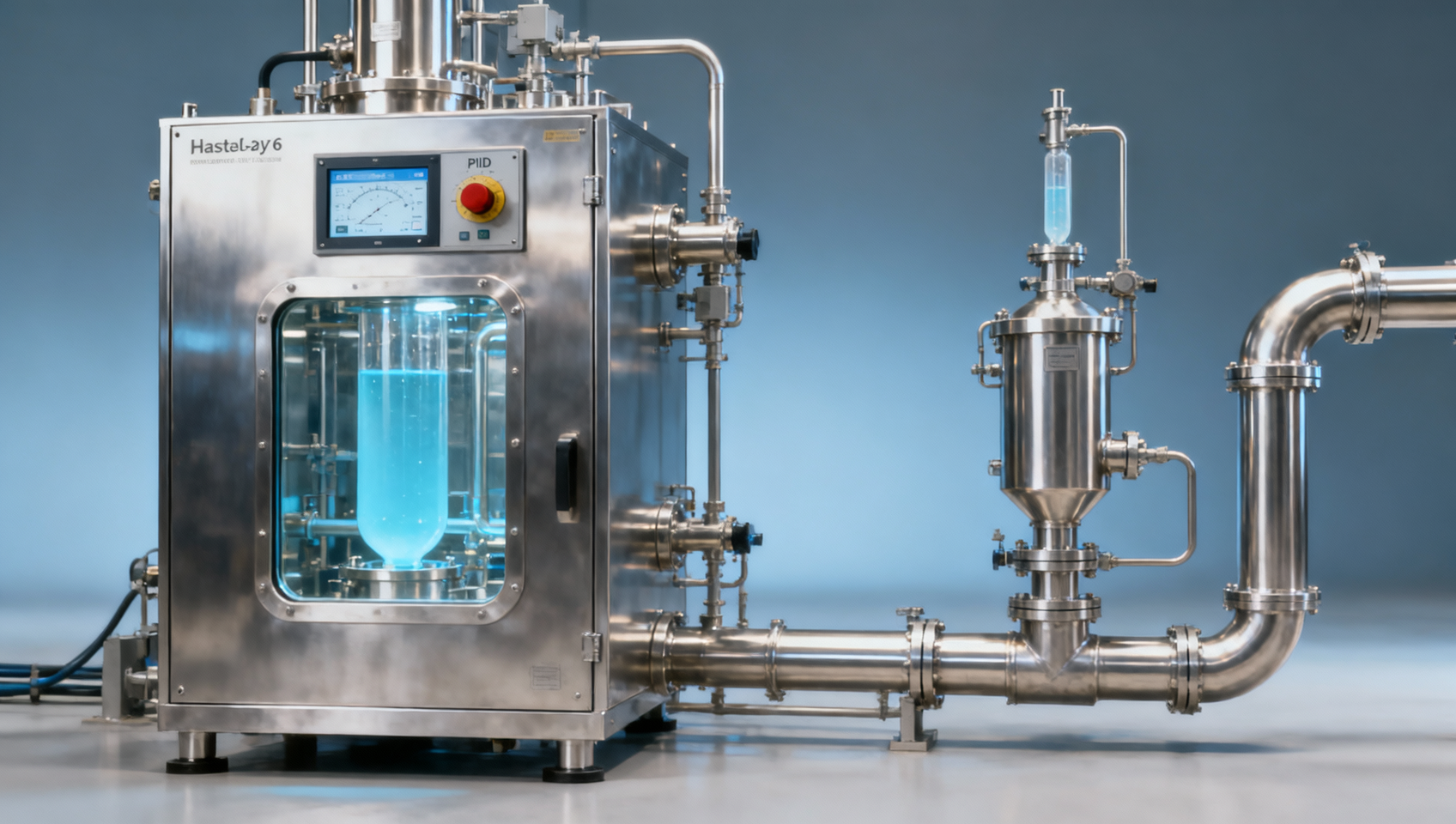
Machinery buyers face parallel implications. Demand is surging for skid-mounted reactor systems with 3–5 year typical service life, corrosion-resistant wetted parts (Hastelloy C-276 or SiC-lined), and PLC-based control interfaces compatible with Industry 4.0 MES platforms. Packaging equipment vendors report a 32% YoY increase in requests for inline blending modules designed for continuous feedstock delivery.
Our platform tracks these cross-sector ripple effects daily—including tariff adjustments on imported reactor components, lead time shifts for stainless-steel valves (now averaging 12–18 weeks), and new local content requirements in ASEAN electronics zones.
Key Procurement Evaluation Dimensions
The table highlights how procurement due diligence must evolve—not just verifying specs, but validating operational maturity. Decision-makers using our platform receive automated alerts when suppliers update certifications, adjust MOQs, or file new REACH registrations—enabling proactive renegotiation before contract renewal.
What Are the Top 3 Implementation Risks—and How to Mitigate Them?
Transitioning to continuous manufacturing carries tangible technical and commercial risks. Based on 42 implementation case reviews published across machinery, chemicals, and electronics sectors in 2023–2024, three recurring challenges dominate:
- Reactor fouling during scale-up: Observed in 57% of cases involving viscous polymer precursors; mitigated via ultrasonic in-line cleaning modules operating at 25–40 kHz.
- Inconsistent heat transfer in multi-step cascades: Caused 31% of unplanned shutdowns; resolved using segmented jacketed reactors with independent PID loops per zone (±0.2°C stability).
- Data silos between chemical process and packaging line: Reported by 64% of food-grade additive producers; addressed through OPC UA–enabled MES integration completed in ≤6 weeks.
Our platform delivers real-time benchmarking: compare average downtime rates across reactor vendors, track failure mode frequencies by material class (e.g., fluoropolymers vs. silicones), and access anonymized maintenance logs from peer companies in packaging equipment or building materials manufacturing.
Why Partner With Our Industry Intelligence Platform?
Unlike generic news aggregators, we deliver actionable intelligence tailored to your role as an information researcher or enterprise decision-maker. We monitor over 1,200 regulatory bulletins, 480+ commodity price indices, and 320+ equipment OEM announcements—filtering noise to surface what directly affects your procurement cycle, product roadmap, or sustainability reporting.
You can request immediate support on:
- Validation of continuous process compliance with FDA 21 CFR Part 11 or China NMPA Annex 15
- Comparative analysis of reactor vendors’ lead times for Hastelloy components (current median: 14 weeks)
- Custom alerts for REACH SVHC candidate list updates affecting your electronic ink formulations
- Regional tariff impact reports for continuous manufacturing equipment shipped to Vietnam or Mexico
- Technical specification crosswalks between batch-derived and continuous-synthesized surfactants used in home improvement cleaners
Contact us today to activate your customized dashboard—with live feeds covering chemicals, packaging machinery, building materials, and international trade compliance. Let data, not assumptions, guide your next strategic move.
- supply chain
- building materials
- electronics sector
- manufacturing
- cement
- packaging machinery
- trade compliance
- green supply chain
- foreign trade
- international trade
- machinery
- machinery equipment
- engineering machinery
- building materials market
- home improvement
- renovation materials
- chemicals
- fine chemicals
- packaging
- packaging equipment
- electronics
Related News
- Chemicals industry trends: Where are specialty polymer prices headed in H1 2026?Apr 18, 2026Chemicals industry trends drive specialty polymer prices in H1 2026—impacting building materials price trends, supply chain risk management strategies, and clean energy investment opportunities. Get actionable insights now.
- Pigments and dyes exports hit regulatory friction points in ASEAN marketsApr 18, 2026Cross border trade in pigments and dyes faces new ASEAN regulatory hurdles—impact FOB price, CIF calculations, direct factory sourcing & procurement management. Stay compliant & competitive.
- Decorative materials get flagged at EU borders for undeclared nano-ingredientsApr 17, 2026Cross border trade in decorative materials faces EU border delays over undeclared nano-ingredients — learn how made in china suppliers, FOB/CIF pricing, and B2B e commerce compliance impact your procurement management & container shipping success.
- Fine chemicals suppliers shifting from batch to continuous manufacturing — what’s driving the change?Apr 18, 2026Fine chemicals suppliers adopt continuous manufacturing for efficiency, compliance & green supply chain—impacting packaging, electronics, building materials, machinery equipment and foreign trade.
Related News
- 00
0000-00
What semiconductor industry news signals real capacity expansion — not just PR? - 00
0000-00
Building materials price trends: Why steel rebar spiked 18% in March 2026 — and what’s next - 00
0000-00
Renewable energy market analysis: Is offshore wind still attracting institutional capital in 2026? - 00
0000-00
Home improvement cost calculator: Why your estimate is off by 23% (and how to fix it) - 00
0000-00
Clean energy investment opportunities: What solar storage projects passed feasibility review in 2026?
Chemical Industry Desk
Weekly Insights
Stay ahead with our curated technology reports delivered every Monday.