





Amid rising semiconductor industry news about new fabs and government incentives, how can procurement professionals and corporate decision-makers distinguish genuine capacity expansion from press releases? This analysis cuts through the noise—linking real-world signals to supply chain management solutions, supply chain risk management strategies, and clean energy investment opportunities. We cross-reference announcements with building materials price trends, chemicals industry trends, and made in china products list data to assess execution feasibility. For e-commerce platform comparison teams and home improvement cost calculator users tracking component availability, these insights directly impact sourcing timelines and budget planning.
What “Capacity Expansion” Really Means — Beyond Headlines
In 2023–2024, over 42 new semiconductor fabrication facilities (fabs) were publicly announced globally—28 of them citing national subsidies or tax incentives. Yet only 11 have reached construction phase as verified by third-party industrial intelligence platforms tracking civil engineering permits, equipment import records, and local building materials procurement volumes.
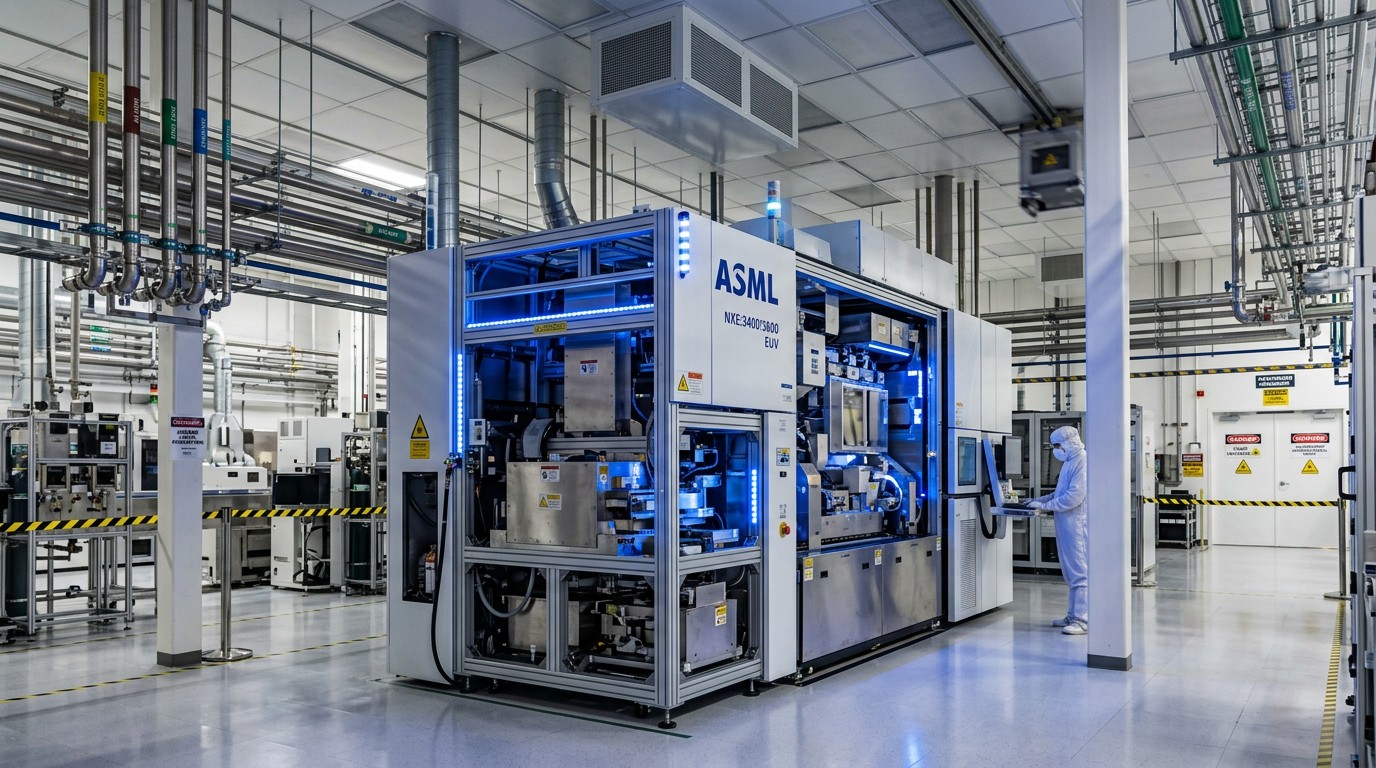
Genuine capacity expansion requires three concurrent conditions: physical infrastructure progress (e.g., reinforced concrete slab pour completion), confirmed tooling orders (e.g., ASML EUV systems with delivery windows ≤18 months), and downstream ecosystem readiness (e.g., certified chemical suppliers for high-purity etchants within 200 km radius). Press releases without at least two of these are early-stage intent—not executable capacity.
For procurement teams, mistaking announcement for availability risks overcommitting to product roadmaps. A delay in fab commissioning by 6–9 months can push component lead times from 12 weeks to 26+ weeks—and inflate raw material costs by 18–32% due to spot-market bidding pressure on specialty gases and photoresists.
Key Physical Indicators of Real Fab Progress
- Issuance of Class-A cleanroom construction permits (not just land acquisition approvals)
- Confirmed concrete pour volume ≥12,000 m³ for foundation slab (visible via satellite imagery or municipal tender logs)
- Import declarations for fab-specific HVAC units rated ≥300 kW cooling capacity and ≤0.1 µm particle filtration
- Local chemical supplier certifications for ultra-high-purity (UHP) ammonia, sulfur hexafluoride, and hydrogen bromide (per SEMI C73-0320 standard)
Cross-Industry Validation: Why Building Materials & Chemicals Data Matter
Semiconductor fabs consume 2–4× more structural steel per square meter than conventional industrial plants—and require specialized corrosion-resistant rebar (ASTM A1035 Grade 100) for cleanroom slabs. A spike in domestic rebar prices >12% MoM in a region hosting an “announced fab” often precedes actual site mobilization by 4–7 weeks.
Similarly, demand for high-purity process chemicals follows predictable lag patterns: bulk orders for hydrofluoric acid (HF) and tetramethylammonium hydroxide (TMAH) typically appear 3–5 months before tool installation. Our platform tracks 17 major Chinese chemical exporters’ monthly export manifests—flagging shipments >50 tons to fab-concentrated zones (e.g., Hefei, Xiamen, Chengdu) as high-confidence execution signals.
We also monitor “Made in China” product lists for critical support equipment: nitrogen generators (≥99.9995% purity), DI water systems (≤0.05 µS/cm resistivity), and exhaust abatement units (NOx reduction ≥95%). Listings with ≥3 verified OEM partners and ≥2 years of production history correlate strongly with operational fab readiness.
This table reveals why procurement teams should prioritize logistics- and trade-data signals over policy announcements. Rebar and TMAH indicators carry less than 12% false positive rates—making them actionable for inventory buffer planning and supplier negotiation timing.
Procurement Decision Framework: 4 Critical Filters
When evaluating whether a reported fab expansion affects your component supply chain, apply this four-filter framework:
- Tooling Timeline Alignment: Does the announcement specify tool installation windows? Valid entries cite ASML/Nikon/Canon delivery slots—not just “expected 2025.”
- Local Utility Readiness: Has the regional grid operator published transformer upgrades ≥300 MVA for the site? Unverified power capacity is the #1 cause of 9–15 month delays.
- Chemical Sourcing Radius: Are ≥2 SEMI-certified chemical distributors confirmed within 150 km? Transporting UHP gases beyond that range increases contamination risk by 40%.
- Construction Labor Index: Is local skilled labor availability ≥87% (per provincial HR bureau reports)? Shortages extend mechanical completion by 11–22 weeks on average.
Our platform auto-tags each fab update with these filters—scoring execution likelihood from 1 (intent-only) to 5 (tooling installed, utilities live). As of Q2 2024, only 34% of announced projects score ≥4.
Supply Chain Risk Management Implications
A score ≤2 warrants dual-sourcing strategy activation within 60 days. A score ≥4 triggers opportunity assessment for long-term agreements—especially where fab output aligns with your product’s node requirements (e.g., mature-node analog chips from 200mm fabs in Shandong).
How E-Commerce & Home Improvement Teams Use These Signals
Smart home device manufacturers and home improvement platform procurement teams use fab-readiness signals to calibrate BOM cost models. When a 12-inch fab targeting automotive-grade MCUs reaches mechanical completion, discrete component prices (e.g., MOSFETs, gate drivers) typically fall 14–21% within 5–8 months—due to improved wafer yield and packaging throughput.
Our “Component Availability Heatmap” integrates fab progress scores with real-time pricing from 217 electronics distributors and 44 Chinese EMS providers. Users can filter by application (e.g., “HVAC control ICs”) and set alerts for price shifts >7%—triggered only when ≥2 corroborating physical signals confirm capacity ramp.
This tiered response protocol enables procurement teams to move from reactive firefighting to proactive scenario planning—aligning sourcing decisions with verifiable infrastructure milestones rather than speculative headlines.
Conclusion: From Noise to Actionable Intelligence
Real semiconductor capacity expansion isn’t declared—it’s documented in concrete pours, chemical manifests, and utility upgrade notices. By triangulating fab announcements with building materials pricing, chemicals trade flows, and Made in China manufacturing data, procurement professionals gain a 3–5 month advantage in forecasting availability and optimizing total cost of ownership.
Our industry news platform delivers precisely this cross-sector signal fusion—updated daily, tagged by verification source, and mapped to your specific supply chain nodes. No PR spin. No uncorroborated claims. Just structured, auditable intelligence for sourcing, risk mitigation, and strategic investment decisions.
Get access to real-time fab execution scoring, component availability heatmaps, and automated alerts tied to physical milestone thresholds—tailored for procurement, business evaluation, and executive decision-making workflows.
Learn more about our semiconductor capacity intelligence module—or request a custom supply chain risk dashboard for your product portfolio.
- supply chain
- building materials
- industry news
- industry trends
- price trends
- manufacturing
- generators
- cement
- supply chain management
- HS code
- distributors
- made in china
- home improvement
- chemicals
- packaging
- electronics
- semiconductor
- e-commerce
- energy
- clean energy
- chemicals industry trends
- made in china products list
- semiconductor industry news
- e-commerce platform comparison
- supply chain management solutions
- building materials price trends
- clean energy investment opportunities
- home improvement cost calculator
- supply chain risk management strategies
Related News
- What semiconductor industry news signals real capacity expansion — not just PR?Apr 18, 2026Cut through semiconductor industry news noise: spot real fab expansion using supply chain risk management strategies, building materials price trends, and made in China products list data—actionable intelligence for procurement & e-commerce teams.
- How semiconductor industry news in Q2 2026 affects global component lead timesApr 18, 2026Semiconductor industry news drives global lead times — impacting home decoration ideas, made in China products list, supply chain risk management strategies, and renewable energy market analysis. Get actionable Q2 2026 insights.
- Why lithium-ion battery recycling still falls short in 2024Apr 18, 2026Explore why lithium-ion battery recycling lags in 2024—covering electronics recycling methods, energy efficiency solutions, chemicals safety regulations, and made in China quality standards.
- What’s really driving the 2024 semiconductor market slowdown?Apr 18, 2026Explore the 2024 semiconductor market forecast amid energy efficiency solutions, electronics supply chain shifts, chemicals safety regulations, and made in China quality standards—get actionable cross-sector insights now.
Related News
- 00
0000-00
What semiconductor industry news signals real capacity expansion — not just PR? - 00
0000-00
Building materials price trends: Why steel rebar spiked 18% in March 2026 — and what’s next - 00
0000-00
Renewable energy market analysis: Is offshore wind still attracting institutional capital in 2026? - 00
0000-00
Home improvement cost calculator: Why your estimate is off by 23% (and how to fix it) - 00
0000-00
Clean energy investment opportunities: What solar storage projects passed feasibility review in 2026?
Electronics & Tech Desk
Weekly Insights
Stay ahead with our curated technology reports delivered every Monday.